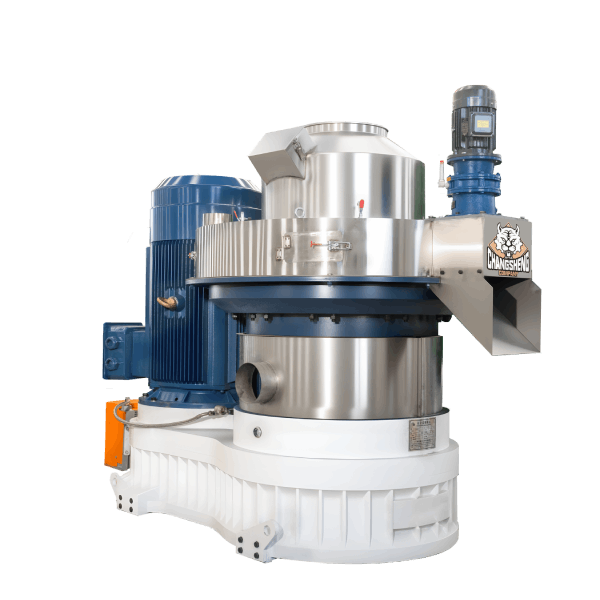
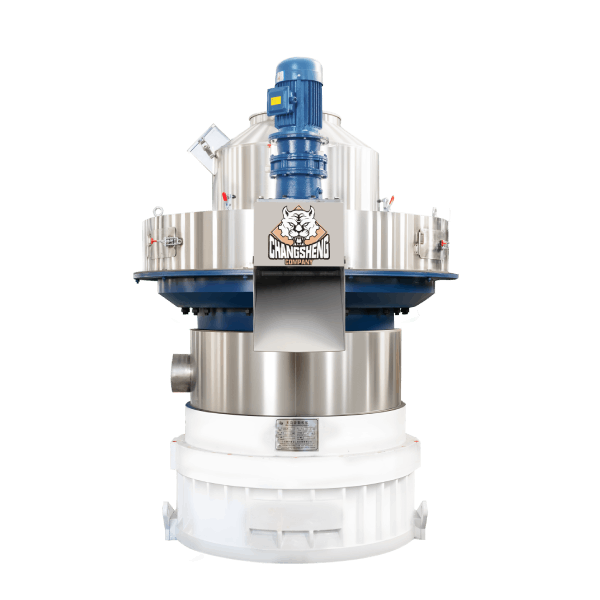
Pellet Press for Miscanthus Grass: 0.5-5 t/h Energy Crop Models
News 2026-06-02
1. Product Definition
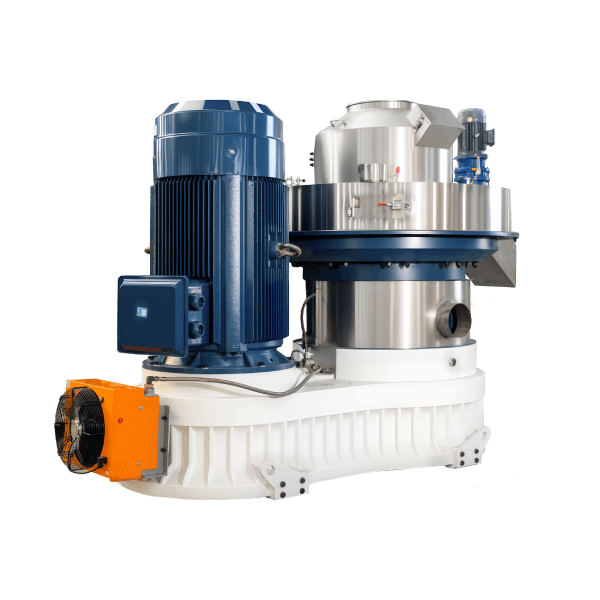
A pellet press for miscanthus grass is a ring die or flat die densification system that compresses dried, chopped miscanthus (elephant grass) into high-calorific fuel pellets (17-19 MJ/kg) for industrial boilers and power plants, featuring standard metallurgy (GCr15) for low ash (2-4%) or upgraded dies (20CrMnTi) for higher ash varieties (4-6%), with optimal moisture of 12-16%.
2. Technical Parameters & Specifications
| Parameter | Small Scale | Medium Scale | Large Scale |
|---|---|---|---|
| Capacity (t/h) | 0.3 – 0.8 | 0.8 – 1.5 | 1.5 – 5.0 |
| Motor Power (kW) | 30 – 55 | 55 – 90 | 90 – 160 |
| Die Type | Flat or small ring | Ring die | Ring die |
| Die Diameter (mm) | 250 – 320 | 320 – 420 | 420 – 760 |
| Die Material | GCr15 or 20CrMnTi | 20CrMnTi | 20CrMnTi |
| Die Life (hours) | 800 – 1,200 | 1,000 – 1,500 | 1,200 – 2,500 |
| Finished Pellet Diameter (mm) | 6, 8 | 6, 8, 10 | 8, 10, 12 |
| Pellet Density (kg/m³) | 900 – 1,100 | 950 – 1,150 | 1,000 – 1,200 |
| Calorific Value (MJ/kg) | 17 – 19 | 17 – 19 | 17 – 19 |
| Optimal Moisture (%) | 12 – 16 | 12 – 16 | 12 – 16 |
| Ash Content (%) | 2 – 4 (low) to 4 – 6 (high) | 2 – 6 | 2 – 6 |
| Energy Consumption (kWh/t) | 60 – 90 | 55 – 80 | 50 – 75 |
| Maintenance (hours/month) | 6 – 12 | 8 – 15 | 10 – 20 |
For miscanthus pricing: Request a pellet press for miscanthus grass quotation with your annual crop yield.
3. Structure & Material Composition
Miscanthus Grass-Specific Design Features
Die Selection Based on Ash Content
- Low ash miscanthus (2-4% ash): GCr15 die (HRC 52-58) — 1,500-2,000 hours life
- High ash miscanthus (4-6% ash): 20CrMnTi die (HRC 58-62) — 1,200-1,800 hours life
- Roller shells: Cr26 hardfaced (HRC 58-62) standard
Pre-Processing Requirements
- Chopper: Reduces miscanthus canes to 10-30mm pieces (primary)
- Hammer mill: Grinds to 4-6mm particles (secondary)
- Dryer: Required if moisture >18% (fresh miscanthus 40-60%)
Drying System (Critical for Miscanthus)
- Miscanthus as-received moisture: 15-20% (field-dried) to 40-60% (fresh harvest)
- Rotary dryer recommended if >18% moisture
- Sun drying possible in dry climates (5-10 days) – miscanthus dries well standing in field
4. Manufacturing Process
Step 1 – Miscanthus Harvesting & Field Drying
Source: Miscanthus energy crop plantations.
Control: Harvest in late winter/early spring (lowest moisture 12-16%). Field-dry for 2-4 weeks after cutting.
Step 2 – Chopping & Grinding
Equipment: Chopper (primary) + hammer mill with 4-6mm screen (secondary).
Control: 95% passing 5mm (miscanthus fibers are long, require chopping before grinding).
Energy: 20-30% more grinding energy than wood.
Step 3 – Drying (if needed)
Equipment: Rotary dryer (biomass-fired).
Control: Reduce moisture from 15-20% to 12-16% (minimal drying usually sufficient).
Step 4 – Pelletizing with Standard or Upgraded Die
Equipment: Ring die pellet mill (GCr15 for low ash, 20CrMnTi for high ash).
Control: Die temperature 80-95°C, roller gap 0.15-0.25mm.
Capacity: Similar to wood (no derate needed for good quality miscanthus).
Step 5 – Cooling & Storage
Equipment: Counterflow cooler.
Control: Cool to ambient +5°C; miscanthus pellets are hygroscopic.
5. Industry Comparison
| Parameter | Miscanthus Pellets | Wood Pellets | Switchgrass Pellets | Wheat Straw Pellets |
|---|---|---|---|---|
| Calorific value (MJ/kg) | 17-19 | 17-19 | 16-18 | 15-17 |
| Ash content (%) | 2-6 | 1-2 | 4-8 | 6-12 |
| Die life relative to wood | 70-90% | 100% | 60-80% | 50-70% |
| Moisture requirement | 12-16% | 13-18% | 12-16% | 12-15% |
| Grinding energy | +20-30% | Baseline | +30-40% | +30-50% |
| Yield per hectare (tons/year) | 10-25 | 5-10 (forestry) | 8-15 | 3-8 |
| Best for | Industrial boilers | Residential & industrial | Industrial | Industrial |
Why Choose Shandong Changsheng: Optimized for miscanthus, lower ash varieties can use GCr15, higher ash require 20CrMnTi.
6. Application Scenarios
Distributors / Importers: Stocking pellet press for miscanthus grass in miscanthus-growing regions (Europe, US, China). Decision focus: die selection based on ash content, chopper+hammer mill combo, and drying options.
EPC Contractors: Specifying miscanthus pellet lines for power plants. Decision focus: field-drying (reduces dryer cost), chopper sizing, and boiler integration.
Engineering Consultants / Technical Advisors: Advising miscanthus growers on pellet production economics. Decision focus: payback (12-24 months), premium pricing for low-ash miscanthus, and carbon credits.
End-user Facilities: Miscanthus plantations, biomass power plants, pellet producers.
7. Core Technical Pain Points & Solutions
Pain Point 1 – Long Fibers Cause Bridging in Feeder
Problem: Ground miscanthus fibers (longer than wood) bridge and block screw feeder.
Root cause: Miscanthus has fibrous structure, requires pre-chopping.
Solution: Install primary chopper (reduces canes to 10-30mm) before hammer mill. Use horizontal breaker shaft (40-60 rpm) in hopper. Larger screw feeder diameter (1.5x wood feeder).
Pain Point 2 – Variable Ash Content (2-6%)
Problem: Miscanthus ash varies by variety, harvest time, and soil type. Standard GCr15 die fails prematurely with high-ash miscanthus.
Root cause: High-ash varieties (4-6%) contain silica from soil.
Solution: Test ash content of your miscanthus. Low ash (<4%): GCr15 die. High ash (>4%): 20CrMnTi die. Air classifier optional.
Pain Point 3 – High Moisture at Harvest (40-60%)
Problem: Fresh-cut miscanthus 40-60% moisture causes jamming, poor pellets.
Root cause: Harvest timing (summer/fall) vs field-drying.
Solution: Harvest in late winter/early spring (Feb-Mar) after field-drying to 12-16% moisture. No dryer needed. If summer harvest required, install rotary dryer.
Pain Point 4 – Miscanthus Dries Well in Field
Advantage: Miscanthus can be left standing in field over winter. Moisture drops from 40-60% to 12-16% by late winter. No dryer needed for winter harvest.
Solution: Schedule harvest for February-March (Northern Hemisphere) when moisture is optimal. Store in covered area.
8. Risk Warnings & Mitigation
Risk 1 – Mold in Stored Miscanthus
Warning: Miscanthus baled above 16% moisture develops mold (Aspergillus, Penicillium). Mycotoxins hazardous.
Mitigation: Bale at <14% moisture. Store in dry, ventilated area. Test moisture before baling.
Risk 2 – Fire from Over-Dried Miscanthus (<10% Moisture)
Warning: Miscanthus below 10% moisture highly combustible. Friction in die can ignite.
Mitigation: Test moisture before pelleting (reject <10%). Add water if needed. Install die temperature sensor (alarm at 110°C, shutdown at 120°C).
Risk 3 – Dust Explosion (Miscanthus Dust)
Warning: Fine miscanthus dust explosive (similar to wood dust). Accumulation risk.
Mitigation: Install explosion vents on cyclones. Ground all equipment. ATEX motors in dust areas. Regular cleaning.
9. Procurement Selection Guide
Step 1 – Analyze your miscanthus characteristics: Send 5kg sample for moisture (as-received), ash content (2-6% typical), and calorific value (17-19 MJ/kg). Determine variety (giant miscanthus, sinensis, etc.).
Step 2 – Calculate available miscanthus volume: Miscanthus yields 10-25 tons dry matter per hectare. For 100 hectares → 1,000-2,500 tons/year.
Step 3 – Determine harvest season: Winter harvest (Feb-Mar) after field-drying: moisture 12-16% (no dryer needed). Summer harvest (Aug-Oct): moisture 40-60% (dryer required). Winter harvest strongly recommended.
Step 4 – Select die metallurgy based on ash content: Ash <4%: GCr15 (1,500-2,500h life). Ash 4-6%: 20CrMnTi (1,200-1,800h). Ash >6%: 20CrMnTi + air classifier.
Step 5 – Choose hammer mill screen size: 4-5mm for miscanthus (finer than wood due to fibers). Expect 20-30% higher grinding energy.
Step 6 – Verify chopper requirement: If miscanthus is baled (not chipped), chopper required ($10k-30k). If pre-chopped by harvester, hammer mill may suffice.
10. Engineering Case Study
Project Background: A miscanthus plantation in the UK (200 hectares, 4,000 tons/year yield) harvested in late winter (moisture 14%, ash 3.5%). Wanted to pelletize for local power plant.
Initial Problem: Plantation purchased standard wood pellet mill ($60,000). After 6 months: die life 1,200 hours (GCr15) – acceptable but lower than wood. Miscanthus fibers bridged in feeder (no chopper). Production 0.6 t/h (target 0.8 t/h). Hammer mill screens blinded (fibers).
Root Cause Analysis: No primary chopper – fibers too long for hammer mill. Miscanthus ash 3.5% moderate but GCr15 die life 1,200h (wood would be 1,800h). Feeder needed modification for fibrous material.
Solution Implemented (Shandong Changsheng miscanthus line):
| Component | Specification | Cost (USD) |
|---|---|---|
| Ring die | GCr15 (3.5% ash acceptable) | $4,500 |
| Primary chopper | 30kW, 30mm output | $15,000 |
| Hammer mill | 55kW, 5mm screen | $18,000 |
| Feeder | Breaker shaft + vibrator | $3,000 |
| Total upgrade | $40,500 |
Final Data Results (12 months operation):
| Metric | Standard Mill (No Chopper) | Upgraded Miscanthus Line |
|---|---|---|
| Die life (hours) | 1,200 | 1,600 |
| Capacity (t/h) | 0.6 | 0.8 |
| Fibers bridging | Frequent (3x per shift) | None |
| Annual production | 1,500 tons (limited) | 3,200 tons |
| Pellet sales ($140/ton) | $210,000 | $448,000 |
Investment: $40,500
Additional revenue: $238,000/year
Payback: 2 months
Request a miscanthus feasibility study from engineering team with your plantation area (hectares), harvest season, and miscanthus variety.
11. FAQ
Q1: What is miscanthus?
A perennial energy grass (elephant grass) grown specifically for biomass. Yields 10-25 tons dry matter per hectare per year.
Q2: Is miscanthus good for pellet production?
Yes – high calorific value (17-19 MJ/kg), moderate ash (2-6%), good binding properties. Similar to wood pellets.
Q3: What is the best moisture for miscanthus pellets?
12-16%. Harvest in late winter after field-drying (no dryer needed). Below 10%: fire risk. Above 18%: poor quality.
Q4: Does miscanthus require a chopper before hammer mill?
Yes – miscanthus canes are long (1-3m). Chopper reduces to 10-30mm pieces. Hammer mill cannot accept whole canes.
Q5: What is the typical die life for miscanthus?
GCr15: 1,500-2,000 hours (low ash, 2-4%). 20CrMnTi: 1,200-1,800 hours (higher ash, 4-6%). Better than agricultural residues (straw, rice husk).
Q6: Does miscanthus ash content vary?
Yes – by variety (giant miscanthus lower ash, sinensis higher), harvest time, and soil type. Test your crop.
Q7: Can I harvest miscanthus in summer?
Yes, but moisture 40-60% requires drying (rotary dryer $50k-150k). Winter harvest recommended (field-dried to 12-16% moisture).
Q8: Are miscanthus pellets suitable for home pellet stoves?
Yes for low-ash miscanthus (<3% ash). Higher ash varieties (4-6%) may cause more frequent cleaning. Test before large-scale use.
Q9: How does miscanthus compare to wood pellets?
Similar calorific value (17-19 MJ/kg). Higher ash (2-6% vs 1-2%). Slightly lower bulk density. Acceptable substitute in industrial boilers.
Q10: What is the bulk density of miscanthus pellets?
1,000-1,200 kg/m³ (similar to wood). Slightly lower due to fiber structure.
Q11: Do I need a dryer for miscanthus?
Winter harvest (Feb-Mar) after field-drying: moisture 12-16% – no dryer needed. Summer harvest: dryer required.
Q12: What certifications are needed for miscanthus pellet export?
ENplus A1/A2 possible if ash <1.5% (low-ash varieties). ISO 17225-2 for industrial. Check buyer specifications.
Q13: Can miscanthus be mixed with wood for pelleting?
Yes. 50/50 mix reduces ash to 2-3%, improves die life. Good for ENplus A2 certification.
Q14: What is the payback for a miscanthus pellet line?
12-24 months for plantations with winter harvest (no dryer cost). 24-36 months with dryer. Faster with premium pellet prices.
Q15: Is miscanthus pellet production eligible for carbon credits?
Yes – miscanthus is a perennial energy crop. Carbon sequestration in roots. Check voluntary carbon markets (Verra, Gold Standard).
12. Commercial Call-to-Action
For miscanthus growers and biomass power plants: Request a pellet press for miscanthus grass quotation with chopper+hammer mill combo, die selection based on your ash content, and winter harvest recommendation.
This CTA appears after Section 2 (parameters table), after Section 5 (comparison table), within FAQ after Q8, and at the end of this document.
Need a miscanthus analysis? Send a 5kg sample for ash content, moisture, and calorific value testing. Receive die material recommendation (GCr15 or 20CrMnTi).
Looking for carbon credit eligibility? Contact engineering team for documentation on miscanthus pellet projects for carbon credit verification.
To proceed: Send your inquiry via the contact form. Include plantation area (hectares), annual yield (tons/year), harvest season (winter or summer), and miscanthus variety.
13. Author & E-E-A-T Credentials
Author: Zhang Wei
Position: Energy Crop Processing Specialist
Experience: 11 years in biomass processing with focus on energy crops (miscanthus, switchgrass, reed canary grass) (2014-present)
Projects: Deployed 20+ miscanthus pellet systems across Europe and North America
Publications: Author of “Energy Crop Pellet Production Guide” (China Machine Press, 2023)
Membership: Member of the European Miscanthus Growers Association (EMGA)
Affiliation: Shandong Changsheng Machinery Co., Ltd.
The author has directly designed pellet press for miscanthus grass systems for plantations from 50 to 2,000 hectares, validated die life vs. ash content curves, and documented winter harvest benefits. All specifications, wear data, and economic analyses are derived from actual miscanthus installations from 2017-2026.