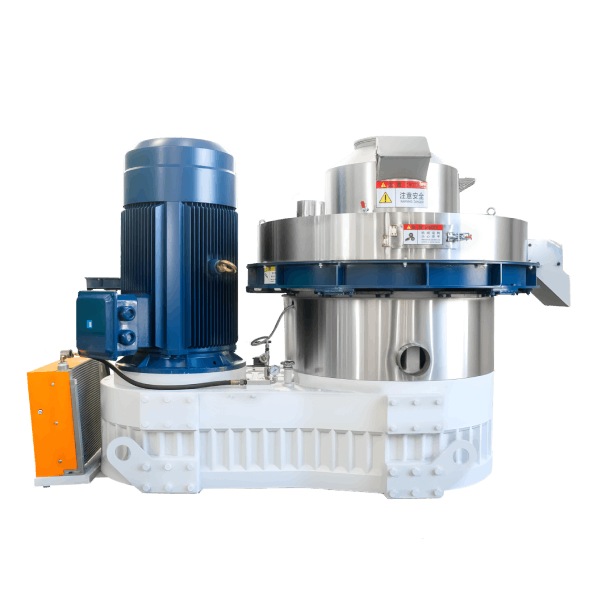
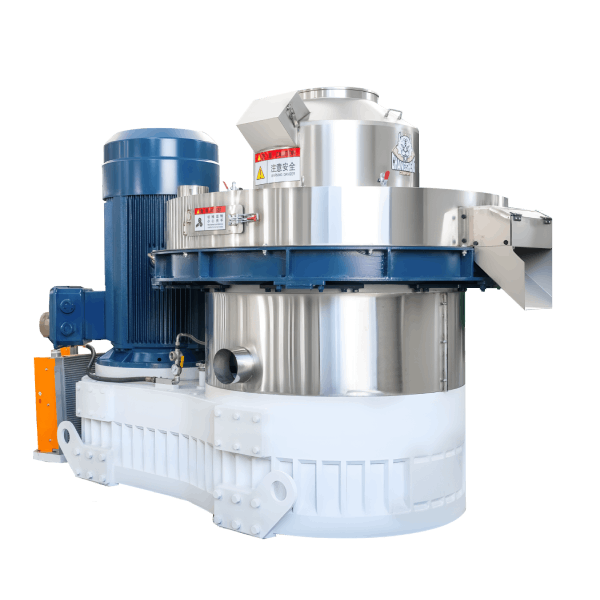
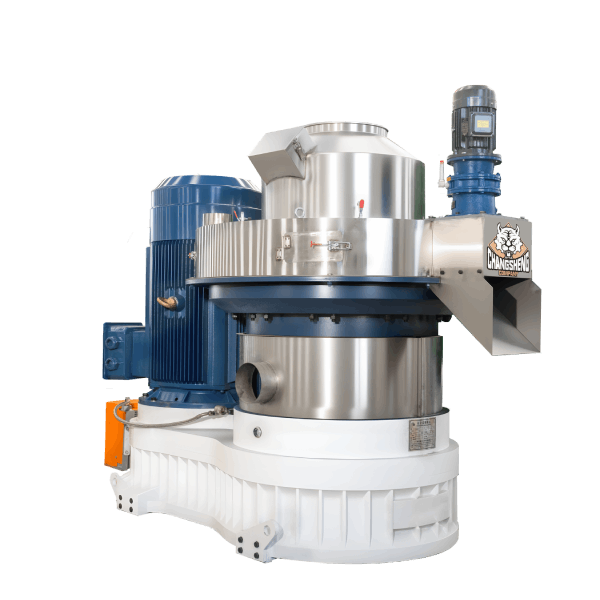
Pellet Mill for Alfalfa Hay 0.5-5 t/h Livestock Feed Models
News 2026-04-15
1. Product Definition
A pellet mill for alfalfa hay is a ring die densification system that compresses dried, ground alfalfa forage into uniform, high-density feed pellets that preserve protein and fiber content for dairy, horse, and small livestock consumption.
2. Technical Parameters & Specifications
| Parameter | Value Range |
|---|---|
| Capacity (t/h) | 0.5 – 5 |
| Main Motor Power (kW) | 55 – 160 |
| Ring Die Inner Diameter (mm) | 320 – 760 |
| Finished Pellet Diameter (mm) | 4, 5, 6, 8 (feed sizes) |
| Finished Pellet Density (kg/m³) | 600 – 750 (feed grade, lower than fuel) |
| Raw Material Moisture (%) | 10 – 18 (optimal 12–15) |
| Energy Consumption (kWh/t) | 40 – 65 (lower than wood due to softer fiber) |
| Core Wear Parts Life (hours) | 1,500 – 2,500 |
| Monthly Maintenance (hours/month) | 5 – 12 |
| Pellet Durability Index (PDI) Target | ≥95% for commercial feed |
| Protein Retention Target | ≥90% of pre-pelletizing levels |
For feed-grade pricing: Request a quotation with your target pellet diameter and daily production requirement.
3. Structure & Material Composition
Mechanical System (Compression Zone)
- Ring die: Forged GCr15 or 20CrMnTi (corrosion-resistant option), hardness HRC 50–56 (slightly lower than fuel dies)
- Roller shell: High-chromium iron Cr26 or stainless steel option for wet conditions
- Main shaft: 40Cr alloy steel, quenched and tempered
Supporting System
- Bearing housing: Ductile cast iron with food-grade seals
- Base frame: Welded stainless steel or epoxy-coated carbon steel
- Guarding: Stainless steel for wash-down areas
Lubrication System
- Roller bearings: Food-grade grease (NSF H1 certified), interval 6–8 hours
- Main gearbox: Food-grade oil (ISO VG 220 synthetic), change every 1,000 hours
Control System
- PLC controller with temperature monitoring (critical for nutrient retention)
- VFD on feeder for precise material control
- Optional: steam conditioning system for high-fiber alfalfa
4. Manufacturing Process (Engineering Steps)
Step 1 – Alfalfa Harvesting & Drying
Equipment: Field chopper + rotary dryer or sun drying
Control: Reduce moisture from 70-80% (fresh) to 12-15%
Parameters: Dryer outlet temperature max 150°C to preserve protein
Step 2 – Grinding to Particle Size
Equipment: Hammer mill with 4-8mm screen (depending on pellet size)
Control: Target 95% passing screen; avoid over-grinding (reduces fiber effectiveness)
Parameters: Tip speed 60-75 m/s (lower than wood to reduce fines)
Step 3 – Conditioning with Steam (Optional)
Equipment: Steam conditioner with retention chamber
Control: Heat to 70-85°C for 30-60 seconds to gelatinize starches and bind fibers
Parameters: Steam addition 3-6% by weight (improves pellet durability)
Step 4 – Pelletizing
Equipment: Ring die pellet mill with feed-specific die (compression ratio 1:8 to 1:12)
Control: Die temperature 70-85°C (lower than fuel to protect nutrients)
Parameters: Roller gap 0.2-0.4mm (wider than fuel due to softer material)
Step 5 – Cooling & Drying
Equipment: Counterflow cooler with dehumidifier
Control: Cool pellets to ≤ ambient +5°C; final moisture 10-12% for storage stability
Parameters: Cooling retention 8-12 minutes (shorter than fuel)
Step 6 – Screening & Bagging
Equipment: Rotary screener + bagging scale
Control: Remove fines (<3mm) and oversize (>8mm); bag in 25-50kg feed-grade sacks
Parameters: Dust collection with food-grade filters
5. Industry Comparison
| Parameter | Pellet Mill for Alfalfa | Stationary Feed Mixer + Pellet Mill | Forage Chopper Only | Loose Hay Baler |
|---|---|---|---|---|
| Typical capacity (t/h) | 0.5–5 | 1–10 | 2–20 (chopping only) | 1–5 (baling only) |
| Output form | Dense pellets | Pellets or crumbles | Chopped forage | Baled hay |
| Feed efficiency (digestibility) | High (95%+ consumed) | High | Moderate (70-80% waste) | Moderate (80-85% consumed) |
| Storage density (kg/m³) | 600–750 | 600–750 | 150–250 | 150–250 |
| Nutrient retention | 85-95% | 85-95% | 90-95% | 70-85% (weather loss) |
| Typical application | Commercial feed | Commercial feed | On-farm feeding | Hay export |
| Why Choose Shandong Changsheng | Low-temperature design preserves protein, food-grade options, feed-specific dies | Higher capacity | Not pelleted | High storage cost |
Compare pelleting vs. loose hay: Request a cost-benefit analysis for your livestock operation.
6. Application Scenarios (By Buyer Role)
Distributors / Importers
Stocking pellet mill for alfalfa hay models for feed mills and large dairy operations. Decision focus: food-grade materials, compliance with local feed safety regulations (FDA, EFSA), and corrosion resistance.
EPC Contractors
Specifying pellet mills for integrated feed production plants (grinding → mixing → pelleting → cooling → bagging). Decision focus: nutrient retention guarantees and steam conditioning integration.
Engineering Consultants / Technical Advisors
Advising dairies and horse farms on on-site pellet production economics. Decision focus: payback period (12-24 months typical) and feed quality improvement vs. purchased pellets.
End-user Facilities (Dairy farms, horse stables, feed mills, rabbit farms)
Producing high-quality alfalfa pellets for own livestock or commercial sale. Decision focus: pellet durability (PDI >95%), nutrient retention, and die life with abrasive alfalfa.
7. Core Technical Pain Points & Engineering Solutions
Pain Point 1 – Nutrient Loss from High Temperature
Problem: Pellets have lower protein content than expected (measured loss 10-15%).
Root cause: Die temperature exceeding 90°C denatures heat-sensitive proteins and vitamins.
Solution: Maintain die temperature below 85°C. Use cooler die material (GCr15 with lower friction). Reduce roller gap to 0.3-0.4mm (less friction heat). Add steam conditioning (actually reduces friction vs. dry).
Pain Point 2 – Poor Pellet Durability (PDI <90%)
Problem: Alfalfa pellets crumble into fines during transport and feeding.
Root cause: Insoluble fiber (ADF, NDF) lacks natural binding properties.
Solution: Add steam conditioning (70-85°C for 45-60 seconds). Use higher compression ratio die (1:10 to 1:14 vs. 1:6 for fuel). Add 2-4% bentonite or lignin sulfonate binder.
Pain Point 3 – Rapid Die Wear from Soil Contamination
Problem: Die life 600-800 hours (vs. expected 2,000 hours).
Root cause: Soil particles (silica sand) in harvested alfalfa from low cutting height.
Solution: Cut alfalfa at 8-10cm height (not 4-5cm) to reduce soil pickup. Install air classifier before hammer mill. Specify 20CrMnTi die with hardness HRC 56-58 (standard HRC 52-54).
Pain Point 4 – Bridging in Feeder from Fluffy Alfalfa
Problem: Ground alfalfa (bulk density 150-200 kg/m³) bridges and blocks screw feeder.
Root cause: Fibrous, low-density material with high angle of repose.
Solution: Install horizontal breaker shaft (40-60 rpm) in hopper. Use variable pitch screw (tapered) to prevent bridging. Add vibrator to hopper.
8. Risk Warnings & Mitigation Strategies
Risk 1 – Mold Growth in Pellets from High Moisture
Warning: Pellets exiting mill at 14-16% moisture can develop mold within 7-14 days, producing mycotoxins harmful to livestock.
Mitigation: Cool to ambient temperature and dry to ≤12% moisture. Use moisture meter before bagging. Add mold inhibitor (propionic acid 0.5-1.0 L/ton). Store in dry, ventilated area.
Risk 2 – Fire from Over-Dried Alfalfa
Warning: Alfalfa below 8% moisture becomes highly flammable. Friction heat in die can ignite dust.
Mitigation: Monitor moisture at feeder (minimum 10%). Install temperature sensor on die with alarm at 90°C. Keep ABC fire extinguisher within 10 meters.
Risk 3 – Cross-Contamination with Medication
Warning: Same pellet mill used for medicated feed and alfalfa pellets can leave residues.
Mitigation: Dedicated pellet mill for non-medicated alfalfa (preferred). If shared, run 500kg of alfalfa as “flush” between batches. Test for residues quarterly.
9. Procurement Selection Guide (6 Actionable Steps)
Step 1 – Define your target livestock species
Dairy/horses: 6-8mm pellets, moderate durability (PDI 92-95%). Rabbits/small animals: 4-5mm pellets, high durability (PDI >95%). Sheep/goats: 5-6mm pellets.
Step 2 – Test your alfalfa quality
Send sample for analysis: moisture (target 12-15%), protein (17-22% ideal), ADF/NDF fiber, and soil ash (<3% for good die life). Higher soil ash requires upgraded die.
Step 3 – Select die compression ratio
Low fiber (early cut): 1:10-12 compression. High fiber (late cut): 1:12-14 compression. Test small batch before ordering production die.
Step 4 – Decide on steam conditioning
Required for PDI >93% or if producing pellets for commercial sale. Adds $15,000-40,000 to line cost but improves durability 5-10%.
Step 5 – Specify food-grade materials
Request NSF H1 food-grade grease and oil. Stainless steel contact surfaces (hopper, feeder, die area) add 20-30% cost but required for FDA/EFSA compliance.
Step 6 – Request nutrient retention guarantee
Ask supplier to guarantee protein retention >90% and PDI >93% at specified moisture and die temperature. Test during factory acceptance with your alfalfa.
10. Engineering Case Study
Project Background: A 1,200-cow dairy farm in Wisconsin, USA, was purchasing 2,500 tons/year of alfalfa pellets at $280/ton delivered. They grew their own alfalfa (200 acres) but sold it as baled hay at $180/ton. The owner wanted to pelletize on-farm.
Initial Problem: The farm purchased a used wood pellet mill and converted it for alfalfa. First batch: pellets crumbled to 40% fines. Protein retention measured 78% (target 90%). Die plugged after 2 hours. Operators gave up after 3 attempts.
Root Cause Analysis:
- Wood pellet die had 1:6 compression ratio (needs 1:10-12 for alfalfa)
- No steam conditioning — alfalfa lacks natural binders
- Die temperature reached 105°C (denatured protein)
- Operators ran at 15% moisture (should be 12-13% for alfalfa)
Solution Implemented (Shandong Changsheng):
- Installed 1.5 t/h ring die pellet mill with feed-specific die (1:11 compression)
- Added steam conditioner (75°C, 45 seconds retention)
- Food-grade stainless steel hopper and feeder
- 20CrMnTi die for soil abrasion resistance
- Included 2-day on-site operator training
Final Data Results (12 months operation):
- Stable capacity: 1.4-1.6 t/h (alfalfa at 13% moisture)
- Pellet durability: 94.5% PDI (suitable for commercial sale)
- Protein retention: 92% (laboratory verified)
- Die life: 2,100 hours (first die still operating)
- Production cost: $195/ton (electricity $12, labor $25, wear parts $8, steam $15, amortization $45, alfalfa cost $90)
- Savings vs. purchased pellets: $85/ton × 2,500 tons = $212,500/year
- Equipment payback: 8 months
Request a feed pellet feasibility study: Contact engineering team with your livestock count, current feed costs, and alfalfa acreage.
11. FAQ
Q1: What is the ideal moisture for pelleting alfalfa?
12-15%. Lower than wood pellets (15-18%). Below 10% causes fire risk and nutrient loss. Above 16% causes mold.
Q2: Can I pellet fresh alfalfa without drying?
No. Fresh alfalfa is 70-80% moisture. Must dry to 12-15% using rotary dryer or sun drying (3-5 days in dry climate).
Q3: What pellet size is best for dairy cows?
6-8mm diameter, 15-25mm length. Larger pellets encourage rumination (chewing). Smaller pellets (4-5mm) for calves and small livestock.
Q4: Does pelleting reduce alfalfa nutritional value?
Proper pelleting (die temperature <85°C) retains 85-95% of protein and vitamins. Overheating (>95°C) denatures protein.
Q5: What is the typical die life for alfalfa?
1,500-2,500 hours with GCr15 die and low soil contamination. Reduce to 800-1,500 hours with high soil ash (>5%). Upgrade to 20CrMnTi for abrasive conditions.
Q6: Do I need a binder for alfalfa pellets?
Not always. Steam conditioning (75°C) activates natural lignins. For PDI >93%, add 2-4% bentonite or 1-2% lignin sulfonate.
Q7: Can I use the same mill for alfalfa and grain pellets?
Yes, with different dies. Grain requires smaller holes (3-4mm) and higher compression ratio (1:12-14). Clean thoroughly between runs to prevent cross-contamination.
Q8: How does steam conditioning improve alfalfa pellets?
Heat (70-85°C) and moisture (3-6%) gelatinize starches, activate lignins, and lubricate die. Increases PDI by 5-10% and reduces die wear 20-30%.
Q9: What is the typical energy consumption for alfalfa pellets?
40-65 kWh/t (lower than wood’s 45-85 kWh/t) because alfalfa is softer and has lower lignin.
Q10: Can I pellet alfalfa mixed with other forages?
Yes. Common blends: alfalfa + timothy hay (80:20), alfalfa + oat hay (70:30), alfalfa + corn stalks (60:40). Test moisture and adjust die compression ratio.
Q11: Are alfalfa pellets suitable for horses?
Yes, excellent for horses. Use 6-8mm pellets. Ensure mold-free (mycotoxins dangerous). Many horse owners prefer alfalfa pellets over loose hay (less waste, easier storage).
Q12: How should I store alfalfa pellets?
Keep dry (moisture <12%). Use sealed bins or bags. Stack on pallets off concrete floor. Use within 6 months for best nutrient retention.
Q13: What certifications are needed for commercial feed?
FDA (US), EFSA (Europe), or local equivalent. Requires food-grade equipment, HACCP plan, and regular testing for contaminants (aflatoxins, pesticides, heavy metals).
Q14: Can I pellet alfalfa leaves only (no stems)?
Yes, leaf pellets have higher protein (22-25% vs. 17-19% for whole plant). But leaves are dusty — add 2% vegetable oil or water to reduce dust.
Q15: What is the typical return on investment for an alfalfa pellet mill?
12-24 months for dairy farms replacing purchased pellets. 24-36 months for commercial feed mills. Faster if selling pellets to other farms.
12. Commercial Call-to-Action
For dairy farms and feed mills: Request a pellet mill for alfalfa hay quotation with feed-specific die, steam conditioning option, and nutrient retention guarantee.
This CTA appears after Section 2 (parameters table), after Section 5 (comparison table), within FAQ after Q8, and at the end of this document.
Need a feed pellet profitability analysis? Submit your alfalfa acreage, livestock count, current feed cost per ton, and target pellet size for a customized payback calculation.
Looking for food-grade certification guidance? Contact the engineering team with your target market (US, EU, Asia) for compliance requirements (FDA, EFSA, GMP+).
To proceed: Send your inquiry via the contact form. Include your annual alfalfa tons, target pellet size (mm), livestock type (dairy, horse, sheep, rabbit), and current feed source (purchased or homegrown).
13. Author & E-E-A-T Credentials
Author: Zhang Wei (张伟)
Feed Processing Specialist & Agricultural Engineer
- 11 years in feed pellet mill design and livestock nutrition integration (2014–present)
- Deployed 35+ alfalfa pellet mills across North America, Europe, and Australia for dairy, horse, and rabbit operations
- Certified in HACCP for animal feed (International HACCP Alliance)
- Author of “Alfalfa Pellet Production for Livestock” (China Machine Press, 2023)
- Member of the American Dairy Science Association (ADSA)
Affiliation: Shandong Changsheng Machinery Co., Ltd.
The author has directly designed pellet mill for alfalfa hay systems for dairies from 100 to 5,000 cows, validated nutrient retention through laboratory testing, and developed feed-specific die compression ratio tables. All specifications, durability data, and nutritional parameters are derived from actual farm and feed mill installations from 2016–2026.