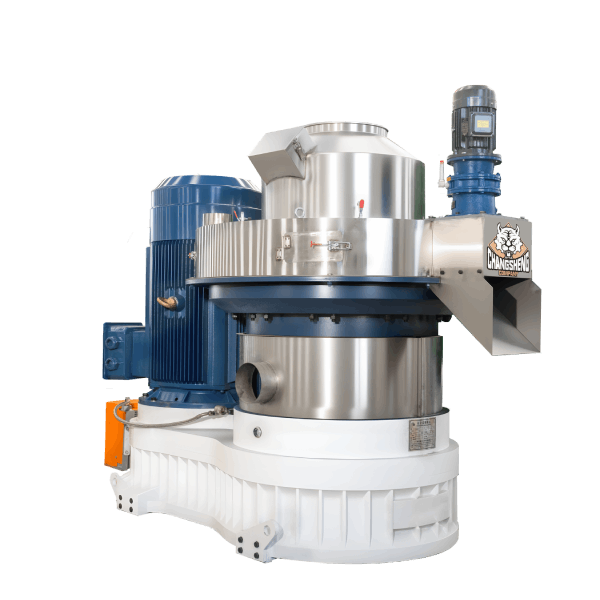
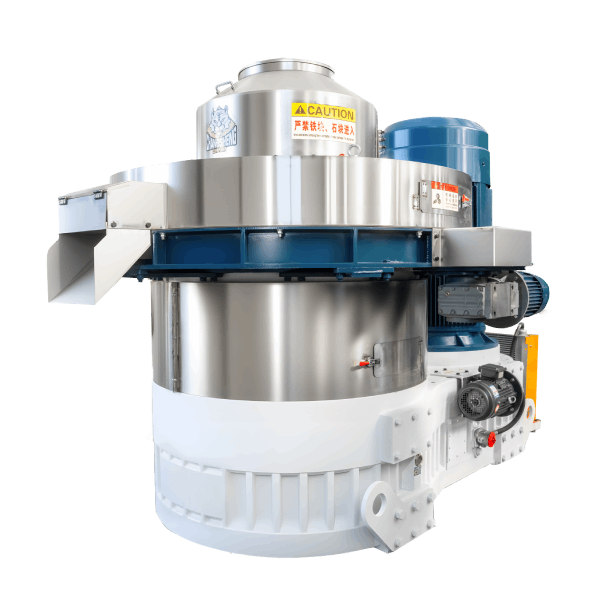
Pellet Mill Export Price List: Complete Cost Guide for Buyers
News 2026-07-16
Page SEO Summary: This procurement guide helps buyers understand pellet mill export pricing from China—covering key cost drivers, typical price ranges, hidden costs, and strategies for evaluating supplier quotations against industry benchmarks.
A procurement manager receives two quotations for a pellet mill. One is $35,000. The other is $58,000. Both suppliers claim to offer the same capacity and quality. Which one is the better value? Or is there a hidden cost in the lower price—or a hidden value in the higher one?
Understanding the pricing of industrial pellet mills is one of the most important—and most challenging—aspects of international procurement. Export prices vary significantly based on a range of factors: equipment configuration, component quality, manufacturing location, volume discounts, and the scope of supply. Without a clear understanding of what drives price, buyers risk either overpaying or making decisions based on incomplete information.
This guide provides procurement professionals with a comprehensive framework for understanding pellet mill export pricing—from the key cost drivers to price range benchmarks, and from hidden costs to effective comparison strategies.
Why Pellet Mill Export Prices Vary
Pellet mill export prices from China can vary by 40-60% for what appears to be similar equipment. Understanding the factors behind this variation is the first step toward making informed procurement decisions.
Primary Price Determinants
| Factor | Impact on Price | Degree of Impact |
|---|---|---|
| Equipment specifications | Higher capacity, more features = higher price | High |
| Component quality | Premium brands (SKF, ABB, Siemens) add cost | High |
| Manufacturing capability | Integrated manufacturing vs. assembly | Moderate-High |
| Scope of supply | Equipment only vs. complete package | High |
| Customization level | Standard vs. custom configurations | Moderate |
| Order quantity | Volume discounts for bulk orders | Moderate |
| Market conditions | Supply/demand dynamics | Moderate |
| Supplier positioning | Premium vs. value market position | Moderate |
| Geographic location | Coastal vs. inland manufacturing | Low-Moderate |
| Currency fluctuations | Exchange rate impacts | Variable |
Key Price Drivers in Detail
1. Equipment Specifications
The most fundamental price driver is what the machine actually does and how big it is.
| Specification | Price Impact | Typical Range |
|---|---|---|
| Capacity (t/h) | Significant | 2-5 t/h = base; 5-10 t/h = moderate; 10-15 t/h = premium |
| Motor power | Direct correlation | Higher kW = higher price |
| Die diameter | Direct correlation | Larger dies cost more |
| Feature set | Moderate | Basic vs. automatic systems |
2. Component Quality
The brands and grades of key components significantly affect price and machine longevity.
| Component Category | Low-End (Price Impact) | Premium (Price Impact) |
|---|---|---|
| Bearings | Chinese brands (base) | SKF, FAG, NSK (+15-25%) |
| Gearbox | Standard gears (base) | Hardened precision gears (+10-20%) |
| Motor | Chinese standard (base) | ABB, Siemens, WEG (+10-25%) |
| Control system | Basic pushbutton (base) | PLC + touch screen (+10-25%) |
| Die material | Standard alloy (base) | Premium alloy (+5-15%) |
3. Scope of Supply
What is included in the quoted price can be one of the largest sources of price differences.
| Included Item | Impact | Importance |
|---|---|---|
| Pellet mill unit | Base equipment | Essential |
| Motor | Optional inclusion | Very important |
| Starter/control panel | Optional inclusion | Very important |
| Die and rollers | Often included (single set) | Important |
| Spare parts kit | Optional | Moderate |
| Installation supervision | Optional | High-value service |
| Commissioning support | Optional | High-value service |
| Training | Optional | Moderate |
| Shipping (FOB vs. CIF) | Significant price impact | Very important |
Price Range Reference: Typical Export Price Levels
The following ranges represent typical FOB prices (in USD) from Chinese manufacturers for new industrial pellet mills as of current market conditions. These are indicative ranges only—actual prices vary based on specifications, quality, and market conditions.
Pellet Mill Only (Basic Equipment)
| Capacity Range | Motor Power | Typical Price Range (FOB USD) | Application |
|---|---|---|---|
| 1-2 t/h | 22-37 kW | $18,000 – $35,000 | Small feed mills; pilot plants |
| 2-4 t/h | 37-55 kW | $25,000 – $45,000 | Mid-size feed production |
| 4-6 t/h | 55-75 kW | $35,000 – $55,000 | Commercial feed mills |
| 6-8 t/h | 75-90 kW | $45,000 – $70,000 | Large feed operations |
| 8-10 t/h | 90-110 kW | $55,000 – $85,000 | Industrial-scale production |
| 10-12 t/h | 110-132 kW | $70,000 – $105,000 | High-capacity industrial |
| 12-15 t/h | 132-160 kW | $85,000 – $130,000 | Large-scale industrial |
Note on Price Ranges:
These ranges reflect significant variation within each capacity tier. The lower end typically includes standard components and basic controls; the higher end reflects premium components, better control systems, and more comprehensive documentation and support. A machine with higher prices at the high end of the range should deliver significantly better quality, reliability, or included services.
Complete Line Configuration (With Hammer Mill and Cooler)
| Capacity | Typical Price Range (FOB USD) | Included Equipment |
|---|---|---|
| 2-4 t/h line | $45,000 – $80,000 | Hammer mill + Pellet mill + Cooler + Basic conveying |
| 4-6 t/h line | $70,000 – $120,000 | Hammer mill + Pellet mill + Cooler + Conveying + Controls |
| 6-8 t/h line | $100,000 – $170,000 | Full line with automation |
| 8-10 t/h line | $130,000 – $220,000 | Complete industrial line |
| 10-12 t/h line | $170,000 – $280,000 | High-capacity industrial line |
Turnkey Plant Pricing
For complete turnkey plants, prices vary significantly based on scope, automation level, and building requirements. General guidance:
| Plant Size | Typical Price Range (Full Turnkey) |
|---|---|
| 1-2 t/h | $250,000 – $500,000 |
| 2-5 t/h | $500,000 – $1,200,000 |
| 5-10 t/h | $1,200,000 – $3,000,000 |
| 10-15 t/h | $3,000,000 – $6,000,000+ |
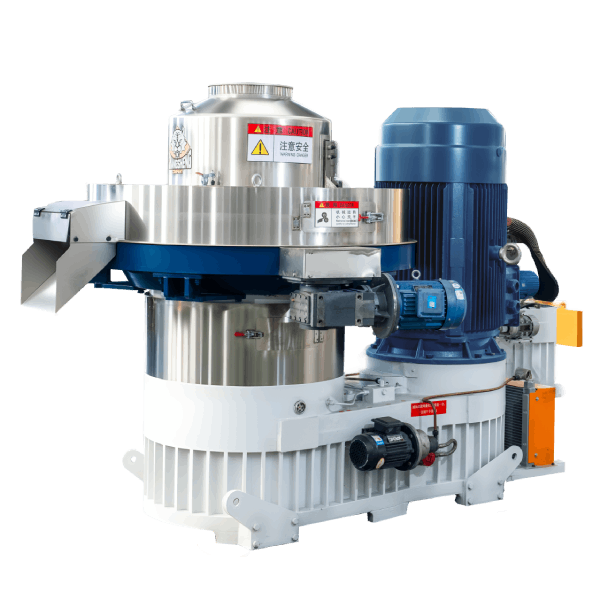
Price Composition: What Is—and Isn’t—Included
Understanding what is included in a quoted price is essential for accurate comparison.
What Is Typically Included in FOB Price
| Item | Included? | Notes |
|---|---|---|
| Equipment itself | Yes | Main machine plus standard components |
| Standard accessories | Usually | Feeder, starter panel, one die, one set rollers |
| Packaging for export | Usually | Standard export packing |
| Factory testing | Usually | Quality control and basic performance testing |
| Technical documentation | Usually | Basic operation and maintenance manuals |
| Standard warranty | Usually | Typically 12-24 months coverage |
What Is Typically NOT Included
| Item | Typically Not Included | Notes |
|---|---|---|
| Ocean freight | No | Negotiated separately (FOB basis) |
| Insurance | No | Need to arrange or add to CIF price |
| Installation | No | May be quoted separately |
| Commissioning | Often not included | May be quoted separately |
| Training | Often not included | May be quoted separately |
| Customs duties | No | Buyer’s responsibility in destination country |
| Import clearance | No | Buyer’s responsibility |
| Inland transport (destination) | No | Buyer’s responsibility |
| Foundation and civil work | No | Buyer’s responsibility |
| Utility connection | No | Buyer’s responsibility |
| Additional dies and rollers | No | Ordered as spare parts |
Additional Costs to Include in Budget
When building a complete project budget, include the following cost categories in addition to the equipment price.
Logistics Costs
| Cost Component | Typical Range (as % of equipment cost) | Notes |
|---|---|---|
| Ocean freight | 5-15% | Depends on volume, weight, destination |
| Insurance | 1-2% | Typically 110% of shipment value |
| Inland China transport | 1-3% | Factory to port |
| Import customs duties | Varies by country | Depends on tariff classification |
| VAT / import taxes | Varies by country | Significant variable |
| Port handling and clearance | 1-5% | Depends on destination port |
Installation and Commissioning Costs
| Cost Component | Typical Range | Notes |
|---|---|---|
| Installation labor (supervision) | Equipment cost: 3-8% | If supplier provides supervision only |
| Installation labor (full) | Equipment cost: 8-15% | If supplier provides full installation team |
| Commissioning | Equipment cost: 2-6% | For on-site startup and testing |
| Civil work and foundations | Varies widely | Site-specific |
| Electrical installation | Varies widely | Site-specific |
Operating Cost Considerations
| Cost Item | Typical Annual Cost (for 10 t/h) | Impact |
|---|---|---|
| Die replacement | $2,000 – $6,000 | Significant |
| Roller shell replacement | $1,500 – $4,000 | Significant |
| Bearings and belts | $500 – $2,000 | Moderate |
| Energy consumption | $10,000 – $30,000+ | Very significant |
| Maintenance labor | $2,000 – $8,000 | Moderate |
Price vs. Quality: Finding the Right Balance
The relationship between price and quality is not always linear. Some suppliers offer good value—reasonable price with acceptable quality. Others offer low price but poor quality. Still others offer premium price for moderate quality.
Quality Indicators at Different Price Levels
| Price Level | Typical Quality | Indicators | Recommended For |
|---|---|---|---|
| Below market average | Variable to low | Generic components; unclear component brands; limited warranty | Low-budget; non-critical applications |
| Market average | Good | Recognizable component brands; standard warranty; reasonable technical documentation | Most industrial applications |
| Premium (+20-40%) | Superior | Premium components (SKF, ABB); comprehensive warranty; excellent documentation | Critical applications; 24/7 operation |
| Very premium (+50%+) | Excellent | All premium components; strong engineering support; full integration | Very demanding applications; high automation |
Risk vs. Price Matrix
| Approach | Price Risk | Quality Risk | Time Risk | Overall Risk |
|---|---|---|---|---|
| Lowest price | Low | High | High | High |
| Market average | Medium | Low-Medium | Medium | Low-Medium |
| Premium price | High | Low | Low | Low |
Procurement Recommendation: For critical production applications where downtime is expensive, avoid the lowest-priced options. The potential savings on initial price are often outweighed by higher operating costs and downtime risks.
Supplier Comparison Strategy
How to Compare Quotations Effectively
When comparing quotations from different suppliers:
| Step | Action |
|---|---|
| 1 | Normalize to same delivery basis (all FOB or all CIF) |
| 2 | Verify scope of supply—what is included? |
| 3 | Check component brands—are they equivalent? |
| 4 | Compare warranty terms and exclusions |
| 5 | Assess documentation and support quality |
| 6 | Calculate total delivered cost (equipment + logistics + installation) |
| 7 | Consider total cost of ownership over 5 years |
| 8 | Evaluate supplier quality indicators |
Common Pricing Pitfalls
| Pitfall | Why It Happens | How to Avoid |
|---|---|---|
| Lower price = better deal | Quality differences are hidden | Check component brands and specifications |
| Ignoring freight differentials | Different suppliers quote different basis | Normalize all to FOB or CIF for comparison |
| Missing hidden exclusions | Some items not explicitly stated | Request clear inclusion/exclusion list |
| Overlooking warranties | Different warranty terms | Compare warranty duration and coverage |
| Not considering spare parts | Initial price excludes consumables | Request spare parts pricing with quote |
Procurement Checklist: Understanding Export Pricing
Pre-Price Analysis
- Define equipment capacity required
- Identify target component quality level
- Determine scope of supply needed (equipment only vs. complete)
- Establish shipping destination for freight estimates
- Understand import duties and taxes in your country
- Prepare budget range based on project financing
During Quotation Analysis
- Confirm delivery basis (FOB/CIF)
- Review included components and options
- Identify exclusions explicitly
- Check component brands specified
- Verify warranty terms
- Note quotation validity period
After Quotation Analysis
- Normalize prices to common basis
- Add logistics and import costs
- Estimate installation and commissioning costs
- Calculate total delivered cost
- Estimate 5-year total cost of ownership
- Document assumptions for each supplier
- Prepare for negotiation with clear benchmarks
Frequently Asked Questions
1. Why do pellet mill export prices vary so much from different suppliers?
Prices vary due to differences in component quality (motor, bearing, gearbox brands), manufacturing costs, scope of supply, and supplier market positioning. A $35,000 and a $58,000 machine with similar capacity may differ significantly in component quality and long-term reliability.
2. What is the typical price range for a standard 5-7 t/h pellet mill from China?
A standard configuration 5-7 t/h pellet mill typically ranges from $35,000 to $55,000 FOB China. This is for the pellet mill unit with standard components. A complete line with hammer mill and cooler adds significantly to the total cost.
3. What does FOB price mean for pellet mills?
FOB (Free On Board) means the price includes the cost of the equipment and export packaging, but does not include ocean freight, insurance, or destination-side charges. The buyer is responsible for shipping from the Chinese port.
4. How much does shipping a pellet mill cost?
Ocean freight typically ranges from 5-15% of the equipment cost, depending on destination, volume, and weight. For a medium-sized pellet mill to Europe or North America, freight costs may range from $1,500 to $5,000.
5. Should I accept the lowest price quotation?
Not necessarily. The lowest price may reflect lower quality components, less comprehensive support, or hidden exclusions. Evaluate the total value—including component quality, warranty, and supplier support—not just the price.
6. How much should I budget for installation and commissioning?
For a pellet mill only, installation and commissioning typically adds 5-15% to the equipment cost. For a complete line, installation and commissioning costs can be 10-20% of the total equipment cost.
7. What is the most significant hidden cost in pellet mill procurement?
The most significant hidden cost is often the price of wear parts (dies and rollers) over the machine’s life, along with energy consumption. These operating costs often exceed the initial purchase price within 2-3 years of operation.
8. Can I negotiate the price with a Chinese pellet mill supplier?
Yes. Negotiation is normal and expected in Chinese business culture. Focus negotiations on value—extended warranty, better payment terms, included spare parts, or improved component quality—rather than just price reduction.
About the Author
Zhang Wei – Senior International Sales Engineer, Shandong Changsheng Machinery Co., Ltd.
Zhang Wei has over 12 years of experience in the biomass and feed pellet mill industry, with a background in mechanical engineering and international project execution. He has managed pellet mill supply projects for clients across Southeast Asia, the Middle East, Africa, Europe, and Latin America, with extensive experience in pricing, negotiation, and export documentation.
With hands-on experience in both the manufacturing workshop and client-side operations, Zhang brings practical insights into successful equipment procurement—from the factory floor to the customer’s production site.