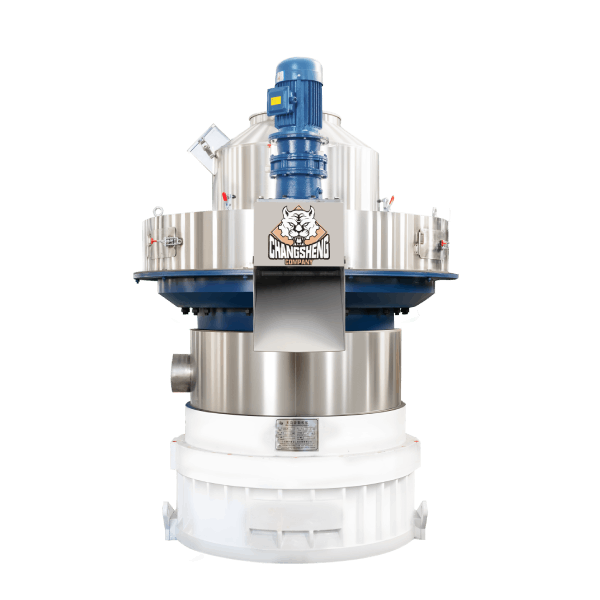
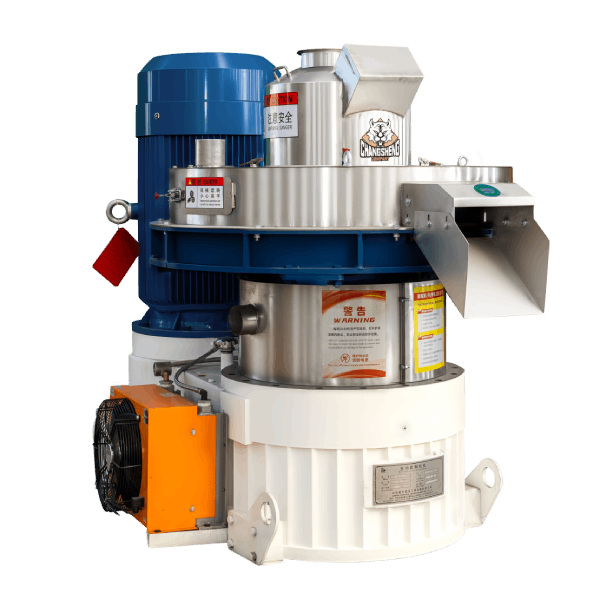
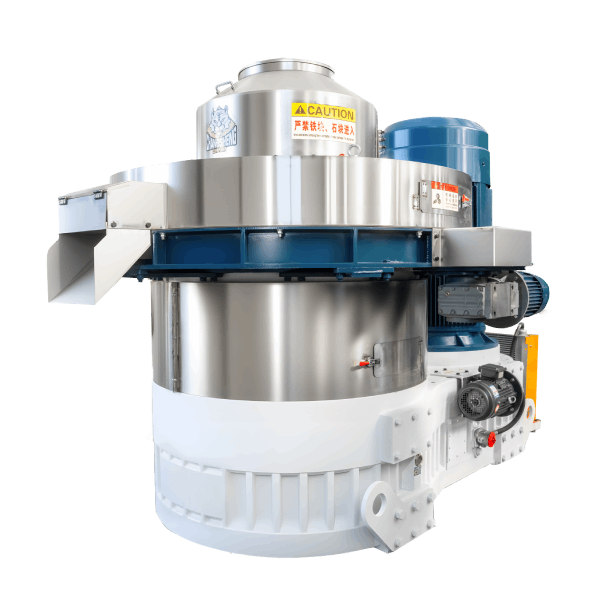
Wood Chipper for Pellet Production 1-10t/h | Equipment Guide
News 2026-06-24
Product Definition
A wood chipper for pellet production is a mechanical size-reduction system that converts logs, branches, and wood waste into uniform wood chips with dimensions suitable for further grinding and pelletising. The chipping process is the first stage in the wood pellet production line, reducing raw material volume and preparing feedstock for hammer mill processing.
Technical Specifications & Performance Parameters
| Parameter | Value Range / Specification |
|---|---|
| Throughput capacity | 1.0 – 10.0 t/h (green wood, feedstock-dependent) |
| Main motor power | 30 – 160 kW (IE3 compatible) |
| Rotor diameter | 400 – 800 mm |
| Rotor speed | 400 – 800 rpm |
| Disc/rotor thickness | 40 – 80 mm |
| Input material diameter (max) | 150 – 400 mm |
| Output chip size | 5 – 30 mm (adjustable via screen/counter-knife) |
| Knife count (rotor) | 2 – 8 knives (depending on model) |
| Raw material moisture | 15% – 55% (acceptable) |
| Optimal moisture for pellet line | 15% – 25% (chipping stage) |
| Specific energy consumption | 5 – 15 kWh/t (green wood) |
| Knife service life (between sharpening) | 80 – 200 hours |
| Wear parts service life | Knives: 500 – 1,200 h; Anvil: 1,000 – 2,000 h |
| Scheduled maintenance man-hours | 3 – 5 h / week (knife inspection/sharpening) |
Structural Composition & Material Selection
The wood chipper for pellet production integrates four functional subsystems with defined material grades:
Mechanical System
- Rotor/disc: Heavy-duty steel construction, dynamically balanced to ISO 1940 G6.3
- Cutting knives: High-speed steel (HSS) or tungsten carbide-tipped, HRC 58–62
- Counter-knife (anvil): Hardened alloy steel, replaceable wear surface
- Rotor shaft: Heat-treated 42CrMo4 steel with induction-hardened journals
- Bearing housing: Ductile cast iron (QT600-3) with heavy-duty spherical roller bearings
Feed System
- Feed hopper: Steel plate (6–10mm) with optional hydraulic feed rollers
- Feed roller drive: Hydraulic motor or gear motor with variable speed control
- Anti-jam system: Pressure-controlled reversal mechanism
Support System
- Base frame: Welded structural steel, stress-relief annealed, with vibration-damping mounts
- Discharge chute: Steel plate with rubber lining (optional) for noise reduction
Lubrication System
- Grease lubrication for bearings (NLGI grade 2)
- Optional automatic lubrication system for continuous operation
Control System
- PLC with HMI touchscreen for process monitoring
- Motor overload protection and bearing temperature monitoring
- Amperage monitoring for jam detection
Manufacturing Process – Engineering Workflow
Step 1 – Raw Material Receiving & Sorting
Logs and branches received at facility. Sorting removes material exceeding max diameter (150–400mm). Metal detector eliminates tramp metal.
Step 2 – Chipping (Core Reduction Process)
Material fed into chipper via feed hopper (gravity or hydraulic feed). Rotor with knives rotating at 400–800 rpm chips material against fixed anvil. Adjustable knife clearance controls chip size (5–30mm). High-inertia rotor maintains speed under varying load.
Step 3 – Chip Screening & Recirculation
Vibrating or drum screener classifies chips: oversize (>30mm) recirculated to chipper; accept size (5–30mm) conveyed to dryer or storage; fines (<5mm) removed for dust collection.
Step 4 – Chip Storage (Buffer System)
Screened chips stored in silo or open pile with moisture management. Chip pile monitored for spontaneous combustion risk (critical if storage >7 days).
Step 5 – Transport to Drying/Grinding
Chips conveyed via belt conveyor or pneumatic system to dryer (for moisture >25%) or directly to hammer mill (for moisture <25%). Chip size 5–30mm suitable for hammer mill intake.
Industry Comparison – Pellet Line Chipping Options
| Equipment Type | Capacity (t/h) | Chip Size Range | Power (kW) | Typical Application |
|---|---|---|---|---|
| Wood Chipper for Pellet Production | 1.0 – 10.0 | 5 – 30mm | 30 – 160 | Industrial pellet lines |
| Drum Chipper | 2.0 – 20.0 | 10 – 40mm | 55 – 300 | Large-scale biomass processing |
| Disc Chipper | 0.5 – 8.0 | 3 – 25mm | 22 – 132 | Medium-scale, uniform chips |
| Hammer Mill (direct) | 0.3 – 3.0 | Dust – 6mm | 30 – 110 | Small lines, single-stage |
| Chainsaw/Manual | 0.1 – 0.5 | Variable | 2 – 5 kW | Very small, farm-scale |
Differentiation (Shandong Changsheng Machinery):
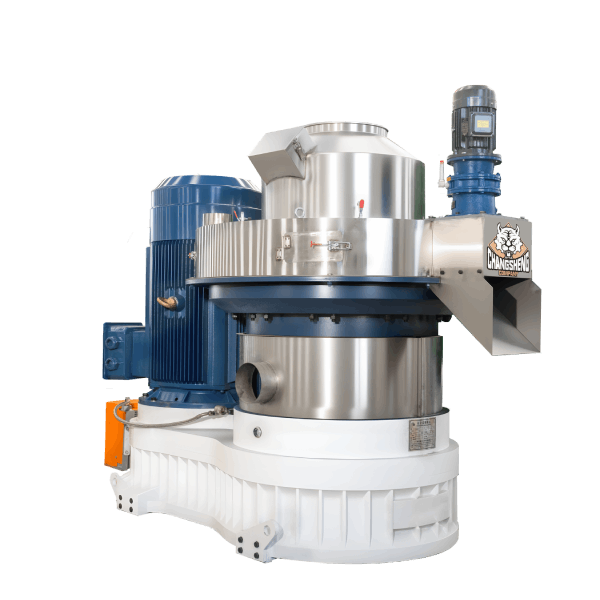
Our wood chipper features a high-inertia rotor with replaceable tungsten-carbide knives – providing consistent chip size with reduced knife wear. The hydraulic feed system with anti-jam technology prevents downtime from log jams. The heavy-duty design handles green and dry wood up to 55% moisture, making it suitable for diverse biomass sources. Compared to alternative feeding methods, our chippers reduce maintenance by 30%–50%.
Application Scenarios by Buyer Role
Distributors / Importers
Focus on chipper capacity for containerised shipping and local log sizes. Require knife replacement and wear part availability for customer support.
EPC Contractors
Integrating the chipper into complete pellet production lines. Need chip size control for dryer and hammer mill compatibility. Require layout drawings for material flow design.
Engineering Consultants / Technical Advisors
Evaluate chipper suitability for feedstock type and moisture. Require energy consumption and maintenance data for plant operational cost analysis.
End-user Production Facilities
Operating pellet plants with varied wood feedstocks (softwood, hardwood, mixed). Demand consistent chip size with minimal downtime for knife changes.
Core Pain Points & Engineering Solutions
Pain Point 1 – Inconsistent chip size causing dryer and mill issues
Root cause: Knife wear or improper knife clearance leads to oversized chips and fines – affecting dryer efficiency and mill throughput.
Solution: Adjustable knife clearance with fixed anvil ensures consistent 5–30mm chips. Tungsten-carbide knives maintain sharpness 3–5× longer than HSS.
Pain Point 2 – High knife wear and frequent replacement
Root cause: Processing dirty wood with embedded sand, stones, or high silica content accelerates knife wear.
Solution: Tungsten-carbide knives extend service life 300–500 hours between replacement. Install metal detector and magnetic separator upstream.
Pain Point 3 – Log jams causing production stoppage
Root cause: Oversized logs or irregular shapes jam the rotor, causing motor overload trips.
Solution: Anti-jam technology with hydraulic feed roller reversal clears jams automatically. Amperage monitoring slows feed rate at high load.
Pain Point 4 – Excessive fines reducing pellet quality
Root cause: Improper knife clearance or worn knives produce fines (<5mm) that create dust during conveying and storage.
Solution: Maintain knife clearance at 0.3–0.8mm (gap setting). Install screener with recirculation of oversize. Fines can be sold as mulch or combusted.
Critical Risk Warnings & Mitigation Measures
Risk 1 – Fires in chip storage piles
Mitigation: Monitor pile temperature weekly. Limit chip pile depth to 3–4 metres. Rotate inventory (FIFO). Maintain minimum 30m distance to structures. Install fire suppression.
Risk 2 – Knife ejection or failure
Mitigation: Use retaining bolts with anti-loosening compounds. Torque knives to manufacturer specification. Inspect bolts weekly. Replace cracked knives immediately.
Risk 3 – Rotor imbalance from uneven knife wear
Mitigation: Replace knives in matched sets (all knives simultaneously). Balance rotor after knife replacement. Monitor vibration monthly.
Procurement Selection Guide – 7 Executable Steps
Step 1 – Analyse your available wood feedstock
Identify species (softwood or hardwood), diameter range (max 400mm), moisture content (15%–55%), and contamination level (sand, stones). Select chipper capacity and knife type accordingly.
Step 2 – Determine required throughput capacity
Chiplayer capacity must exceed pellet mill capacity by 20%–30% to allow for downtime (maintenance, sharpening). For 2.0 t/h pellet output, specify 2.5–3.0 t/h chipper.
Step 3 – Select chip size specification
Target chip size for pellet production: 5–30mm. 10–20mm ideal for efficient drying and grinding. Specify screen/perforated discharge.
Step 4 – Choose feed system type
Gravity feed for clean, consistent feedstock. Hydraulic feed for variable logs and anti-jam capability. Disc feed for space-constrained facilities.
Step 5 – Evaluate knife replacement cost
Tungsten-carbide knives (higher initial cost, 3–5× longer life) vs HSS (lower initial cost, more frequent replacement). Calculate lifecycle cost.
Step 6 – Assess power supply capacity
Chipper motor power 30–160kW. Verify site transformer capacity (minimum 1.5× motor kVA). Consider soft-start for large chippers.
Step 7 – Plan for dust and noise control
Specify dust collection at discharge. Consider sound enclosure for chipper (90–105 dB(A) typical). Comply with local environmental regulations.
Engineering Case Study – Wood Pellet Plant in Finland
Project Background
A Finnish wood pellet plant processes 4.5 t/h of spruce and pine logs (200–350mm diameter, 40%–50% green moisture). Existing hammer mill struggled with whole logs.
Initial Problem
Direct hammer mill feeding of whole logs caused excessive wear, high energy consumption (25–30 kWh/t), and frequent screen tear. Target chip size was inconsistent, affecting dryer efficiency.
Root Cause Analysis
No primary size reduction stage. Hammer mills require chip size <20mm for efficient operation. Whole logs (200–350mm) caused impact damage and overload.
Solution Implemented
Installed Shandong Changsheng wood chipper (4–6 t/h, 90kW, tungsten-carbide knives, hydraulic feed). Chips screened: accept 10–30mm to dryer, oversize recirculated.
Final Data Results (12-month average)
| Metric | Before (Direct Hammer Mill) | After (Chipper + Hammer Mill) |
|---|---|---|
| Specific energy (chipping + grinding) | 28 kWh/t | 16 kWh/t (-43%) |
| Hammer mill screen life | 120 h | 450 h (+275%) |
| Dryer efficiency | 72% | 88% |
| Pellet output quality | Inconsistent | Consistent |
| Annual energy savings (4,000h) | – | $14,400 |
Frequently Asked Questions (FAQ)
1. What size wood does a chipper for pellet production handle?
Input log diameter up to 150–400mm depending on model. Output chip size 5–30mm (adjustable).
2. What is the ideal chip size for pellet production?
10–20mm ideal for drying and hammer mill processing. Acceptable range: 5–30mm.
3. Can the chipper process green (wet) wood?
Yes – green wood up to 55% moisture. Green wood chips require drying before pelletising.
4. What is the difference between a disc chipper and a drum chipper?
Disc chipper – rotating disc with knives mounted radially. Produces uniform chips. Drum chipper – rotating drum with knives mounted peripherally. Higher capacity but less uniform.
5. What type of knives are recommended?
Tungsten-carbide tipped knives for high silica/hardwood applications. HSS knives for clean softwood (lower cost).
6. How often do knives need replacement?
Tungsten-carbide: 300–500 hours between replacement. HSS: 80–200 hours. Knife life depends on feedstock contamination.
7. What is the energy consumption of a wood chipper?
5–15 kWh/t for green wood. Higher for dry/hard hardwood due to increased friction.
8. Do I need a chip screener after the chipper?
Yes – a screener separates fines (<5mm) and oversize (>30mm). Oversize recirculates to chipper.
9. Can I process branches and logging residues?
Yes – if branch diameter is within chipper capacity. Multiple feed systems available for irregular material.
10. What is the safety requirement for a wood chipper?
Feed hopper interlock prevents access to rotating knives. Emergency stop. No operator access to feed opening during operation.
11. What maintenance is required?
Weekly: Knife inspection and sharpening (if worn). Monthly: Bearing lubrication, belt tensioning, vibration check. Annually: Full knife replacement, rotor balance check.
12. Can the chipper be used for other biomass?
Yes – suitable for eucalyptus, poplar, pine, spruce, and other biomass. Contact factory for specific material testing.
Author & E-E-A-T Credentials
Author: Dr. Chen Wei
Title: Senior Mechanical Engineer, Pelletising Systems Division
Experience: 14 years in biomass densification and feed processing equipment design
Notable Projects:
- Commissioned 12 wood chipping systems for pellet production across Finland, Canada, and Brazil (2017–2025)
- Developed knife wear optimisation protocol for high-silica feedstocks
- Co-author of “Industrial Pellet Mill Maintenance and Optimisation” (Engineering Press, 2022)
Affiliation: Shandong Changsheng Machinery Co., Ltd.