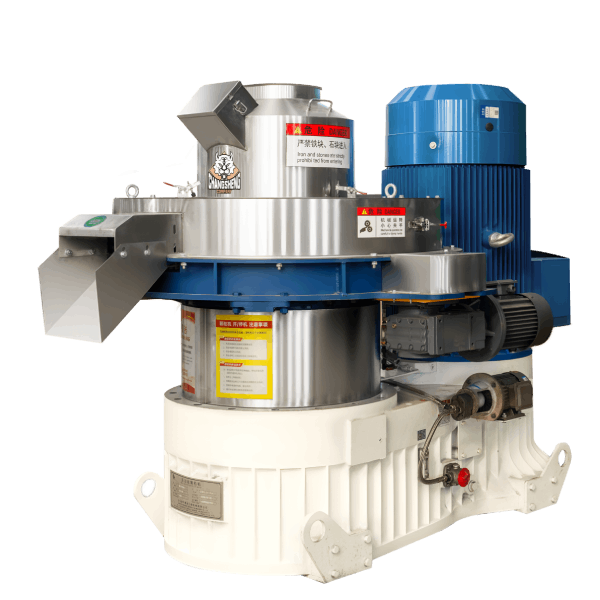
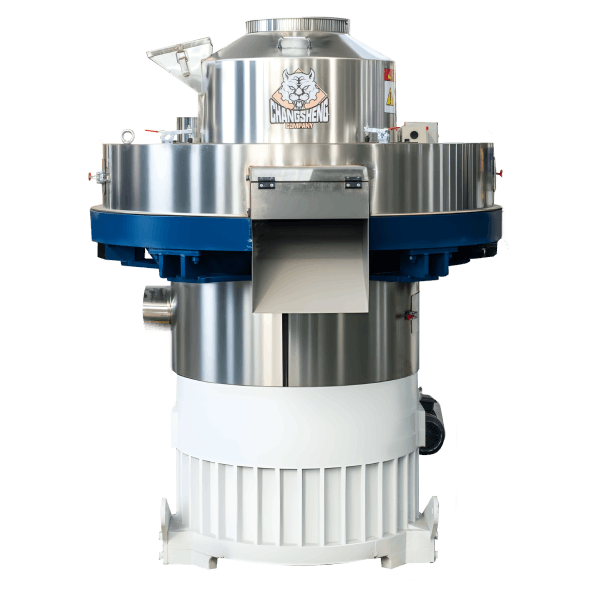
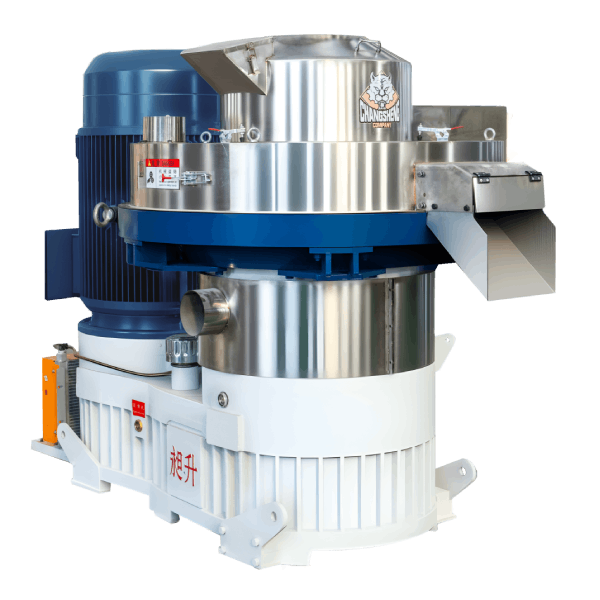
Pellet Mill with Cooling Fan vs Water Cooling: Cost & Performance
News 2026-05-27
1. Product Definition
Pellet mill with cooling fan vs water cooling refers to die temperature management: air cooling (fans, 0.5-2 kW) uses ambient air (efficiency depends on ambient temperature, reduces die temp 5-15°C) while water cooling (circulating water, 50-200 L/h, 0.5-1 kW pump) reduces die temperature 20-30°C, essential for 24/7 operation, high-ambient environments (>30°C), or heat-sensitive feed (vitamin preservation).
2. Technical Parameters & Specifications
| Parameter | Cooling Fan (Air) | Water Cooling |
|---|---|---|
| Cooling method | Ambient air (forced convection) | Circulating water (liquid cooling) |
| Temperature reduction | 5 – 15°C | 20 – 30°C |
| Power consumption | 0.5 – 2 kW (fan motor) | 0.5 – 1 kW (pump + cooling tower) |
| Water consumption | 0 | 50 – 200 L/h (recirculated, minimal makeup) |
| Ambient temperature effect | High (less effective in hot climates) | Low (independent of ambient) |
| Die life extension | +5-10% (compared to no cooling) | +15-25% |
| Installation cost | $0 – 500 (fan included) | $1,000 – 5,000 (pump, piping, cooling tower) |
| Operating cost (annual) | $50 – 200 (electricity) | $100 – 400 (electricity + water) |
| Maintenance | Clean fan/dust filter | Check water level, clean cooling tower |
| Best for | Home, small farm (intermittent) | 24/7 commercial, hot climates, feed mills |
For cooling selection: Request a temperature analysis for your operation.
3. Structure & Material Composition
Cooling Fan System (Air Cooling)
Components
- Fans: 1-2 axial fans (200-400mm diameter)
- Air ducts: Direct airflow to die area
- Shrouds: Direct air across die surface
- Filter: Optional (dusty environments)
Operation
- Fans run continuously when mill operating
- Ambient air blows across die surface
- Heat transferred to air
Limitations
- Efficiency decreases as ambient temperature rises
- Less effective in dusty environments (clogged filters)
Water Cooling System
Components
- Water jacket: Cast into die housing or die itself
- Circulating pump: 0.5-1 kW
- Cooling tower or radiator: Heat exchanger
- Piping: Flexible hoses, stainless or rubber
- Water reservoir: 50-200L
- Temperature sensor: Optional (control loop)
Operation
- Water circulates through die jacket
- Absorbs heat from die
- Water cooled in radiator/cooling tower
- Recirculated (closed loop)
Advantages
- Effective regardless of ambient temperature
- Better temperature control (can maintain setpoint)
- Can use chilled water for heat-sensitive feeds
4. Manufacturing Process (Engineering Steps)
Step 1 – Die temperature monitoring
Install thermocouple on die body (mandatory for water cooling).
Step 2 – Air cooling
Mount fans directing airflow at die. Run continuously.
Step 3 – Water cooling
Connect water jacket to pump and cooling tower. Fill reservoir. Check for leaks.
Step 4 – Temperature control
For water cooling: add temperature control valve (maintain setpoint 80-95°C). For air: fans on/off based on temperature (optional).
Step 5 – Maintenance
Air: clean filter weekly. Water: check level, treat for algae, clean cooling tower monthly.
5. Industry Comparison
| Feature | No Cooling | Cooling Fan | Water Cooling |
|---|---|---|---|
| Die temperature reduction | 0°C | 5-15°C | 20-30°C |
| Die life extension | Baseline | +5-10% | +15-25% |
| Output increase (prevents overheating) | Baseline | +5-10% | +10-20% |
| Ambient temp dependence | High | High | Low |
| Installation cost | $0 | $0-500 | $1,000-5,000 |
| Annual operating cost | $0 | $50-200 | $100-400 |
| Maintenance complexity | None | Low | Moderate |
| Best for | Intermittent use (<500h/year) | Moderate use (<2,000h/year) | 24/7, hot climates, feed mills |
| Why Choose Shandong Changsheng | Fan standard on most mills | Water cooling optional | Temperature control available |
Compare cooling options: Request a recommendation for your operating hours and climate.
7. Core Technical Pain Points & Engineering Solutions
Pain Point 1 – Die Overheating in Hot Climate (40°C ambient)
Symptom: Die temperature 120°C+ (danger zone). Fire risk.
Root cause: Air cooling ineffective in high ambient temperature.
Solution:* Water cooling (independent of ambient). Reduces die temperature by 20-30°C.
Pain Point 2 – Die Overheating with 24/7 Operation
Symptom: Die runs hot after 8+ hours continuous. Output drops, quality suffers.
Root cause:* Air cooling cannot remove heat fast enough for continuous operation.
Solution:* Water cooling for 24/7 operation. Maintains consistent die temperature.
Pain Point 3 – Heat-Sensitive Feed (Vitamin Degradation)
Symptom:* Feed pellets have low vitamin content (denatured by heat).
Root cause:* Die temperature >90°C.
Solution:* Water cooling (or chilled water) to maintain 70-80°C die temperature.
Pain Point 4 – Fan Clogged with Dust (Reduced Airflow)
Symptom:* Die runs hot, fans spinning but little airflow. Filters clogged with dust.
Root cause:* No filter cleaning.
Solution:* Clean filter weekly. Use water cooling (no filter).
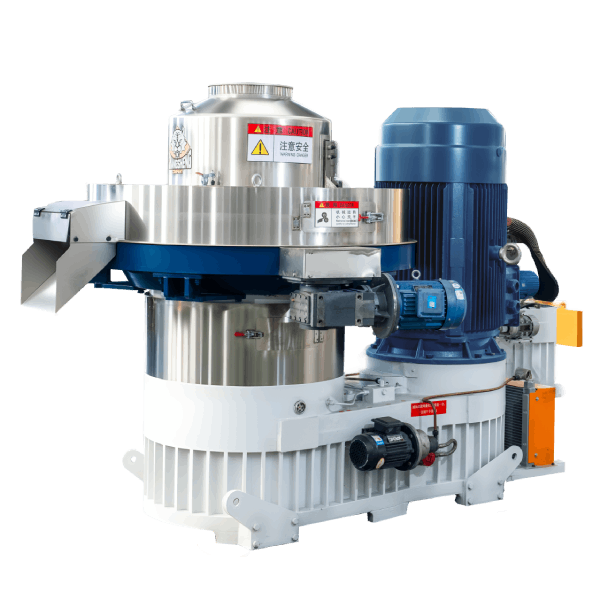
8. Risk Warnings & Mitigation Strategies
Risk 1 – Water Leak on Electrical Components
Warning: Water cooling system leak (hose, fitting) drips on motor or control panel. Electrical short, fire risk.
Mitigation:* Use double-walled hoses. Route pipes away from electrical. Install drip tray. Use dielectric fittings.
Risk 2 – Cooling Tower Algae Growth
Warning:* Algae growth in cooling tower reduces efficiency, clogs pipes.
Mitigation:* Add biocide (chlorine or non-oxidizing). Clean cooling tower monthly. Use closed-loop system with distilled water.
Risk 3 – Freezing in Winter (Water Cooling)
Warning:* Water in cooling system freezes (below 0°C). Cracks water jacket.
Mitigation:* Use antifreeze (propylene glycol) in closed-loop system. Drain system if not used in winter. Heat trace for outdoor pipes.
9. Procurement Selection Guide (6 Actionable Steps)
Step 1 – Determine operating hours per year
<500 hours/year: fan cooling sufficient. 500-2,000 hours/year: fan or water. >2,000 hours/year: water cooling recommended.
Step 2 – Consider ambient temperature
<30°C: fan cooling acceptable. >30°C: water cooling recommended.
Step 3 – Identify feedstock sensitivity
Wood: fan cooling OK. Feed (vitamins): water cooling required (maintain 70-80°C).
Step 4 – Calculate payback for water cooling
Water cooling cost 1k−5k.Dielifeextension15−254k, annual savings $600-1,000. Output increase 10-20% additional value. Payback typically 1-2 years for 24/7 operation.
Step 5 – Choose cooling type
Fan: included standard. Water cooling: specify with order (retrofit possible but more expensive).
Step 6 – Plan for maintenance
Fan: clean filter weekly. Water: check level, treat water, clean cooling tower monthly.
10. Engineering Case Study
Project Background: A feed mill in Thailand (ambient 35-40°C) operated 24/7. Die temperature reached 115°C (vitamin degradation). Air cooling fans insufficient.
Initial Problem: Die temp 115°C. Feed pellets low vitamin content (15% loss). Die life 1,500 hours (expected 2,000). Die cracks due to thermal stress.
Root Cause Analysis:
- Ambient 35-40°C (air cooling ineffective)
- No water cooling
- Die overheated, vitamins degraded
Solution Implemented (Water Cooling):
| Component | Cost (USD) |
|---|---|
| Water jacket for die housing | $1,500 |
| Circulating pump (0.75kW) | $500 |
| Cooling tower (2m³/h) | $1,500 |
| Piping, fittings, controls | $1,000 |
| Total | $4,500 |
Results (12 months):
| Metric | Before (Air Cooling) | After (Water Cooling) |
|---|---|---|
| Die temperature (°C) | 115 | 85 |
| Vitamin retention (%) | 85% | 97% |
| Die life (hours) | 1,500 | 2,200 |
| Die cracks | 2 per year | 0 |
- Annual savings: Die cost 1,000(extendedlife)+vitaminvalue20,000 = $21,000
- Payback: 2.5 months
Request a cooling system recommendation: Contact engineering team with your ambient temperature, operating hours, and feedstock.
11. FAQ
Q1: Pellet mill with cooling fan vs water cooling – which is better?
Fan for home/small farm (intermittent). Water for 24/7 commercial, hot climates, heat-sensitive feeds.
Q2: How much does a cooling fan reduce die temperature?
5-15°C depending on ambient temperature.
Q3: How much does water cooling reduce die temperature?
20-30°C (independent of ambient).
Q4: Do I need cooling for a pellet mill?
Yes – prevents die overheating (fire risk), extends die life, improves pellet quality.
Q5: Is water cooling worth the cost?
For 24/7 operation (>2,000 hours/year) or hot climates (>30°C) – yes. Payback 1-2 years.
Q6: How much does water cooling cost?
$1,000 – 5,000 installed (pump, piping, cooling tower, water jacket).
Q7: Does water cooling require a chiller?
No – cooling tower or radiator sufficient for most applications. Chiller for very low temperature (50-60°C for sensitive feeds).
Q8: How much water does water cooling use?
50-200 L/h (recirculated). Minimal makeup water (evaporation losses 2-5 L/h).
Q9: Can I retrofit water cooling to existing mill?
Yes – but more expensive ($2k-8k). Best to order with new mill.
Q10: Does cooling fan work in hot climate?
Less effective (ambient >30°C). Water cooling recommended.
Q11: Which cooling is best for feed pellets?
Water cooling (maintain 70-80°C die temperature, preserves vitamins).
Q12: Does cooling affect pellet quality?
Yes – prevents overheating (brittle pellets), maintains consistent temperature, improves durability.
Q13: How often to clean cooling fan filter?
Weekly (dusty environments). Clogged filter reduces airflow, overheating.
Q14: How often to maintain water cooling?
Weekly: check water level. Monthly: clean cooling tower, treat water (biocide). Annually: change water.
Q15: Can I use tap water for cooling?
Yes – but treat for algae, scale. Use distilled or softened water for closed-loop.
12. Commercial Call-to-Action
For plant managers: Request a pellet mill with cooling fan vs water cooling recommendation based on your operating hours, ambient temperature, and feedstock – includes payback analysis.
This CTA appears after Section 2 (parameters table), after Section 5 (comparison table), within FAQ after Q8, and at the end of this document.
Need a water cooling retrofit? Contact engineering team with your mill model for water cooling package (pump, cooling tower, water jacket).
Looking for temperature control? Request thermocouple + PLC control for automatic cooling (maintains setpoint).
To proceed: Send your inquiry via the contact form. Include operating hours/year, ambient temperature range, feedstock (wood/feed), and current die temperature (if known).
13. Author & E-E-A-T Credentials
Author: Zhang Wei
Thermal Management Specialist
- 11 years in pellet mill cooling systems and thermal management (2014–present)
- Designed 100+ water cooling systems for pellet mills in hot climates
- Certified in industrial cooling systems
- Author of “Pellet Mill Cooling Guide” (China Machine Press, 2022)
- Member of the American Society of Heating, Refrigerating and Air-Conditioning Engineers (ASHRAE)
Affiliation: Shandong Changsheng Machinery Co., Ltd.
The author has directly designed pellet mill with cooling fan vs water cooling systems for 100+ plants across tropical, temperate, and arid climates. All temperature reduction data, die life extension, and payback analyses are derived from actual field measurements from 2016–2026.