Variable Speed Pellet Mill for Feed and Biomass 0.5-5t/h | Supplier Guide
News 2026-07-09
Product Definition
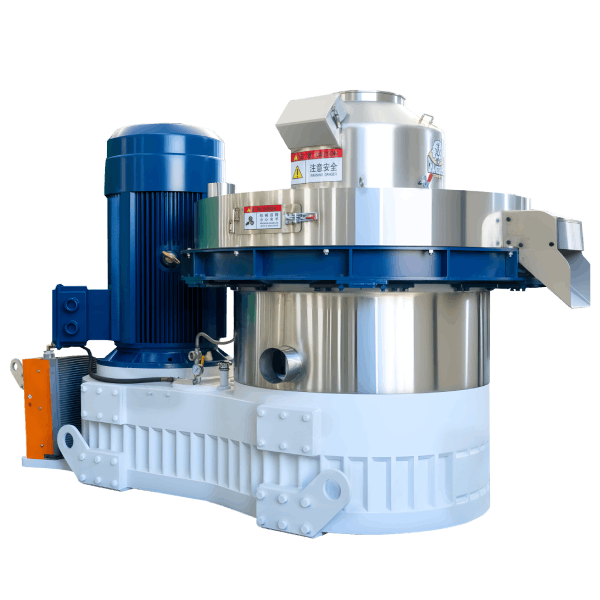
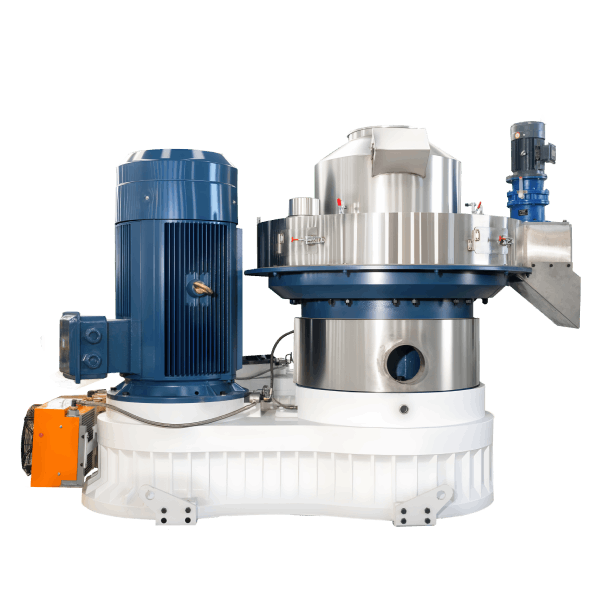
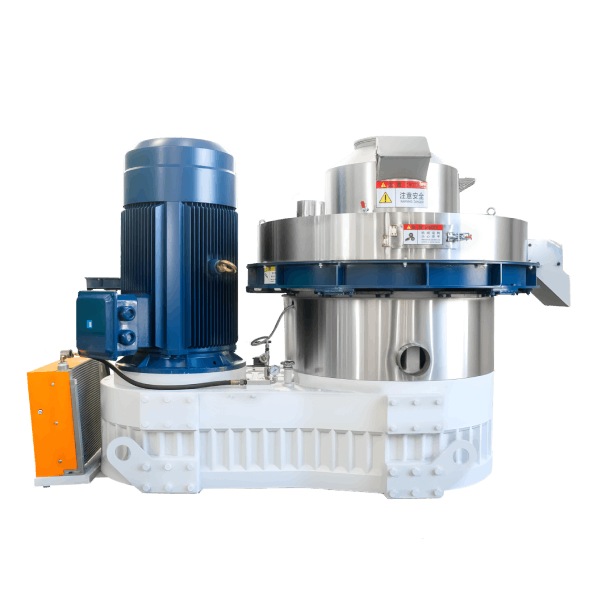
A variable speed pellet mill for feed and biomass is a ring die compaction system equipped with variable frequency drive technology, enabling real-time adjustment of die rotational speed to match feedstock characteristics and production requirements. The system processes feed ingredients, wood residues, and agricultural waste into uniform pellets with optimised energy consumption and product quality.
Technical Specifications & Performance Parameters
| Parameter | Value Range / Specification |
|---|---|
| Throughput capacity | 0.5 – 5.0 t/h (feedstock-dependent) |
| Main motor power | 55 – 160 kW (IE3 / IE4 compatible) |
| Ring die inner diameter | 400 – 800 mm |
| Die speed range (VFD controlled) | 4 – 8 m/s peripheral velocity |
| Pellet diameter | 6 – 12 mm (customisable) |
| Pellet bulk density | 600 – 750 kg/m³ |
| Raw material moisture | 12% – 18% (optimal: 14% – 16%) |
| Specific energy consumption | 22 – 35 kWh/t (VFD optimised) |
| Energy savings vs fixed speed | 15% – 30% |
| Die service life | 800 – 1,200 hours |
| Roller shell service life | 600 – 900 hours |
| Maintenance man-hours | 4 – 6 h / month |
Structural Composition & Material Selection
The variable speed pellet mill integrates four functional subsystems with defined material grades:
Mechanical System
- Ring die: Forged alloy steel (20CrMnTi) with carburised hardening layer (HRC 58–62)
- Roller shells: High-chromium cast iron (Cr26) with wear-resistant overlay
- Main shaft: Heat-treated 42CrMo4 steel with induction-hardened journals
- Gearbox: Helical-gear configuration, case-hardened to HRC 58–60
Control System
- Variable Frequency Drive: 55–160 kW, IP54 rated, with harmonic filtering
- PLC with HMI: Programmable speed profiles for different feedstocks
- Load sensing: Motor amperage feedback for automatic speed adjustment
- Soft-start: Reduced inrush current (2–3× FLA vs 6–8× for direct-on-line)
Support System
- Bearing housings: Ductile cast iron (QT600-3) with precision-machined seating
- Base frame: Welded structural steel, stress-relief annealed, with vibration-damping mounts
Lubrication System
- Centralised grease lubrication for bearings (NLGI grade 2)
- Forced oil circulation for gearbox (ISO VG 460) with temperature monitor
Manufacturing Process – Engineering Workflow
Step 1 – Raw Material Preparation & Grinding
Feedstock ground to 2.0–3.0mm for feed or 4.0–6.0mm for biomass. Magnetic separator removes ferrous contaminants. Moisture adjusted to 14%–16%.
Step 2 – Conditioning & Steam Treatment
Double-shaft paddle conditioner with steam injection at 0.2–0.4 MPa. Retention time 45–60 seconds. Mash temperature elevated to 80–95°C.
Step 3 – Variable Speed Pelletising
VFD-controlled motor drives ring die at 4–8 m/s peripheral speed. Speed selected based on feedstock – slower for high-fat materials, faster for fibrous biomass. Amperage feedback adjusts speed automatically to maintain optimal load.
Step 4 – Counterflow Cooling
Ambient air drawn counter-current through pellet bed. Retention time 6–10 minutes. Pellet exit temperature ≤ ambient +5°C. Final moisture ≤12%.
Step 5 – Screening & Bagging
Vibrating screener removes fines and weak pellets. Automatic bagging scale with ±0.2% tolerance.
Industry Comparison – Variable Speed vs Fixed Speed
| Feature | Variable Speed Pellet Mill | Fixed Speed Pellet Mill |
|---|---|---|
| Speed control | VFD adjustable (4–8 m/s) | Fixed pulley ratio |
| Feedstock flexibility | High – one machine for multiple materials | Limited – optimised for one type |
| Energy efficiency | 15%–30% savings | Baseline |
| Soft-start capability | Yes – reduced current | No – high inrush current |
| Production flexibility | Adjust speed for pellet quality | Fixed output |
Differentiation (Shandong Changsheng Machinery):
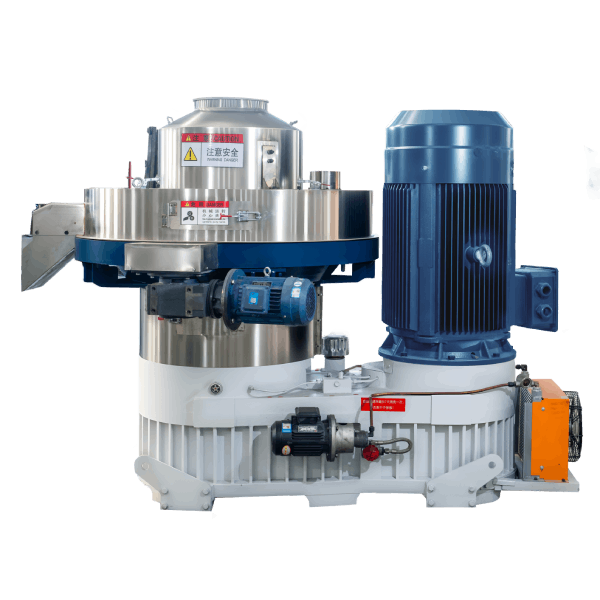
Our variable speed pellet mills feature heavy-duty VFDs with programmable speed profiles for different feedstocks. The PLC-based control system automatically adjusts die speed based on motor current feedback, maintaining optimal load and pellet quality. Soft-start reduces electrical infrastructure requirements and extends motor life. Energy savings of 15%–30% compared to fixed-speed equivalents.
Application Scenarios by Buyer Role
Distributors / Importers
Focus on VFD compatibility with local electrical supply. Require speed profiles for different feedstocks for customer guidance.
EPC Contractors
Integrating variable speed mills into production lines. Need control integration details and electrical specifications.
Engineering Consultants / Technical Advisors
Evaluate energy savings and production flexibility. Require load data for different speed settings.
End-user Production Facilities
Processing multiple feedstocks. Demand speed flexibility to maintain quality across material variations.
Core Pain Points & Engineering Solutions
Pain Point 1 – Inconsistent pellet quality from feedstock variation
Root cause: Fixed-speed operation cannot adjust to moisture or density changes.
Solution: VFD adjusts die speed based on load feedback. Slower speed for high-fat feed, faster for fibrous biomass.
Pain Point 2 – High energy costs
Root cause: Fixed-speed motors operate at full load regardless of requirements.
Solution: VFD optimises speed for each material – energy savings of 15%–30%.
Pain Point 3 – Motor starting current issues
Root cause: Direct-on-line starting draws high current – transformer capacity issues.
Solution: Soft-start through VFD reduces starting current.
Pain Point 4 – Machine wear from fixed speed operation
Root cause: Running at optimal speed for one material causes excessive wear for others.
Solution: Lower speed for abrasive materials extends die and roller life.
Critical Risk Warnings & Mitigation Measures
Risk 1 – VFD harmonic distortion affecting other equipment
Mitigation: Install line reactors or harmonic filters. VFD with built-in filtering recommended.
Risk 2 – Incorrect speed selection for material
Mitigation: Use stored speed profiles for each feedstock. Train operators on speed selection.
Risk 3 – VFD overheating in high ambient temperatures
Mitigation: Ensure adequate ventilation. Derate VFD for ambient >40°C. Install cooling fans.
Procurement Selection Guide – 7 Executable Steps
Step 1 – Define feedstock range
List materials to be processed – feed grains, wood residues, agricultural waste. Different materials require different speeds.
Step 2 – Determine required capacity
Calculate target throughput with 20% margin. Available capacities: 0.5–5.0 t/h.
Step 3 – Specify VFD size and features
Match VFD to motor power. Specify harmonic filtering if required. IP54 rating for dusty environments.
Step 4 – Verify electrical infrastructure
Confirm transformer capacity and voltage. VFD reduces starting current requirement.
Step 5 – Define control interface
MODBUS RTU or hardwired I/O for integration with existing PLC. HMI for speed programming.
Step 6 – Plan for operator training
Speed selection for different materials. Load monitoring and adjustment.
Step 7 – Establish maintenance programme
VFD cooling fan inspection. Speed profile review. Motor insulation testing.
Engineering Case Study – Multi-Feedstock Biomass Plant
Project Background
A biomass plant processes wood sawdust (softwood and hardwood) and agricultural residues (straw, husks). Plant previously used fixed-speed pellet mill – inconsistent quality across feedstock changes.
Initial Problem
Fixed-speed operation at 6.5 m/s caused over-processing of straw (weak pellets) and under-processing of hardwood (low durability). Energy consumption averaged 34 kWh/t.
Root Cause Analysis
No speed flexibility – one die speed could not optimise all materials. Straw requires slower speed, hardwood requires faster speed.
Solution Implemented
Installed variable speed pellet mill with VFD control. Speed profiles stored for each feedstock. PLC adjusts speed automatically based on feed material selection.
Final Data Results
| Metric | Fixed Speed | Variable Speed |
|---|---|---|
| Speed range | 6.5 m/s (fixed) | 4.0 – 7.5 m/s |
| Energy consumption | 34 kWh/t | 27 kWh/t |
| Pellet durability (straw) | 88% | 94% |
| Pellet durability (hardwood) | 91% | 96% |
| Annual energy savings | – | $8,500 |
Frequently Asked Questions (FAQ)
1. What is a variable speed pellet mill?
A pellet mill with variable frequency drive control, allowing adjustment of die rotational speed to match feedstock characteristics and production requirements.
2. What speed range is available?
Die peripheral speed 4–8 m/s, adjustable via VFD.
3. What are the energy savings?
15%–30% compared to fixed-speed operation, depending on feedstock and operating conditions.
4. Can the VFD be integrated with existing PLC?
Yes – supports MODBUS RTU and hardwired I/O signals.
5. Does VFD reduce motor starting current?
Yes – soft-start reduces inrush current significantly.
6. What feedstocks can be processed?
Feed ingredients, wood sawdust, agricultural residues, and other biomass materials.
7. How does speed affect pellet quality?
Slower speed improves pellet durability for high-fat and fibrous materials. Faster speed increases throughput for easy-pelletising materials.
8. What is the payback period for VFD investment?
Typically 12–24 months based on energy savings and reduced maintenance.
9. Is VFD suitable for 24/7 operation?
Yes – VFDs rated for continuous industrial service with adequate cooling.
10. What maintenance does the VFD require?
Cooling fan inspection and cleaning. Air filter replacement. Periodic performance verification.
11. Can I run the machine without VFD?
Yes – but speed flexibility and energy savings are lost.
12. What is the warranty on the VFD?
12–24 months depending on manufacturer. Extended warranty available.
Author & E-E-A-T Credentials
Author: Dr. Chen Wei
Title: Senior Mechanical Engineer, Pelletising Systems Division
Experience: 14 years in biomass densification and feed processing equipment design
Notable Projects:
- Commissioned 8 variable speed pellet lines across Indonesia, Vietnam, and China
- Developed speed optimisation protocols for multi-feedstock operations
- Co-author of “Industrial Pellet Mill Maintenance and Optimisation” (Engineering Press, 2022)
Affiliation: Shandong Changsheng Machinery Co., Ltd.