Vertical vs Horizontal Pellet Mill: 5 Key Differences
News 2026-05-27
1. Product Definition
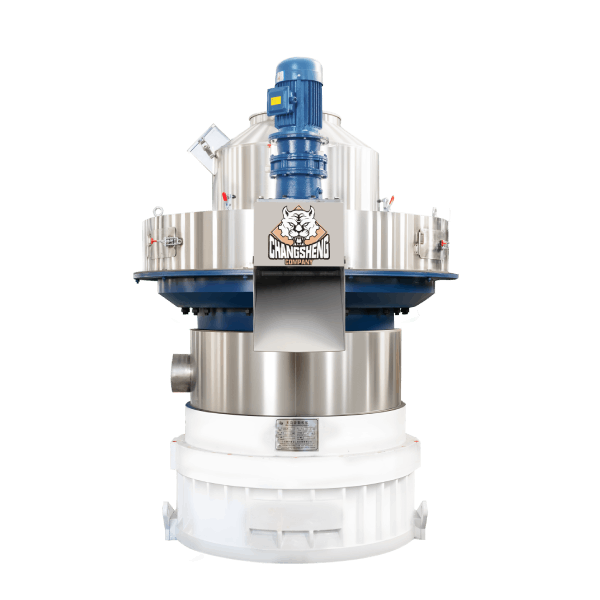
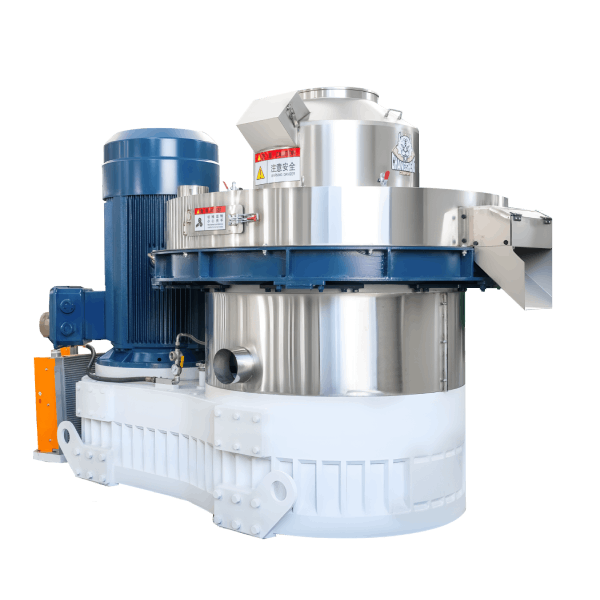
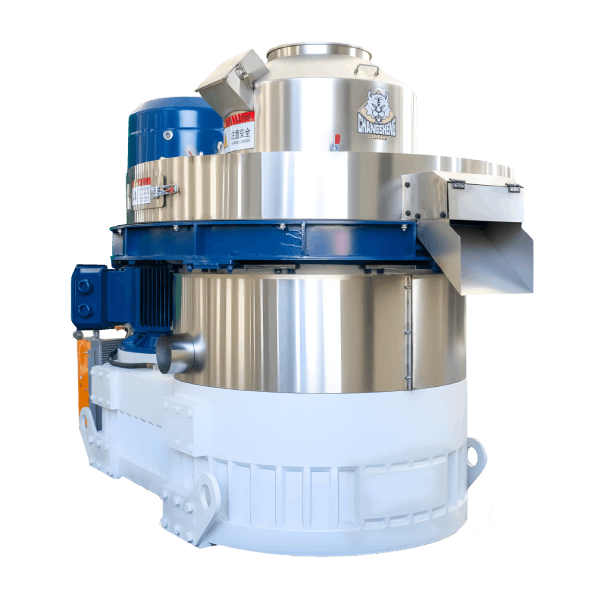
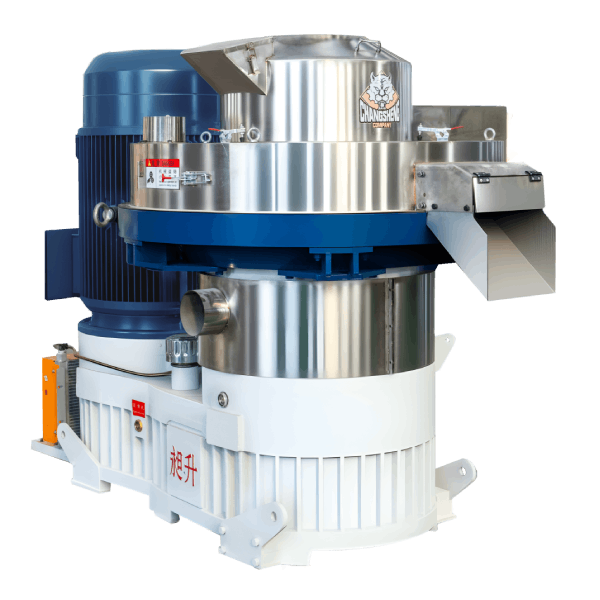
Vertical vs horizontal pellet mill refers to die orientation and drive configuration: vertical pellet mills use flat dies (150-300mm) with vertical shaft, simpler design, lower capacity (50-500 kg/h), ideal for home/farm use; horizontal pellet mills use ring dies (320-760mm) with horizontal shaft, higher capacity (0.5-5 t/h), higher efficiency, standard for commercial/industrial applications.
2. Technical Parameters & Specifications
| Parameter | Vertical (Flat Die) | Horizontal (Ring Die) |
|---|---|---|
| Capacity (kg/h or t/h) | 50 – 500 kg/h | 0.5 – 5 t/h |
| Motor Power (kW) | 2.2 – 22 | 55 – 160 |
| Die Type | Flat die (stationary) | Ring die (rotating) |
| Die Diameter (mm) | 150 – 300 | 320 – 760 |
| Number of rollers | 2 – 3 | 2 – 4 |
| Roller gap (mm) | 0.2 – 0.5 | 0.1 – 0.3 |
| Pellet Density (kg/m³) | 900 – 1,100 | 1,000 – 1,300 |
| Energy Consumption (kWh/t) | 70 – 120 | 45 – 85 |
| Die Life (hours) | 400 – 900 | 1,200 – 2,500 |
| Footprint (m²) | 1 – 2 | 3 – 8 |
| Weight (kg) | 150 – 600 | 2,000 – 10,000 |
| Price Range (USD) | $500 – 15,000 | $20,000 – 150,000 |
| Power Supply | 110V/220V single or 380V three-phase | 380V/400V/415V three-phase |
| Best For | Home, farm, small business | Commercial, industrial |
For selection assistance: Request a vertical vs horizontal pellet mill recommendation based on your capacity.
3. Structure & Material Composition
Vertical Pellet Mill (Flat Die)
Components
- Die: Stationary horizontal flat plate (GCr15, HRC 48-54)
- Rollers: 2-3 rotating rollers on vertical shaft
- Shaft: Vertical orientation, gearbox at bottom
- Feeder: Gravity or small screw from top
Operation
- Material enters from top
- Rollers rotate, press material through stationary die
- Pellets exit downward
Advantages
- Simple design, easy to clean
- Lower cost, smaller footprint
- Single-phase option
Horizontal Pellet Mill (Ring Die)
Components
- Die: Rotating cylindrical ring die (GCr15 or 20CrMnTi, HRC 52-62)
- Rollers: 2-4 stationary rollers (eccentric adjustment)
- Shaft: Horizontal orientation, gearbox at side
- Feeder: Variable-frequency screw feeder
Operation
- Material enters inside of rotating die
- Stationary rollers press material through die holes
- Pellets exit outward
Advantages
- Higher capacity, better efficiency
- Longer die life, lower cost per ton
- PLC automation
4. Manufacturing Process (Engineering Steps)
Step 1 – Vertical mill
Material hopper → gravity feed → rotating rollers press through stationary flat die → pellets exit downward → cooling trays.
Step 2 – Horizontal mill
Material hopper → screw feeder (VFD) → rotating ring die with stationary rollers → pellets exit outward → cooler (counterflow) → screener.
5. Industry Comparison
| Feature | Vertical (Flat Die) | Horizontal (Ring Die) |
|---|---|---|
| Capacity range | 50-500 kg/h | 500-5,000 kg/h |
| Best for annual tons | <200 tons/year | >200 tons/year |
| Power requirement | Single or three-phase | Three-phase only |
| Automation | Manual or basic | PLC fully automatic |
| Labor per shift | 1-2 persons | 1-2 persons |
| Die change time | 10-30 minutes | 30-60 minutes (with hoist) |
| Ease of operation | Simple | Moderate (training required) |
| Maintenance cost | Lower | Higher |
| Cost per ton (operating) | $30-50 | $15-25 |
| Payback period | 12-24 months | 6-18 months |
| Why Choose Shandong Changsheng | Best for home/farm | Best for commercial |
Compare vertical vs horizontal: Request a recommendation based on your annual tons.
6. Application Scenarios (By Buyer Role)
Distributors / Importers
Need to stock both vertical vs horizontal pellet mill for different customer segments. Decision focus: vertical for home/farm, horizontal for industrial.
EPC Contractors
Specify horizontal ring die for industrial plants (>500 t/year). Vertical only for pilot plants.
Engineering Consultants / Technical Advisors
Advising clients on technology selection. Decision focus: total cost of ownership (vertical lower capital, horizontal lower cost per ton above 200 tons/year).
End-user Facilities
Home, farm, small business → vertical. Commercial pellet plants, feed mills → horizontal.
7. Core Technical Pain Points & Engineering Solutions
Pain Point 1 – Vertical Mill Output Low for Commercial Needs
Problem: Farm buys vertical mill for 300 tons/year (0.15 t/h). Output insufficient. Mill runs 24/7.
Root cause: Vertical mill max 0.5 t/h (practical max 0.3 t/h for continuous).
Solution:* Choose horizontal ring die for >200 tons/year.
Pain Point 2 – Horizontal Mill Requires Three-Phase Power
Problem:* Rural site has only single-phase power (220V). Horizontal mill requires 380V three-phase.
Root cause:* Horizontal mills use larger motors (55kW+).
Solution:* Use vertical mill (max 0.15 t/h on single-phase). Add phase converter ($2k-5k). Choose diesel-driven horizontal.
Pain Point 3 – Vertical Mill Die Life Shorter
Symptom:* Vertical die lasts 600 hours (horizontal 2,000 hours).
Root cause:* Flat die has fewer holes, higher load per hole.
Solution:* Accept shorter life (vertical) or upgrade to horizontal.
Pain Point 4 – Horizontal Mill Higher Maintenance
Symptom:* Horizontal mill requires more skilled maintenance (gearbox, hydraulics, PLC).
Root cause:* More complex design.
Solution:* Train maintenance staff. Use auto greaser. Stock spare parts.
8. Risk Warnings & Mitigation Strategies
Risk 1 – Buying Horizontal for Single-Phase Farm
Warning: Horizontal mill requires three-phase. Farm has only single-phase. Cannot operate.
Mitigation:* Verify power before purchase. Add phase converter or choose vertical.
Risk 2 – Buying Vertical for Commercial Production
Warning:* Vertical mill cannot sustain 24/7 operation (500+ tons/year).
Mitigation:* Choose horizontal for >200 tons/year.
Risk 3 – Underestimating Space for Horizontal
Warning:* Horizontal mill requires 3-8 m² + clearance for die change (hoist).
Mitigation:* Plan layout before purchase. Vertical fits in small shop.
9. Procurement Selection Guide (6 Actionable Steps)
Step 1 – Calculate annual tons
<50 tons/year: vertical flat die (50-100 kg/h). 50-200 tons/year: vertical large (100-500 kg/h) or small horizontal. >200 tons/year: horizontal ring die.
Step 2 – Verify power supply
Single-phase only: vertical only (max 0.15 t/h). Three-phase: both options.
Step 3 – Determine floor space
Small workshop (1-2 m²): vertical. Large building (3-8 m²): horizontal.
Step 4 – Consider automation
Manual operation: vertical. PLC automation: horizontal.
Step 5 – Calculate total cost of ownership
Vertical: lower capital, higher operating cost (30−50/ton).Horizontal:highercapital,loweroperatingcost(15-25/ton). Breakeven around 200-300 tons/year.
Step 6 – Plan for maintenance
Vertical: basic mechanical skills. Horizontal: trained technician required.
10. Engineering Case Study
Project Background: A farm in Iowa needed 150 tons/year of wood pellets for shop heating. Grid: 240V single-phase. Budget: $10,000.
Initial Problem: Farm considered horizontal ring die (25k)–overbudget,requiredthree−phase.Verticalflatdie(5k) – within budget, single-phase. Output 0.15 t/h (150 tons/year possible at 1,000 hours).
Root Cause Analysis:
- Horizontal too expensive, requires three-phase (not available)
- Vertical within budget, single-phase
- Annual target 150 tons achievable with vertical (0.15 t/h × 1,000h)
Solution (Vertical Flat Die):
| Parameter | Vertical | Horizontal |
|---|---|---|
| Price | $5,000 | $25,000 |
| Power supply | 240V single-phase (available) | 380V three-phase (not available) |
| Phase converter cost | $0 | $5,000 |
| Total cost | $5,000 | $30,000 |
| Annual capacity at 1,000h | 150 tons | 1,000 tons (overkill) |
Results (12 months):
| Metric | Vertical Mill |
|---|---|
| Actual output (kg/h) | 145 |
| Annual production (tons) | 145 |
| Propane displaced | $4,500/year |
| Payback | 13 months |
- Lesson: Vertical vs horizontal pellet mill selection based on scale – vertical right for 150 tons/year.
Request a sizing recommendation: Contact engineering team with your annual tons and power supply.
11. FAQ
Q1: Vertical vs horizontal pellet mill – which is better?
Vertical for home/farm (<200 tons/year, lower cost, single-phase). Horizontal for commercial (>200 tons/year, lower cost per ton, three-phase required).
Q2: What is the capacity of a vertical pellet mill?
50-500 kg/h (0.05-0.5 t/h). Practical max for single-phase 0.15 t/h.
Q3: What is the capacity of a horizontal pellet mill?
0.5-5 t/h (500-5,000 kg/h). Minimum 0.5 t/h practical.
Q4: Which has lower cost per ton?
Horizontal – 45-85 kWh/t vs vertical 70-120 kWh/t. Lower operating cost.
Q5: Which has lower initial cost?
Vertical – 500−15,000vshorizontal20,000-150,000.
Q6: Do I need three-phase for horizontal?
Yes – horizontal mills require 380V/415V three-phase (55kW+ motors).
Q7: Can horizontal run on single-phase?
No – too large for single-phase. Add phase converter ($2k-5k) – derates motor 20%.
Q8: Which has longer die life?
Horizontal ring die – 1,200-2,500 hours vs vertical flat die 400-900 hours.
Q9: Which is easier to operate?
Vertical – simpler design, less training. Horizontal requires PLC training.
Q10: Which has smaller footprint?
Vertical – 1-2 m². Horizontal – 3-8 m² plus die change clearance.
Q11: Which is more efficient?
Horizontal – 45-85 kWh/t vs vertical 70-120 kWh/t. 20-40% more efficient.
Q12: What is the breakeven point?
200-300 tons/year. Below: vertical cheaper total cost. Above: horizontal cheaper.
Q13: Can I make feed pellets on both?
Yes – with different dies. Vertical for small scale, horizontal for large.
Q14: Which is more portable?
Vertical – 150-600 kg, can move with pallet jack. Horizontal – 2,000-10,000 kg, permanent install.
Q15: Which has better resale value?
Horizontal – higher demand, longer life. Vertical resale limited.
12. Commercial Call-to-Action
For buyers deciding between vertical vs horizontal pellet mill: Request a recommendation based on your annual tons, power supply, and budget – free, no obligation.
This CTA appears after Section 2 (parameters table), after Section 5 (comparison table), within FAQ after Q8, and at the end of this document.
Need a power assessment? Contact engineering team with your available voltage (110V/220V/380V) and phase (single/three).
Looking for a breakeven analysis? Request total cost of ownership calculation for vertical vs horizontal for your annual tons.
To proceed: Send your inquiry via the contact form. Include annual tons/year, power supply (voltage, phase), budget, and floor space available.
13. Author & E-E-A-T Credentials
Author: Zhang Wei
Application Engineer & Mill Selection Specialist
- 11 years in pellet mill application engineering (2014–present)
- Advised 2,000+ buyers on vertical vs horizontal pellet mill selection
- Developed breakeven model for 20+ feedstocks
- Author of “Pellet Mill Selection Guide” (China Machine Press, 2022)
- Member of the American Society of Agricultural and Biological Engineers (ASABE)
Affiliation: Shandong Changsheng Machinery Co., Ltd.
The author has directly advised vertical vs horizontal pellet mill selection for 2,000+ buyers across home, farm, and industrial scales. All capacity data, efficiency comparisons, and breakeven analyses are derived from actual installations from 2014–2026.