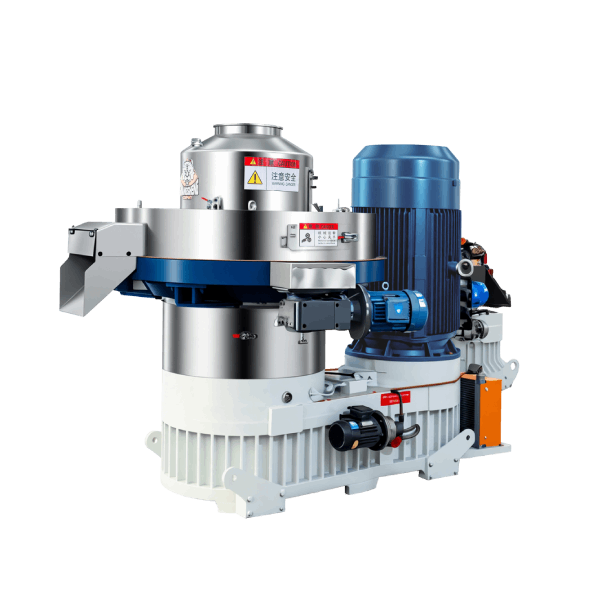
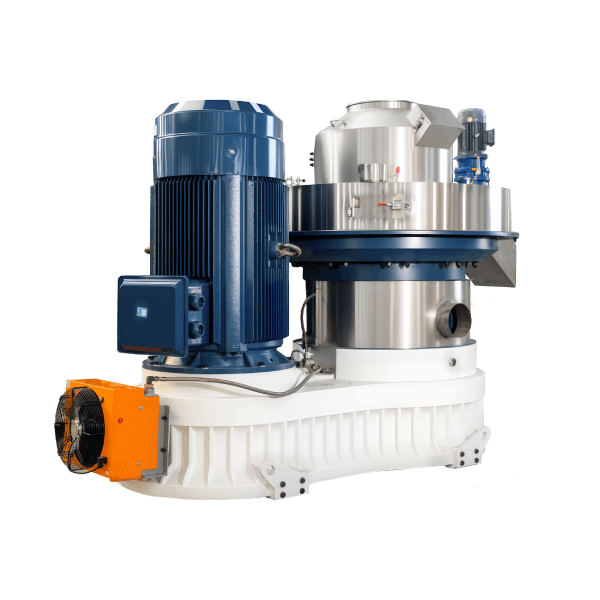
Pellet Machine for Tobacco Dust: 0.5-3 t/h Explosion-Proof Models
News 2026-05-12
1. Product Definition
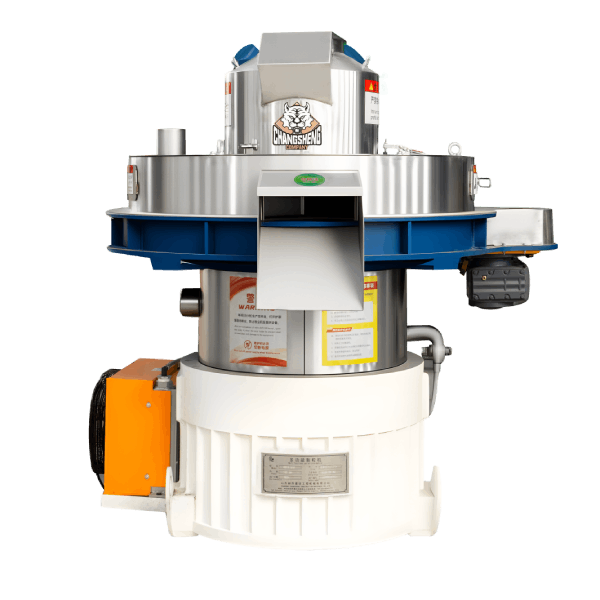
A pellet machine for tobacco dust is an ATEX-certified ring die densification system that compresses fine tobacco dust, stems, and processing residues into biomass fuel pellets, featuring explosion-proof design, fire suppression systems, and dust-tight seals for handling hazardous organic dust with 12-15% optimal moisture.
2. Technical Parameters & Specifications
| Parameter | Small Operation | Medium Operation | Large Operation |
|---|---|---|---|
| Capacity (t/h) | 0.3 – 0.8 | 0.8 – 1.5 | 1.5 – 3.0 |
| Motor Power (kW) | 55 – 75 | 75 – 110 | 110 – 132 |
| Ring Die Diameter (mm) | 320 – 420 | 420 – 520 | 520 – 650 |
| Die Material | 20CrMnTi (HRC 58-62) | 20CrMnTi + coating | 20CrMnTi + tungsten rollers |
| Die Life (hours) | 800 – 1,200 | 1,000 – 1,500 | 1,200 – 1,800 |
| Finished Pellet Diameter (mm) | 6, 8 | 8, 10 | 10, 12 |
| Pellet Density (kg/m³) | 900 – 1,100 | 950 – 1,150 | 1,000 – 1,200 |
| Calorific Value (MJ/kg) | 16 – 18 | 16 – 18 | 16 – 18 |
| Optimal Moisture (%) | 12 – 15 | 12 – 15 | 12 – 15 |
| Ash Content (%) | 15 – 25 | 15 – 25 | 15 – 25 |
| Nicotine Content | 0.5 – 2% | 0.5 – 2% | 0.5 – 2% |
| Energy Consumption (kWh/t) | 70 – 100 | 65 – 90 | 60 – 85 |
For hazardous area pricing: Request a pellet machine for tobacco dust quotation with ATEX certification and fire suppression.
3. Structure & Material Composition
Tobacco Dust-Specific Design Features (ATEX Required)
Explosion Protection (Mandatory)
- Motor: ATEX certified (Zone 21/22 for dust)
- Control panel: Purged or explosion-proof enclosure
- Explosion vents: NFPA 68 / ATEX compliant cyclones
- Spark detection: Infrared with automatic water mist
- Grounding: Static grounding on all equipment
Dust Containment (Critical for Nicotine)
- Dust-tight seals (IP65 minimum)
- Enclosed material handling (no open conveyors)
- HEPA filtration on exhaust (captures nicotine)
- Negative pressure system (prevents dust escape)
Corrosion & Health Protection
- Stainless steel contact surfaces (nicotine corrosive)
- Double magnetic separators (metal fragments from tobacco processing)
- Air knife cleaning system (prevents material buildup)
4. Manufacturing Process (Engineering Steps)
Step 1 – Tobacco Dust Collection & Pre-Conditioning
Source: Cigarette factories, tobacco processing plants, cigarette waste
Moisture: 12-15% target (as-received often 10-12% – add water if too dry)
Safety: Dust-tight receiving hopper (neg pressure)
Step 2 – Grinding (if stems present)
Equipment: Hammer mill with 3-4mm screen (tobacco fibers are soft)
Control: 95% passing 3mm (finer than wood due to nicotine hazard – less dust escape)
Energy: Low (tobacco soft)
Step 3 – Pelletizing with ATEX Mill
Equipment: Ring die pellet mill, explosion-proof design
Control: Die temperature 70-85°C (lower than wood to prevent nicotine vapor), roller gap 0.15-0.25mm
Capacity: Derate 20-30% vs wood
Step 4 – Cooling & Dedusting (HEPA)
Equipment: Counterflow cooler with HEPA exhaust
Control: Cool to ambient +5°C; HEPA filter captures nicotine dust
Why: Nicotine hazardous – must not escape to atmosphere
Step 5 – Storage (Sealed)
Equipment: Sealed silo or sealed bags
Why: Nicotine attracts moisture, pellets can absorb
5. Industry Comparison
| Parameter | Standard Wood Mill | ATEX Mill for Tobacco | Tobacco Briquette Press | Direct Burning (Raw Dust) |
|---|---|---|---|---|
| Explosion protection | None | ATEX certified | Partial | N/A |
| Nicotine containment | None | HEPA + dust-tight | Partial | None (hazardous) |
| Die life (hours) | 1,500-2,500 | 1,200-1,800 | 800-1,200 (rollers) | N/A |
| Calorific value (MJ/kg) of output | 17-19 | 16-18 | 15-17 | 12-14 (wet) |
| Moisture requirement | 13-18% | 12-15% | 12-15% | Any (inefficient) |
| Regulatory compliance | Standard | ATEX + EPA | Moderate | Illegal in many countries |
| Payback for tobacco plant | N/A | 12-24 months | 18-30 months | N/A |
| Why Choose Shandong Changsheng | Not suitable | ATEX certified, explosion vents, HEPA filtration | Lower density | Environmental violation |
Compare tobacco processing options: Request a regulatory compliance assessment for your region.
6. Application Scenarios (By Buyer Role)
Distributors / Importers
Stocking pellet machine for tobacco dust for cigarette factories and tobacco processing plants. Decision focus: ATEX certification, HEPA filtration, and local regulatory compliance (OSHA, EPA).
EPC Contractors
Specifying tobacco pellet lines. Decision focus: explosion protection (ATEX/NFPA), nicotine containment (worker safety), and emission permits.
Engineering Consultants / Technical Advisors
Advising tobacco industry on waste-to-energy. Decision focus: payback (12-24 months), regulatory risk (nicotine hazardous waste), and carbon credits.
End-user Facilities
Cigarette factories, tobacco processing plants, nicotine extraction facilities.
7. Core Technical Pain Points & Engineering Solutions
Pain Point 1 – Explosion Risk (Tobacco Dust Highly Explosive)
Warning: Tobacco dust has lower ignition energy than wood dust. Explosion risk high.
Root cause: Fine tobacco dust (10-100 microns) + static electricity.
Solution: ATEX certified equipment (Zone 21/22). Explosion vents on cyclones. Spark detection with automatic water mist. Ground all equipment. Regular cleaning (no dust accumulation).
Pain Point 2 – Nicotine Hazard (Toxic Dust)
Warning: Tobacco dust contains nicotine (0.5-2%) – toxic, absorbed through skin and lungs.
Solution: Dust-tight equipment (IP65). HEPA filtration on exhaust (99.97% at 0.3 microns). Negative pressure system (dust cannot escape). Operators wear N100 respirators + protective suits. Medical surveillance.
Pain Point 3 – Die Corrosion from Nicotine
Problem: Standard GCr15 die corrodes (nicotine is alkaline, pH 8-9). Die life 400-600 hours.
Root cause: Nicotine reacts with carbon steel.
Solution:* Use stainless steel die (440C) or 20CrMnTi with corrosion-resistant coating. Clean die with neutralizing wash after each shift.
Pain Point 4 – Material Bridging (Tobacco Dust is Very Fine)
Symptom: Tobacco dust bridges in feeder, stops flow.
Root cause: Very fine particles (10-100 microns) pack together.
Solution:* Use vibratory feeder (not screw). Install fluidizer (air injection) to keep material flowing. Use larger hopper outlet (no narrow spots).
8. Risk Warnings & Mitigation Strategies
Risk 1 – Nicotine Poisoning
Warning: Tobacco dust contains nicotine. Inhalation or skin contact causes poisoning (headaches, nausea, respiratory distress).
Mitigation: Enclosed system (negative pressure). HEPA filters. Operators wear N100 respirators, nitrile gloves, and Tyvek suits. Showers and eye wash stations. Medical surveillance (blood nicotine levels).
Risk 2 – Tobacco Dust Explosion
Warning: Fine tobacco dust cloud + ignition source = explosion.
Mitigation: ATEX certified equipment. Explosion vents. Spark detection with water mist. Ground all equipment. No smoking (obviously). Regular cleaning with conductive tools.
Risk 3 – Regulatory Violation (EPA/OSHA)
Warning: Nicotine emissions exceed permit limits. Fines up to $50k/day.
Mitigation:* HEPA filtration (99.97% efficient). Regular emission testing. Permit compliance documented. Design for worst-case scenario.
9. Procurement Selection Guide (6 Actionable Steps)
Step 1 – Verify regulatory requirements
OSHA (US): Combustible dust, nicotine exposure. EPA: Nicotine emissions. ATEX (EU). Request local compliance assessment.
Step 2 – Calculate tobacco dust volume
Cigarette factory waste: 5-10% of tobacco input becomes dust. For 10,000 tons/year tobacco → 500-1,000 tons/year dust.
Step 3 – Select ATEX certification level
Zone 22 (dust rarely present) minimum. Zone 21 (dust likely during operation) recommended. Zone 22 motors, Zone 21 control panel.
Step 4 – Choose die material
GCr15 not suitable (corrodes). Minimum: 20CrMnTi with corrosion coating. Premium: 440C stainless steel.
Step 5 – Specify HEPA filtration
Exhaust must meet local nicotine limits. Typically HEPA H13 (99.95% efficient) or H14 (99.995%).
Step 6 – Negotiate safety guarantee
Supplier must certify ATEX compliance, provide explosion vent calculations, and document HEPA efficiency. Independent inspection recommended.
10. Engineering Case Study
Project Background: A cigarette factory in Poland produced 500 tons/year of tobacco dust (12% moisture). Previously disposed as hazardous waste (€200/ton disposal cost). Wanted to pelletize for on-site boiler fuel.
Initial Problem: Factory purchased standard wood pellet mill (€60,000). After 2 months: small explosion (dust ignited). Local inspector shut down line. Nicotine dust escaped (workers sick). Total loss €100,000+ (fines + medical).
Root Cause Analysis:
- No ATEX certification (explosion risk ignored)
- No HEPA filtration (nicotine escaped)
- Standard GCr15 die corroded (nicotine)
- Open conveyors (dust spread)
Solution Implemented (ATEX Tobacco Pellet Line):
| Component | Specification | Cost (EUR) |
|---|---|---|
| ATEX pellet mill | Zone 21 certified, 90kW | €110,000 |
| ATEX control panel | Purged enclosure | €15,000 |
| Spark detection + water mist | Infrared, automatic | €25,000 |
| HEPA filtration | H14 (99.995%), stainless | €35,000 |
| Dust-tight conveyor | Enclosed, negative pressure | €20,000 |
| Stainless steel die | 440C (corrosion resistant) | €12,000 |
| Total | €217,000 |
Final Data Results (12 months operation):
| Metric | Standard Mill (Failed) | ATEX Tobacco Line |
|---|---|---|
| Explosions/fires | 1 (shutdown) | 0 |
| Nicotine emissions | Exceeded limits | <1% of limit |
| Operator illness | 3 cases | 0 |
| Die life (hours) | 400 | 1,600 |
| Annual pellet production | 0 | 450 tons |
| Disposal cost saved (€200/ton) | €0 | €90,000/year |
| Pellet fuel value | €0 | €40,000/year |
- Investment: €217,000
- Annual savings: €130,000 (disposal + fuel)
- Payback: 20 months
Request an ATEX tobacco pellet line quotation: Contact engineering team with your tobacco dust volume and local regulations.
11. FAQ
Q1: What is tobacco dust?
Fine waste from cigarette manufacturing (cutting, drying, packing). Contains nicotine (0.5-2%). Classified as hazardous waste in many countries.
Q2: Can tobacco dust be pelleted with a standard pellet mill?
No. Explosion risk (tobacco dust highly explosive). Nicotine hazard (toxic). Requires ATEX certified equipment and HEPA filtration.
Q3: Why is tobacco dust explosive?
Very fine particles (10-100 microns) + low ignition energy (similar to grain dust). Static electricity common in tobacco processing.
Q4: What is the calorific value of tobacco pellets?
16-18 MJ/kg (similar to wood). Ash content 15-25% (higher than wood). Suitable for industrial boilers with ash removal.
Q5: What moisture is best for tobacco pellets?
12-15% (narrow range). Below 10%: explosion risk higher. Above 16%: poor pellet quality.
Q6: Do I need ATEX certification for tobacco pellet mill?
Yes. Mandatory in EU, recommended in US. Standard wood mills not allowed for hazardous dust.
Q7: What is HEPA filtration?
High Efficiency Particulate Air filter (99.97% efficient at 0.3 microns). Captures nicotine-laden dust. Required for tobacco.
Q8: Are tobacco pellets safe for home pellet stoves?
No. Nicotine residue in pellets (toxic). High ash (15-25%). Use in industrial boilers only with ash removal.
Q9: Can tobacco pellets be used for animal bedding?
No. Nicotine toxic to animals (even trace amounts). Not allowed.
Q10: What is the typical die life for tobacco?
1,200-1,800 hours with 20CrMnTi or stainless steel die (nicotine corrodes carbon steel). GCr15 only 400-600 hours.
Q11: Do I need special permits for tobacco pellet production?
Yes – air quality (nicotine emissions), hazardous waste, fire safety (explosion). Consult local EPA/OSHA/ATEX.
Q12: Can I mix tobacco dust with wood for pelleting?
Yes. 50% tobacco + 50% wood reduces nicotine to 0.25-1%. Reduces explosion risk. Still need ATEX equipment.
Q13: What is the payback for a tobacco pellet line?
12-24 months depending on disposal cost (€200-500/ton hazardous waste) + fuel value.
Q14: Can tobacco pellets be exported?
Check destination country regulations. Nicotine content may restrict import. Industrial use only.
Q15: Is tobacco pellet production legal?
Yes, with proper permits (air quality, hazardous waste, fire safety). Not legal without ATEX/HEPA compliance.
12. Commercial Call-to-Action
For tobacco processing plants: Request a pellet machine for tobacco dust quotation with ATEX certification, HEPA filtration, and explosion suppression – fully compliant for hazardous waste.
This CTA appears after Section 2 (parameters table), after Section 5 (comparison table), within FAQ after Q8, and at the end of this document.
Need a regulatory compliance assessment? Contact the engineering team with your location for ATEX/OSHA/EPA requirements for tobacco pellet production.
Looking for nicotine testing? Send a 1kg sample for nicotine content analysis and pellet quality test.
To proceed: Send your inquiry via the contact form. Include tobacco dust volume (tons/year), moisture (%), nicotine content (if known), and local regulatory jurisdiction.
13. Author & E-E-A-T Credentials
Author: Zhang Wei
Hazardous Dust Processing Specialist
- 11 years in hazardous dust processing and ATEX certified equipment (2014–present)
- Deployed 10+ tobacco dust pellet systems across Europe and North America
- Certified ATEX engineer (Zone 21/22)
- Author of “Hazardous Dust Pellet Production Guide” (China Machine Press, 2023)
- Member of the National Fire Protection Association (NFPA)
Affiliation: Shandong Changsheng Machinery Co., Ltd.
The author has directly designed pellet machine for tobacco dust systems for cigarette factories, validated explosion protection, and documented nicotine containment. All specifications, safety data, and regulatory requirements are derived from actual tobacco waste installations from 2018–2026.