pellet production line cost estimate
News 2026-02-03
A pellet production line is an integrated industrial system that converts biomass or feedstock into standardized pellets through crushing, drying, pelleting, cooling, and screening. A pellet production line cost estimate evaluates total investment based on capacity, configuration, automation level, and engineering scope.
Technical Parameters and Specifications
When preparing a pellet production line cost estimate, technical parameters must be fixed first, as they directly affect equipment selection and capital expenditure:
- Design capacity: 1–20 tons/hour
- Pellet diameter: 6–12 mm (biomass fuel), 3–6 mm (feed)
- Main pellet mill power: 55–250 kW
- Raw material moisture (inlet): 10–20%
- Finished pellet moisture: ≤10%
- Annual operating hours: 6,000–8,000 hours
- Automation level: Semi-automatic or PLC-controlled
Structure and Material Composition
A standard pellet production line cost estimate includes the following structural modules and material configurations:
- Feeding system: Carbon steel silos, belt or screw conveyors
- Grinding unit: Hammer mill with alloy steel hammers
- Drying system: Rotary drum dryer with heat-resistant steel shell
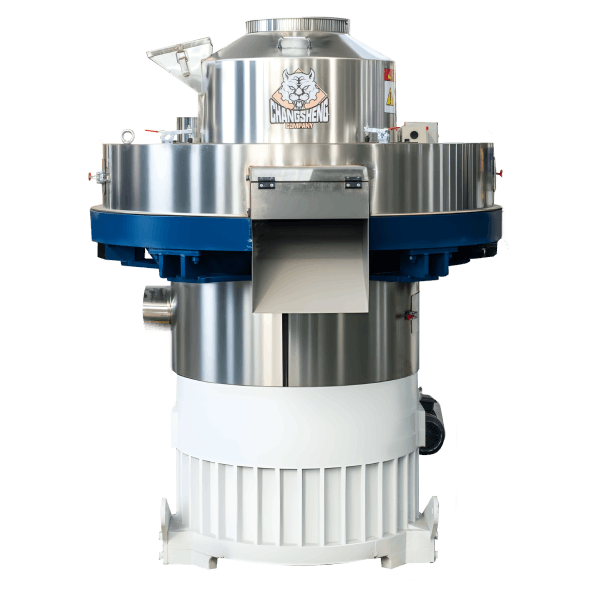
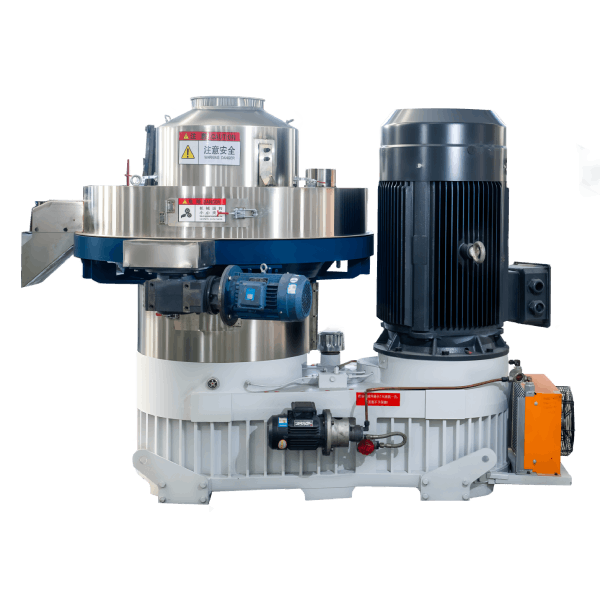
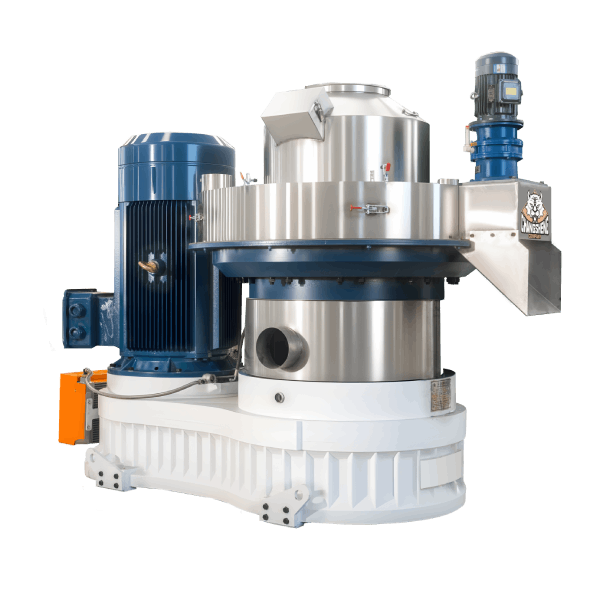
- Pelletizing unit: Ring die pellet mill (alloy steel die & rollers)
- Cooling unit: Counterflow cooler with reinforced frame
- Screening system: Vibrating screen for fines recovery
- Electrical control: PLC cabinet with overload protection
Manufacturing Process and Engineering Workflow
A realistic pellet production line cost estimate must reflect the complete process chain and associated equipment:
- Raw Material Handling: Bulk materials conveyed from storage to grinder.
- Size Reduction: Hammer mill reduces particle size to ≤5 mm.
- Drying: Rotary dryer adjusts moisture using biomass or gas heat source.
- Conditioning: Moisture and temperature stabilized before pelleting.
- Pelletizing: High-pressure compression through ring die.
- Cooling: Hot pellets cooled to ambient temperature.
- Screening & Packing: Qualified pellets packed; fines recycled.
Industry Comparison
| System Type | Initial Investment | Operating Cost | Automation | Market Value |
|---|---|---|---|---|
| Pellet Production Line | Medium–High | Medium | High | High |
| Briquette Line | Medium | Medium | Medium | Medium |
| Loose Biomass Processing | Low | High | Low | Low |
Application Scenarios
A detailed pellet production line cost estimate is typically required by:
- Distributors planning standardized pellet fuel supply
- EPC contractors delivering turnkey biomass energy plants
- Industrial operators converting waste to fuel pellets
- Importers evaluating long-term pellet sourcing investments
Core Pain Points and Solutions
- Unclear budget boundaries: Solved by capacity-based cost segmentation
- Overinvestment risk: Mitigated through phased line configuration
- High operating cost: Reduced by energy-efficient motors and dryers
- Unexpected downtime: Addressed with modular design and spare planning
Risk Warnings and Mitigation Strategies
Common risks identified during pellet production line cost estimate evaluation include:
- Ignoring civil works and foundation costs
- Underestimating electrical installation expenses
- Overlooking dust control and fire safety systems
- Assuming uniform raw material quality year-round
Procurement and Selection Guide
- Define raw material type and annual availability
- Confirm target pellet specification and end-market
- Select capacity with 10–20% scalability margin
- Request detailed equipment list and power breakdown
- Review layout drawing and civil requirements
- Compare lifecycle cost, not only purchase price
- Verify commissioning and training scope
Engineering Case Example
A 3 tons/hour biomass pellet production line was installed for a regional energy supplier. Total equipment investment ranged between USD 380,000–450,000, excluding civil works. The line processed wood chips at 15% moisture and achieved annual output of approximately 18,000 tons.
FAQ
- Q1: What is the typical pellet production line cost estimate range?
A: USD 150,000–1,500,000 depending on capacity. - Q2: Does capacity double mean double cost?
A: No, cost increases non-linearly. - Q3: Is dryer cost significant?
A: Yes, often 20–30% of total equipment cost. - Q4: Are installation costs included?
A: Usually excluded unless specified. - Q5: How much power per ton of pellets?
A: 80–120 kWh/ton. - Q6: Is automation worth the extra cost?
A: Yes, for stable long-term operation. - Q7: Typical ROI period?
A: 18–36 months. - Q8: Can used equipment reduce cost?
A: Possible, but increases operational risk. - Q9: What affects die replacement cost?
A: Material abrasiveness and moisture control. - Q10: Should spare parts be budgeted upfront?
A: Yes, typically 3–5% of equipment cost.
Call to Action
To obtain a precise pellet production line cost estimate, including equipment list, power consumption, and layout drawings, please request a customized quotation or technical proposal from an experienced engineering supplier.
E-E-A-T Author Credentials
This content is prepared by a senior biomass processing engineer with over 15 years of experience in pellet plant design, cost modeling, and EPC project execution for industrial-scale production lines worldwide.