Pellet Machine Output Stability Long Term Guide
News 2026-03-02
Pellet Machine Output Stability Long Term: Engineering Guide for Industrial Buyers
Product Definition (40–60 words)
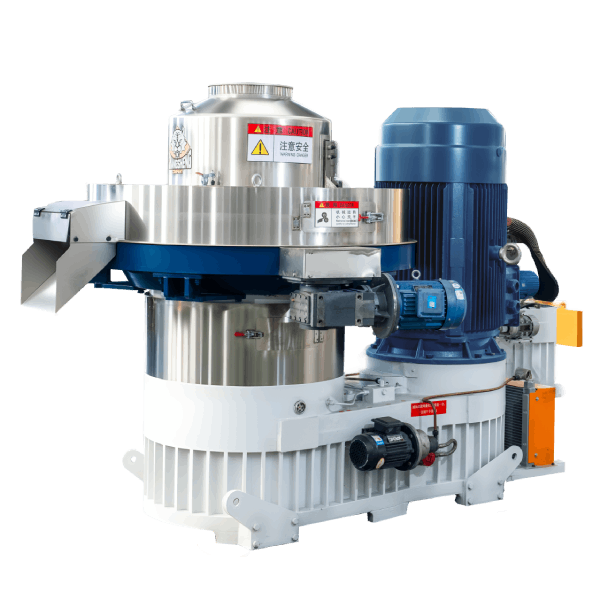
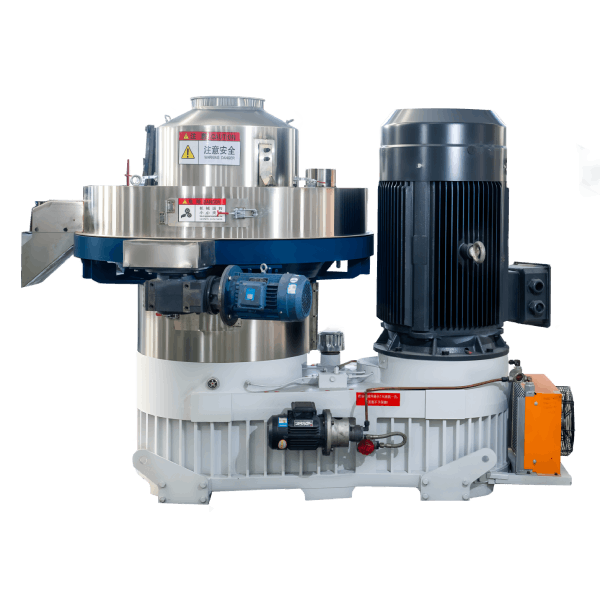
Pellet machine output stability long term refers to a pelletizing system’s ability to maintain consistent throughput, density, and energy efficiency over extended operating cycles. It reflects mechanical durability, die-roller precision, feed uniformity, and thermal control under continuous industrial production conditions.
Technical Parameters and Specifications
Achieving pellet machine output stability long term requires alignment between mechanical capacity, motor sizing, and material characteristics. For industrial ring-die pellet machines used in biomass or feed applications, typical engineering ranges are:
• Capacity range: 1–20 tons/hour (depending on die diameter and material type)
• Main motor power: 90–315 kW
• Die diameter: 420–860 mm
• Roller quantity: 2–3 heavy-duty forged rollers
• Die material: 4Cr13 or X46Cr13 stainless alloy steel
• Pellet diameter: 6–12 mm
• Moisture input range: 12–18% (biomass typical)
• Continuous operation: 16–24 hours/day under industrial conditions
• Acceptable output fluctuation: ±3–5% over 8-hour shift
Pellet machine output stability long term is directly influenced by torque reserve (≥15% design margin), bearing load rating, and gearbox safety factor (>1.8).
Structure and Material Composition
A stable long-term pelletizing system depends on structural integrity and metallurgical consistency.
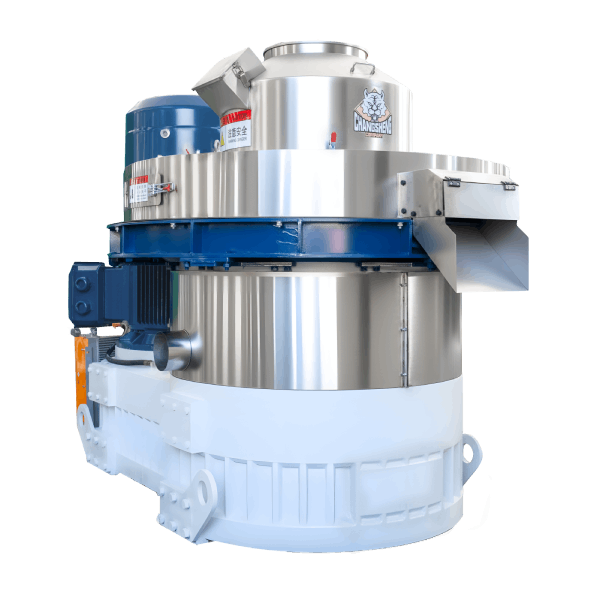
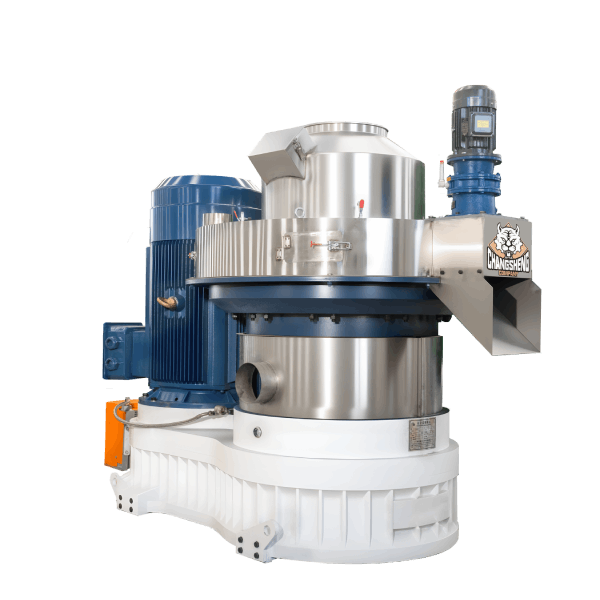
Core Structural Components:
- Ring Die Assembly
- Vacuum-quenched alloy steel
- Surface hardness: HRC 52–58
- Precision bore tolerance ≤0.02 mm
- Press Rollers
- Forged steel core
- Replaceable shell design
- Automatic lubrication channels
- Main Shaft
- 42CrMo forged steel
- Dynamic balancing grade G6.3
- Gearbox
- Helical gear transmission
- Surface carburized gears
- Oil-cooling circuit
- Feeder & Conditioner
- Variable frequency control
- Stainless steel paddles
- Steam injection ports (feed applications)
Each structural decision contributes to pellet machine output stability long term by minimizing vibration, uneven compression, and premature wear.
Manufacturing Process (Engineering Steps)
Industrial production quality determines long-term stability.
Step 1 – Raw Material Preparation
CNC cutting of alloy steel billets; ultrasonic flaw detection.
Step 2 – Precision Machining
Five-axis CNC boring for die holes; tolerance control within ±0.01 mm.
Step 3 – Heat Treatment
Vacuum quenching and tempering; stress-relief annealing to reduce deformation.
Step 4 – Surface Finishing
Mirror polishing of die inner surface to improve pellet release.
Step 5 – Assembly
Laser alignment of main shaft; torque-calibrated fastening.
Step 6 – Dynamic Load Testing
Simulated 80–100% load operation for 6–8 hours before shipment.
Manufacturing precision is a primary factor in pellet machine output stability long term under continuous industrial loads.
Industry Comparison
Below is a technical comparison of different pelletizing systems regarding long-term stability:
| System Type | Load Stability | Wear Rate | Energy Efficiency | Long-Term Output Consistency |
|---|---|---|---|---|
| Ring Die Pellet Mill | High | Moderate | High | Excellent |
| Flat Die Pellet Mill | Medium | High | Medium | Limited |
| Hydraulic Press Type | Low | Low | Low | Inconsistent |
| Extruder Type | Medium | Moderate | Medium | Moderate |
For industrial-scale production, ring die systems provide superior pellet machine output stability long term due to distributed compression and gearbox-driven torque stability.
Application Scenarios
Pellet machine output stability long term is critical for:
Distributors
Stable performance reduces warranty claims and after-sales service frequency.
EPC Contractors
Ensures predictable plant commissioning timelines and capacity guarantees.
Industrial Plant Owners
Maintains contractual supply commitments to power plants or feed buyers.
Importers / Wholesalers
Reduces spare parts inventory uncertainty and improves brand credibility.
Core Pain Points and Solutions
- Output Fluctuation Under Continuous Load
Cause: Die wear and inconsistent feeding.
Solution: Install variable frequency feeder and implement die inspection every 500 hours. - Bearing Overheating
Cause: Insufficient lubrication or overload.
Solution: Automatic centralized lubrication with temperature monitoring. - Pellet Density Inconsistency
Cause: Moisture variation in raw material.
Solution: Add online moisture analyzer before conditioning. - Premature Gearbox Failure
Cause: Poor heat dissipation.
Solution: Independent oil cooling and oil filtration system.
Addressing these issues systematically improves pellet machine output stability long term and extends service life beyond 8–10 years.
Risk Warnings and Mitigation
• Overloading beyond rated capacity reduces long-term stability by accelerating die wear.
• Inadequate foundation alignment increases vibration amplitude.
• Low-quality raw materials with sand contamination damage die surfaces.
• Ignoring lubrication schedules shortens bearing lifespan by up to 40%.
Mitigation strategies include load margin design, vibration sensors, magnetic separators, and scheduled preventive maintenance.
Procurement Selection Guide (Actionable Steps)
- Define required hourly capacity and annual operating hours.
- Verify motor power margin (≥15% reserve capacity).
- Review die material certification and hardness test reports.
- Confirm gearbox manufacturer and safety factor.
- Request load testing data under 80–100% operating conditions.
- Evaluate spare parts availability and replacement cycle cost.
- Inspect assembly workshop quality control procedures.
- Analyze total lifecycle cost, not only initial price.
Following these steps ensures pellet machine output stability long term and reduces operational uncertainty.
Engineering Case Study
Project: 5 TPH Biomass Pellet Line – Southeast Asia
Scope: Complete ring die pellet production system for rubber wood waste.
Operating Conditions:
• 18–20 hours/day
• Ambient temperature: 30–38°C
• Moisture input: 15%
Results After 18 Months:
• Average output deviation: ±2.8%
• Die replacement cycle: 1,200–1,500 hours
• Energy consumption: 85–95 kWh/ton
• No major gearbox failure
This case demonstrates measurable pellet machine output stability long term when design margins and maintenance schedules are properly implemented.
FAQ
- What defines long-term output stability?
Consistent capacity, pellet density, and energy efficiency over extended cycles. - How many hours can a ring die machine run continuously?
Up to 24 hours with proper cooling and lubrication. - Does moisture affect stability?
Yes, variation above ±2% impacts density and throughput. - What is acceptable output fluctuation?
Industrial standard is ±3–5%. - How often should the die be replaced?
Typically every 1,000–1,500 operating hours depending on material. - Does motor oversizing help?
A 10–15% power margin improves stability. - Is gearbox cooling necessary?
For ≥160 kW systems, independent cooling is recommended. - Can vibration monitoring improve stability?
Yes, predictive maintenance reduces unexpected shutdowns. - What is the typical service life?
8–12 years with correct maintenance. - How to test stability before purchase?
Request factory load test reports and operating video under full capacity.
Call to Action
For detailed technical specifications, load testing data, or a customized engineering quotation, contact our technical department. We provide capacity calculations, layout support, and spare parts lifecycle analysis for industrial pellet production projects.
E-E-A-T Author Qualification
This article is prepared by an engineering team with over 15 years of industrial pelletizing system design experience, supporting biomass, feed, and recycling projects across Asia, the Middle East, and Europe. Technical data is based on field operation records and standardized industrial manufacturing practices.