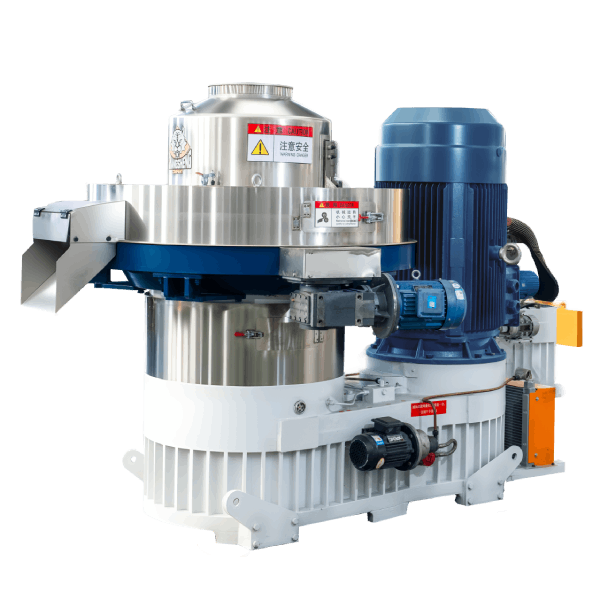
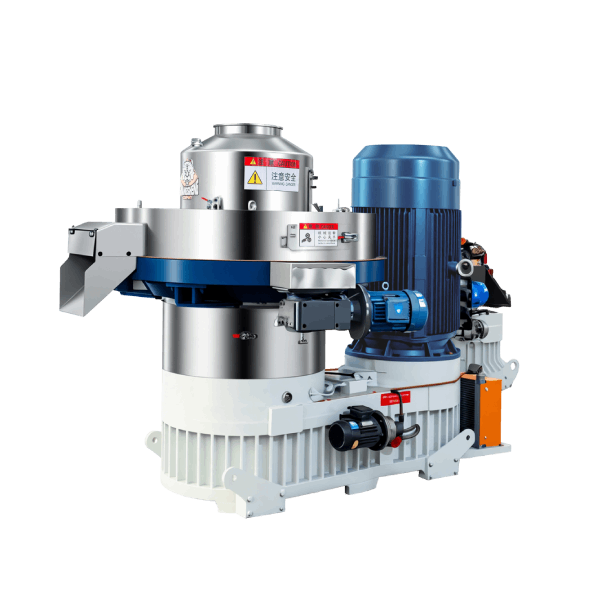
How Long Does a Pellet Die Last: 400-2,500 Hours by Type
News 2026-05-05
1. Product Definition
How long a pellet die lasts depends on die type (flat vs ring), material (GCr15 vs 20CrMnTi), feedstock abrasiveness (softwood vs rice husk), and moisture control, with typical ranges from 400 hours (flat die, abrasive material) to 2,500 hours (premium ring die, softwood).
2. Technical Parameters & Specifications
| Die Type & Material | Softwood (Pine) | Hardwood (Oak) | Rice Husk / Straw | Feed (Grains) |
|---|---|---|---|---|
| Flat Die (GCr15) | 500 – 700 hours | 300 – 500 hours | 200 – 350 hours | 600 – 900 hours |
| Ring Die (GCr15) | 1,500 – 2,000 hours | 800 – 1,200 hours | 400 – 600 hours | 1,800 – 2,500 hours |
| Ring Die (20CrMnTi) | 1,800 – 2,500 hours | 1,200 – 1,800 hours | 800 – 1,500 hours | 2,000 – 3,000 hours |
| Ring Die + Tungsten Rollers | 2,000 – 2,800 hours | 1,500 – 2,200 hours | 1,000 – 2,000 hours | N/A |
| Die Diameter Effect | Larger die = longer life (more holes) | Same | Same | Same |
| Moisture Effect | Optimal 13-18% (longest life) | <10% or >20% reduces life 50% | <12% or >15% reduces life | 12-15% optimal |
For die life prediction: Request a calculator based on your feedstock and annual tons.
3. Structure & Material Composition
Why Dies Wear Out
Die Hole Wear (Primary Failure Mode)
- Normal wear: Holes gradually enlarge from oval to round (abrasion)
- Abrasive feedstocks (rice husk, hardwood, sand-contaminated wood) accelerate wear
- Softwood (pine, spruce) low abrasion – longest life
Die Face Wear
- Surface becomes rough, reduces material flow
- Caused by metal-to-metal contact (roller gap too tight) or tramp metal
Die Cracking (Premature Failure)
- Thermal shock (cold material into hot die)
- Substandard die material (45# steel vs GCr15/20CrMnTi)
- Stress from uneven roller gap
Material Hardness (Mohs Scale)
- Pine/softwood: 2-3 (low abrasion)
- Oak/hardwood: 3-4 (moderate)
- Rice husk silica: 7 (high abrasion)
- GCr15 die hardness: HRC 52-58
- 20CrMnTi case hardness: HRC 60-62
4. Manufacturing Process (Engineering Steps)
Step 1 – Die Selection (User)
Life factor: Choose GCr15 for softwood, 20CrMnTi for hardwood/abrasive.
Step 2 – Installation
Life factor: Correct roller gap (0.1-0.3mm ring die). Too tight = wear, too loose = reduced output.
Step 3 – Operation
Life factor: Moisture 13-18% optimal. Off-spec reduces life 30-50%. Temperature control (80-110°C).
Step 4 – Maintenance
Life factor: Clean die after each shift (oil-soaked sawdust). Check roller gap weekly.
Step 5 – End of Life
Replace when output drops 20% below baseline or pellets become crumbly.
5. Industry Comparison
| Feedstock | Flat Die (GCr15) | Ring Die (GCr15) | Ring Die (20CrMnTi) | Best Choice |
|---|---|---|---|---|
| Softwood (pine, spruce, fir) | 500-700h | 1,500-2,000h | 1,800-2,500h | Ring die (any) |
| Hardwood (oak, maple, beech) | 300-500h | 800-1,200h | 1,200-1,800h | 20CrMnTi ring |
| Mixed soft/hard (50/50) | 400-600h | 1,100-1,600h | 1,500-2,000h | 20CrMnTi ring |
| Rice husk (8-15% silica) | 200-350h | 400-600h | 800-1,500h | 20CrMnTi + tungsten |
| Straw (wheat, barley) | 250-400h | 450-700h | 800-1,200h | 20CrMnTi |
| Feed (corn, soy) | 600-900h | 1,800-2,500h | 2,000-3,000h | Ring die (any) |
| Why Choose Shandong Changsheng | GCr15 standard | 20CrMnTi upgrade | Longest life for abrasive | Match to your feedstock |
Compare die life by material: Request a chart for your specific feedstock.
6. Application Scenarios (By Buyer Role)
Distributors / Importers
Customers ask “how long does a pellet die last?” Need life expectancy data for different feedstocks. Decision focus: stock dies for common applications (softwood ring die GCr15), train customers on maintenance.
EPC Contractors
Require die life predictions for plant operating cost calculations. Decision focus: cost per ton ($2-10/ton depending on feedstock), spare die stocking strategy.
Engineering Consultants / Technical Advisors
Advising clients on operating costs. Decision focus: die cost per ton vs premium die (20CrMnTi) – higher upfront, lower per ton.
End-user Facilities
Pellet plants, feed mills. Decision focus: track die life (tons per die), optimize replacement interval, budget for spares.
7. Core Technical Pain Points & Engineering Solutions
Pain Point 1 – Premature Die Failure (200 hours instead of 1,500)
Problem: Standard GCr15 die lasts 200-300 hours with rice husk. Expected 1,500+ hours.
Root cause: Rice husk has 8-15% silica (hardness 7 Mohs). Abrasive.
Solution: Upgrade to 20CrMnTi die (case HRC 60-62) – 800-1,500 hours life. Add tungsten carbide rollers. Accept higher die cost (+40-60%) for lower cost per ton.
Pain Point 2 – Die Life Calculation Confusion
Problem: Manufacturer claims “2,000 hours life”. User gets 800 hours. Blames manufacturer.
Root cause: Manufacturer assumed softwood at 13-18% moisture. User runs hardwood (oak) at 22% moisture.
Solution: Request life expectancy for your specific feedstock and moisture range. Derate for hardwood (0.6-0.8 factor), off-spec moisture (0.5 factor).
Pain Point 3 – When to Replace Die? (Too Early = Waste, Too Late = Quality Loss)
Problem: Plant replaces die at 1,200 hours (still good) – waste $3,000. Another plant runs to 2,000 hours (pellets poor quality) – customer complaints.
Root cause: No tracking of output or pellet density.
Solution: Track output (kg/h or tons/day) weekly. Replace when output drops 20% below baseline. Track tons per die. Replace die at 15-20% output drop.
Pain Point 4 – Die Cracking from Thermal Shock
Problem: Die cracks after 500 hours (expected 2,000). Radial cracks visible.
Root cause: Cold material (from frozen storage) enters hot die (100°C). Thermal stress cracks.
Solution: Condition material to 40-50°C before feeding. Ramp down die before shutdown (run 5 minutes with no feed). Avoid temperature differential >50°C.
8. Risk Warnings & Mitigation Strategies
Risk 1 – Substandard Die Material (45# steel vs GCr15)
Warning: Cheap die labeled “hardened steel” is 45# carbon steel. Life 50-150 hours vs GCr15 500-2,500 hours.
Mitigation: Request material certificate (GCr15 or 20CrMnTi). Test hardness (HRC 52-58 for GCr15, HRC 58-62 case for 20CrMnTi). Avoid unknown brands.
Risk 2 – Running Die Too Long (Poor Quality)
Warning: Die holes worn oval. Pellets lose density, crumble. Customer complaints, price reduction.
Mitigation: Track output weekly. Replace at 20% output drop. Inspect die monthly (visual for oval holes). Keep spare die in stock.
Risk 3 – No Spare Die in Stock
Warning: Die fails. Replacement takes 4-8 weeks from supplier. Plant idle for 1-2 months.
Mitigation: Order spare die with initial machine. Keep in dry storage. Order next spare when current die reaches 50% of expected life.
9. Procurement Selection Guide (6 Actionable Steps)
Step 1 – Identify your feedstock and moisture
Softwood (pine) = longest life. Hardwood = 60-80% of softwood life. Rice husk/straw = 30-50% life. Optimal moisture (13-18%) = longest life.
Step 2 – Select die material
GCr15: softwood, mixed (best value). 20CrMnTi: hardwood, rice husk, straw (longer life, higher cost, lower cost per ton).
Step 3 – Calculate expected life in tons
Formula: Expected hours × capacity (t/h) = tons per die. Example: 2,000 hours × 2 t/h = 4,000 tons per die.
Step 4 – Calculate cost per ton
Die price ÷ expected tons = cost per ton. Example: 4,000die÷4,000tons=1.00/ton. Compare across suppliers.
Step 5 – Track actual life
Log date installed, hours run, tons produced. Calculate actual life. Compare to expected. Adjust maintenance if short.
Step 6 – Plan spare die inventory
Order die when current die reaches 50% of expected life (2-4 weeks lead time). Keep one spare in stock at all times.
10. Engineering Case Study
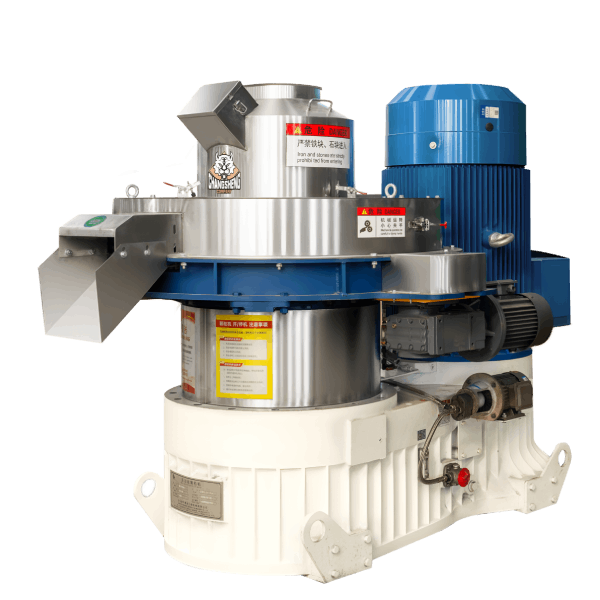
Project Background: A pellet plant in Vietnam processed 50% pine (softwood) and 50% acacia (hardwood). Used GCr15 ring die (420mm). Expected life 1,500 hours.
Initial Problem: Die life 700-900 hours (40-60% of expected). Replaced die 5-6 times per year (4,000each=20,000/year). Plant manager frustrated.
Root Cause Analysis:
- Hardwood (50%) reduced life by factor 0.6 (GCr15 hardwood life 800-1,200h vs softwood 1,500-2,000h)
- Moisture 16-22% (optimal 13-18%) – reduced life further
- No air classifier – sand from outdoor storage accelerated wear
Solution Implemented:
- Upgraded to 20CrMnTi die (5,500vs4,000 GCr15) – expected life 2,500 hours for softwood, 1,500 hours for 50/50 mix
- Added air classifier to remove sand (extended life 30%)
- Dried material to 15% (covered storage)
Final Data Results (12 months after changes):
| Metric | GCr15 Die (Before) | 20CrMnTi Die (After) |
|---|---|---|
| Die price | $4,000 | $5,500 |
| Actual life (hours) – 50/50 mix | 800 | 1,350 |
| Dies per year (6,000 hours) | 7.5 | 4.4 |
| Annual die cost | $30,000 | $24,200 |
| Cost per ton (4,000/800h×2t/h=10/ton) | $10/ton | $5.50/ton (based on 2 t/h) |
- Annual savings: 5,800(diecost)+8,000 (less downtime for die changes) = $13,800
- Payback on premium die: Immediate (lower cost per ton)
Request a die life projection: Contact engineering team with your feedstock mix, moisture range, and annual hours.
11. FAQ
Q1: How long does a pellet die last for softwood (pine)?
Flat die GCr15: 500-700 hours. Ring die GCr15: 1,500-2,000 hours. Ring die 20CrMnTi: 1,800-2,500 hours.
Q2: How long does a pellet die last for hardwood (oak)?
Flat die: 300-500 hours. Ring die GCr15: 800-1,200 hours. Ring die 20CrMnTi: 1,200-1,800 hours.
Q3: How long does a pellet die last for rice husk?
Flat die: 200-350 hours. Ring die GCr15: 400-600 hours. Ring die 20CrMnTi + tungsten: 800-1,500 hours.
Q4: What is the normal die life for feed pellets?
Ring die GCr15: 1,800-2,500 hours. Feed is less abrasive than wood (softer particles). Longer life.
Q5: How to know when to replace a die?
Output drops 20% below baseline. Pellets become crumbly. Die holes visibly oval. Track tons per die.
Q6: Can I extend die life?
Maintain moisture 13-18%. Clean die after each shift (oil-soaked sawdust). Use air classifier for sand removal. Proper roller gap (0.1-0.3mm). Avoid thermal shock.
Q7: Why does my die crack prematurely?
Thermal shock (cold material into hot die). Substandard material (45# vs GCr15/20CrMnTi). Roller gap too tight (metal contact).
Q8: Does die diameter affect life?
Larger die has more holes, so life in hours similar (holes wear at same rate). But larger die produces more tons per hour, so tons per die higher.
Q9: How much does a replacement die cost?
Flat die (200-300mm): 200−800.Ringdie(320mm):2,000-3,500. Ring die (420mm): 3,000−5,500.Ringdie(520mm):5,000-8,000. 20CrMnTi add 40-60%.
Q10: GCr15 vs 20CrMnTi – which lasts longer?
20CrMnTi lasts 1.5-2x longer for abrasive feedstocks (hardwood, rice husk). For softwood, difference smaller (20-30%).
Q11: How to calculate cost per ton for die?
Die price ÷ (expected hours × capacity t/h) = cost per ton. Example: 4,000÷(2,000h×2t/h)=1.00/ton.
Q12: Is it worth buying premium die (20CrMnTi)?
For softwood: marginal benefit (20-30% longer life, 40-60% higher cost). For hardwood/rice husk: yes (100% longer life, lower cost per ton).
Q13: How many tons can a die produce?
Flat die: 20-50 tons (0.05t/h × 400-1,000h). Ring die 420mm: 2,000-6,000 tons (2t/h × 1,000-3,000h). Depends on feedstock.
Q14: Does moisture affect die life?
Yes. Below 10% or above 20% reduces life 30-50%. Optimal 13-18%.
Q15: How to store spare dies?
Coat with rust preventative oil. Store vertically on edge (not flat). Keep in dry area (humidity <60%). Inspect for rust every 3 months.
12. Commercial Call-to-Action
For procurement and operations teams: Request a “how long does a pellet die last” calculator for your specific feedstock, moisture range, and annual hours. Includes cost per ton projection.
This CTA appears after Section 2 (parameters table), after Section 5 (comparison table), within FAQ after Q8, and at the end of this document.
Need a die recommendation? Submit your feedstock (species, % hardwood if mixed), moisture range, and target capacity for material (GCr15 vs 20CrMnTi) and life expectancy.
Looking for a spare die quote? Request pricing for your die diameter (320-760mm) and material (GCr15, 20CrMnTi) with quantity discount for 2+ dies.
To proceed: Send your inquiry via the contact form. Include die diameter (mm), feedstock (softwood, hardwood, rice husk, etc.), moisture range, and annual operating hours.
13. Author & E-E-A-T Credentials
Author: Zhang Wei
Wear Parts Specialist & Metallurgical Engineer
- 11 years in pellet mill die metallurgy and wear analysis (2014–present)
- Tested die life across 30+ feedstock types and 5 die materials
- Developed die life prediction models (hours and tons) for softwood, hardwood, rice husk, straw, and feed
- Author of “Pellet Die Life & Wear Guide” (China Machine Press, 2022)
- Member of ASM International (materials society)
Affiliation: Shandong Changsheng Machinery Co., Ltd.
The author has directly analyzed die wear patterns from 500+ pellet mills across 40 countries, documented life expectancy for 30+ feedstocks, and developed cost-per-ton optimization models. All life data, derate factors, and recommendations are derived from actual field wear measurements and production logs from 2014–2026.