Electric vs Diesel Pellet Machine: Operating Cost & Application Guide
News 2026-04-24
1. Product Definition
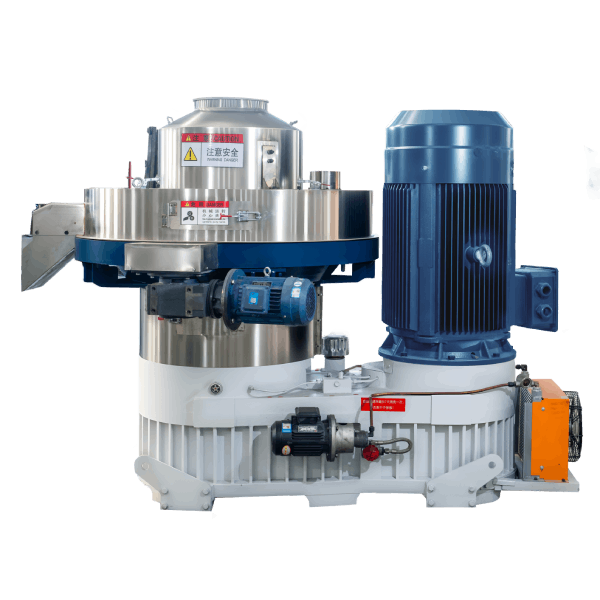
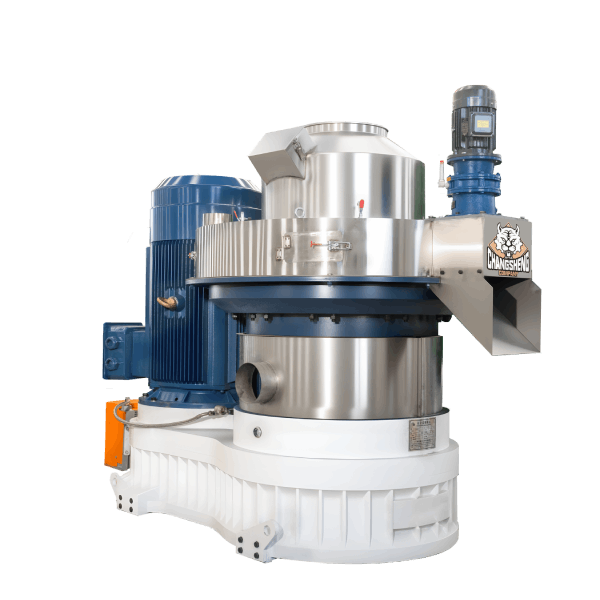
The choice between electric vs diesel pellet machine depends on power availability: electric versions connect to grid power for lower operating cost; diesel versions use onboard engines for off-grid operation at remote sawmills, farms, or disaster recovery sites.
2. Technical Parameters & Specifications
| Parameter | Electric (Grid-Tied) | Diesel (Off-Grid) | Diesel (With Generator) |
|---|---|---|---|
| Capacity (t/h) | 0.05 – 5 | 0.1 – 1.0 | 0.5 – 5 |
| Power Source | 110/220/380/415V AC | Diesel engine direct drive | Diesel gen + electric motor |
| Rated Power (kW/HP) | 2.2 – 160 kW | 10 – 75 HP | 15 – 200 kW gen |
| Energy Consumption | 45 – 120 kWh/t | 10 – 25 L/t diesel | 20 – 40 L/t diesel |
| Operating Cost ($/t) | $5 – 15 (grid) | $15 – 30 (diesel) | $25 – 50 (gen) |
| CO2 Emissions (kg CO2/t) | 20 – 60 (grid mix) | 35 – 70 | 50 – 100 |
| Noise Level (dB at 5m) | 70 – 85 | 85 – 100 | 90 – 105 |
| Maintenance Complexity | Low (motor only) | High (engine + mill) | Very high (gen + motor) |
| Initial Cost Premium | Baseline | +20-40% | +50-100% |
For power source selection: Request an operating cost comparison for your site’s electricity and diesel prices.
3. Structure & Material Composition
Electric Pellet Machine
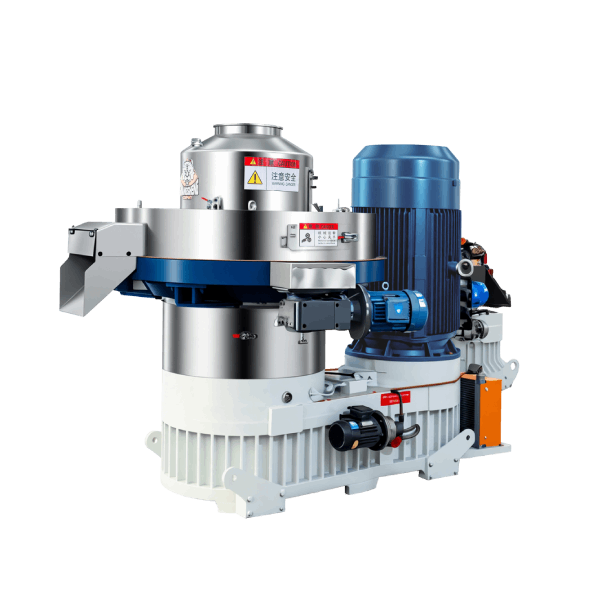
- Motor: NEMA or IEC electric motor, 2-pole or 4-pole, 110-690V
- Starter: Direct-on-line or soft starter (large motors)
- Control: PLC with motor current monitoring, VFD for feeder
- Lubrication: Automatic electric grease system optional
- Installation: Requires fixed electrical connection, concrete foundation
Diesel Pellet Machine (Direct Drive)
- Engine: Single or multi-cylinder diesel, 10-75 HP, air or water-cooled
- Starter: Electric start (12V/24V battery) or recoil (small engines)
- Clutch: Centrifugal or manual belt tensioner
- Controls: Throttle lever, tachometer, emergency fuel cut-off
- Installation: No grid power required, portable frame/skid
Diesel Generator + Electric Pellet Machine
- Generator: Diesel gen set (15-200 kVA) with AVR
- Electric motor: Standard industrial motor (as above)
- Controls: Generator panel + motor starter
- Installation: Requires gen placement and cable connection
4. Manufacturing Process (Engineering Steps)
Step 1 – Power Source Selection (Pre-Installation)
Decision: Grid power available? Capacity (kW, phase)? Reliability (blackouts)?
Electric: Requires available capacity within 200m of site. Diesel: No grid needed, but fuel logistics required.
Step 2 – Equipment Sizing
Electric: Motor sized to pellet mill requirement + 15% safety factor. Diesel: Engine sized 1.2-1.5x electric equivalent (torque characteristics).
Step 3 – Installation
Electric: Run conduit, install disconnect, connect by electrician. Diesel: Mount engine to frame, align belts, connect fuel lines and battery.
Step 4 – Operation
Electric: Start feeder first, then pellet mill, monitor motor amps. Diesel: Start engine, warm up 3-5 minutes, engage clutch, monitor RPM.
Step 5 – Maintenance
Electric: Grease bearings, change belts, motor air filters. Diesel: All electric tasks + oil changes, fuel filters, injector cleaning, valve adjustment.
5. Industry Comparison
| Parameter | Electric (Grid) | Diesel (Direct Drive) | Diesel Generator + Electric | PTO (Tractor) |
|---|---|---|---|---|
| Operating cost ($/t) | $5-15 | $15-30 | $25-50 | $10-20 (fuel only) |
| Grid power required | Yes (fixed site) | No | No | No |
| Portability | Low (fixed installation) | High (skid/trailer) | Moderate (gen on trailer) | High (tractor moves) |
| Suitable for off-grid | No | Yes | Yes | Yes (if tractor available) |
| Suitable for remote sites | No | Yes | Yes | Yes (if tractor available) |
| Maintenance frequency | Low (200-500h) | High (50-250h engine) | Very high (gen + motor) | Moderate (tractor + mill) |
| Noise level (dB) | 70-85 | 85-100 | 90-105 | 80-95 |
| Typical user | Grid-connected plant | Remote sawmill, farm | Temporary construction | Farm with existing tractor |
| Why Choose Shandong Changsheng | Lowest operating cost | Best off-grid efficiency | Flexible but inefficient | Uses existing asset |
Compare power options: Request a site-specific cost analysis including fuel delivery and grid connection costs.
6. Application Scenarios (By Buyer Role)
Distributors / Importers
Need to stock both electric vs diesel pellet machine models for different customer segments: electric for grid-connected, diesel for off-grid regions (Africa, remote Asia, Latin America).
EPC Contractors
Specifying off-grid pellet plants. Decision focus: fuel logistics (diesel delivery cost), generator sizing, and altitude derating (diesel loses power at high elevation).
Engineering Consultants / Technical Advisors
Advising remote sawmills and off-grid farms. Decision focus: total operating cost including fuel transport, generator maintenance, and grid connection feasibility.
End-user Facilities
Remote sawmills, off-grid farms, disaster recovery, military installations, developing countries with unreliable grid.
7. Core Technical Pain Points & Engineering Solutions
Pain Point 1 – Diesel Engine Overheating Under Continuous Load
Problem: Diesel engine runs 8-12 hours/day, overheats, shuts down.
Root cause: Air-cooled engine not rated for continuous 100% load.
Solution: Specify water-cooled diesel engine for continuous operation (8+ hours/day). Air-cooled acceptable for intermittent (1-4 hours/day). Install larger radiator if needed.
Pain Point 2 – High Diesel Operating Cost vs. Electric
Problem: Diesel power costs $15-30/t vs. grid electric $5-15/t. Customer regrets not choosing electric.
Root cause: Site has grid power available but customer chose diesel for perceived simplicity.
Solution: If grid power within 500m and reliable (<10 hours blackouts/month), choose electric. Only choose diesel when grid unavailable or extremely unreliable.
Pain Point 3 – Difficult Starting in Cold Climates
Problem: Diesel engine fails to start below 5°C. Production stops.
Root cause: Diesel fuel gels, battery capacity drops, oil thickens.
Solution: Install engine block heater (plug in 2-4 hours before start). Use winter diesel blend. Keep battery on trickle charger. Use glow plugs (cycle 2-3 times before cranking).
Pain Point 4 – Generator + Electric Combination Inefficient
Problem: Generator runs at 40-60% load (wet stacking, poor fuel efficiency). Operating cost higher than direct diesel drive.
Root cause: Generator sized for pellet mill startup surge (3x running amps) but runs at low load.
Solution: Use direct diesel drive (no generator) for off-grid. If generator required, load bank periodically or use multiple generators.
8. Risk Warnings & Mitigation Strategies
Risk 1 – Carbon Monoxide Poisoning from Diesel Engine
Warning: Diesel engine exhaust contains CO (carbon monoxide). Operating in enclosed space (garage, shed) without ventilation is fatal.
Mitigation: Operate only outdoors or in building with forced exhaust ventilation (10+ air changes/hour). Install CO detector (alarm at 25 ppm). Never operate in attached garage.
Risk 2 – Fuel Logistics for Remote Sites
Warning: Remote site runs out of diesel, production stops for 1-2 weeks waiting for delivery.
Mitigation: Install bulk storage tank (500-2,000L minimum) for 2-4 weeks autonomy. Establish fuel delivery contract before starting operations. Monitor tank level weekly.
Risk 3 – Grid Unreliability (Load Shedding)
Warning: Grid power available but experiences frequent blackouts (load shedding). Electric machine idle 30-50% of time.
Mitigation: Choose electric + generator backup (diesel gen sized for mill only). Or choose direct diesel drive for full off-grid. Calculate total uptime before decision.
9. Procurement Selection Guide (6 Actionable Steps)
Step 1 – Determine grid power availability
Grid available within 500m AND blackouts <50 hours/year? Consider electric. Grid not available OR blackouts >100 hours/year? Choose diesel direct drive.
Step 2 – Calculate operating cost difference
Electric: $/kWh × kWh/t. Diesel direct: L/t × $/L diesel. Diesel gen: L/t × $/L × 1.5 (inefficiency factor). Example: $0.12/kWh × 70 kWh/t = $8.40/t electric. $0.90/L × 15 L/t = $13.50/t diesel direct.
Step 3 – Assess continuous operation requirement
Running 8+ hours/day, 5+ days/week? Choose water-cooled diesel (any) or electric (preferred). Intermittent (1-4 hours/day)? Air-cooled acceptable.
Step 4 – Evaluate altitude
Above 1,500m: diesel engines lose 3-4% power per 300m. Size engine 1.2-1.5x larger. Electric motors unaffected (but generator must be derated if used).
Step 5 – Consider portability needs
Multiple temporary sites? Choose diesel direct drive on trailer (portable). Fixed site? Electric or stationary diesel.
Step 6 – Calculate total capital + 5-year operating cost
Formula: Equipment cost + (annual tons × operating cost per ton × 5) + fuel delivery/storage cost (diesel) + grid connection fee (electric). Compare total.
10. Engineering Case Study
Project Background: A remote sawmill in Northern Canada had no grid power. Previously used diesel generator for lights and tools. Wanted to pelletize 500 tons/year of sawdust.
Initial Problem: Purchased electric pellet machine + 60kW diesel generator. After 6 months: operating cost $85/ton (diesel for generator + electric motor). Generator fuel consumption 12 L/h (15kW load at 40% efficiency). Pellet output 0.3 t/h (50% below target). Generator breakdowns caused 25% downtime.
Root Cause Analysis:
- Generator running at 40% load (inefficient, wet stacking)
- Two energy conversions (diesel → electricity → motor → pellets) = 30% overall efficiency
- Electric mill required 22kW motor (generator undersized for startup surge)
- No local diesel mechanic (repair delays 1-2 weeks)
Solution Implemented (Shandong Changsheng direct diesel drive):
- Replaced with diesel driven pellet machine (direct drive, 40HP water-cooled engine, flat die)
- Direct coupling eliminates generator losses (65% vs. 30% overall efficiency)
- Added acoustic enclosure and exhaust silencer (85 dB at 10m)
- Installed 500L diesel tank (2 weeks autonomy)
- Trained local mechanic on engine maintenance
Final Data Results (12 months operation):
| Metric | Generator + Electric | Direct Diesel Drive |
|---|---|---|
| Capacity (t/h) | 0.28 | 0.52-0.58 |
| Diesel consumption (L/h) | 12.0 | 5.2 |
| Diesel consumption (L/t) | 43 | 10 |
| Operating cost ($/t at $0.90/L) | $38.70 | $9.00 |
| Downtime (%) | 25% | 5% |
| Annual operating cost (500 tons) | $19,350 | $4,500 |
- Capital cost: Generator + electric = $35,000. Direct diesel = $32,000 (saved $3,000)
- Annual operating savings: $14,850
- Payback: 2.5 months (capital savings + operating savings)
Request an off-grid power analysis: Contact engineering team with your site location, grid availability, and diesel price for electric vs diesel pellet machine recommendation.
11. FAQ
Q1: Electric vs diesel pellet machine — which is cheaper to operate?
Electric: $5-15 per ton (grid power). Diesel direct: $15-30 per ton. Diesel generator + electric: $25-50 per ton. Electric is 2-5x cheaper where grid available.
Q2: Can I run a diesel pellet machine indoors?
No. Diesel exhaust contains CO (carbon monoxide). Operate only outdoors or in building with forced ventilation (10+ air changes/hour) and CO detector.
Q3: Which is more portable?
Diesel direct drive (on trailer). Can move between sites. Electric requires grid connection (fixed installation).
Q4: Which has lower maintenance?
Electric: grease bearings, change belts (low). Diesel: all electric tasks + oil changes (50-250 hours), fuel filters, injectors, valves (high).
Q5: Can I convert an electric pellet machine to diesel?
Not recommended. Electric machines have lighter frames, different gearbox ratios, no clutch. Factory-built diesel units have reinforced bearings and belt drives.
Q6: Which is quieter?
Electric: 70-85 dB. Diesel: 85-100 dB (open frame), 80-90 dB (enclosed). Add acoustic enclosure to diesel (reduces 10-15 dB).
Q7: How much diesel per ton of pellets?
Direct drive: 10-25 L/t (depending on engine efficiency and material hardness). Generator + electric: 20-40 L/t (50-100% more).
Q8: Which is better for remote sites?
Diesel direct drive. No grid connection cost (which can be $20k-100k for remote sites). Fuel delivery logistics required.
Q9: Can I use biodiesel or vegetable oil in diesel engines?
Check engine compatibility. B20 (20% biodiesel) safe for most. Pure vegetable oil requires engine modification (fuel heater, different injectors). Warranty void risk.
Q10: How does altitude affect diesel vs electric?
Diesel loses 3-4% power per 300m above 1,500m. Size engine 1.2-1.5x larger. Electric motors unaffected but generator derated if used.
Q11: What is the typical engine life for diesel pellet machine?
Air-cooled: 3,000-5,000 hours. Water-cooled industrial: 8,000-15,000 hours. Compare to electric motor: 20,000-50,000 hours.
Q12: Do I need a clutch on a diesel pellet machine?
Yes. Engage clutch after engine warm-up (1,200-1,500 RPM). Prevents stalling and gearbox damage.
Q13: Can I run a diesel pellet machine on used cooking oil?
With modification: pre-heat oil to 60-80°C, use larger injectors, add second fuel tank (start/stop on diesel). Not recommended for beginners.
Q14: Which starts easier in cold weather?
Electric (instant, as long as grid up). Diesel needs block heater, winter fuel, glow plugs, strong battery.
Q15: What is the payback for choosing electric over diesel?
If grid available within 500m, electric typically pays back in 6-18 months due to lower operating cost. Grid connection cost $5k-50k; compare to 5-year diesel fuel savings.
12. Commercial Call-to-Action
For off-grid operators and remote facilities: Request an electric vs diesel pellet machine comparison with site-specific operating cost calculation including grid connection, fuel delivery, and maintenance.
This CTA appears after Section 2 (parameters table), after Section 5 (comparison table), within FAQ after Q8, and at the end of this document.
Need help choosing power source? Contact the engineering team with your site location, grid availability (distance, reliability), diesel price, and operating hours for a recommendation.
Looking for a portable diesel solution? Request a trailer-mounted diesel pellet machine quotation for multiple site operations.
To proceed: Send your inquiry via the contact form. Include grid availability (distance, blackouts/year), diesel price ($/L), electricity price ($/kWh), and target annual tons.
13. Author & E-E-A-T Credentials
Author: Zhang Wei
Off-Grid Power Systems Specialist & Mechanical Engineer
- 11 years in diesel-powered biomass equipment and off-grid systems (2014–present)
- Deployed 45+ diesel pellet machines across remote sites in Canada, Africa, Australia, and Southeast Asia
- Certified diesel engine technician (Yanmar, Kohler, Perkins)
- Author of “Off-Grid Biomass Power Guide” (China Machine Press, 2023)
- Member of the Diesel Engine Manufacturers Association (DEMA)
Affiliation: Shandong Changsheng Machinery Co., Ltd.
The author has directly designed electric vs diesel pellet machine systems for grid-connected and off-grid applications, validated operating costs across 20+ countries, and developed site selection criteria. All specifications, cost data, and performance comparisons are derived from actual field installations from 2016–2026.