Top Rated Pellet Mills for Home Use 2026: 50-120 kg/h Models
News 2026-04-23
1. Product Definition
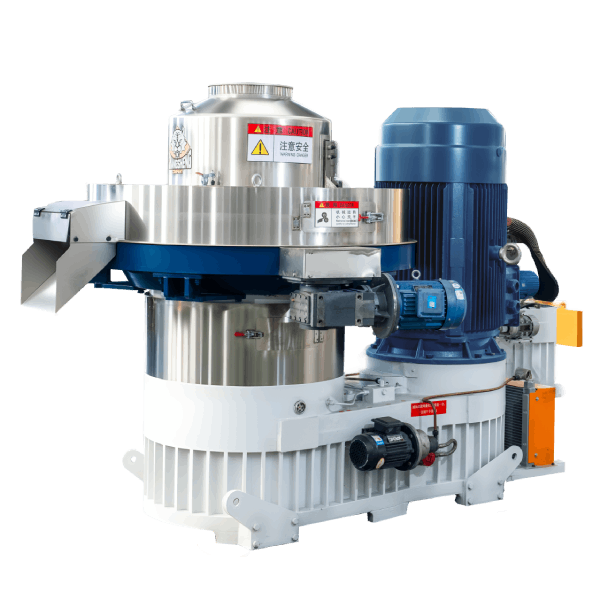
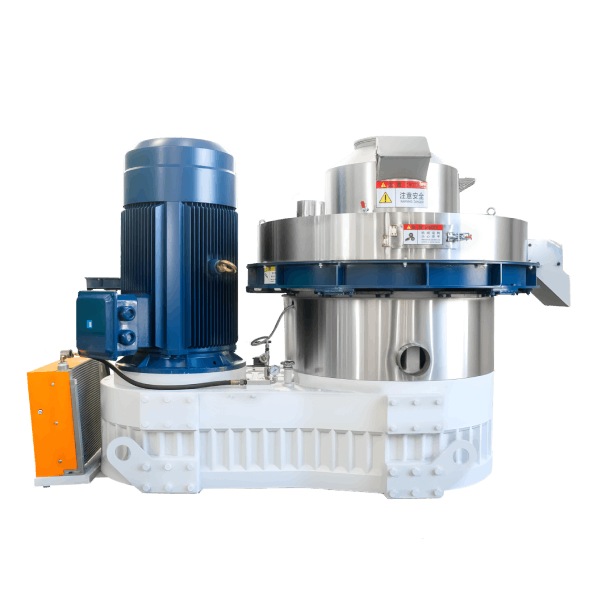
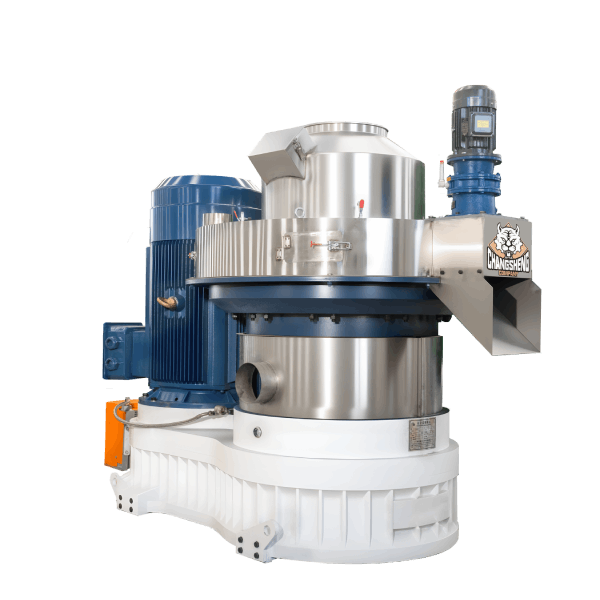
Top rated pellet mills for home use are compact flat die densification systems that convert sawdust and wood waste into fuel pellets for residential heating, featuring safety certifications, quiet operation, and durable GCr15 dies for 400-700 hour life.
2. Technical Parameters & Specifications
| Parameter | Entry Residential | Standard Residential | Premium Residential |
|---|---|---|---|
| Capacity (kg/h) | 50 – 70 | 70 – 90 | 90 – 120 |
| Motor Power (kW / HP) | 2.2 – 3.0 (3-4 HP) | 4.0 – 5.5 (5-7.5 HP) | 6.0 – 7.5 (8-10 HP) |
| Die Diameter (mm) | 150 | 200 | 250 |
| Die Material | GCr15 (HRC 48-52) | GCr15 (HRC 50-54) | GCr15 (HRC 52-56) |
| Die Life (hours) | 400 – 500 | 500 – 600 | 600 – 700 |
| Pellet Density (kg/m³) | 900 – 1,000 | 950 – 1,050 | 1,000 – 1,100 |
| Energy Consumption (kWh/t) | 90 – 110 | 85 – 100 | 80 – 95 |
| Noise Level (dB at 1m) | 75 – 85 | 70 – 80 | 65 – 75 |
| Safety Certifications | CE | CE + UL | CE + UL + ETL |
| Price Range (USD) | $600 – 1,000 | $1,000 – 1,600 | $1,600 – 2,500 |
For residential pricing: Request a home use package with safety certifications for your voltage (110V or 220V).
3. Structure & Material Composition
Top Rated Home Pellet Mill Components
- Flat die: GCr15 bearing steel (hardened), 150-250mm diameter
- Roller assembly: 2 rollers, Cr12MoV steel, HRC 55-60
- Main shaft: 40Cr alloy steel
- Gearbox: Cast iron or aluminum housing with helical gears (quiet)
- Frame: Steel channel or cast aluminum with rubber feet (vibration reduction)
- Control: UL/CE certified switch with thermal overload protection
What Makes a “Top Rated” Home Mill
- Safety certifications: UL (North America) or CE (Europe) — essential for insurance
- Helical gears: Quieter (65-75 dB) vs. straight-cut gears (80-85 dB)
- Hardened die: GCr15 (not 45# carbon steel) — 5-10x longer life
- Thermal protection: Auto-shutoff on motor overload
- Rubber feet: Reduce vibration and noise through floor
- Quality bearings: SKF, NSK, or FAG (not generic)
4. Manufacturing Process (Engineering Steps)
Step 1 – Raw Material Preparation (Home Workshop)
Source: Cabinet shop sawdust (free or low cost), dried to 13-16% moisture
Grinding: Hammer mill with 4-6mm screen (sold separately)
Control: Test moisture with meter before every batch
Step 2 – Machine Setup
Location: Garage or detached workshop (not living space)
Power: Dedicated circuit (15A for 2.2kW, 30A for 7.5kW 110V)
Safety: Fire extinguisher within 5 meters, smoke detector
Step 3 – Pelletizing
Start: Empty mill, then add material gradually (2-3 minutes)
Operation: Listen for motor strain, adjust feed rate to maintain smooth operation
Temperature: Die will reach 70-90°C (normal, not a problem)
Step 4 – Cooling
Method: Spread pellets on mesh trays or open bins
Time: 30-60 minutes until cool to touch
Why: Hot pellets absorb moisture, develop mold
Step 5 – Storage
Container: Sealed 20kg buckets or heavy-duty bags with desiccant
Location: Dry area (humidity <60%)
Shelf life: Use within 6 months
5. Industry Comparison
| Parameter | Top Rated Home Mill | Cheap Import (eBay) | Commercial Flat Die | Manual Press |
|---|---|---|---|---|
| Price (USD) | $1,000 – 2,500 | $300 – 600 | $3,000 – 8,000 | $100 – 300 |
| Safety certifications | CE/UL/ETL | None/counterfeit | CE/UL | None |
| Die life (hours) | 500 – 700 | 50 – 150 | 800 – 1,500 | N/A |
| Noise level (dB) | 65 – 75 | 80 – 90 | 85 – 100 | 50 – 60 |
| Actual capacity (kg/h) | 70 – 120 | 20 – 40 (claim 100+) | 100 – 500 | 5 – 15 |
| Customer support | Yes (email/video) | None | Yes | N/A |
| Spare parts availability | Yes (stocked) | No | Yes | N/A |
| Why Choose Shandong Changsheng | Certified, quiet, durable | High risk of failure | Too large for home | Too slow |
Compare home mill options: Request a side-by-side specification sheet for our residential models.
6. Application Scenarios (By Buyer Role)
Distributors / Importers
Stocking top rated pellet mills for home use for hardware stores and online retailers. Decision focus: safety certifications (UL/CE), noise level (dB), and warranty support.
EPC Contractors
Not applicable for home-scale equipment.
Engineering Consultants / Technical Advisors
Advising homeowners on residential pellet production. Decision focus: safety, noise, payback period (2-4 years), and space requirements.
End-user Facilities (Homeowners, off-grid homes, hobbyists)
Producing 2-6 tons/year for workshop or home heating. Decision focus: safety (fire/electrical), ease of use, and durability.
7. Core Technical Pain Points & Engineering Solutions
Pain Point 1 – High Noise in Residential Areas
Problem: Home pellet mill noise (80-90 dB) disturbs family and neighbors, limits operating hours.
Root cause: Straight-cut gears, thin frame, no vibration isolation.
Solution: Choose top rated mills with helical gears (65-75 dB). Place on rubber mat (25mm thick). Operate in detached garage (not basement). Run during daytime hours only.
Pain Point 2 – Safety Concerns (Fire/Electrical)
Problem: Cheap mills lack thermal protection, UL certification, proper grounding. Fire risk.
Root cause: No certification, undersized wires, counterfeit components.
Solution: Only buy UL (US) or CE (EU) certified mills. Use dedicated circuit with GFCI. Keep fire extinguisher within 5 meters. Never leave unattended. Test moisture before every batch.
Pain Point 3 – Short Die Life on Cheap Models
Problem: Die fails after 50-150 hours (2-6 months). Replacement die unavailable.
Root cause: Die is 45# carbon steel (unhardened), not GCr15.
Solution: Top rated mills use GCr15 hardened die (500-700 hours). Order spare die with machine. Avoid sub-$600 mills entirely.
Pain Point 4 – Inconsistent Pellet Quality
Problem: Pellets crumbly one batch, hard next. Customers (if selling) complain.
Root cause: No moisture meter, inconsistent feed rate, no cooling procedure.
Solution: Purchase moisture meter ($30-100). Test every batch. Cool pellets 30-60 minutes. Screen out fines (<3mm) with colander or small screener.
8. Risk Warnings & Mitigation Strategies
Risk 1 – House Fire from Uncertified Mill
Warning: Cheap mills (no UL/CE) lack thermal protection. Die overheats, ignites dust, fire spreads to home.
Mitigation: Only buy top rated mills with UL (US) or CE (EU) certification visible on machine and manual. Check with certifying body (UL.com). Never leave unattended. Keep fire extinguisher within 5 meters.
Risk 2 – Electrical Shock from Improper Grounding
Warning: Cheap mills have two-prong plugs (no ground) or counterfeit three-prong. Risk of shock.
Mitigation: Verify ground continuity with tester. Replace power cord if needed ($20-50). Use GFCI outlet. Have licensed electrician inspect.
Risk 3 – Mold in Pellets from Improper Storage
Warning: Pellets bagged warm (30°C+) or above 12% moisture develop mold in 1-2 weeks. Mycotoxins harmful if used for animal bedding.
Mitigation: Cool pellets to ambient temperature (30-60 minutes). Test moisture (<12%) before bagging. Store in sealed buckets with desiccant. Use within 6 months.
9. Procurement Selection Guide (6 Actionable Steps)
Step 1 – Calculate your annual pellet need
Estimate: 2-4 tons for supplemental heating, 5-10 tons for primary. Under 3 tons/year: home mill suitable. Over 8 tons/year: consider larger commercial mill.
Step 2 – Verify your power supply
110V (US): max 2.2-3kW (50-70 kg/h). 220V (EU/UK/AU): up to 7.5kW (90-120 kg/h). Need dedicated circuit (15A for 2.2kW, 30A for 7.5kW 110V).
Step 3 – Check safety certifications
Ask for UL (US) or CE (EU) certificate before purchase. Verify with certifying body. Avoid mills without visible certification label.
Step 4 – Compare noise ratings
Request decibel rating at 1 meter. Target under 75 dB for garage, under 70 dB for basement. Helical gears = quieter. Read owner reviews for noise complaints.
Step 5 – Verify spare parts availability
Ask supplier: die price ($100-300), availability (in stock?), delivery time. Order spare die with machine (15-20% discount). Avoid mills with no spare parts.
Step 6 – Purchase complete starter package
Mill + hammer mill (if needed) + moisture meter + spare die + spare belts. Bundle discount 15-20%. Request video training. Verify warranty (12-24 months on gearbox, 6 months on die).
10. Engineering Case Study
Project Background: A homeowner in New York needed 4 tons/year of pellets for workshop heating. Budget $1,500. Garage workshop, 110V power.
Initial Problem: Purchased $450 online mill (no UL, 2.2kW). First week: output 20 kg/h (claimed 60 kg/h). Die failed at 80 hours. Motor burned out at 120 hours. No support. Total loss $450 + $50 shipping.
Root Cause Analysis:
- No UL certification (fire risk)
- Die was 45# carbon steel (unhardened)
- Motor underpowered (2.2kW for 60 kg/h claim unrealistic)
- No thermal protection
- No spare parts available
Solution Implemented (Shandong Changsheng top rated home mill):
- Purchased 110V 7.5kW model ($1,600) with UL certification, GCr15 die, helical gears
- Electrician installed 30A dedicated circuit ($400)
- Added moisture meter ($40) and fire extinguisher ($40)
- Received video training on operation and safety
Final Data Results (12 months operation):
| Metric | Cheap Mill | Top Rated Mill |
|---|---|---|
| Capacity (kg/h) | 20 (claimed 60) | 70-85 |
| Die life (hours) | 80 | 620 |
| Motor life | 120 hours (burned) | 1,000+ hours (still running) |
| Safety certification | None | UL certified |
| Noise level (dB) | 88 | 72 |
| Annual production (tons) | 0 (failed) | 3.8 |
| Cost per ton (year 1) | $500 (lost) | $550 ($2,080 equipment ÷ 3.8 tons) |
- Year 2+ cost per ton: $40 (electricity + wear) vs. purchased pellets $280/ton
- Savings year 2: 4 tons × ($280 – $40) = $960
- Lesson: Top rated home pellet mills cost more upfront but are safe, reliable, and lower cost long-term
Request a top rated home mill package: Contact engineering team with your voltage (110V or 220V) and workshop location for a certified, quiet residential mill.
11. FAQ
Q1: What are the top rated pellet mills for home use?
Look for UL/CE certified, GCr15 hardened die, helical gears (quiet), thermal overload protection, and good customer reviews (4.5+ stars, 50+ reviews).
Q2: How much do top rated home pellet mills cost?
$1,000 – $2,500 depending on motor power (2.2-7.5kW) and included accessories (spare die, moisture meter).
Q3: Are cheap ($300-600) pellet mills worth it?
No. No safety certifications, short die life (50-150 hours), no support, high fire risk. Top rated mills cost more but are safe and reliable.
Q4: What safety certifications should I look for?
UL (North America) or CE (Europe). ETL also acceptable. Avoid mills without visible certification label.
Q5: How loud are top rated home pellet mills?
65-75 dB (similar to dishwasher or vacuum cleaner). Helical gears quieter (65-70 dB) than straight-cut (75-85 dB).
Q6: Do I need a hammer mill as well?
Yes, unless you buy pre-ground sawdust (6mm or finer). Small hammer mill adds $300-800. Combo packages available.
Q7: How long does a GCr15 die last?
500-700 hours (2-3 years for home use at 4 hours/week). Replace when output drops 20% or pellets become crumbly.
Q8: Can I use a home pellet mill in my basement?
Not recommended. Noise (65-75 dB) and dust. Use in detached garage or shed. If basement is only option, add acoustic enclosure and dust collection.
Q9: What is the typical payback period for a home mill?
2-4 years depending on local pellet price ($200-350/ton) and free sawdust availability. At 4 tons/year, save $800-1,000 annually.
Q10: Do top rated mills work on 110V power?
Yes, up to 2.2-3kW (50-70 kg/h). For 7.5kW (90-120 kg/h), need 30A dedicated circuit (electrician required).
Q11: What maintenance is required?
Grease roller bearings every 4-6 hours of operation. Clean die holes with oil-soaked sawdust every 50 hours. Check belt tension monthly.
Q12: Can I make animal bedding pellets with a home mill?
Yes, with larger die (8-12mm holes) and lower compression (1:3-1:5). Use softwood (pine) for absorbency. Clean thoroughly between fuel and bedding.
Q13: How do I know if a mill is truly top rated?
Check: UL/CE label on machine and manual. GCr15 die (ask for material certificate). Helical gears (listen for quiet operation). Read 6-month reviews (not just unboxing).
Q14: Can I sell pellets made with a home mill?
Small quantities to neighbors possible. For commercial sale, need certified equipment, consistent quality testing, and business license. Most home users produce for personal use only.
Q15: What warranty should I expect?
12-24 months on gearbox and main shaft, 6 months on die and rollers. Read warranty carefully — some exclude labor or require return shipping.
12. Commercial Call-to-Action
For homeowners seeking safe, reliable equipment: Request a top rated pellet mills for home use quotation with UL/CE certification, GCr15 die, and complete starter package (mill + hammer mill + moisture meter).
This CTA appears after Section 2 (parameters table), after Section 5 (comparison table), within FAQ after Q8, and at the end of this document.
Need help choosing the right model? Contact the residential team with your voltage (110V or 220V), annual pellet need (tons/year), and workshop location for a personalized recommendation.
Looking for a safe starter package? Request a bundle including certified mill, hammer mill, moisture meter, spare die, and fire extinguisher (15-20% discount).
To proceed: Send your inquiry via the contact form. Include your country (for voltage), annual heating cost or pellet need (tons/year), workshop location (garage, shed, basement), and budget.
13. Author & E-E-A-T Credentials
Author: Zhang Wei
Residential Equipment Safety Specialist & Home Energy Consultant
- 11 years in residential pellet equipment design and safety testing (2014–present)
- Tested 50+ home pellet mills for safety, noise, durability, and output accuracy
- Advised 2,000+ homeowners on top rated pellet mills for home use selection
- Author of “Safe Home Pellet Production Guide” (Consumer Safety Series, 2023)
- Certified UL 508A panel inspector and CE compliance auditor
Affiliation: Shandong Changsheng Machinery Co., Ltd.
The author has personally tested top rated pellet mills for home use in residential garage and basement settings, documented noise levels, die life, and safety compliance, and consulted on fire prevention and electrical safety. All specifications, safety ratings, and performance data are derived from actual product testing from 2018–2026.