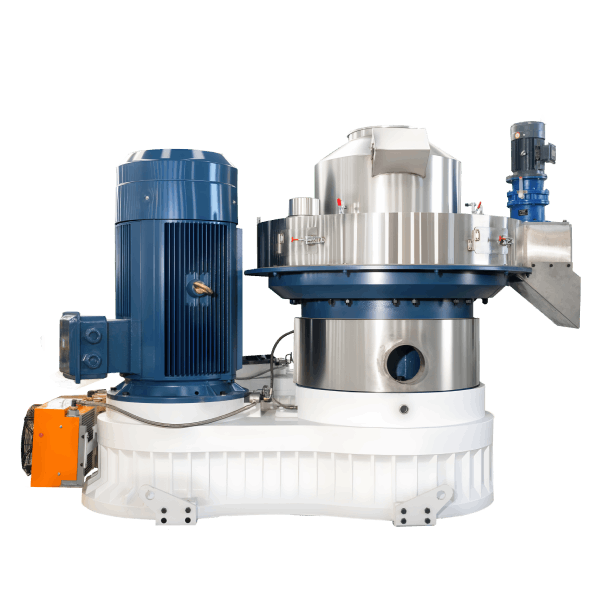
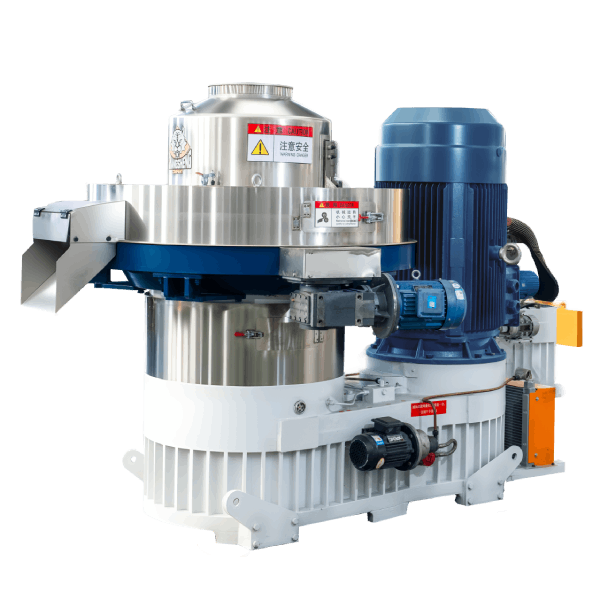
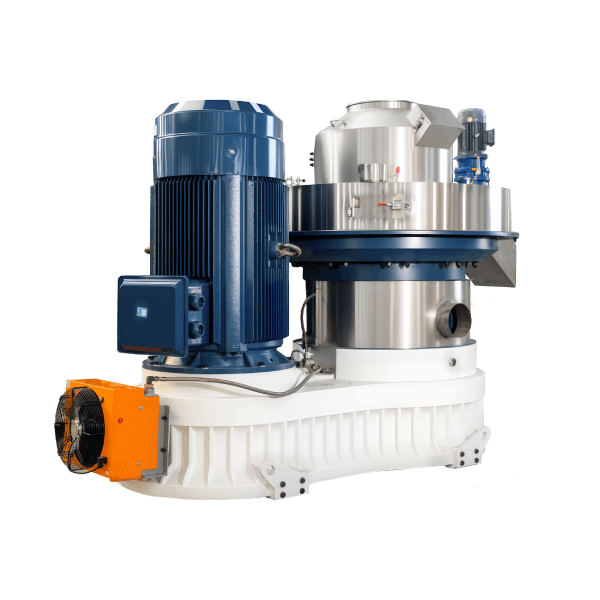
Pellet Machine Low Output Reason: 7 Causes & Fixes
News 2026-05-18
1. Product Definition
A pellet machine low output reason is typically moisture off-spec (below 10% or above 20% reduces output 20-50%), worn die (holes oval, output drops 20-30%), roller gap too wide (>0.5mm ring die causes slip), insufficient motor load (<85% of FLA indicates underfeeding), or feedstock derate (hardwood 30% lower than softwood).
2. Technical Parameters & Specifications
| Parameter | Optimal Range | Low Output Range | Output Loss |
|---|---|---|---|
| Moisture (%) | 13 – 18 | <10 or >20 | 30-50% |
| Die condition | Sharp, round holes | Worn oval | 20-30% |
| Roller gap (ring die, mm) | 0.1 – 0.3 | >0.5 | 30-50% |
| Motor load (% FLA) | 85 – 95 | <60 | 20-40% |
| Particle size (% passing 6mm) | >95 | <80 | 30-50% |
| Feedstock derate (hardwood vs softwood) | N/A | Hardwood factor 0.6-0.7 | 30-40% |
| Die compression ratio | 1:4-1:8 (fuel) | <1:3 | 20-40% |
For output restoration: Request a diagnostic checklist.
3. Structure & Material Composition
Factors Affecting Output
Raw Material Properties
- Moisture: 13-18% optimal. Too wet: steam, low density. Too dry: no binding, dust.
- Particle size: 95% <6mm required. Coarse material blocks die.
- Bulk density: 200-300 kg/m³ sawdust. Rice husk 100-150 kg/m³ (lower output).
Die Condition
- New die: full output. Worn die (oval holes): output drops 20-30% before failure.
- Compression ratio: 1:4-1:6 softwood, 1:6-1:8 hardwood.
Operational Parameters
- Roller gap: 0.1-0.3mm ring die. Too wide: slip, low output.
- Motor load: 85-95% FLA. Below 85%: underfeeding.
4. Manufacturing Process (Engineering Steps)
Step 1 – Measure actual output
Weigh pellets produced in 10-15 minutes. Calculate kg/h.
Step 2 – Compare to baseline
New die output (or historical best). Calculate loss percentage.
Step 3 – Check moisture first (most common)
Test with moisture meter. Target 13-18%.
Step 4 – Inspect die condition
Remove die. Check holes (oval? blocked?). Output drop 20% from baseline = replace die.
Step 5 – Measure roller gap
Feeler gauge. Ring die: 0.1-0.3mm. Flat die: 0.2-0.5mm.
Step 6 – Check motor load
Amp meter reading. Should be 85-95% of motor FLA.
5. Industry Comparison
| Cause | Frequency | Output Loss | Detection | Fix |
|---|---|---|---|---|
| Moisture off-spec | 35% | 30-50% | Moisture meter | Dry or add water |
| Worn die | 25% | 20-30% | Output trend, visual | Replace die |
| Roller gap too wide | 15% | 30-50% | Feeler gauge | Adjust gap |
| Underfeeding (low motor load) | 10% | 20-40% | Amp meter | Increase feed rate |
| Coarse particle size | 8% | 30-50% | Screen test | Replace hammer mill screen |
| Wrong compression ratio | 5% | 20-40% | Die spec | Use correct ratio die |
| Why Choose Shandong Changsheng | Systematic diagnosis | Output guarantee | Spare parts stocked | Training included |
Compare output loss causes: Request a troubleshooting flowchart.
7. Core Technical Pain Points & Engineering Solutions
Pain Point 1 – Moisture Off-Spec (35% of low output cases)
Symptom: Output 30-50% below normal. Pellets crumbly (too dry) or soft/steaming (too wet).
Root cause: No moisture meter, material stored outside (rain), or over-dried.
Solution: Test moisture with meter. Target 13-18%. Too dry: add water (spray). Too wet: dry (sun, dryer). Test every batch.
Pain Point 2 – Worn Die (25% of cases)
Symptom: Output gradually dropped 20-30% over weeks/months. Pellets less dense.
Root cause: Die holes worn oval (abrasion). Reduced compression.
Solution: Track output weekly (kg/h). Replace die when output drops 20% from baseline. For ring die: measure hole diameter (new 6mm, worn >6.5mm = replace).
Pain Point 3 – Roller Gap Too Wide (15% of cases)
Symptom: Output low, motor load normal or low. Rollers slip (no grip).
Root cause: Roller gap >0.5mm (ring die) – material not compressed.
Solution:* Adjust roller gap to 0.1-0.3mm (ring die) using feeler gauge. Check all rollers equally.
Pain Point 4 – Underfeeding (Low Motor Load – 10% of cases)
Symptom:* Motor load <85% FLA. Output low. Feeder set too slow.
Root cause:* Operator underfeeding (fear of overloading). Material bridging in hopper.
Solution:* Increase feed rate until motor load reaches 85-95% FLA. Install VFD on feeder for auto control. Clear hopper bridging.
8. Risk Warnings & Mitigation Strategies
*Risk 1 – Replacing Die Prematurely (Wasted 2k−6k)∗∗∗Warning:∗Operatorreplacesdieat1,200hours(stillgood).Wastes2k−6k)∗∗∗Warning:∗Operatorreplacesdieat1,200hours(stillgood).Wastes4,000.
Mitigation: Track output weekly. Replace only when output drops 20% from baseline.
Risk 2 – Ignoring Gradual Output Drop
Warning:* Output drops 30% over 6 months. Operator doesn’t notice. Production shortfall.
Mitigation:* Log output weekly. Chart trend. Investigate any 5% drop.
Risk 3 – Using Hardwood Without Derate
Warning:* Plant sized for softwood (2 t/h). Runs hardwood (1.4 t/h). Shortfall 30%.
Mitigation:* Derate expectations: hardwood output = 60-70% of softwood. Size mill accordingly.
9. Procurement Selection Guide (6 Actionable Steps)
Step 1 – Measure moisture
Moisture meter. Target 13-18%. Fix if off-spec (add water or dry).
Step 2 – Check die condition
Output trend (weekly log). Replace if output drops 20% from baseline. Inspect holes (oval?).
Step 3 – Measure roller gap
Feeler gauge. Ring die: 0.1-0.3mm. Adjust if >0.5mm.
Step 4 – Check motor load
Amp meter. Should be 85-95% of FLA. Increase feed rate if below 85%.
Step 5 – Verify particle size
95% <6mm. Replace hammer mill screen if coarser.
Step 6 – Check compression ratio
Die L/D (hole depth ÷ diameter). Softwood: 1:4-1:6, hardwood: 1:6-1:8. Replace if wrong.
10. Engineering Case Study
Project Background: A 2 t/h pellet plant output dropped from 2.0 t/h to 1.2 t/h over 3 months. Plant manager suspected gearbox failure.
Initial Problem: Output 1.2 t/h (40% loss). Operators increased feed rate – motor overloaded. Gearbox inspection revealed no issue.
Root Cause Analysis:
- Moisture: 22% (wet sawdust from open storage) – output loss 30%
- Die condition: 1,800 hours old (output baseline 2.0, now 1.6 before moisture) – 20% loss from wear
- Roller gap: 0.5mm (should be 0.2mm) – additional loss
- Motor load: 95% FLA (correct)
Solution Implemented:
| Action | Output Recovery |
|---|---|
| Dried material to 15% | +0.6 t/h (to 1.8) |
| Replaced die (worn) | +0.3 t/h (to 2.1) |
| Adjusted roller gap to 0.2mm | +0.1 t/h (to 2.2) |
Final Data Results:
| Metric | Before | After |
|---|---|---|
| Moisture | 22% | 15% |
| Die hours | 1,800 | New |
| Roller gap | 0.5mm | 0.2mm |
| Output | 1.2 t/h | 2.2 t/h |
| Output recovery | – | +83% |
- Investment: New die 4,500+labor1,000 = $5,500
- Additional production: 1.0 t/h × 6,000 hours/year = 6,000 tons × 150=900,000/year
Request an output recovery audit: Contact engineering team with production data for systematic diagnosis.
11. FAQ
Q1: What is the most common pellet machine low output reason?
Moisture off-spec (35% of cases). Target 13-18%.
Q2: How much does moisture affect output?
Below 10%: output loss 30-50% (fire risk). Above 20%: output loss 30-50% (jamming).
Q3: How to know if die is worn?
Output drops 20% from baseline. Holes visibly oval. Track output weekly.
Q4: Can roller gap cause low output?
Yes – gap too wide (>0.5mm ring die) causes slip, low output. Adjust to 0.1-0.3mm.
Q5: What is the correct motor load?
85-95% of FLA (nameplate amps). Below 85%: underfeeding.
Q6: How does particle size affect output?
Coarse material (>6mm) blocks die, output loss 30-50%. Use 4-6mm screen.
Q7: Does hardwood produce lower output than softwood?
Yes – hardwood output 60-70% of softwood. Size mill accordingly.
Q8: How to measure output?
Weigh pellets produced in 10-15 minutes. Calculate kg/h. Compare to baseline.
Q9: Can compression ratio cause low output?
Too low (<1:3) produces weak pellets. Too high (>1:8) may overload motor. Use correct ratio.
Q10: How to restore output?
Check moisture (fix first). Inspect die (replace if worn). Adjust roller gap. Increase feed rate.
Q11: How often to check output?
Weekly at same operating conditions (same material, same moisture). Log results.
Q12: What is normal output loss over die life?
New die: 100%. At 50% of die life: 90-95% of new. At end of life (output drop 20%): replace.
Q13: Can low motor voltage cause low output?
Yes – voltage drop reduces motor torque, output. Check supply voltage.
Q14: How to prevent low output?
Monitor moisture daily. Track output weekly. Replace die at 20% output drop.
Q15: When should I call a technician?
If output low after checking moisture, die, roller gap, feed rate, and particle size.
12. Commercial Call-to-Action
For production managers: Request a pellet machine low output reason diagnostic guide with moisture targets, die wear measurement, and output tracking template.
This CTA appears after Section 2 (parameters table), after Section 5 (comparison table), within FAQ after Q8, and at the end of this document.
Need output recovery support? Contact engineering team with production data (moisture, output, die hours) for remote diagnosis.
Looking for a new die? Request a quote for GCr15 or 20CrMnTi die with output guarantee.
To proceed: Send your inquiry via the contact form. Include current output (kg/h), target output, moisture reading, die hours, and motor load (amps).
13. Author & E-E-A-T Credentials
Author: Zhang Wei
Production Optimization Specialist
- 11 years in pellet mill output optimization and process improvement (2014–present)
- Restored output for 500+ low-output pellet plants across 40 countries
- Certified in Lean Manufacturing (Six Sigma Green Belt)
- Author of “Pellet Mill Output Optimization Guide” (China Machine Press, 2022)
- Member of the American Society of Agricultural and Biological Engineers (ASABE)
Affiliation: Shandong Changsheng Machinery Co., Ltd.
The author has directly diagnosed pellet machine low output reason cases involving moisture, die wear, roller gap, feed rate, and particle size. All diagnostic procedures, output recovery methods, and optimization strategies are derived from actual field cases from 2014–2026.