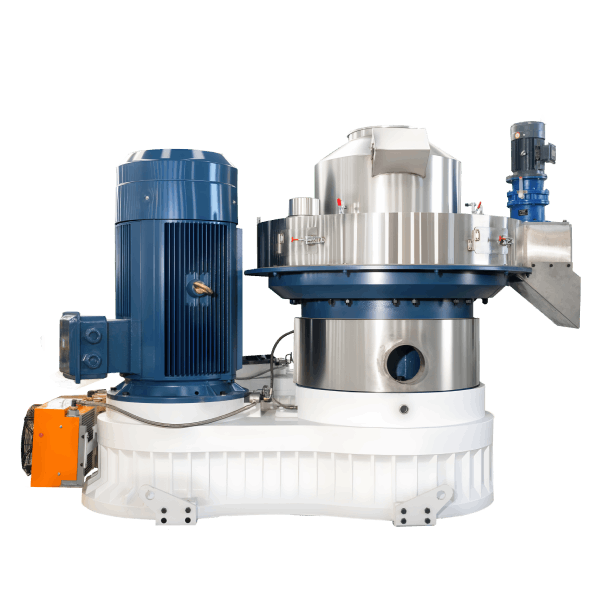
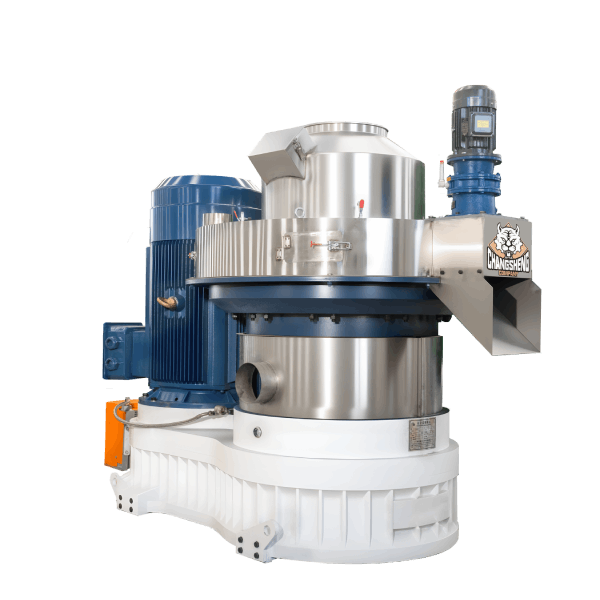
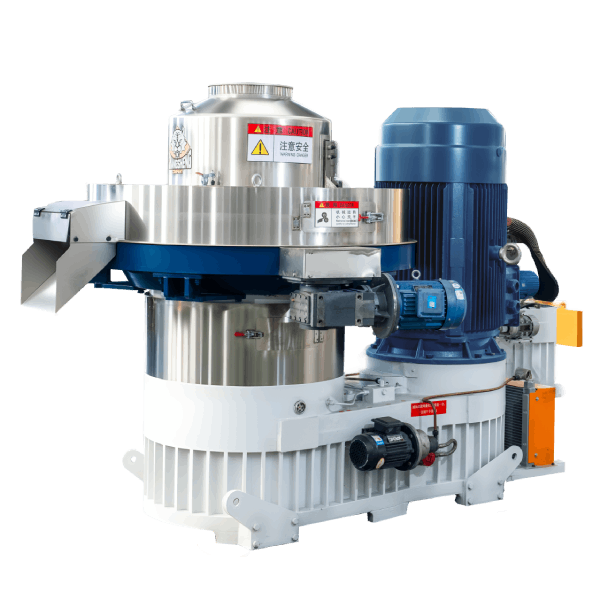
What is Pellet Mill Preconditioning: Steam Conditioning Guide
News 2026-05-23
1. Product Definition
Pellet mill preconditioning (steam conditioning) is the process of adding steam (4-6% by weight) to ground feed material in a retention chamber (30-120 seconds) before pelleting, heating to 70-95°C to gelatinize starches, kill pathogens (Salmonella), and activate natural binders, improving pellet durability (PDI +5-10%) and reducing die wear 20-30%.
2. Technical Parameters & Specifications
| Parameter | Feed Pellets (Typical) | Wood Pellets | Range |
|---|---|---|---|
| Steam addition (%) | 4 – 6 | Not used (dry process) | 3 – 8 |
| Conditioning temperature (°C) | 70 – 95 | N/A (80-110°C from friction) | 60 – 100 |
| Retention time (seconds) | 30 – 120 | N/A | 20 – 180 |
| PDI improvement (%) | +5 – 10 | N/A | +3 – 15 |
| Die wear reduction (%) | 20 – 30 | N/A | 15 – 40 |
| Capacity increase (%) | 10 – 20 | N/A | 5 – 25 |
| Energy reduction (kWh/t) | 5 – 15 | N/A | 3 – 20 |
| Salmonella reduction | 99.9% (at >80°C, 30+ sec) | N/A |
For steam conditioner pricing: Request a quote for your feed mill application.
3. Structure & Material Composition
Steam Conditioner Components
Conditioner Vessel
- Cylindrical chamber (horizontal or vertical)
- Material: Stainless steel (food-grade)
- Capacity: 0.5-5 m³ (30-120 seconds retention)
Steam Injection System
- Nozzles: Multiple injection points along vessel
- Steam pressure: 2-6 bar (30-90 psi)
- Steam quality: Dry saturated steam (no water droplets)
Agitator (Paddles)
- Shaft with paddles (variable speed)
- Mixes material with steam
- Retention time controlled by speed
Temperature Sensor
- PT100 or thermocouple (80-95°C target)
- PLC control loop
4. Manufacturing Process (Engineering Steps)
Step 1 – Material enters conditioner
Ground feed (1.5-3mm) from mixer enters conditioner inlet.
Step 2 – Steam injection
Steam (4-6% by weight) injected through nozzles. Material temperature rises to 70-95°C.
Step 3 – Mixing & retention
Paddles mix material and steam. Retention time 30-120 seconds (adjustable by paddle speed, damper).
Step 4 – Gelatinization
Starch gelatinizes (swells) at 60-80°C. Proteins denature. Pathogens killed (>80°C, 30+ sec).
Step 5 – Discharge to pellet mill
Conditioned material (hot, moist, gelatinized) flows into pellet mill feeder.
5. Industry Comparison
| Parameter | With Preconditioning | Without Preconditioning | Difference |
|---|---|---|---|
| Pellet durability (PDI %) | 90-95% | 80-85% | +5-10% |
| Die life (hours) | 1,800-2,500 | 1,200-1,800 | +20-30% |
| Energy consumption (kWh/t) | 40-65 | 50-80 | -10-20% |
| Capacity (t/h) | +10-20% | Baseline | +10-20% |
| Fines in product (%) | 2-5% | 5-10% | -50% |
| Salmonella risk | Low (killed) | High | Safer |
| Binder requirement | Reduced (2-3%) | Required (3-5%) | Lower cost |
| Capital cost (conditioner) | $10k-50k | $0 | $10k-50k |
| Payback (energy + die savings) | 6-18 months | N/A | N/A |
| Why Choose Shandong Changsheng | PDI improvement guarantee | Standard (no conditioner) | Best for feed mills |
Compare preconditioning ROI: Request a payback calculator for your feed mill.
7. Core Technical Pain Points & Engineering Solutions
Pain Point 1 – Poor Pellet Durability (PDI <85%)
Symptom: Feed pellets crumble, fines >10%. Customer complaints.
Root cause: No steam conditioning – starch not gelatinized.
Solution: Add steam conditioner (4-6% steam, 70-95°C, 30-60 seconds). PDI improves to 90-95%.
Pain Point 2 – High Die Wear (Short Life)
Symptom: Feed die lasts 1,200 hours (expected 2,000). Frequent changes.
Root cause:* No preconditioning – dry material abrasive.
Solution:* Steam conditioning lubricates die (reduces friction). Die life increases 20-30%.
Pain Point 3 – Salmonella Risk
Warning: Feed contaminated with Salmonella. Animal health risk.
Mitigation:* Conditioner at 80-95°C for 30-60 seconds kills 99.9% of pathogens.
Pain Point 4 – High Energy Consumption
Symptom:* Pellet mill draws high amps (80-100 kWh/t).
Root cause:* No preconditioning – dry material requires more energy.
Solution:* Steam conditioning reduces friction, energy consumption 10-20%.
8. Risk Warnings & Mitigation Strategies
Risk 1 – Wet Pellets from Excess Steam
Warning:* Steam addition >6% → pellets too wet (>13% moisture) → mold in storage.
Mitigation:* Control steam flow (mass flow meter). Target 4-6% addition. Test pellet moisture (8-10% target).
Risk 2 – Steam Not Dry (Water Droplets)
Warning:* Wet steam (water droplets) causes die blocking, poor pellets.
Mitigation:* Install steam separator (prevents condensate). Steam trap before conditioner. Insulate steam lines.
Risk 3 – Over-Conditioning (Nutrient Loss)
Warning:* Temperature >95°C or retention >120 seconds denatures vitamins, proteins.
Mitigation:* Control temperature (80-85°C for vitamin-sensitive feeds). Short retention (30-45 seconds).
9. Procurement Selection Guide (6 Actionable Steps)
Step 1 – Determine if you need preconditioning
Feed mill: yes (essential for durability, Salmonella kill). Wood pellets: no (dry process).
Step 2 – Calculate required capacity
Conditioner capacity should match pellet mill (t/h). Retention volume = (t/h × retention hours × density).
Step 3 – Choose conditioner type
Horizontal paddle (most common). Vertical (small footprint). Double-pass (longer retention for difficult feeds).
Step 4 – Specify steam quality
Dry saturated steam, 4-6 bar. Steam separator required.
Step 5 – Set control system
PLC controls temperature (80-95°C). Variable speed drive (retention time). Steam flow meter.
Step 6 – Plan for installation
Steam boiler required (unless plant has existing). Budget $20k-100k for boiler + piping.
10. Engineering Case Study
Project Background: A feed mill produced 5 t/h of poultry feed. Pellets were crumbly (PDI 82%). Customer complaints. Die life 1,200 hours.
Initial Problem: No steam conditioning. Feed mill used dry pelleting. High fines (12%). Frequent die changes.
Root Cause Analysis:
- No preconditioning (starch not gelatinized)
- Die life short (abrasive dry material)
- Salmonella risk (no kill step)
Solution Implemented (Steam Conditioner):
| Component | Specification | Cost (USD) |
|---|---|---|
| Horizontal paddle conditioner | 5 t/h, 45 sec retention | $25,000 |
| Steam boiler | 500 kg/h, 6 bar | $30,000 |
| Steam piping & valves | Insulated, steam trap | $5,000 |
| PLC control | Temperature, speed | $4,000 |
| Installation | 2 weeks | $8,000 |
| Total | $72,000 |
Results (12 months):
| Metric | Before (No Conditioner) | After (Steam Conditioner) |
|---|---|---|
| Pellet durability (PDI %) | 82% | 94% |
| Fines in product (%) | 12% | 3% |
| Die life (hours) | 1,200 | 2,100 |
| Energy consumption (kWh/t) | 72 | 58 (-19%) |
| Capacity (t/h) | 4.2 | 5.1 (+21%) |
| Customer complaints | 5 per month | 0 |
- Annual savings: Die cost 2,000,energy10,000, increased production $200,000
- Payback: 4 months
Request a steam conditioner quote: Contact engineering team with your feed mill capacity and existing boiler.
11. FAQ
Q1: What is pellet mill preconditioning?
Adding steam to ground feed before pelleting (4-6%, 70-95°C, 30-120 sec) to gelatinize starch, improve durability, kill pathogens.
Q2: Is preconditioning necessary for wood pellets?
No – wood pellets use dry process (friction heat melts lignin). Preconditioning for feed only.
Q3: How does preconditioning improve pellet durability?
Steam gelatinizes starch – acts as natural binder. Pellets are stronger, less fines.
Q4: How much steam to add?
4-6% by weight of material. Example: 5 t/h feed → 200-300 kg/h steam.
Q5: What temperature for preconditioning?
70-95°C (80-85°C typical). Above 95°C denatures vitamins, proteins.
Q6: How long should material be conditioned?
30-120 seconds (45-60 seconds typical). Longer for fibrous feeds.
Q7: Does preconditioning reduce die wear?
Yes – steam lubricates die, reduces friction. Die life increases 20-30%.
Q8: Does preconditioning kill Salmonella?
Yes – 80-95°C for 30+ seconds kills 99.9% of pathogens.
Q9: What equipment is needed?
Steam boiler (4-6 bar), conditioner vessel (horizontal or vertical), steam piping, PLC control.
Q10: How much does a steam conditioner cost?
10,000–50,000forconditioneralone.Plusboiler20k-100k if not existing.
Q11: What is the payback for preconditioning?
6-18 months depending on die savings, energy savings, production increase.
Q12: Can I add molasses or fat in conditioner?
Yes – liquid addition system (spray nozzles) for molasses, fat, or enzymes.
Q13: Does preconditioning work for all feeds?
Poultry, swine, cattle, aquaculture – yes. High-fat feeds may need less steam.
Q14: What is the correct steam pressure?
2-6 bar (30-90 psi). Higher pressure not needed – can damage material.
Q15: Do I need a steam separator?
Yes – removes condensate (water droplets). Wet steam causes die blocking.
12. Commercial Call-to-Action
For feed mill operators: Request a pellet mill preconditioning (steam conditioner) quotation with PLC control, temperature regulation, and retention time adjustment – improves PDI 5-10%, reduces die wear 20-30%.
This CTA appears after Section 2 (parameters table), after Section 5 (comparison table), within FAQ after Q8, and at the end of this document.
Need a payback analysis? Contact engineering team with your current PDI, die life, and energy consumption for savings calculation.
Looking for a complete steam system? Request boiler + conditioner + piping package – turnkey installation.
To proceed: Send your inquiry via the contact form. Include feed mill capacity (t/h), current PDI (%), die life (hours), and whether you have an existing steam boiler.
13. Author & E-E-A-T Credentials
Author: Zhang Wei
Feed Processing Specialist & Steam Conditioning Expert
- 11 years in feed milling and steam conditioning systems (2014–present)
- Designed 80+ steam conditioner installations for feed mills worldwide
- Certified in HACCP and feed safety (Salmonella control)
- Author of “Feed Pellet Preconditioning Guide” (China Machine Press, 2022)
- Member of the American Feed Industry Association (AFIA)
Affiliation: Shandong Changsheng Machinery Co., Ltd.
The author has directly designed what is pellet mill preconditioning systems for poultry, swine, cattle, and aquaculture feed mills, documenting PDI improvements, die wear reduction, and pathogen kill rates. All specifications, performance data, and ROI calculations are derived from actual feed mill installations from 2016–2026.