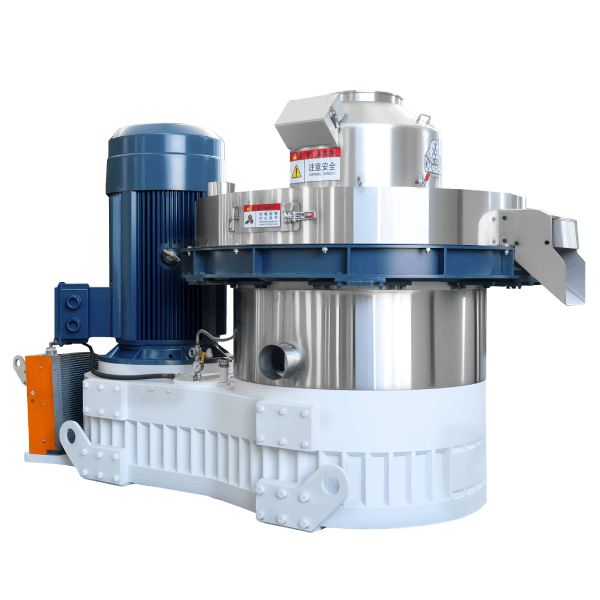
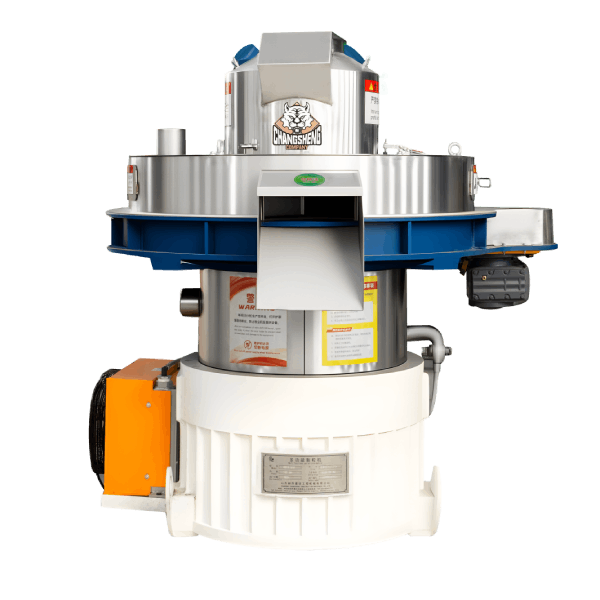
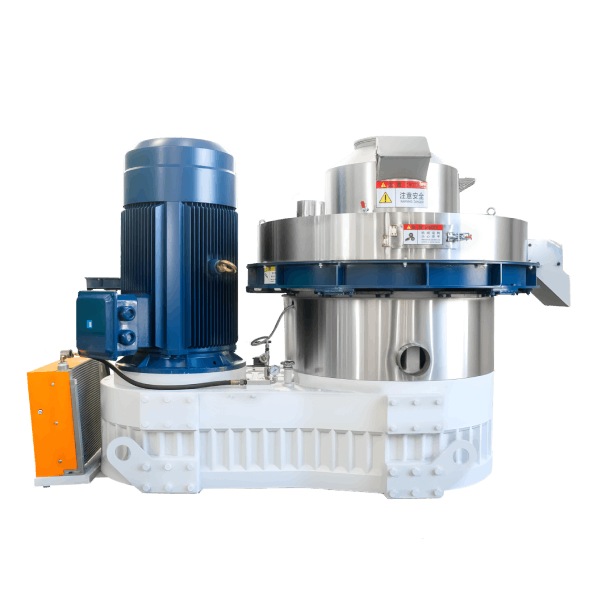
Diesel driven sawdust pellet machine
News 2026-04-13
1. Product Definition
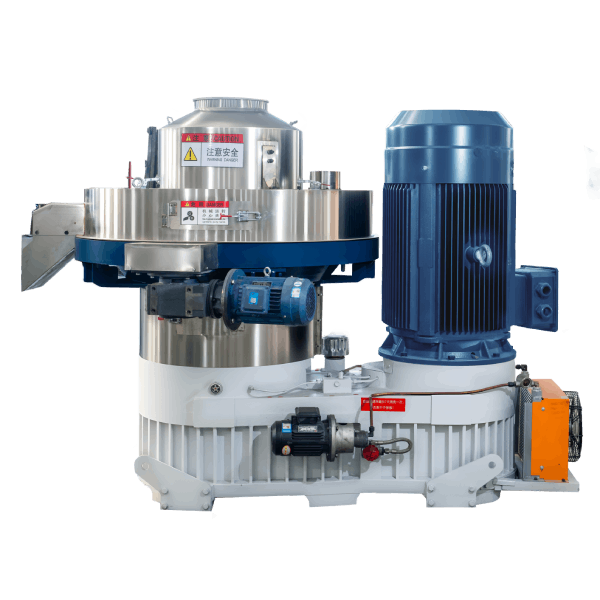
A diesel driven sawdust pellet machine is a self-powered densification system that compresses sawdust and wood waste into fuel pellets using a diesel engine instead of electric motor, suitable for locations without grid power.
2. Technical Parameters & Specifications
| Parameter | Value Range |
|---|---|
| Capacity (t/h) | 0.1 – 1.0 |
| Diesel Engine Power (HP) | 10 – 50 |
| Die Type & Diameter (mm) | Flat die (200-400) or ring die (320-500) |
| Finished Pellet Diameter (mm) | 6, 8, 10 |
| Finished Pellet Density (kg/m³) | 900 – 1,100 |
| Raw Material Moisture Content (%) | 10 – 20 (optimal: 13–16) |
| Fuel Consumption (L/h) | 2 – 8 |
| Core Wear Parts Life (hours) | 500 – 1,200 |
| Monthly Maintenance Man-hours (hours/month) | 8 – 15 |
| Diesel Tank Capacity (L) | 20 – 100 |
| Machine Weight (kg) | 300 – 1,500 |
For off-grid pricing: Request a quotation with your engine power preference (HP) and typical operating altitude.
3. Structure & Material Composition
Mechanical System (Compression Zone)
- Die: Forged GCr15 bearing steel (flat or ring), hardness HRC 48–54
- Roller assembly: High-chromium cast iron Cr12MoV, hardness HRC 55–60
- Main shaft: 40Cr alloy steel, quenched and tempered
Diesel Engine System
- Engine: Single or multi-cylinder diesel, air or water-cooled
- Starter: Recoil (manual) or electric start with battery
- Fuel system: Mechanical injection, diesel tank with filter
Power Transmission
- Clutch: Centrifugal or manual belt tensioner
- Belt drive: Multiple V-belts (minimum 3-5 belts)
- Frame: Welded heavy-duty steel channel
Control System
- Engine throttle lever (manual RPM control)
- Tachometer (optional hour meter)
- Emergency stop (fuel cut-off or clutch disengage)
4. Manufacturing Process (Engineering Steps)
Step 1 – Raw Material Drying & Grinding
Equipment: Diesel-powered hammer mill or electric (if generator available)
Control: Moisture 13-16%, particle size 95% under 6mm
Parameters: Hammer mill screen 4-6mm
Step 2 – Engine Startup & Warm-up
Equipment: Diesel engine with clutch disengaged
Control: Run at idle (800-1,000 RPM) for 3-5 minutes before engaging load
Parameters: Oil pressure >1.5 bar, coolant temperature rising
Step 3 – Engagement & RPM Setting
Equipment: Centrifugal or manual clutch
Control: Engage at 1,200-1,500 RPM; increase to operating speed (1,800-2,200 RPM)
Parameters: Belt tension deflection 10mm per meter
Step 4 – Pelletizing Under Load
Equipment: Flat die or ring die assembly
Control: Maintain engine RPM within 10% of target under load
Parameters: Die temperature 70-90°C, steady feed rate
Step 5 – Cool-down & Shutdown
Equipment: No-load run with clutch disengaged
Control: Run at idle for 3-5 minutes before stopping
Parameters: Allow turbocharger cool-down if equipped
5. Industry Comparison
| Parameter | Diesel Driven Pellet Machine | Electric Pellet Machine | PTO-Driven (Tractor) | Portable Generator + Electric |
|---|---|---|---|---|
| Power source | Diesel engine | Grid electricity | Tractor PTO | Diesel gen + electric motor |
| Capacity range (t/h) | 0.1–1.0 | 0.05–5 | 0.2–1.5 | 0.1–0.8 |
| Fuel efficiency | Direct (best) | Grid (cheapest if available) | Good | Poor (two conversions) |
| Off-grid capability | Yes (no external power) | No | Yes (with tractor) | Yes (but inefficient) |
| Noise level (dB at 5m) | 85-100 | 70-85 | 80-95 | 90-105 |
| Operating cost per ton | $15-25 (diesel) | $5-15 (electric) | $10-20 | $20-35 |
| Maintenance complexity | Moderate (engine + mill) | Low (mill only) | Moderate | High (gen + mill) |
| Typical user | Remote forestry, off-grid farm | Grid-connected facility | Farm with tractor | Temporary site |
| Why Choose Shandong Changsheng | Direct drive efficiency, rugged frame, easy start | Lower operating cost | Requires tractor | Least efficient |
Compare diesel vs. electric operating costs: Request a fuel consumption calculator for your location and diesel price.
6. Application Scenarios (By Buyer Role)
Distributors / Importers
Stocking diesel driven sawdust pellet machine models for off-grid regions (Africa, remote Asia, Latin America). Decision focus: engine parts availability (common brands like Kohler, Yanmar, Changchai), manual start option, and rugged packaging.
EPC Contractors
Specifying diesel-driven units for remote mine sites, disaster recovery zones, or temporary military installations without grid power. Decision focus: fuel consumption (L/h) at full load and altitude derating.
Engineering Consultants / Technical Advisors
Advising off-grid sawmills, remote farms, and forestry operations on diesel vs. generator+electric trade-offs. Decision focus: total operating cost per ton including diesel delivery logistics.
End-user Facilities (Remote sawmills, off-grid farms, forestry camps, disaster response)
Operating in locations with no grid power or unreliable electricity (3+ hours of daily blackouts). Decision focus: fuel availability, cold-start capability, and parts support.
7. Core Technical Pain Points & Engineering Solutions
Pain Point 1 – Engine Overheating Under Continuous Load
Problem: Diesel engine overheats after 2-3 hours of continuous pelletizing, triggering shutdown.
Root cause: Radiator undersized for 100% load duty cycle (many engines rated for intermittent use).
Solution: Specify water-cooled engine (vs. air-cooled) for continuous operation. Install larger radiator (1.5x standard). Clean cooling fins daily. Reduce ambient temperature limit to 40°C.
Pain Point 2 – Belt Slippage Under Heavy Load
Problem: V-belts slip and burn after 50-100 hours, reducing output.
Root cause: Insufficient belts (2 belts on 30HP engine) or incorrect tension.
Solution: Use minimum 4-5 belts for 30HP+. Install belt tension gauge (target 5-7 kg per belt). Use cogged belts for better grip. Keep spare belt set.
Pain Point 3 – Difficult Starting in Cold Weather
Problem: Engine cranks slowly or fails to start below 5°C.
Root cause: Cold diesel fuel thickens; battery capacity drops in cold.
Solution: Install engine block heater ($200-500) for cold climates. Use winter diesel blend. Upgrade battery to higher CCA rating. Use electric start (not recoil) for cold regions.
Pain Point 4 – RPM Droop Under Load Variation
Problem: Engine speed drops from 2,200 RPM to 1,600 RPM when denser material enters die, causing poor pellet quality.
Root cause: Mechanical governor lacks sensitivity for rapid load changes.
Solution: Install electronic governor ($500-1,000) for ±2% speed regulation. Or train operator to feed more consistently (smaller batches).
8. Risk Warnings & Mitigation Strategies
Risk 1 – Carbon Monoxide Poisoning in Enclosed Spaces
Warning: Diesel engine exhaust contains CO (carbon monoxide). Operating in garage, shed, or workshop without ventilation is fatal.
Mitigation: Operate only outdoors or in building with forced exhaust ventilation (minimum 10 air changes per hour). Install CO detector (alarm at 25 ppm). Never operate in attached garage.
Risk 2 – Fire from Fuel Leaks
Warning: Diesel fuel leaks onto hot engine (exhaust manifold temperature 300-500°C) can ignite.
Mitigation: Inspect fuel lines daily for cracks. Use braided stainless lines. Install drip tray under engine. Keep ABC fire extinguisher within 10 meters. Clean spilled fuel immediately.
Risk 3 – Flywheel or Belt Ejection
Warning: Broken belt or clutch component can be ejected at high speed, causing severe injury.
Mitigation: Install full belt guard (2mm steel) with interlock switch. Never remove guards. Inspect belts for cracks every 50 hours. Stand to the side when engaging clutch.
9. Procurement Selection Guide (6 Actionable Steps)
Step 1 – Determine off-grid operating hours
Estimate annual production hours. Below 500 hours/year: air-cooled engine acceptable. Above 1,000 hours/year: specify water-cooled industrial engine.
Step 2 – Calculate diesel fuel logistics
Fuel consumption: 2-8 L/h. At 1,000 hours/year = 2,000-8,000 liters/year. Verify fuel delivery access. Add bulk storage tank (500-2,000L) if remote.
Step 3 – Select engine brand with local parts
Choose engine brand with dealer within 200km (Yanmar, Kohler, Kubota, Perkins, or local Chinese brands with parts support). Avoid orphan engines with no parts availability.
Step 4 – Verify altitude derating
Above 1,500m altitude, diesel engines lose 3-4% power per 300m. Size engine 1.2-1.5x larger for high-altitude operation (e.g., 30HP engine derated to 22HP at 2,500m).
Step 5 – Request noise control options
Open-frame diesel: 95-100 dB (requires hearing protection). Acoustic enclosure: reduces to 80-85 dB (adds $1,000-3,000). Remote operation (cable throttle from 50m away): lowest noise at operator position.
Step 6 – Negotiate spare parts kit
Purchase: spare belts (2 sets), fuel filters (4), oil filters (4), air filters (2), clutch shoes/centrifugal clutch, and one set of engine gaskets. Request engine service manual.
10. Engineering Case Study
Project Background: A remote sawmill in Northern Ontario, Canada, had no grid power. They operated on diesel generator for lights and tools. The owner wanted to produce pellets from 500 tons/year of sawdust for on-site heating.
Initial Problem: The mill purchased an electric pellet machine plus 60kW diesel generator. After 6 months, total operating cost was $85/ton (diesel for generator + electric motor). Generator fuel consumption was 12 L/h (15kW load at 40% efficiency). Pellet output averaged 0.3 t/h (50% below target).
Root Cause Analysis:
- Generator running at 40% load (inefficient, wet stacking)
- Two energy conversions (diesel → electricity → motor → pellets) = 30% overall efficiency
- Electric mill required 22kW motor (generator undersized for startup surge)
- Generator breakdowns caused 25% downtime
Solution Implemented (Shandong Changsheng):
- Replaced with diesel driven sawdust pellet machine (direct drive, 40HP water-cooled engine, flat die)
- Direct coupling eliminates generator losses (65% vs. 30% overall efficiency)
- Added acoustic enclosure and exhaust silencer (85 dB at 10m)
- Installed 500L diesel tank (2 weeks autonomy)
Final Data Results (12 months operation):
- Stable output: 0.52-0.58 t/h (sawdust at 14% moisture)
- Diesel consumption: 5.2 L/h average (vs. 12 L/h for generator setup)
- Operating cost: $28/ton (diesel $1.10/L) vs. $85/ton previously
- Fuel savings: $28,500/year at 500 tons/year
- Equipment payback: 9 months (including engine upgrade)
Request an off-grid operating cost analysis: Contact engineering team with your diesel price, operating hours, and current power source.
11. FAQ
Q1: What is the typical diesel driven sawdust pellet machine price range?
$5,000 – $18,000 depending on engine power (10-50HP), die type (flat vs. ring), and start type (recoil vs. electric).
Q2: Can I run a diesel pellet machine on biodiesel or vegetable oil?
Yes, but check engine compatibility. Use B20 (20% biodiesel) or lower. Pure vegetable oil requires engine modification (fuel heater, different injectors). Warranty may be voided.
Q3: How much diesel fuel per ton of pellets?
15-25 liters per ton depending on engine efficiency and material hardness. At $1.10/L, fuel cost = $16.50-27.50 per ton.
Q4: Is a diesel machine louder than electric?
Yes. Diesel: 85-100 dB at 5m. Electric: 70-85 dB. Acoustic enclosure reduces diesel noise by 10-15 dB. Hearing protection required for open-frame units.
Q5: Can I convert an electric pellet machine to diesel?
Not recommended. Electric machines have lighter frames, different gearbox ratios, and no clutch mechanism. Factory-built diesel units have reinforced bearings and belt drives.
Q6: What maintenance does the diesel engine require?
Oil change every 100-250 hours. Fuel filter every 200 hours. Air filter cleaning daily (dusty environments). Valve adjustment every 500 hours. Coolant change annually.
Q7: How long can a diesel engine run continuously?
Water-cooled industrial engine: 24/7 with proper cooling. Air-cooled engine: 4-8 hours maximum (needs cool-down). Always check manufacturer duty cycle rating.
Q8: What is the typical engine life in pellet machine service?
3,000-6,000 hours for air-cooled engines. 8,000-15,000 hours for water-cooled industrial engines. Continuous operation reduces life due to sustained load.
Q9: Can I use a tractor PTO instead of a dedicated diesel engine?
Yes, if tractor is available. PTO-driven pellet machine (540 or 1,000 RPM) costs less ($4,000-12,000) but ties up tractor. Efficiency similar to dedicated diesel.
Q10: How do I start the engine in cold weather?
Use electric start (not recoil). Install block heater (plug in 2-4 hours before start). Use winter diesel blend. Ensure battery fully charged. Glow plugs on diesel engine (cycle 2-3 times before cranking).
Q11: Does altitude affect diesel pellet machine performance?
Yes. Above 1,500m, power decreases 3-4% per 300m. Turbocharged engines derate less (1-2% per 300m). Specify high-altitude fuel injection pump if operating above 2,500m.
Q12: What safety features are required?
Belt guard, emergency fuel cut-off, exhaust shield (burn protection), and CO detector if any indoor operation. Fire extinguisher (ABC type) within 10 meters.
Q13: Can I run the machine in rain?
Protect engine from water (use canopy). Diesel engines can run in rain but electrical starter and alternator may fail. Install weather cover. Do not operate in standing water.
Q14: What is the typical delivery time?
30-50 days depending on engine brand (Yanmar/Kubota add 2-3 weeks vs. Chinese engines). Container shipping adds 30-60 days for international orders.
Q15: Is training included in the price?
Basic engine operation and mill training via video. On-site training adds $1,000-2,500 plus travel. Request engine service manual in your language.
12. Commercial Call-to-Action
For off-grid operators and remote facilities: Request a diesel driven sawdust pellet machine quotation with your engine power preference, operating altitude, and cold climate requirements.
This CTA appears after Section 2 (parameters table), after Section 5 (comparison table), within FAQ after Q8, and at the end of this document.
Ready to compare diesel vs. electric operating costs? Submit your diesel price per liter, annual operating hours, and grid power availability for a customized cost analysis.
Need a cold-weather starting package? Contact the off-grid equipment team for engine block heaters, battery warmers, and winter diesel blends.
To proceed: Send your inquiry via the contact form. Include your operating location (altitude, temperature range), diesel fuel availability, and target capacity (t/h or tons/year).
13. Author & E-E-A-T Credentials
Author: Zhang Wei
Off-Grid Equipment Specialist & Diesel Systems Engineer
- 11 years in diesel-powered biomass equipment design and field deployment (2014–present)
- Deployed 65+ diesel driven pellet machines across remote sites in Africa, Southeast Asia, South America, and Northern Canada
- Certified diesel engine technician (Yanmar and Kohler)
- Author of “Off-Grid Biomass Pellet Production Guide” (China Machine Press, 2022)
- Member of the Diesel Engine Manufacturers Association (DEMA)
Affiliation: Shandong Changsheng Machinery Co., Ltd.
The author has personally field-tested diesel driven sawdust pellet machines at altitudes from sea level to 3,500m, temperatures from -25°C to +45°C, and documented fuel consumption and derating curves. All specifications, operating costs, and maintenance schedules are derived from actual off-grid installations from 2018–2026.