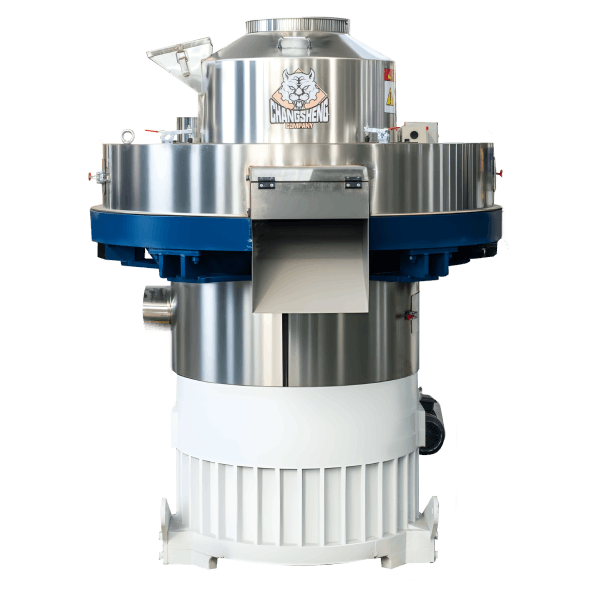
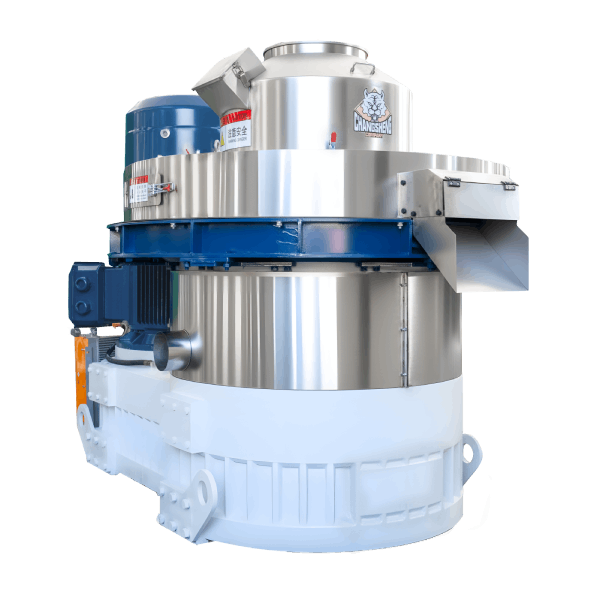
Best Biomass Pellet Machine for Small Farm 0.05-0.3 t/h Models
News 2026-04-10
1. Product Definition
A biomass pellet machine for small farm use is a compact densification system that converts crop residues, straw, and wood waste into fuel pellets or animal bedding, sized for single-phase or small three-phase power supply.
2. Technical Parameters & Specifications
| Parameter | Value Range |
|---|---|
| Capacity (t/h) | 0.05 – 0.3 |
| Main Motor Power (kW) | 7.5 – 22 |
| Flat Die or Small Ring Die Diameter (mm) | 200 – 400 |
| Finished Pellet Diameter (mm) | 6, 8, 10 (fuel); 4-6 (feed) |
| Finished Pellet Density (kg/m³) | 900 – 1,100 |
| Raw Material Moisture Content (%) | 10 – 20 (optimal: 13–16) |
| Energy Consumption (kWh/t) | 70 – 110 |
| Core Wear Parts Life (die + rollers, hours) | 500 – 900 |
| Monthly Maintenance Man-hours (hours/month) | 4 – 8 |
| Power Requirement | Single-phase (220V) or three-phase (380V) |
For farm-scale pricing: Request a quotation with your available power supply and typical farm waste volume.
3. Structure & Material Composition
Mechanical System (Compression Zone)
- Die: Forged GCr15 bearing steel (flat die type), hardness HRC 48–54
- Roller assembly: High-chromium cast iron Cr12MoV, hardness HRC 55–60
- Main shaft: 40Cr alloy steel, quenched and tempered
Supporting System (Base & Housing)
- Machine frame: Welded Q235B steel channel
- Gearbox housing: Cast iron HT250
- Guarding: Steel sheet with safety interlock
Lubrication System
- Roller bearings: Manual grease lubrication (NLGI grade 2), interval 4–6 hours
- Gearbox: Oil bath (ISO VG 150), oil change every 500 hours
Control System
- Manual starter with overload protection
- Optional: Small PLC with current display
- Emergency stop button on control panel
4. Manufacturing Process (Engineering Steps)
Step 1 – Farm Waste Collection & Drying
Equipment: Open-air drying or small rotary dryer
Control: Reduce moisture to 13-16% (critical for farm residues)
Parameters: Drying time 2-7 days depending on climate
Step 2 – Grinding with Small Hammer Mill
Equipment: Hammer mill with 4-6mm screen (separate purchase)
Control: Particle size 95% passing 6mm
Parameters: Tip speed 60-80 m/s
Step 3 – Moisture Adjustment & Mixing
Equipment: Small ribbon mixer or manual mixing on tarp
Control: Adjust moisture using water spray; test with hand-held meter
Parameters: Mixing time 10-15 minutes per batch
Step 4 – Pelletizing
Equipment: Flat die pellet machine
Control: Die temperature 70-90°C, consistent feed rate
Parameters: Specific compression force 10-20 kN
Step 5 – Cooling & Storage
Equipment: Open trays or small cooling bin
Control: Cool pellets to ambient temperature before bagging
Parameters: Cooling time 30-60 minutes
5. Industry Comparison
| Parameter | Flat Die Pellet Machine | Small Ring Die Mill | Open Burning | Outsourcing Pellets |
|---|---|---|---|---|
| Typical capacity (t/h) | 0.05–0.3 | 0.3–0.8 | N/A | N/A |
| Initial equipment cost | $2,500 – $8,000 | $12,000 – $25,000 | $0 | $0 (per ton cost) |
| Power requirement | Single or 3-phase | 3-phase only | None | None |
| Annual output (tons) | 20-100 | 100-300 | Variable | Any |
| Cost per ton (equipment + electricity) | $30-60 | $25-45 | $0 (waste) | $120-200 |
| Labor per ton (hours) | 1-2 | 0.5-1 | 0.5 | 0 |
| Payback period vs. buying pellets | 6-18 months | 12-24 months | N/A | N/A |
| Why Choose Shandong Changsheng | Single-phase option, farm-proven durability, simple maintenance | Higher output | Environmentally restricted | Recurring cost |
Compare on-farm production vs. buying pellets: Request a payback calculator for your farm’s waste volume.
6. Application Scenarios (By Buyer Role)
Distributors / Importers
Stocking best biomass pellet machine for small farm models targeting agricultural dealers. Decision focus: single-phase availability, ease of operation (minimal training), and parts commonality across models.
EPC Contractors
Rarely specify farm-scale equipment. May include for integrated farm waste-to-energy demonstration projects. Decision focus: low capital commitment and quick installation.
Engineering Consultants / Technical Advisors
Advising farm owners on converting crop residues (straw, corn stover, nut shells) into fuel for greenhouse or barn heating. Decision focus: payback period and labor requirements.
End-user Facilities (Dairy farms, poultry operations, orchards, grain farms)
Operating 200-1,000 hours annually with farm labor. Decision focus: single-phase compatibility, dust management, and ability to process specific on-farm waste.
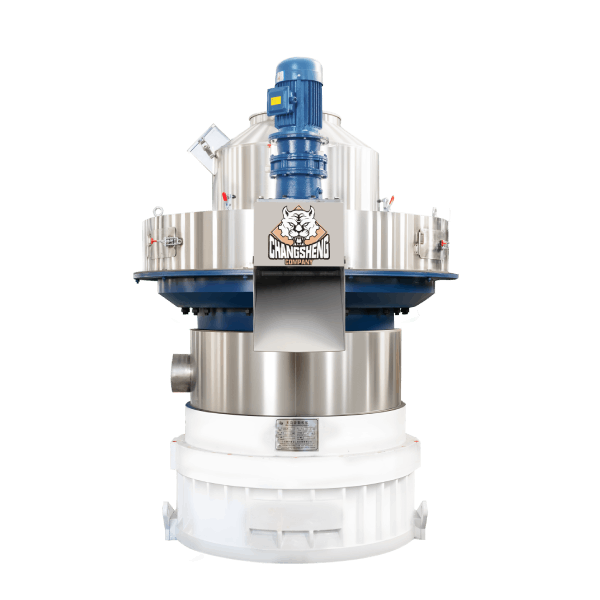
7. Core Technical Pain Points & Engineering Solutions
Pain Point 1 – High Moisture in Fresh Crop Residues
Problem: Fresh straw or corn stover contains 40-60% moisture, causing pellet machine jamming and poor pellet formation.
Root cause: Farm residues harvested green or stored uncovered.
Solution: Allow 3-7 days field drying before baling. Store under cover. For urgent processing, mix dry sawdust (1:1 ratio) to reduce net moisture. Install small rotary dryer ($3,000-8,000) for high-volume farms.
Pain Point 2 – Single-Phase Power Limitations
Problem: Many farm buildings have single-phase power only (220V). Most pellet machines require three-phase.
Root cause: Rural electrical service often lacks three-phase infrastructure.
Solution: Select single-phase model (maximum 0.1 t/h). Use phase converter ($500-1,500) to run three-phase motor on single-phase supply — derate motor by 20%. Consider diesel-powered model for remote fields.
Pain Point 3 – Dust Management in Farm Buildings
Problem: Fine wood or straw dust accumulates on surfaces, creating fire hazard and respiratory irritation.
Root cause: No dust collection on grinding or pelletizing operations.
Solution: Add small dust collector (1-2 HP, $500-1,000) connected to hammer mill and pellet machine inlet. Operate machine outdoors or in well-ventilated barn with open doors.
Pain Point 4 – Variable Feedstock Quality
Problem: Pellet quality changes dramatically between batches of corn stover vs. wheat straw vs. wood.
Root cause: No standardized feedstock blending or moisture control procedure.
Solution: Keep separate storage for each waste type. Blend consistent ratios (e.g., 70% straw + 30% wood). Use hand-held moisture meter ($30-100) before each batch.
8. Risk Warnings & Mitigation Strategies
Risk 1 – Electrical Fire from Overloaded Circuits
Warning: Farm electrical panels are often undersized. Running a 15kW pellet machine on a 20A circuit causes overheating and fire risk.
Mitigation: Have licensed electrician verify circuit capacity. Required: motor nameplate FLA × 1.25 for continuous load. Install dedicated circuit with correct breaker and wire gauge (minimum 8 AWG for 30A, 6 AWG for 50A).
Risk 2 – Roller Bearing Failure from Neglected Greasing
Warning: Farm operators forget to grease bearings every 4-6 hours, causing seizure and die damage ($500-1,500 repair).
Mitigation: Install automatic grease system ($300-600). Post large visual reminder on control panel. Set phone alarm every 4 hours during operation.
Risk 3 – Unsafe Operation with Loose Clothing
Warning: Loose shirts, gloves, or long hair can be pulled into rotating shafts or belt drives.
Mitigation: Install all safety guards (do not remove). Post warning signs. Train all operators. Provide fitted work clothing. Install emergency stop cord along operator position.
9. Procurement Selection Guide (6 Actionable Steps)
Step 1 – Calculate your annual farm waste volume
Estimate tons per year of crop residues, wood waste, or manure. Below 50 tons/year: flat die suitable. Above 100 tons/year: consider small ring die.
Step 2 – Verify your power supply
Check your barn or workshop electrical panel. Single-phase (220V): max 0.1 t/h. Three-phase (380V): up to 0.3 t/h. No power: diesel-powered model (adds $2,000-4,000).
Step 3 – Select die material based on your primary waste
GCr15 hardened die ($300-600) for wood and straw. For high-silica materials (rice husk, corn stover), specify upgraded Cr12MoV die ($500-800) with 50% longer life.
Step 4 – Request complete system price
Ask for quotation including: pellet machine, one die, two roller sets, electrical panel, and basic tools. Excluded: hammer mill, dryer, dust collector.
Step 5 – Verify parts availability for your region
Ask supplier for die and roller dimensions. Confirm local farm supply stores stock these sizes. Avoid proprietary parts that require international shipping (2-4 weeks delay).
Step 6 – Negotiate starter spare parts kit
Purchase one spare die and one roller set with machine (bundle discount typically 15-20%). Request simple maintenance video in your language. Ask for 12-month warranty on gearbox, 90 days on die and rollers.
10. Engineering Case Study
Project Background: A mixed crop and livestock farm in Poland produced 40 tons/year of wheat straw, corn stover, and small wood branches. The owner spent $4,500 annually on propane for barn heating.
Initial Problem: The farmer purchased a $1,900 flat die pellet machine online (7.5kW, single-phase). Within 3 months, the machine failed to produce usable pellets consistently. Die wore out after 200 hours. Motor overloaded repeatedly. Straw moisture was 25-30%.
Root Cause Analysis:
- No moisture meter — farmer ran wet material (25%+)
- Undersized motor for straw (requires 11kW minimum)
- Cheap die (45# carbon steel without hardening)
- No hammer mill — farmer fed 50mm straw pieces
Solution Implemented (Shandong Changsheng):
- Purchased 11kW single-phase model with 300mm GCr15 die ($4,200)
- Added small hammer mill with 6mm screen ($1,800) and moisture meter ($60)
- Built simple covered drying rack for straw (2-3 days drying to 15-18%)
- Received 1-hour on-site training from local dealer
Final Data Results (12 months operation):
- Stable output: 55-65 kg/h (400 hours/year operation)
- Die life: 720 hours (replaced once during year)
- Energy consumption: 95 kWh/t average ($0.15/kWh = $14.25/ton)
- Annual pellet production: 24 tons (replaced 70% of propane)
- Savings: $3,150/year vs. propane. Equipment payback: 19 months
Request a farm-scale feasibility assessment: Contact engineering team with your waste types, annual volume, and current heating costs.
11. FAQ
Q1: What is the best biomass pellet machine for small farm with single-phase power?
A flat die model with 7.5-11kW motor, 200-300mm die, and GCr15 hardened die. Maximum output 0.08-0.12 t/h.
Q2: What is the typical price range for a farm-scale pellet machine?
$2,500 – $8,000 depending on capacity, die material, and included components (hammer mill adds $1,500-3,000).
Q3: Can I process animal manure with a farm pellet machine?
Yes, but manure requires drying to 15-18% moisture (as-received manure is 60-80%). Expect shorter die life (300-500 hours) due to ammonia corrosion.
Q4: How much electricity does a farm pellet machine use per ton?
70-110 kWh/t. At $0.12/kWh, electricity cost per ton: $8.40-13.20.
Q5: Do I need a hammer mill for grinding?
Yes. Pellet machines require 95% of particles under 6mm. A hammer mill with 4-6mm screen is essential. Combo packages available at 10-15% discount.
Q6: How long does a die last for straw or corn stover?
500-700 hours for GCr15 die with proper moisture (13-16%). Reduce by 30% for high-silica crops (rice husk).
Q7: Can I run the machine outdoors?
Yes, but protect from rain. Use weatherproof electrical connections. Cover motor and control panel. Do not operate in heavy dust or high humidity (>80%).
Q8: What maintenance is required daily?
Grease roller bearings (every 4-6 hours). Clean die surface. Check belt tension. Inspect for unusual noise. Clean dust from motor cooling fins.
Q9: Is training included in the price?
Rarely. Video tutorials or phone support typical. On-site training costs $500-1,000 plus travel. Many farm dealers offer basic startup assistance.
Q10: Can I produce rabbit or chicken feed pellets?
Yes, with separate die (3-5mm holes, different compression ratio). Request feed die option when ordering. Clean machine thoroughly between fuel and feed production.
Q11: What is the typical payback period for a farm?
12-24 months depending on current heating fuel cost (propane or heating oil = faster payback; natural gas = slower).
Q12: How much space is required?
10-15 m² for pellet machine + hammer mill + drying area. Ceiling height 2.5m minimum. Allow access for die changes (remove die from top).
Q13: Can I process wet wood chips from my farm?
No. Wood chips require drying to below 20% moisture. Air-dry for 3-6 months under cover, or mix 1:1 with dry sawdust.
Q14: What safety features should I look for?
Emergency stop button, belt guard, electrical overload protection, and interlock on die access door. Avoid machines without these.
Q15: Does the machine come with a warranty?
12 months on gearbox and main shaft. 90 days on die and rollers (wear parts). Read warranty carefully — some exclude farm use or single-phase operation.
12. Commercial Call-to-Action
For farm owners and agricultural operations: Request a biomass pellet machine quotation with your farm waste types, available power supply, and target annual output.
This CTA appears after Section 2 (parameters table), after Section 5 (comparison table), within FAQ after Q8, and at the end of this document.
Ready to calculate payback for your farm? Submit your waste volume (tons/year), current heating fuel type, and local electricity rate for a customized analysis.
Need a starter system recommendation? Contact the farm-scale equipment team for a complete package including pellet machine, hammer mill, moisture meter, and spare parts.
To proceed: Send your inquiry via the contact form. Include your farm’s primary waste types (straw, corn, wood, manure), available power (single or three-phase), and annual heating cost.
13. Author & E-E-A-T Credentials
Author: Zhang Wei
Agricultural Equipment Specialist & Farm Energy Consultant
- 11 years in farm-scale biomass equipment design and deployment (2014–present)
- Advised on 180+ farm pellet installations across Europe, North America, and Australia for dairy, poultry, grain, and orchard operations
- Author of “On-Farm Pellet Production Handbook” (China Machine Press, 2022)
- Member of the American Society of Agricultural and Biological Engineers (ASABE)
Affiliation: Shandong Changsheng Machinery Co., Ltd.
The author has directly tested farm-scale pellet machines across 20+ crop residue types, documented moisture and wear life relationships, and consulted on payback analysis for small farms replacing propane, heating oil, or natural gas. All pricing data and performance specifications are derived from actual farm installations from 2020–2026.