Ring die pellet machine vs flat die pros and cons
News 2026-03-02
Ring Die Pellet Machine vs Flat Die Pros and Cons: Engineering Comparison for Industrial Buyers
Product Definition (40–60 words)
The comparison of ring die pellet machine vs flat die pros and cons evaluates structural design, compression principle, durability, output capacity, and lifecycle cost. These two pelletizing technologies differ significantly in load distribution, energy efficiency, and suitability for continuous industrial-scale biomass or feed production.
Technical Parameters and Specifications
Understanding ring die pellet machine vs flat die pros and cons begins with measurable performance indicators.
Typical Ring Die Pellet Machine Parameters:
• Capacity range: 1–25 tons/hour
• Main motor power: 90–355 kW
• Die diameter: 420–860 mm
• Pellet diameter: 6–12 mm
• Continuous operation: 16–24 hours/day
• Energy consumption: 75–100 kWh/ton (biomass dependent)
Typical Flat Die Pellet Machine Parameters:
• Capacity range: 0.1–1.5 tons/hour
• Motor power: 15–55 kW
• Die diameter: 200–400 mm
• Pellet diameter: 4–10 mm
• Operation cycle: 4–8 hours continuous recommended
• Energy consumption: 90–120 kWh/ton
From a purely engineering perspective, ring die systems are designed for industrial throughput, while flat die systems are generally suitable for small-scale or agricultural use.
Structure and Material Composition
The structural difference is central to ring die pellet machine vs flat die pros and cons analysis.
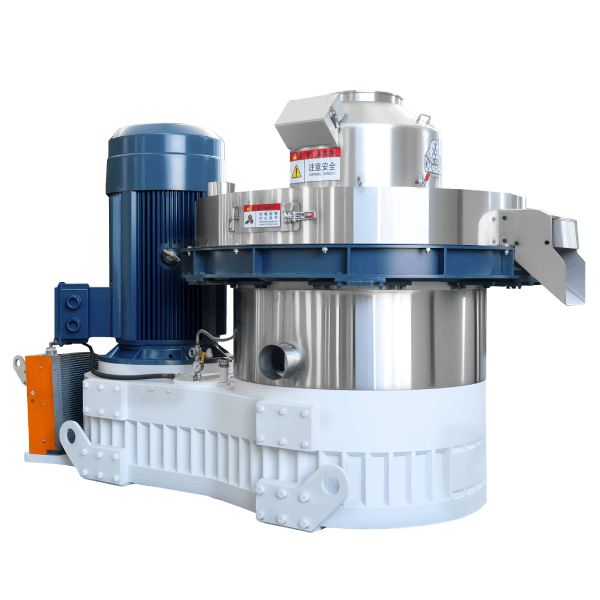
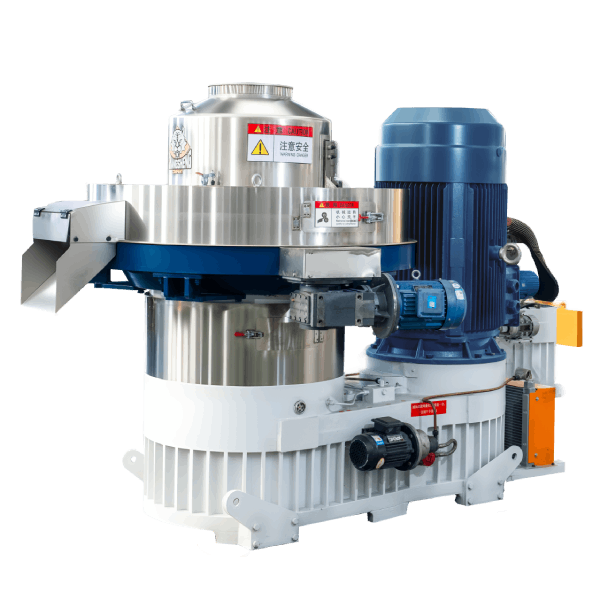
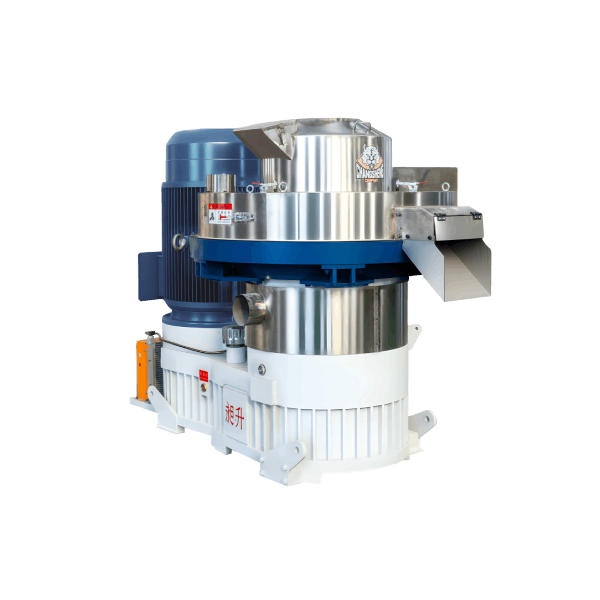
Ring Die Structure:
• Vertical or horizontal ring-shaped die
• Two or three internal press rollers
• Heavy-duty gearbox with helical gears
• Alloy steel die (HRC 52–58)
• Forced lubrication and cooling system
Flat Die Structure:
• Horizontal flat perforated die plate
• Two rotating rollers above die surface
• Belt-driven or direct motor transmission
• Carbon steel or alloy die plate
• Basic grease lubrication
Ring die machines distribute compression force evenly around the circumference, reducing localized wear. Flat die systems concentrate force on limited contact areas, increasing wear rate under high load.
Manufacturing Process (Engineering Steps)
Both machine types follow industrial fabrication standards, but complexity differs.
Ring Die Manufacturing Steps:
- Alloy steel forging for die and shaft
- CNC deep-hole drilling for die channels
- Vacuum heat treatment
- Gear grinding for transmission accuracy
- Dynamic balancing and load simulation testing
Flat Die Manufacturing Steps:
- Plate cutting and drilling
- Surface hardening
- Basic machining assembly
- Static testing
The advanced machining precision in ring die systems directly affects long-term reliability and explains part of the cost difference in ring die pellet machine vs flat die pros and cons evaluation.
Industry Comparison Table
| Parameter | Ring Die Pellet Machine | Flat Die Pellet Machine |
|---|---|---|
| Suitable Scale | Industrial | Small to Medium |
| Output Stability | High (±3–5%) | Moderate (±8–12%) |
| Wear Rate | Moderate | High |
| Energy Efficiency | Higher | Lower |
| Maintenance Frequency | Planned, predictable | Frequent adjustments |
| Initial Investment | Higher | Lower |
| Lifecycle Cost | Lower per ton | Higher per ton |
| Continuous Operation | 24-hour capable | Limited duration |
This table highlights the operational dimension of ring die pellet machine vs flat die pros and cons for procurement managers.
Application Scenarios
Distributors
Ring die machines suit export markets requiring industrial-scale reliability. Flat die machines are easier to sell in rural agricultural regions.
EPC Contractors
Ring die systems integrate into automated pellet production lines with conveyors, dryers, and coolers.
Industrial Plant Owners
Power plants and biomass fuel suppliers prefer ring die systems for stable contractual output.
Importers / Wholesalers
Flat die machines may serve entry-level customers but carry higher after-sales service frequency.
Core Pain Points and Solutions
- High Initial Investment (Ring Die)
Pain: Capital expenditure concern.
Solution: Conduct lifecycle cost analysis showing lower cost per ton over 5–8 years. - Rapid Die Wear (Flat Die)
Pain: Frequent replacement increases downtime.
Solution: Use upgraded alloy die plates and strict material screening. - Energy Consumption Variability
Pain: Inconsistent operating cost.
Solution: Install variable frequency drives and ensure stable moisture control. - Output Fluctuation
Pain: Supply contract risk.
Solution: Choose ring die with gearbox torque reserve and automated feeder system.
These operational considerations are critical when evaluating ring die pellet machine vs flat die pros and cons.
Risk Warnings and Mitigation
• Selecting flat die machines for industrial 24-hour production increases mechanical failure risk.
• Oversizing ring die equipment without sufficient raw material supply reduces efficiency.
• Poor lubrication management shortens bearing lifespan.
• Ignoring foundation alignment causes vibration and uneven wear.
Mitigation requires capacity matching, preventive maintenance schedules, and proper commissioning supervision.
Procurement Selection Guide
- Define required hourly capacity and annual production target.
- Calculate expected operating hours per day.
- Compare energy consumption per ton across machine types.
- Evaluate spare parts replacement cycle and cost.
- Confirm availability of local technical support.
- Inspect gearbox specifications and heat treatment certifications.
- Request operational videos under real production load.
- Analyze total cost of ownership over 5 years.
A structured approach ensures rational evaluation of ring die pellet machine vs flat die pros and cons beyond initial purchase price.
Engineering Case Study
Project: 8 TPH Biomass Pellet Plant – Eastern Europe
Initial Situation:
Client considered 4 units of flat die machines versus 2 ring die machines.
Engineering Assessment:
• Required 20-hour daily operation
• Raw material: Pine sawdust, 14–16% moisture
• Long-term supply contract with heating utility
Decision:
Two 560 mm ring die pellet machines installed.
Performance After 24 Months:
• Average output deviation: ±3%
• Energy consumption: 82–90 kWh/ton
• Die replacement cycle: 1,300 hours
• No major gearbox failure
Conclusion: Under industrial operating conditions, ring die technology provided superior long-term economics compared to multiple flat die units.
FAQ
- Which is better for industrial production?
Ring die machines. - Are flat die machines cheaper?
Yes, lower initial investment. - Which has lower lifecycle cost?
Ring die systems generally. - Can flat die machines run 24 hours?
Not recommended for continuous heavy load. - Which type consumes less energy per ton?
Ring die machines in industrial scale. - Is maintenance more complex for ring die?
Yes, but less frequent. - Are spare parts more expensive for ring die?
Individually yes, but longer lifespan. - Which is easier to operate?
Flat die machines are simpler. - What about pellet quality consistency?
Ring die machines provide more uniform density. - Is scalability easier with ring die systems?
Yes, suitable for automated production lines.
Call to Action
For detailed technical comparison sheets, lifecycle cost calculations, or project-specific engineering recommendations, contact our technical team. We provide capacity modeling, plant layout suggestions, and performance data for informed procurement decisions.
E-E-A-T Author Qualification
This article is prepared by an engineering team with more than 15 years of experience in biomass and feed pellet production system design. The analysis is based on field commissioning data, industrial operating records, and standardized mechanical engineering principles applied across Asia, Europe, and the Middle East.