Pellet Machine for Wood Sawdust vs Agricultural Waste
News 2026-02-13
Product Definition
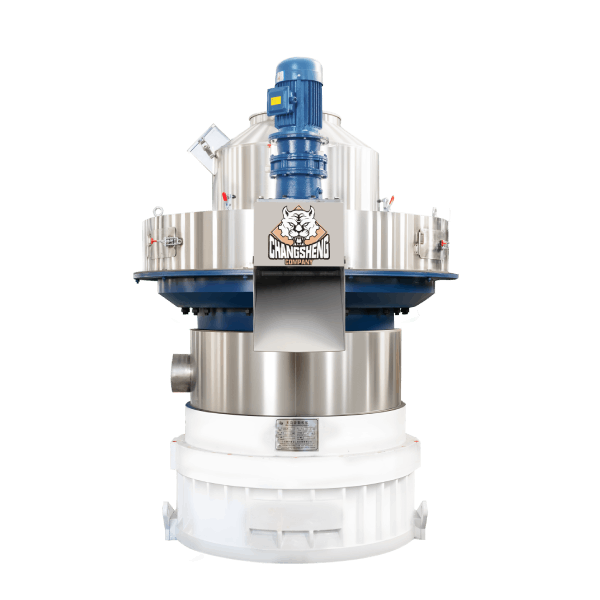
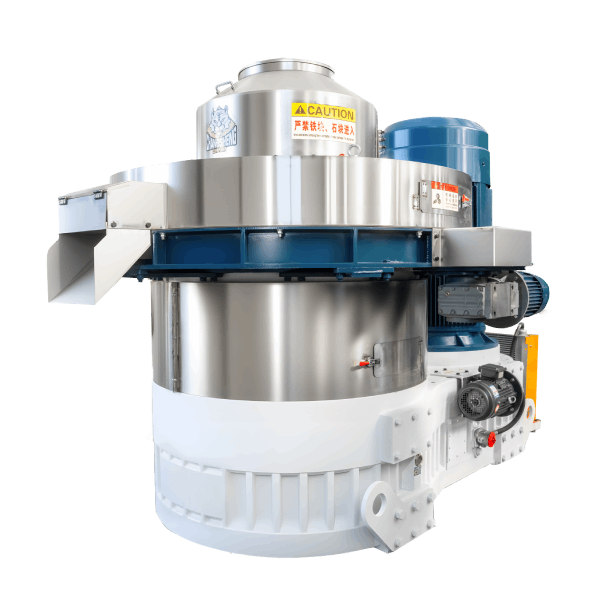
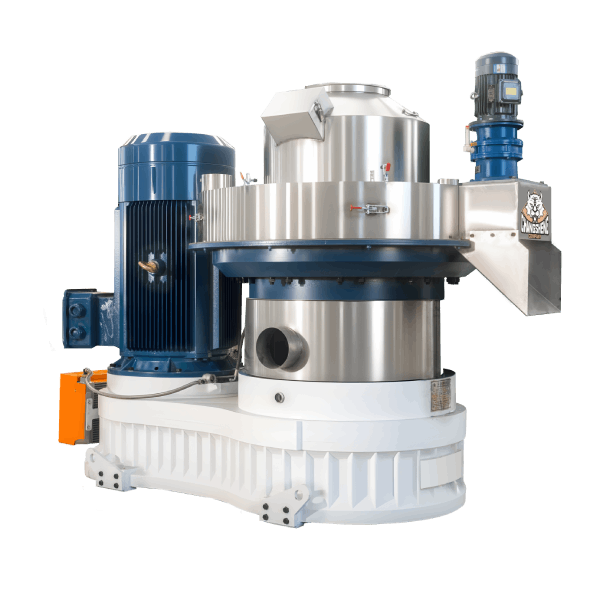
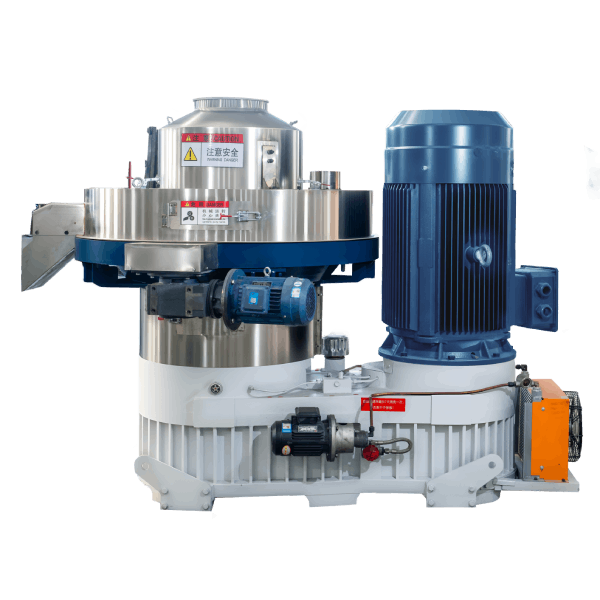
A pellet machine is an industrial mechanical system that compresses biomass raw materials such as wood sawdust or agricultural residues into high-density cylindrical pellets through controlled pressure, heat, and die extrusion. It is used for fuel, animal bedding, and industrial energy supply applications.
Technical Parameters and Specifications
Typical industrial-grade pellet machines operate within the following engineering ranges:
Rated Capacity
0.5–10.0 tons per hour depending on raw material type and moisture
Main Motor Power
55–315 kW (higher for agricultural waste due to fiber toughness)
Die Diameter
Ring die: 450–850 mm
Flat die: 300–600 mm
Pellet Diameter
6 mm / 8 mm / 10 mm / 12 mm (customizable)
Raw Material Moisture Input
Wood sawdust: 8–15%
Agricultural waste: 12–20% (pre-conditioning required)
Compression Ratio
Wood sawdust: 1:8 – 1:10
Agricultural waste: 1:10 – 1:14
Operating Temperature
80–130°C at die zone (generated by friction, not external heating)
Structural and Material Composition
Core mechanical structure differs significantly depending on material hardness and fiber composition.
Main Components (diagram-style breakdown):
• Feeding system: variable-speed screw or force feeder
• Conditioning chamber: optional steam or water misting
• Ring die or flat die assembly: alloy steel with heat treatment
• Press rollers: high-chromium steel with wear-resistant surface
• Main shaft and bearing system: heavy-duty, continuous-load design
• Lubrication system: centralized automatic grease distribution
• Discharge and cooling interface
Material reinforcement is mandatory for agricultural waste due to higher silica and ash content.
Manufacturing Process (Engineering Workflow)
Step 1: Raw Material Preparation
Wood sawdust requires screening and drying. Agricultural waste requires crushing, fiber cutting, and impurity removal.
Step 2: Moisture Conditioning
Water or steam is added to achieve optimal plasticity for pellet formation.
Step 3: Pelletizing Compression
Material is forced between press rollers and die holes under high pressure, forming pellets by mechanical extrusion.
Step 4: Thermal Stabilization
Friction heat activates natural lignin (wood) or binding fibers (agro waste) for pellet integrity.
Step 5: Cooling and Hardening
Pellets are cooled to ambient temperature to prevent cracking and deformation.
Step 6: Screening and Packaging
Fines are removed and recycled before bulk or bagged packaging.
Industry Comparison: Wood Sawdust vs Agricultural Waste
| Parameter | Wood Sawdust | Agricultural Waste |
|---|---|---|
| Fiber consistency | Uniform | Highly variable |
| Abrasiveness | Low | Medium to high |
| Required compression | Medium | High |
| Die wear rate | Low | High |
| Energy consumption | Lower | 15–30% higher |
| Process stability | High | Moderate |
| Maintenance frequency | Lower | Higher |
| Pellet durability | Excellent | Good (with conditioning) |
Application Scenarios
Distributors
Standardized wood pellet machines for resale into heating and fuel markets.
EPC Contractors
Custom-engineered agricultural waste pellet lines integrated with drying and ash handling systems.
Industrial Project Owners
On-site biomass fuel production for boilers, kilns, or cogeneration plants.
Exporters and Importers
Regional adaptation based on locally available biomass feedstock.
Core Pain Points and Engineering Solutions
- Inconsistent Pellet Quality
Solution: adjustable die compression ratios and feeder control - Excessive Die and Roller Wear
Solution: reinforced alloy materials and surface hardening - High Energy Consumption
Solution: optimized roller-die gap and material conditioning - Frequent Blockage
Solution: forced feeder and pre-processing fiber cutting
Risk Warnings and Mitigation Advice
• Using wood-configured machines for agricultural waste causes premature die failure
• High ash content leads to slagging without proper screening
• Incorrect moisture causes pellet cracking or die blockage
• Over-compression increases power draw and bearing damage
Mitigation requires raw material testing and machine configuration matching.
Procurement and Selection Guide (Actionable Steps)
- Analyze raw material type, fiber length, and ash content
- Confirm required hourly output and operating hours per day
- Specify pellet diameter and density requirements
- Select ring die or flat die based on capacity and duty cycle
- Verify die material and compression ratio suitability
- Request wear-part lifespan data under similar materials
- Evaluate energy consumption per ton
- Confirm after-sales technical support and spare parts lead time
Engineering Case Example
A 5 t/h agricultural waste pellet line processing rice husk and wheat straw was deployed for an industrial boiler fuel project. The system included a hammer mill, rotary dryer, forced-feed ring die pellet machine, counterflow cooler, and ash-resistant conveying. Energy output replaced 60% of coal consumption with stable operation after compression ratio optimization.
Frequently Asked Questions
- Can one pellet machine process both materials?
Yes, but only with adjustable dies and reinforced components. - Which material is harder to pelletize?
Agricultural waste due to fiber variability and ash. - Is binder required?
Usually no for wood; sometimes for agricultural residues. - What is the main wear component?
Ring die and press rollers. - How long does a die last?
3,000–8,000 hours depending on material. - Is drying mandatory?
Yes if moisture exceeds optimal range. - Which consumes more power?
Agricultural waste pelletizing. - Are pellets suitable for boilers?
Yes, with proper ash handling. - What causes pellet cracking?
Incorrect moisture or insufficient cooling. - Is automation recommended?
Yes for large-scale continuous operation.
Call to Action
For detailed technical drawings, material suitability evaluation, or a project-specific quotation, request full specifications, engineering data sheets, or pilot testing support from a qualified pellet machine supplier.
E-E-A-T Author Credentials
This article is written by a mechanical engineer with over 10 years of experience in biomass pelletizing systems, EPC project engineering, and industrial fuel conversion projects, with direct involvement in equipment selection, commissioning, and long-term operation optimization.