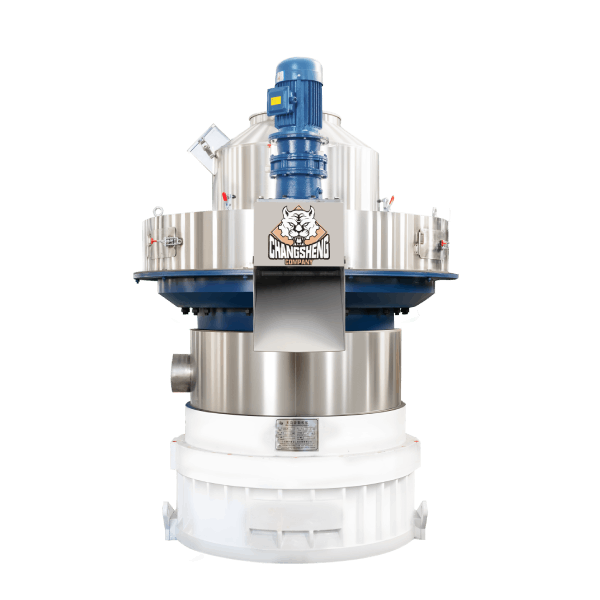
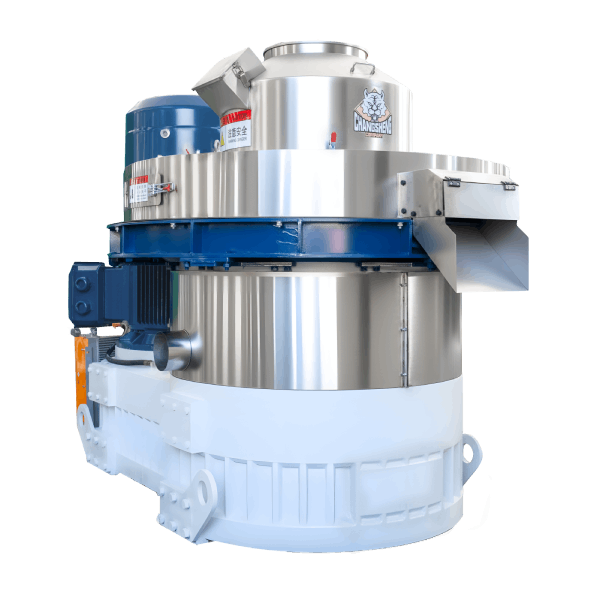
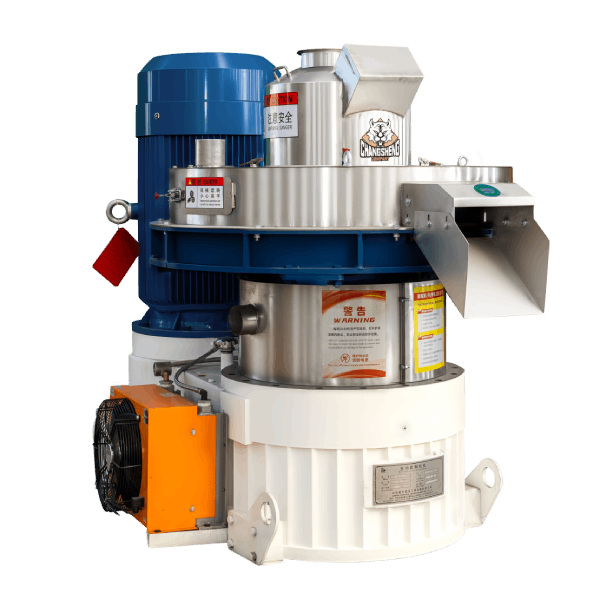
Pellet machine real output per hour analysis
News 2026-03-01
Pellet Machine Real Output Per Hour: Engineering Evaluation and Capacity Verification Guide
Product Definition
Pellet machine real output per hour refers to the verified continuous production capacity under stable industrial operating conditions, considering material type, moisture, die configuration, and energy load. It differs from nominal or laboratory-rated capacity and represents the true commercial performance of the pelletizing system.
Understanding Pellet Machine Real Output Per Hour
In industrial procurement, pellet machine real output per hour is the most critical performance indicator. Manufacturers often publish rated capacity under ideal conditions, while actual throughput depends on raw material density, fiber characteristics, compression ratio, operator stability, and auxiliary system performance.
For B2B buyers, real output must be evaluated under continuous 8–24 hour load conditions with stable amperage and consistent pellet durability index (PDI).
Technical Parameters and Performance Specifications
Below are practical engineering ranges for evaluating pellet machine real output per hour in biomass applications.
Typical Ring Die Pellet Mill (Industrial Grade)
• Die diameter: 520–700 mm
• Main motor power: 160–355 kW
• Roller number: 2 or 3
• Feed particle size: 3–5 mm
• Optimal moisture range: 10%–14%
• Pellet diameter: 6–8 mm
• Continuous operation: ≥20 hours/day
• Specific energy consumption: 80–120 kWh/t
Real Output Reference (Wood-Based Biomass)
160 kW machine
Rated capacity: 2.0–2.5 t/h
Real output per hour: 1.6–2.2 t/h
250 kW machine
Rated capacity: 4.0–5.0 t/h
Real output per hour: 3.5–4.5 t/h
315 kW machine
Rated capacity: 5.0–6.5 t/h
Real output per hour: 4.5–6.0 t/h
The difference between rated and pellet machine real output per hour typically ranges from 10% to 20%, depending on feedstock consistency and process optimization.
Structure and Material Composition
The ability to maintain stable pellet machine real output per hour depends heavily on structural design and material quality.
Core Components
- Ring Die
• Alloy steel (20CrMnTi)
• Vacuum heat-treated
• Optimized compression ratio - Press Rollers
• Surface carburized
• Adjustable clearance mechanism - Main Shaft
• Forged alloy steel
• Dynamic balancing for torque stability - Transmission System
• High-precision gear coupling
• Reinforced gearbox housing - Lubrication System
• Automatic grease injection
• Temperature and vibration monitoring
Structural rigidity directly affects the consistency of pellet machine real output per hour during heavy-load operation.
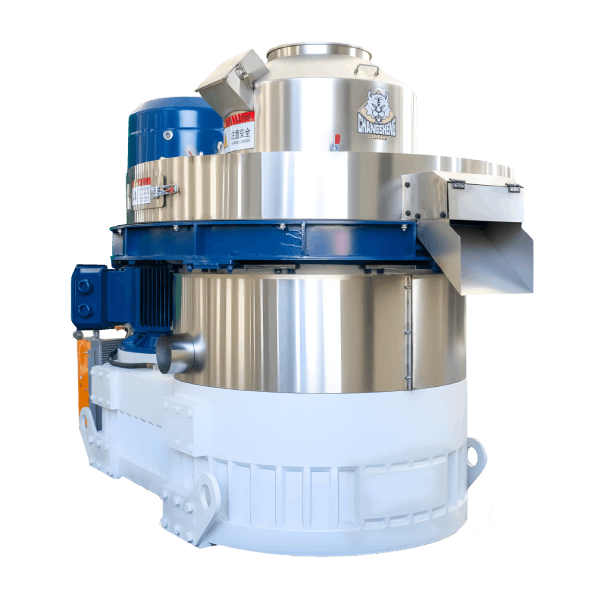
Manufacturing and Production Workflow
Step 1: Raw Material Preprocessing
Wood chips or agricultural biomass are screened to remove contaminants.
Step 2: Size Reduction
Hammer mill reduces material to 3–5 mm for uniform feeding.
Step 3: Drying
Moisture adjusted to optimal range; excessive moisture reduces pellet machine real output per hour.
Step 4: Feeding and Conditioning
Stable feed rate ensures constant die pressure. Steam conditioning may improve binding efficiency.
Step 5: Pelletizing
Compression force generates heat (70–90°C), activating lignin as natural binder.
Step 6: Cooling and Screening
Counterflow cooler reduces pellet temperature; vibrating screen removes fines.
Process balance across these stages determines whether pellet machine real output per hour remains consistent.
Industry Comparison
Parameter | Rated Capacity | Real Industrial Output | Lab Test Output
Test Duration | Short-term | Continuous 8–24h | Limited
Moisture Control | Ideal | Variable | Ideal
Load Stability | Controlled | Real-time fluctuation | Controlled
Power Measurement | Nominal | Actual kWh/t | Nominal
Commercial Relevance | Low | High | Low
For procurement decisions, pellet machine real output per hour measured under real production conditions is the only reliable benchmark.
Application Scenarios
Distributors
Need verified pellet machine real output per hour data to avoid overpromising performance to end users.
EPC Contractors
Must calculate annual production based on real hourly throughput, not theoretical capacity.
Engineering Consultants
Use real output values for ROI and energy efficiency modeling.
Importers and Wholesalers
Evaluate output stability before committing to long-term supply contracts.
Technical Managers
Monitor amperage curves and output logs to validate actual production.
Core Pain Points and Engineering Solutions
- Output Lower Than Rated
Cause: Overstated manufacturer specification
Solution: Request 24-hour continuous operation test report. - Frequent Output Fluctuation
Cause: Inconsistent feed moisture
Solution: Install automatic moisture control system. - High Energy Consumption
Cause: Incorrect die compression ratio
Solution: Optimize die design based on material density. - Overheating and Downtime
Cause: Bearing overload
Solution: Ensure 10%–15% motor power reserve margin. - Die Blockage
Cause: Excessive fines or resin accumulation
Solution: Maintain proper particle size and lubrication schedule.
Risk Warnings and Mitigation
• Do not rely solely on nameplate capacity.
• Avoid underpowered motors for dense hardwood.
• Confirm auxiliary equipment sizing matches pellet mill capacity.
• Monitor specific energy consumption during commissioning.
Failure to evaluate pellet machine real output per hour accurately can result in ROI miscalculation and contractual disputes.
Procurement and Selection Guide
- Define raw material type and density.
- Confirm moisture control capability in the production line.
- Request documented 24-hour continuous operation data.
- Compare rated vs actual energy consumption (kWh/t).
- Inspect die material and compression ratio specification.
- Verify gearbox torque rating.
- Confirm spare part lifecycle documentation.
- Conduct on-site or video production test verification.
Selection based on pellet machine real output per hour ensures accurate investment planning and production forecasting.
Engineering Case Example
Project: 10 t/h Export Wood Pellet Line
Location: Eastern Europe
Raw Material: Mixed softwood and hardwood
Configuration
• Two 315 kW ring die pellet mills
• Rotary drum dryer (evaporation 4 t/h)
• Automatic feeding and weighing system
Measured Data After Commissioning
• Average real output per machine: 5.2 t/h
• Total line output: 10.3 t/h
• Specific energy consumption: 102 kWh/t
• Continuous operation: 22 hours/day
Initial rated capacity suggested 6 t/h per unit, but pellet machine real output per hour stabilized at 5.2 t/h under commercial conditions, aligning with engineering expectations.
FAQ
- Why is real output lower than rated capacity?
Rated values are based on ideal conditions. - How much difference is acceptable?
10%–20% variation is common. - Does material type affect output?
Yes, density and lignin content are critical factors. - Can moisture increase capacity?
No, excessive moisture reduces efficiency. - What defines continuous operation?
Stable load for at least 8–24 hours. - How to verify real output?
Measure total tonnage over fixed operating hours. - Is energy consumption linked to output?
Yes, kWh per ton reflects compression efficiency. - Do hardwood pellets reduce throughput?
Generally yes, due to higher density. - Should motor power be oversized?
A 10% safety margin is recommended. - Can automation improve real output?
Yes, stable feeding and moisture control enhance consistency.
Request Technical Documentation or Quotation
For verified pellet machine real output per hour data, detailed energy analysis, or customized capacity evaluation, submit your material specifications and target output. Our engineering team will provide a formal technical proposal and budgetary quotation.
Authoritative Technical Statement (E-E-A-T)
This content is prepared by industrial biomass engineers with more than 15 years of experience in pellet plant design, commissioning, and performance auditing. Data ranges reflect actual industrial production environments and validated engineering benchmarks used in commercial pellet facilities across multiple regions.