best pellet production line equipment suppliers: Engineering Guide
News 2026-02-11
Pellet production line equipment suppliers are industrial manufacturers or EPC-oriented providers that design, manufacture, and integrate complete pelletizing systems, including raw material preparation, drying, pelletizing, cooling, and control systems, to deliver stable, continuous pellet output under defined technical and commercial conditions.
What Defines the Best Pellet Production Line Equipment Suppliers
The term “best pellet production line equipment suppliers” does not refer to brand popularity alone. In industrial procurement, it refers to suppliers that can consistently deliver engineered systems meeting performance guarantees, lifecycle cost targets, and long-term operational reliability.
For EPC contractors and large buyers, supplier quality directly impacts:
• Project delivery risk
• Cost per ton of pellets
• Plant uptime and asset lifespan
Technical Parameters and Supplier Capability Benchmarks
When comparing the best pellet production line equipment suppliers, the following technical benchmarks are commonly used:
Supported line capacity
• 1–3 t/h (small commercial)
• 5–6 t/h (standard industrial)
• 8–12 t/h (large industrial)
Material adaptability
• Wood residues
• Agricultural biomass
• Feed formulations
Pellet specifications
• Diameter: 3–10 mm
• Density: ≥600 kg/m³ (fuel pellets)
Energy efficiency
• Electricity: 90–150 kWh/ton
• Thermal demand (drying): 0.8–1.6 GJ/ton
Control system
• PLC-based automation
• Remote diagnostics capability
Engineering documentation
• Layout drawings
• Power and heat balance
• Process flow diagrams
Suppliers unable to provide these parameters transparently should be excluded early.
Structure and Material Composition of Supplier Equipment
High-quality pellet production line suppliers typically use standardized industrial materials and modular structures:
Raw Material Handling
• Carbon steel conveyors with wear liners
• Silo discharge systems with anti-bridging design
Size Reduction
• Hammer mills with forged alloy steel hammers
• Replaceable hardened screens
Drying System
• Rotary drum dryer with reinforced shell
• Hot air furnace (biomass or gas-fired)
• Cyclone + bag filter dust removal
Pelletizing Section
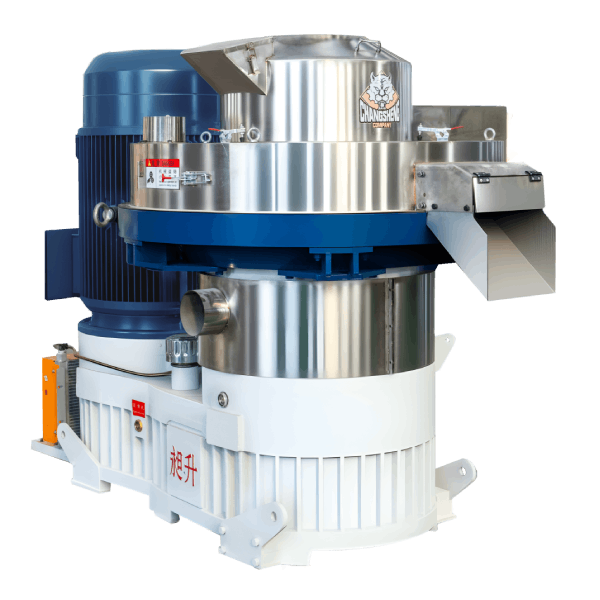
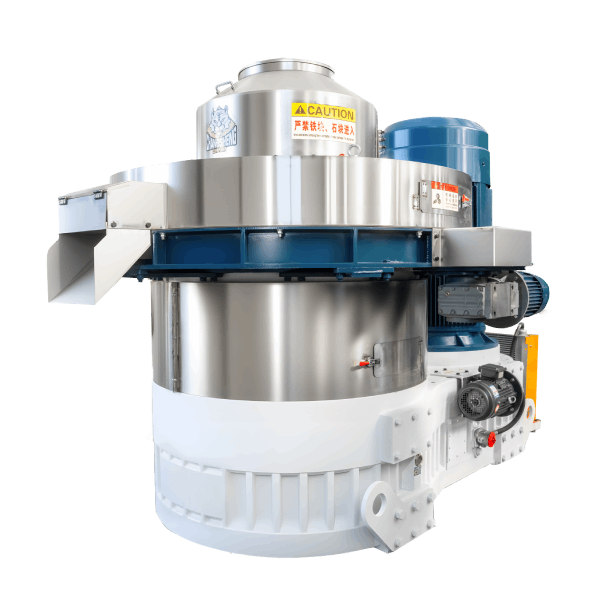
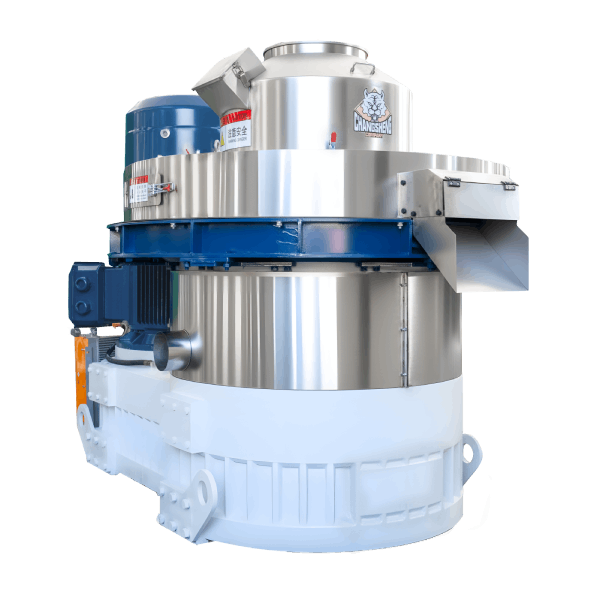
• Ring die pellet mills
• Forged alloy steel dies
• Hardened roller shells with precision bearings
Cooling and Screening
• Counterflow pellet coolers
• Vibrating screening systems with recycle loop
Electrical and Automation
• Industrial PLC cabinets
• Variable frequency drives
Material choice directly affects wear rate, maintenance cost, and service life.
Manufacturing Process and Supplier Engineering Depth
Step 1: Raw Material Engineering
Top suppliers analyze bulk density, moisture, and fiber structure before design.
Step 2: Crushing Optimization
Proper hammer mill sizing avoids unnecessary power consumption.
Step 3: Drying Engineering
Dryer sizing is based on evaporation load, not nominal throughput.
Step 4: Pelletizing Design
Die compression ratio is selected according to material characteristics.
Step 5: Cooling and Screening
Correct cooling airflow prevents pellet cracking and fines generation.
Step 6: Automation and Commissioning
Best suppliers provide on-site commissioning and operator training.
Industry Comparison of Supplier Types
| Supplier Type | Engineering Depth | Cost Control | Risk Level | Best For |
|---|---|---|---|---|
| EPC-Oriented Manufacturers | High | Strong | Low | Large projects |
| Equipment Traders | Low | Weak | High | Small budgets |
| Local Fabricators | Medium | Medium | Medium | Simple lines |
| Integrated OEMs | High | Strong | Low | Industrial plants |
The best pellet production line equipment suppliers are typically EPC-capable OEMs rather than trading companies.
Application Scenarios
Distributors and Importers
• Long-term pellet supply projects
• Export-oriented fuel pellet plants
EPC Contractors
• Biomass energy and fuel conversion projects
• Industrial decarbonization systems
Engineering Consultants
• Supplier technical audits
• Feasibility and cost benchmarking
Core Pain Points and Supplier Solutions
Pain Point 1: Overpromised Capacity
Solution: Demand performance guarantees based on continuous output.
Pain Point 2: High Maintenance Cost
Solution: Select suppliers using standardized wear parts.
Pain Point 3: Poor After-Sales Support
Solution: Choose suppliers with regional service or spare parts stock.
Pain Point 4: Incomplete Engineering Data
Solution: Require full process documentation before contract signing.
Risk Warnings and Mitigation Strategies
Low-price suppliers often omit drying system optimization, increasing operating cost.
Inadequate dust control design increases fire and explosion risk.
Lack of commissioning support leads to prolonged ramp-up periods.
Single-source spare parts increase long-term operational dependency.
Procurement and Supplier Selection Guide
- Define target pellet type and annual output
- Shortlist suppliers with proven reference projects
- Request full technical proposals, not quotations only
- Compare lifecycle cost, not equipment price
- Verify material specifications of key components
- Evaluate commissioning and training scope
- Confirm warranty terms and spare parts strategy
Engineering Case Example
An EPC contractor in Eastern Europe selected an integrated OEM supplier for a 8 t/h wood pellet plant. By using standardized ring die pellet mills and a biomass-fired dryer, the project achieved stable output within 30 days of commissioning and reduced unplanned downtime by over 20% compared to a previous non-EPC supplier.
FAQ
- What qualifies a supplier as “best”?
Engineering capability, references, and lifecycle support. - Are European suppliers always better?
Not necessarily; engineering depth matters more than origin. - Should I choose a turnkey supplier?
Yes, for medium and large-scale projects. - How many reference projects should a supplier have?
At least three similar-capacity projects. - Is customization necessary?
Yes, raw materials vary significantly. - Can one supplier handle feed and fuel pellets?
Some can, but configurations differ. - How important is automation?
Critical for stable quality and labor efficiency. - What documents should a supplier provide?
Process flow, layout, power and heat balance. - How long is typical delivery time?
Usually 8–16 weeks depending on scale. - Should after-sales support be in the contract?
Absolutely, with defined response times.
CTA
To evaluate the best pellet production line equipment suppliers for your specific project, request detailed technical proposals, reference lists, and lifecycle cost models from qualified industrial pellet system manufacturers.
E-E-A-T Author Credentials
This article is authored by an industrial pellet production systems engineer with over 12 years of experience in equipment supplier evaluation, EPC project execution, and lifecycle optimization of biomass pellet plants across multiple international markets.