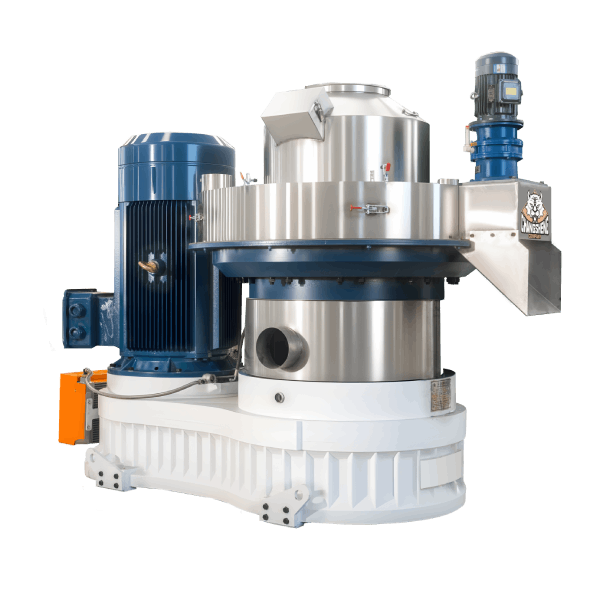
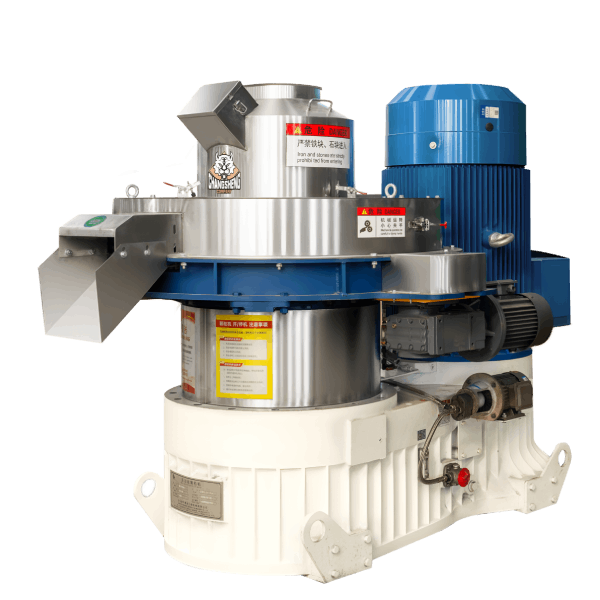
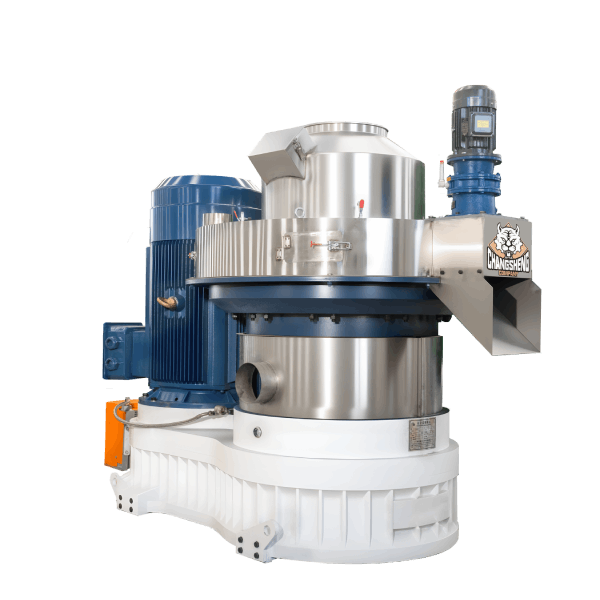
Pellet Machine for Wet Biomass Material
News 2026-02-28
Pellet Machine for Wet Biomass Material – Industrial Engineering Guide
Product Definition
A pellet machine for wet biomass material is an industrial densification system engineered to process high-moisture organic feedstocks through integrated drying, size reduction, and controlled compression, converting unstable wet biomass into standardized solid fuel pellets suitable for storage, transport, and industrial combustion applications.
Introduction
Processing wet biomass presents distinct engineering challenges compared to dry sawdust or conditioned agricultural residues. Moisture levels above 20% significantly reduce pellet strength, increase energy consumption, and cause die blockage. Therefore, a pellet machine for wet biomass material must be configured as part of a complete, moisture-controlled production line rather than as a standalone press.
This guide provides technical specifications, process parameters, risk controls, and procurement strategies for B2B buyers evaluating biomass pellet production systems.
Technical Parameters and Specifications
Because wet biomass varies in moisture from 20% to 60%, system design must prioritize pre-drying and stable feed regulation.
Typical industrial configuration:
Production capacity: 1–6 tons/hour per line
Main motor power: 132–355 kW
Die type: Heavy-duty ring die
Pellet diameter: 6–10 mm
Initial moisture range: 20%–50%
Required moisture before pelletizing: 10%–15%
Final pellet density: 1.1–1.35 t/m³
Bulk density: 650–750 kg/m³
Energy consumption (pelletizing stage): 80–120 kWh/ton
Total line energy (including drying): depends on initial moisture level
Die compression ratio: 1:6 to 1:9
Operating temperature in die: 75–95°C
A pellet machine for wet biomass material must be matched with a properly sized rotary dryer or belt dryer to ensure process stability.
Structure and Material Composition
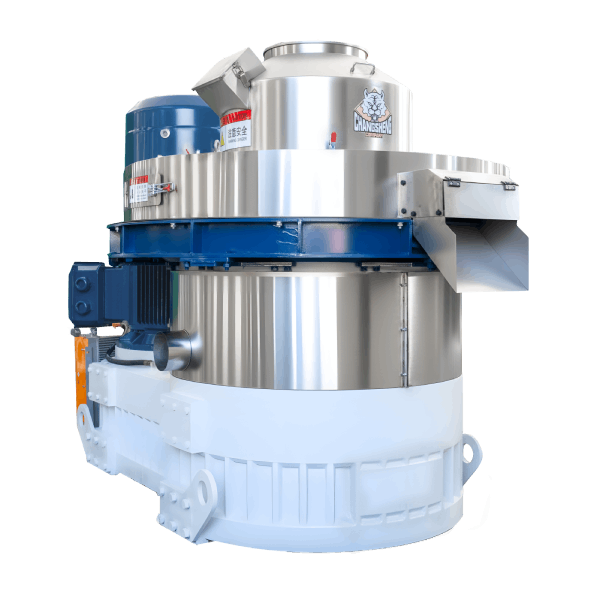
The pellet machine for wet biomass material is part of an integrated system with reinforced structural design:
Feeding and Buffer Section
– Anti-bridging hopper
– Variable frequency screw feeder
– Level sensors
Drying Interface
– Rotary drum dryer or belt dryer connection
– Hot air furnace system
– Cyclone dust separator
Pelletizing Chamber
– Alloy steel ring die (HRC 52–58)
– Two or three compression rollers
– Adjustable roller gap mechanism
Drive System
– High-efficiency industrial motor
– Hardened gear transmission
– Overload protection coupling
Lubrication and Monitoring
– Automatic lubrication system
– Bearing temperature monitoring
– Vibration monitoring ports
Frame and Base
– Heavy welded steel frame
– Shock-absorbing foundation pads
Materials are selected to resist corrosion and abrasion caused by wet organic matter.
Manufacturing Process (Engineering Workflow)
Step 1: Raw Material Collection
Feedstock examples: fresh wood chips, green straw, palm residues, manure-based biomass.
Step 2: Pre-Screening
Equipment: Vibrating screen
Purpose: Remove stones and metal impurities.
Step 3: Size Reduction
Equipment: Hammer mill
Target particle size: ≤4 mm.
Step 4: Drying
Equipment: Rotary drum dryer or belt dryer
Target moisture: 10–15%.
Process control: Maintain stable inlet temperature to avoid over-drying.
Step 5: Pelletizing
Equipment: Pellet machine for wet biomass material
Key controls:
– Stable feed rate
– Controlled die temperature
– Consistent compression pressure
Step 6: Cooling
Equipment: Counter-flow cooler
Purpose: Stabilize pellet structure and reduce internal stress.
Step 7: Screening and Packaging
Fines are recycled back into the pelletizing stage.
Industry Comparison
Feedstock Condition | Drying Required | Process Stability | Energy Demand | Equipment Complexity
Dry Sawdust | No | High | Medium | Low
Semi-Dry Biomass (15–20%) | Partial | Medium | Medium | Medium
Wet Biomass (20–50%) | Yes | High (after drying) | High | High
Manure-Based Biomass | Yes | Variable | High | High
Compared with dry systems, a pellet machine for wet biomass material requires greater investment in drying but enables utilization of lower-cost raw materials.
Application Scenarios
Distributors
– Supply industrial fuel pellets derived from agricultural waste.
EPC Contractors
– Biomass power plants utilizing fresh forestry residues.
– Waste-to-energy installations.
Engineering Firms
– Agricultural waste recycling projects.
– Municipal organic waste treatment facilities.
This system allows conversion of high-moisture biomass into standardized commercial fuel.
Core Pain Points and Engineering Solutions
Problem 1: Excessive Energy Consumption
Cause: High initial moisture content.
Solution: Optimize dryer efficiency and use heat recovery systems.
Problem 2: Pellet Cracking
Cause: Over-drying below 8% moisture.
Solution: Maintain target 12–14% before pelletizing.
Problem 3: Die Blockage
Cause: Inconsistent feed rate or oversized particles.
Solution: Install buffer silo and calibrated feeder.
Problem 4: Rapid Die Wear
Cause: Contaminants in raw biomass.
Solution: Add magnetic separator and pre-screening stage.
Problem 5: Unstable Output
Cause: Moisture fluctuation.
Solution: Implement real-time moisture monitoring.
Risk Warnings and Avoidance Strategies
Risk 1: Ignoring Moisture Variability
Outdoor storage causes unpredictable moisture swings.
Risk 2: Undersized Dryer
Insufficient drying capacity limits pellet machine throughput.
Risk 3: Overheating
Excessive drying temperature may degrade biomass fiber structure.
Risk 4: Underestimating Total Energy Demand
Drying can represent a significant share of total operational cost.
Procurement Selection Guide
- Conduct laboratory analysis of biomass moisture and ash content.
- Define target output capacity and annual operating hours.
- Calculate required drying capacity based on moisture reduction.
- Confirm crusher output particle size ≤4 mm.
- Select ring die compression ratio according to material type.
- Verify total installed power and electrical infrastructure compatibility.
- Evaluate automation and monitoring systems.
- Request pilot testing with actual wet biomass samples.
Engineering Case Study
Project: Agricultural Residue Biomass Plant, South Asia
Raw Material: Fresh rice straw and green agricultural waste
Initial Moisture: 35%–40%
Target Capacity: 4 tons/hour
Line Configuration:
Pre-screening → Hammer mill → Rotary drum dryer → Pellet machine for wet biomass material → Cooler → Screening → Packaging
Operating Data:
Moisture before pelletizing: 13%
Average stable output: 3.8–4.1 t/h
Pellet density: 1.2 t/m³
Energy consumption (pellet stage): approx. 105 kWh/ton
Result: Stable industrial-grade pellets suitable for boiler fuel applications.
FAQ
- Can wet biomass be pelletized directly?
No, drying to 10–15% moisture is required. - What is the maximum acceptable moisture?
Typically not above 15% before pelletizing. - Is ring die mandatory?
For industrial scale, yes. - How critical is particle size?
Very critical; ≤4 mm is recommended. - Does wet biomass increase die wear?
Indirectly, due to higher friction and impurities. - What drying system is preferred?
Rotary drum dryers are common for large-scale lines. - Is energy consumption significantly higher?
Yes, mainly due to drying requirements. - Can manure-based biomass be processed?
Yes, with specialized drying and odor control. - How is pellet durability ensured?
By controlling moisture and compression ratio. - Is automation necessary?
For stable industrial production, automation is strongly recommended.
Call to Action
For engineering consultation, layout planning, material testing, or a formal quotation for a pellet machine for wet biomass material, contact our technical department. We provide capacity evaluation, drying integration design, and commissioning support for industrial biomass projects.
E-E-A-T Author Qualification
This guide is prepared by a biomass processing engineer with over a decade of experience in pellet plant design and EPC implementation, specializing in high-moisture biomass utilization systems. Technical data are derived from operational industrial benchmarks and standard biomass processing practices.