Pellet Machine for Palm Kernel Shell – Technical Guide
News 2026-02-27
Pellet Machine for Palm Kernel Shell – Engineering Analysis for Industrial Buyers
Product Definition
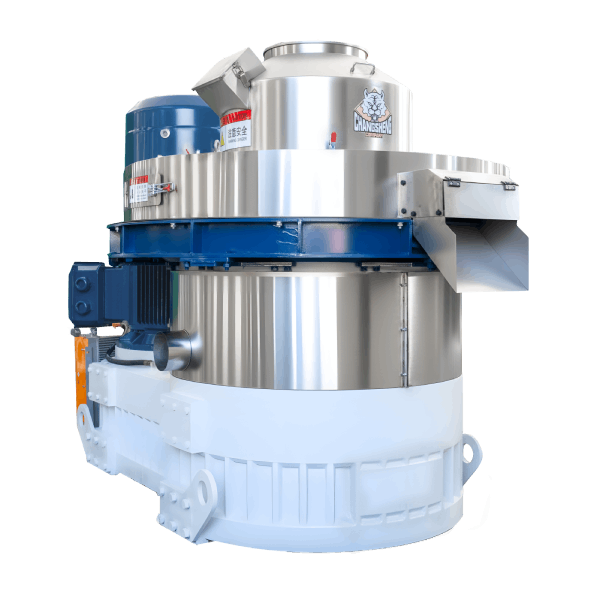
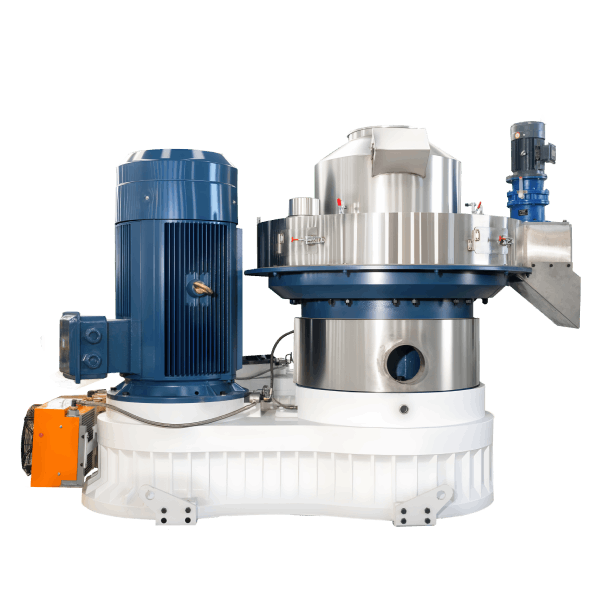
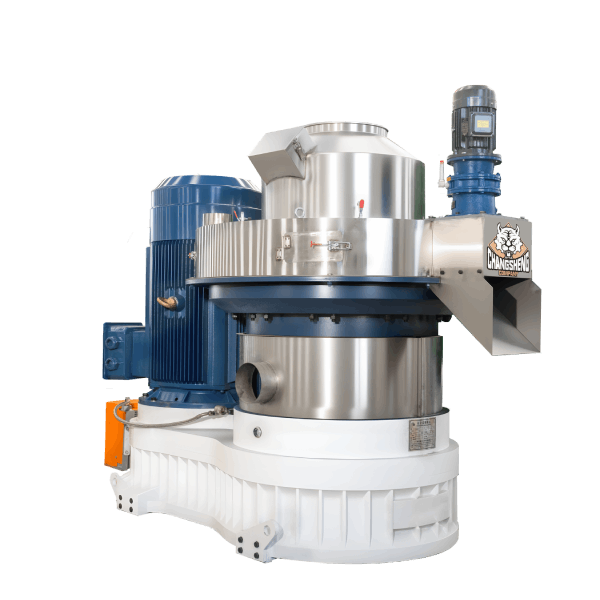
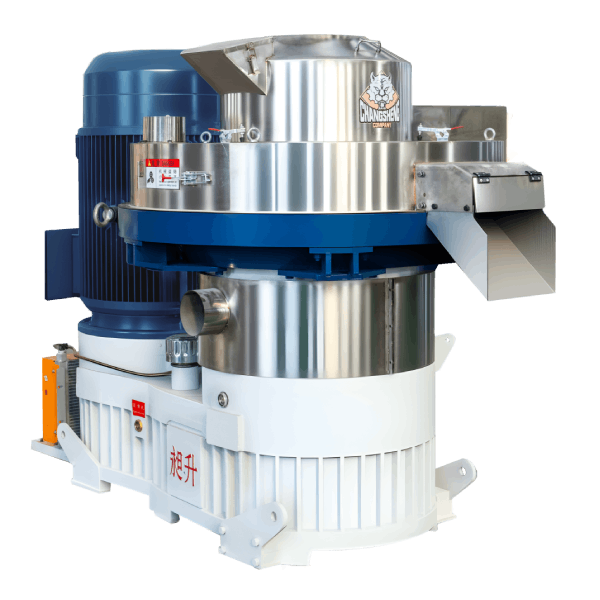
A pellet machine for palm kernel shell is a high-torque biomass densification system designed to compress crushed palm kernel shell (PKS) into high-density fuel pellets through mechanical extrusion under controlled pressure and temperature. It is engineered for abrasive, high-lignin materials requiring reinforced dies, heavy-duty bearings, and stable power transmission.
Technical Parameters and Specifications
Palm kernel shell is significantly harder and more abrasive than wood sawdust. Therefore, a pellet machine for palm kernel shell must operate under higher compression force and structural rigidity.
Typical industrial specifications:
Capacity range: 1–5 tons/hour per unit
Main motor power: 90–315 kW
Die type: Ring die, 6–10 mm hole diameter
Compression ratio: 1:6 to 1:8 (material dependent)
Moisture requirement: 10%–15%
Final pellet diameter: 6–12 mm
Pellet bulk density: 1.1–1.3 t/m³
Gearbox type: Hardened helical gear transmission
Roller quantity: 2–3 heavy-duty rollers
Die material: Alloy steel (HRC 52–58)
Lubrication system: Automatic grease lubrication
Cooling system: Counter-flow cooler
For EPC contractors and plant engineers, stable amperage under load and die life expectancy are key measurable performance indicators.
Structure and Material Composition
A pellet machine for palm kernel shell typically consists of the following core modules:
Feeding System
– Variable frequency feeder
– Anti-bridging hopper design
Pelletizing Chamber
– Reinforced ring die
– High-chromium alloy rollers
– Adjustable roller clearance mechanism
Drive System
– Main motor (IP55 protection)
– Heavy-duty gearbox
– Elastic coupling
Lubrication and Protection
– Automatic grease pump
– Overload protection system
– Temperature sensors for bearings
Frame and Base
– Thickened carbon steel base
– Anti-vibration foundation pads
The reinforced structure is necessary because PKS hardness increases wear rate compared to wood materials.
Manufacturing Process (Engineering Workflow)
Step 1: Raw Material Preparation
Equipment: Crusher (hammer mill)
Process requirement: PKS particle size <5 mm
Step 2: Drying
Equipment: Rotary drum dryer
Target moisture: 10%–15%
Excess moisture leads to low pellet strength.
Step 3: Pelletizing
Equipment: Pellet machine for palm kernel shell
Key point: Maintain stable compression ratio and die temperature (70–90°C).
Step 4: Cooling
Equipment: Counter-flow cooler
Purpose: Reduce pellet temperature to near ambient, stabilize structure.
Step 5: Screening and Packaging
Equipment: Vibrating screen and automatic bagging system
For plant investors, energy consumption per ton is typically 80–110 kWh depending on raw material hardness.
Industry Comparison
Material Type | Abrasiveness | Energy Consumption | Die Wear Rate | Typical Capacity Stability
Wood Sawdust | Low | Low | Low | High
Rice Husk | Medium | Medium | Medium | Medium
Palm Kernel Shell | High | High | High | Requires reinforced design
Compared with wood pellets, a pellet machine for palm kernel shell must emphasize wear resistance and torque stability.
Application Scenarios
Distributors
– Supply industrial biomass fuel markets
– Export pellet production lines
EPC Contractors
– Biomass power plant construction
– Turnkey pellet production plants
Engineering Companies
– Industrial boiler retrofitting projects
– Palm oil mill waste recycling systems
Palm oil mills generate large quantities of PKS, making on-site pelletization a practical waste-to-energy solution.
Core Problems and Engineering Solutions
Problem 1: Severe Die Wear
Cause: High silica and hardness in PKS
Solution: Use high-alloy steel dies, optimize compression ratio, implement regular inspection schedule.
Problem 2: High Power Consumption
Cause: Excessive moisture or improper particle size
Solution: Strict drying control and pre-crushing below 5 mm.
Problem 3: Roller Slippage
Cause: Insufficient pressure or worn rollers
Solution: Adjust roller clearance and replace worn components.
Problem 4: Pellet Cracking
Cause: Over-compression or unstable cooling
Solution: Control temperature and install counter-flow cooling.
Risk Warnings and Avoidance Strategies
Risk 1: Overloading Motor
Always verify power reserve ≥15% above theoretical demand.
Risk 2: Improper Die Compression Ratio
Too high causes blockage; too low causes loose pellets.
Risk 3: Poor Lubrication
Bearing failure risk increases significantly under high load.
Risk 4: Unstable Raw Material Supply
Inconsistent moisture leads to unstable pellet density.
Procurement Selection Guide (Actionable Steps)
- Determine required hourly output and annual operating hours.
- Analyze PKS hardness and moisture characteristics.
- Verify motor power and gearbox torque capacity.
- Confirm die material hardness and replacement cycle.
- Evaluate after-sales technical support capability.
- Request real operation data under PKS conditions.
- Inspect automation level and safety systems.
- Compare total cost of ownership, not only purchase price.
Engineering Case Study
Project: Southeast Asia Palm Oil Mill Pellet Line
Capacity: 3 tons/hour
Configuration: Crusher + dryer + pellet machine for palm kernel shell + cooler + packing system
Operating hours: 18 hours/day
Outcome: Stable output of 2.8–3 t/h, pellet density 1.2 t/m³
Application: Fuel supply for local biomass boiler plant
The project reduced raw PKS storage volume by over 60% and improved transport efficiency.
FAQ
- Can PKS be pelletized without crushing?
No. Particle size must generally be under 5 mm. - What moisture level is optimal?
Between 10% and 15%. - How long does a die last with PKS?
It depends on hardness and operation hours; regular monitoring is required. - Is ring die better than flat die?
For industrial scale, ring die offers better capacity and stability. - What pellet diameter is common?
6–8 mm for industrial fuel markets. - Is energy consumption higher than wood?
Yes, due to higher material hardness. - Can PKS pellets be exported?
Yes, widely used in industrial boilers and power plants. - Is automation necessary?
Recommended for stable long-term operation. - What is the minimum investment scale?
Typically above 1 t/h for commercial viability. - Does PKS require binder?
Generally no, natural lignin acts as binder.
Call to Action
For detailed technical specifications, operation data sheets, and engineering drawings of a pellet machine for palm kernel shell, contact our engineering team. Request a formal quotation, plant layout proposal, or pilot material testing report.
E-E-A-T Author Qualification
This article is prepared by a senior mechanical engineer with over 12 years of experience in biomass pellet production line design, equipment commissioning, and EPC project management. The content is based on industrial practice, mechanical design standards, and real production data from biomass energy projects.