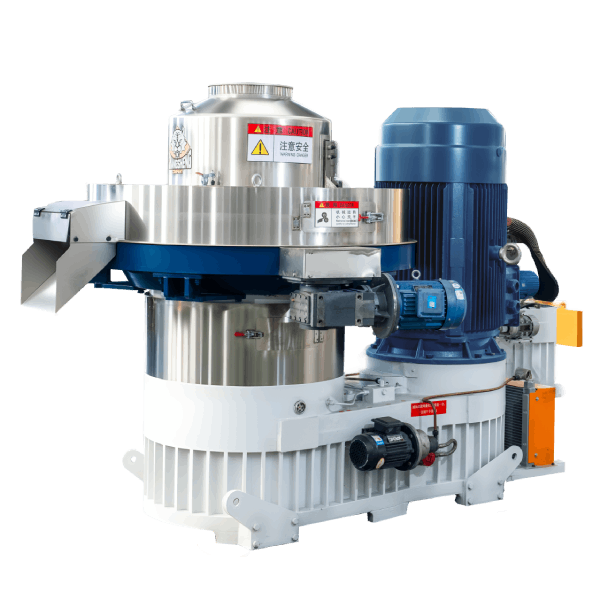
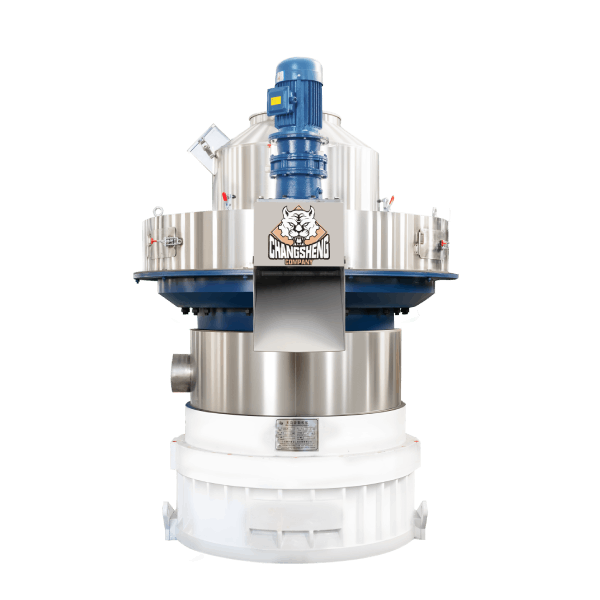
best pellet machine for small business production line
News 2026-02-03
The best pellet machine for small business production line refers to a compact, cost-efficient pelletizing system designed for low to medium output operations. It balances investment cost, operational stability, and scalability, enabling small enterprises to produce commercial-grade pellets with controlled risk and predictable performance.
Technical Parameters and Specifications
When evaluating the best pellet machine for small business production line, the following technical parameters are critical for matching output, cost, and operational capability:
- Production capacity: 0.5–3 tons/hour
- Applicable materials: wood sawdust, agricultural residues, feed raw materials
- Pellet diameter: 3–8 mm
- Main motor power: 22–75 kW
- Raw material moisture range: 10–18%
- Pellet bulk density: 550–700 kg/m³
- Power consumption: 60–100 kWh per ton
- Operation mode: Continuous or semi-continuous
Structure and Material Composition
A best pellet machine for small business production line is typically modular, using industrial-grade but simplified structures:
- Feeding system: Manual or screw feeder with carbon steel hopper
- Pelletizing unit: Ring die or flat die pellet mill with alloy steel die
- Drive system: Direct-coupled motor or gearbox-driven system
- Conditioning section: Basic conditioner or moisture control chamber
- Cooling unit: Small counterflow or air-cooling system
- Electrical control: Independent control panel with overload protection
Manufacturing Process and Engineering Workflow
A small-scale production line built around the best pellet machine for small business production line follows a simplified but engineering-driven workflow:
- Raw Material Preparation: Pre-sized materials are stored near the machine.
- Moisture Adjustment: Manual or automatic water/steam conditioning.
- Pelletizing: Material compressed through die to form pellets.
- Cooling: Pellets cooled to stabilize shape and hardness.
- Screening: Fines removed and recycled.
- Packing: Pellets bagged or stored in bulk.
Industry Comparison
| Machine Type | Initial Investment | Operational Stability | Scalability | Suitable Users |
|---|---|---|---|---|
| Small Pellet Production Line | Low–Medium | Medium–High | Medium | Small Businesses |
| Industrial Pellet Line | High | High | High | Large Enterprises |
| Standalone Pellet Machine | Low | Low–Medium | Low | Micro Workshops |
Application Scenarios
The best pellet machine for small business production line is commonly used by:
- Local pellet fuel distributors entering regional markets
- Small feed producers supplying nearby farms
- Recycling businesses converting biomass waste into fuel
- Importers testing new pellet markets with limited investment
Core Pain Points and Engineering Solutions
- Limited capital budget: Addressed by modular line configuration
- Unstable pellet quality: Solved through correct die selection and moisture control
- High maintenance frequency: Reduced by using alloy steel wear parts
- Operational skill gaps: Mitigated with simplified controls and training
Risk Warnings and Mitigation Strategies
Key risks when selecting the best pellet machine for small business production line include:
- Overestimating production capacity relative to raw material supply
- Choosing undersized motors leading to frequent overload
- Ignoring cooling and screening steps to reduce cost
- Lack of spare parts availability in local markets
Procurement and Selection Guide
- Confirm raw material type, size, and moisture range
- Define target pellet application (fuel or feed)
- Select capacity aligned with daily operating hours
- Choose pellet mill type (ring die vs flat die)
- Request power consumption and wear part data
- Evaluate ease of maintenance and operator requirements
- Verify supplier technical support and spare part supply
Engineering Case Example
A small enterprise installed a 1.5 tons/hour pellet production line using a 55 kW ring die pellet machine. Processing mixed wood sawdust at 13% moisture, the line achieved stable output of 9–10 tons per day, supplying local heating fuel markets with consistent pellet quality.
FAQ
- Q1: What is the ideal capacity for small businesses?
A: Typically 1–2 tons/hour. - Q2: Ring die or flat die for small scale?
A: Ring die offers better durability. - Q3: Is a dryer required?
A: Only if moisture exceeds 15–18%. - Q4: Typical power consumption?
A: 60–100 kWh per ton. - Q5: How many operators are needed?
A: One to two per shift. - Q6: Pellet mill die lifespan?
A: 600–1,200 operating hours. - Q7: Can the line be expanded later?
A: Yes, modular design allows upgrades. - Q8: Is automation necessary?
A: Basic automation is sufficient. - Q9: What maintenance is most critical?
A: Die and roller inspection. - Q10: Typical ROI for small lines?
A: 12–24 months depending on market.
Call to Action
For a precise recommendation on the best pellet machine for small business production line, including technical specifications, layout suggestions, and cost estimation, please request a formal quotation or technical proposal from a qualified pellet equipment supplier.
E-E-A-T Author Credentials
This article is written by a senior pelletizing equipment engineer with more than 15 years of experience in small and medium-scale pellet production line design, commissioning, and operational optimization across multiple international markets.