Product Details
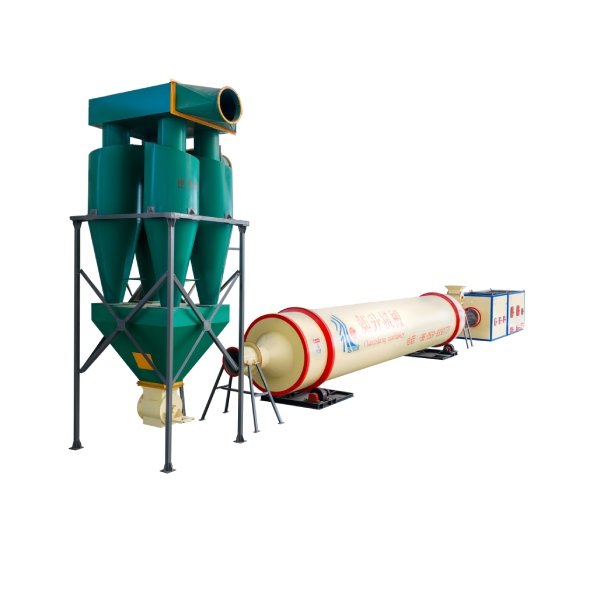
Stop letting inconsistent moisture levels and high fuel costs destabilize your process. The Changsheng Rotary Drying Drum delivers uniform, scalable thermal drying with industry-leading efficiency for biomass, wood chips, and mineral concentrates. Request a free drying analysis & thermal efficiency report.
In production processes from biomass pelletizing to mineral processing, moisture is the invisible enemy of quality, efficiency, and profit. Uncontrolled moisture leads to mold in stored materials, poor pellet integrity, inefficient combustion, costly shipping of water weight, and sub-par chemical reactions. Batch dryers and inefficient designs create bottlenecks, while rising energy costs make drying a primary driver of your plant’s operating expenses.
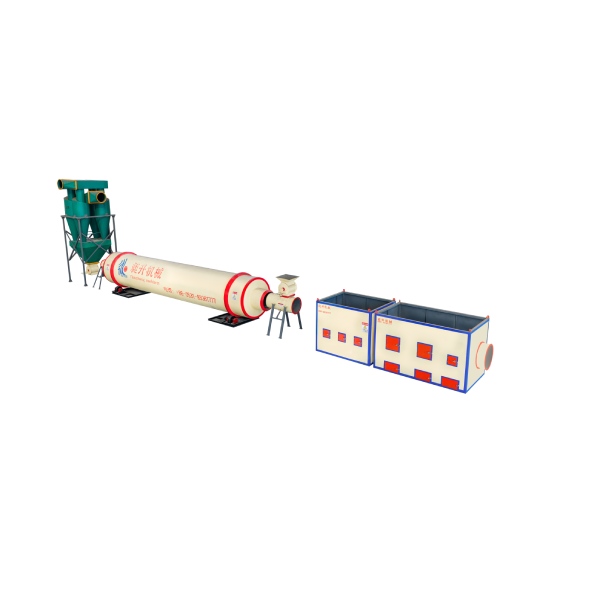
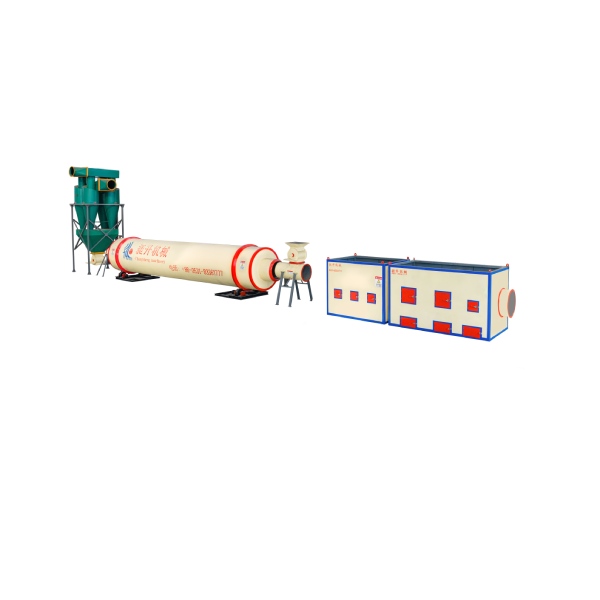
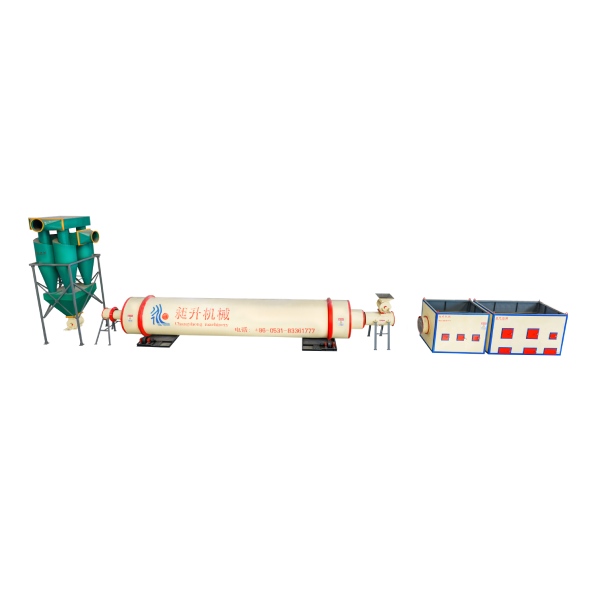
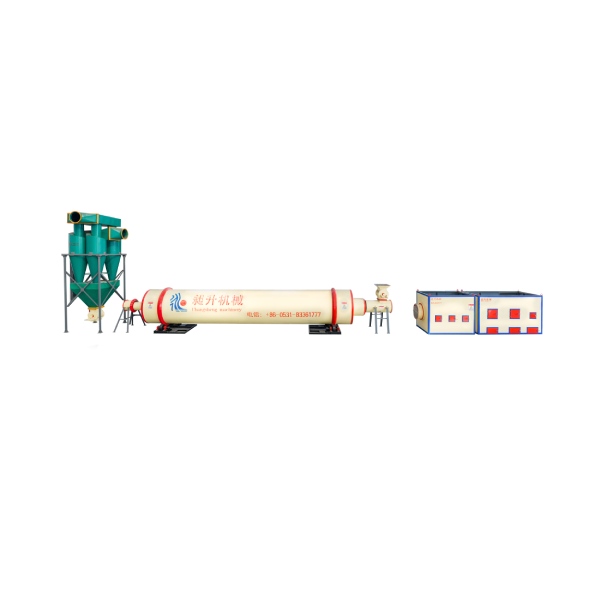
The Changsheng Rotary Drying Drum is engineered to be the reliable, cost-effective thermal engine at the heart of your industrial drying line. It’s not merely a heated tube; it’s a precision-engineered reactor that optimally transfers heat to your material. By combining robust continuous throughput with advanced heat exchange design and intelligent airflow management, this system delivers consistent, predictable moisture removal at the lowest possible cost per ton of water evaporated, transforming a variable cost center into a controlled, optimized process.
Engineered for Thermal Efficiency & Process Control
Core Performance Specifications:
- Evaporation Capacity: 1,000 – 20,000 kg H₂O/hour (Custom engineered)
- Heat Source Flexibility: Designed for biomass, gas, oil, or steam
- Inlet Moisture Range: Up to 50-60% (depending on material)
- Outlet Moisture Range: Adjustable down to 8-12% or lower
- Key Design Feature: Lifting Flight System & Induced/Co-Current Airflow
The Efficiency Advantage: Direct vs. Indirect & Co-Current vs. Counter-Current
| Critical Drying Metric | Our High-Efficiency Rotary Drum | Standard Drying Solutions | Impact on Your Bottom Line |
|---|---|---|---|
| Fuel Efficiency & Cost | Optimized Internal Flight Design maximizes material exposure; Indirect heating options prevent combustion gas contamination. | Simple paddles or direct-fired designs waste heat; higher specific energy consumption. | Reduces specific fuel consumption by 15-30%. Directly lowers your largest operating cost. |
| Product Uniformity & Quality | Controlled Retention Time & Cascading Material Flow ensures every particle receives equal thermal treatment. | Uneven tumbling leads to over-dried fines and wet core material. | Achieves uniform final moisture content (±1%). Eliminates spoilage, improves downstream process stability, and enhances product value. |
| Operational Robustness | Heavy-Duty Construction, Anti-Bridging Inlet, & Advanced Sealing. | Prone to material bridging at feed, high air leakage, and thermal stress failures. | Enables continuous 24/7 operation with minimal supervision. Robust design handles variable feed rates and compositions. |
The Drying Science Inside the Drum:
Material is fed into a rotating, slightly inclined cylinder. A custom-configured system of internal lifting flights continuously cascades the material through a stream of hot air (co-current or counter-current flow). This creates a veil of falling particles, maximizing the surface area exposed to the heat source. The drum’s length and rotation speed precisely control the retention time, allowing for gentle, progressive drying without overheating sensitive materials. Exhaust air is treated through a cyclone or baghouse to capture particulates, ensuring environmental compliance.
Trust Built on Drying Complex Materials at Scale
Application-Specific Engineering: Our drums are tailored for material-specific challenges: abrasion resistance for minerals, corrosion resistance for certain chemicals, and gentle handling for biomass fibers.
Global Process Integration: Changsheng dryers are key components in wood pellet plants across North America, mineral processing facilities in Africa, and organic fertilizer lines in Europe, operating reliably in harsh, dusty environments.
Documented Efficiency Gains:
- Case Study: Biomass Pellet Plant, Scandinavia:
- Challenge: Inefficient old dryer limited plant capacity, with high gas costs and uneven chip moisture causing pellet mill instability.
- Solution: Installation of a large-capacity, biomass-fired Changsheng rotary drum with indirect heating section.
- Result: Increased drying line capacity by 40%, reduced specific energy consumption by 25%, and achieved stable chip moisture of 10% (±0.8%), enabling the pellet mill to run at full, stable capacity.
- Case Study: Mineral Sands Processor, Australia:
- Challenge: Abrasive feedstock caused excessive wear in a direct-fired dryer, leading to high maintenance and product contamination.
- Solution: Upgrade to a Changsheng indirect-heated rotary drum with wear-resistant liners.
- Result: Eliminated product contamination from combustion gases, reduced annual maintenance downtime by 60%, and improved product purity for premium market pricing.
Our Commitment to Your Uptime: We provide thermal performance guarantees based on pilot tests. Support includes comprehensive training on system control and optimization, and fast-track supply of critical wear components.
Answering Critical Industrial Drying Questions
Q: How do you prevent material from sticking or building up inside the drum?
A: This is addressed in the design phase. We employ a combination of strategies: custom flight designs to promote constant material movement, polished or coated internal surfaces for sticky materials, and chain-type knockers or air cannons for persistent build-up. The correct solution depends on your specific material analysis.
Q: What are the trade-offs between co-current and counter-current airflow?
A: Co-current flow (hot air and material move in the same direction) is excellent for heat-sensitive materials, as the hottest air contacts the wettest material, preventing overheating at the discharge end. Counter-current flow (air and material move opposite) provides superior thermal efficiency for non-sensitive materials, as the hottest air contacts the driest material, driving moisture levels lower. We model both to recommend the optimal configuration for your goals.
Your Path to Optimized Thermal Processing
Download Our Technical Guide: Access our in-depth report: “Calculating True Drying Cost: A Framework for Evaluating Efficiency in Industrial Rotary Dryers.”
Get a Drying System Audit: Connect with our thermal process engineers for a Free Drying Line Feasibility Study. We’ll analyze your material’s characteristics and capacity needs to specify the optimal drum size, heating method, and airflow configuration.
Validate with a Pilot Test: Request Your Free Drying Trial & Detailed System Proposal. Send us a representative sample of your wet material. We will conduct a controlled drying test and provide a full report on achievable moisture reduction, throughput, and estimated fuel consumption.
The Definitive Solution for Continuous, Cost-Effective Drying
In modern industrial processing, drying is too critical and costly to leave to chance or outdated technology. The Changsheng Rotary Drying Drum represents a system-level approach to thermal efficiency, combining mechanical robustness with process intelligence. It is the engineered answer for operations that require not just moisture removal, but predictable, efficient, and scalable control over a key variable in their production chain. For businesses where product quality and energy costs are paramount, this investment defines your competitive edge.
Frequently Asked Questions
A small home-use pellet mill (50-100kg/h) costs $1,000-$4,000. A commercial ring die machine (500-1000kg/h) ranges from $15,000 to $50,000. The final price depends on capacity, power (electric/diesel), and die type (flat/ring). For an exact quote, always specify your raw material (wood, feed, straw) and target hourly output.
For making wood pellets, a ring die pellet mill is best for commercial production (>300kg/h) due to higher output and durability. For home/small farm use (<300kg/h), a flat die machine is more cost-effective. Key factors: moisture content (<15%), material size (<3mm), and your required capacity.
Three main reasons: ① Incorrect moisture (too dry or wet – ideal is 10-15%). ② Worn die or rollers – replace if gap > 0.5mm. ③ Improper feeding – inconsistent or too fast. Always test with dry sawdust first and ensure material is finely crushed.
Pellet machines can process biomass (wood, straw, bamboo), animal feed (alfalfa, corn, soybean), and some organic waste. Wood is most common. Avoid materials with high sand, oil, or metal content. Each material requires specific die hole size and moisture adjustment.
- Market research – target local farms (feed) or homeowners (heating).
- Start small – begin with a 300-500kg/h machine (investment: ~$20k-$35k).
- Secure raw materials – local sawdust, agricultural waste.
- Focus on quality – produce high-density, low-ash pellets.
- Calculate ROI – average net profit: $30-$80/ton. A 500kg/h line can ROI in 12-18 months.