Pellet Machine Motor Overheating: Causes, Diagnosis and Fixes
News 2026-11-18
A pellet machine motor that overheats is telling you that the heat it generates is more than it can dissipate. The motor itself may be fine. The heat comes from the load it is driving, the supply it is running on, the cooling it is not getting, or a combination of the three, and the fault is in whichever of those has changed.
The cause is usually one of five things: a mechanical overload from the mill or the material, a supply problem such as low voltage or a phase imbalance, a cooling problem such as a blocked fan or a hot location, a motor fault such as a failing bearing or a winding problem, or a duty cycle that exceeds what the motor was specified for. Which one it is decides the fix, and the first step is to know what “too hot” means for the specific motor.
This article covers how to judge whether a motor is actually overheating, how to tell the causes apart, the electrical, mechanical and cooling causes, the diagnostic sequence, the safety procedure for working on the motor, and what to confirm when buying a mill.
What “Overheating” Actually Means
A motor that feels hot is not necessarily overheating. Motors run hot in normal operation, and the temperature that is acceptable depends on the motor’s insulation class, its rated ambient temperature, and its design.
The judgement should be made on three comparisons, not on hand touch:
- Against the ambient temperature. A motor that runs well above the ambient temperature is generating more heat than it can dissipate. The acceptable rise above ambient is set by the insulation class and stated on the motor nameplate or data sheet.
- Against the motor’s own history. A motor that has run at one temperature for months and now runs noticeably hotter at the same load and ambient has changed, even if the absolute temperature is still within the rating.
- Against the load. A motor that is hot at full load may be normal; a motor that is hot at low load is not, and points to a supply, cooling or motor fault.
The insulation class on the nameplate (for example, class F) defines the maximum winding temperature the insulation can tolerate. The allowable temperature rise above ambient is derived from that class, and it is the number to compare against. The nameplate and the motor data sheet give the limit for the specific motor; a general figure should not be assumed.
Measure the motor temperature with a contact thermometer or a thermal camera. Hand touch is subjective, unsafe on a hot motor, and cannot be recorded for comparison.
What the Overheating Pattern Tells You
The conditions under which the motor overheats narrow the cause before any measurement is taken.
| Overheating pattern | Likely area | What to check first |
|---|---|---|
| Hot after running under load, cool when running empty | Mechanical overload or material problem | Feed rate, material moisture, die and roller condition |
| Hot even when running empty | Motor or cooling fault | Cooling fan, ventilation, motor bearings, winding |
| Hot in a hot environment | Cooling or ambient temperature | Ambient temperature, ventilation, motor rating |
| Hot after a supply change or a site change | Supply fault | Voltage, phase balance, connection |
| Hot after a motor or drive change | Motor, protection or duty cycle | Motor rating, protection setting, load |
| One phase current higher than the others (measured, not felt) | Supply or winding fault | Phase balance, winding resistance |
Judging Load: Current Against Rated Current
The most direct way to tell whether the motor is overheating from overload is to compare the running current against the motor’s rated current on the nameplate.
- At or below rated current, and the motor is hot. The load is not the cause, and the supply, cooling or motor is.
- Above rated current, and the motor is hot. The load is the cause, and the mechanical and material causes below apply.
- Above rated current on one phase only. A phase imbalance or a winding fault is present, and the supply should be checked before the motor is blamed.
The current should be measured with a clamp meter at the motor terminals under load, not read only from the panel, because the panel reading may be from a different point or may be scaled.
Mechanical Overload
A mechanical overload is the most common cause of a motor that runs hot under load, and it is usually a symptom of a different problem.
Material moisture
Wet material raises the load because it compresses but does not flow through the die. The motor works harder for the same output and heats up. This is the most common material cause.
Feed rate too high
More material than the die can consume backs up in front of the rollers and raises the load. This often follows a change in material bulk density, which changes the mass flow at the same feeder setting.
Die condition
A die with blocked holes raises the load; a die whose holes have worn can lower it. Either way, a die that has changed since the last good run should be checked.
Roller gap
A roller gap that is too small over-compresses the material and raises the load without a matching output gain. An uneven gap loads the mill unevenly.
Bearing or drive fault
A failing bearing or a drive fault adds load to the motor. This is usually accompanied by noise, heat or vibration at the bearing or drive, and is a separate diagnosis.
Supply and Electrical Causes
Low supply voltage
Low voltage raises the current for the same load, and the motor heats up. The supply should be measured at the motor terminals under load, not only at the panel.
Phase imbalance (three-phase motors)
An imbalance between phases raises the current in one winding and heats the motor. Phase voltages and currents should be measured under load.
Loose or corroded connections
A loose terminal or a corroded connection increases resistance and heat, and can cause the motor to run hot or trip. The terminals at the motor and at the protection device should be checked and tightened to specification.
Protection setting and thermal relay behaviour
A protection device set too tight for the application trips on normal load. A device set too loose allows the motor to run hot without tripping, which is worse.
A thermal overload relay works on an inverse-time curve: it tolerates a moderate overload for a short time and a large overload for a very short time, and it trips before the motor’s insulation is damaged. The setting should match the motor’s rated current and the manufacturer’s specification, and it should be verified after any motor or drive change. A relay that has been set high to stop nuisance tripping is no longer protecting the motor.
Motor winding fault
A motor with a winding fault draws high current, runs hot and may trip. Winding insulation resistance and winding resistance should be measured by a qualified electrician.
Cooling Causes
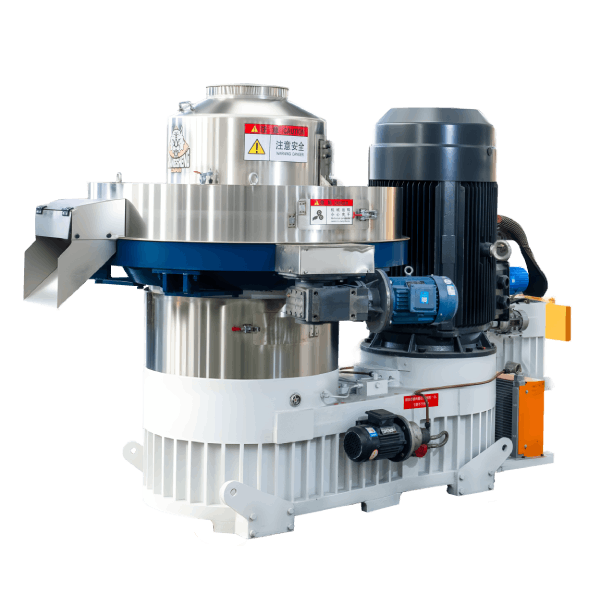
Blocked or failed cooling fan
A motor with a blocked or failed cooling fan cannot dissipate the heat it generates. Check that the fan turns with the shaft, not only that it is present, because a fan whose key or fixing has failed can spin freely without moving air.
Blocked cooling passages
Dust and material buildup in the cooling passages reduces airflow. The motor should be cleaned at intervals, particularly in dusty biomass environments.
Hot environment
A motor rated for a standard ambient temperature will run hot in a hotter environment. The ambient temperature at the motor location should be checked, and the motor rating should match it.
Poor ventilation
A motor installed in an enclosed space, or close to a hot surface, runs hotter than one with free airflow. The installation location should allow airflow around the motor.
Bearing Heat vs Winding Heat
Motor overheating from the bearing and motor overheating from the winding are different faults with different fixes, and they can be told apart on the machine.
| Sign | Bearing heat | Winding heat |
|---|---|---|
| Where the heat is | Localised at the bearing housing | Even over the motor body |
| Sound | Grinding, rumbling or squealing at the bearing | Humming, sometimes louder than normal |
| Vibration | Present at the bearing | Usually not localised |
| Current | May be normal | Often high, or high on one phase |
| Smell | No burning smell | May smell hot insulation in severe cases |
| Shaft play | Present when checked by hand | Not related |
Bearing heat is a mechanical fault and is corrected by replacing the bearing. Winding heat is an electrical fault and is corrected by finding the supply, load or winding cause. Replacing a bearing will not fix a winding problem, and reducing the load will not fix a dry bearing.
Diagnosing Motor Overheating
Work through these steps. The electrical steps should be done by a qualified electrician.
- Record when the overheating happens. Under load, when empty, in a hot environment, after a supply change, or after a motor change. Record the motor temperature and the ambient temperature.
- Compare the current against the rated current. This tells you whether the load is the cause.
- Check the mechanical side. With the mill isolated and locked out, confirm the mill turns freely by hand, and check the material, the die and the roller gap.
- Check the cooling. Fan condition, fan-to-shaft connection, cooling passages and airflow around the motor.
- Check the supply voltage and phase balance at the motor terminals under load, by a qualified electrician.
- Check the protection setting against the motor’s rated current and the manufacturer’s specification, and confirm the thermal relay is working.
- Check the terminals and connections for tightness and corrosion.
- Check the motor winding insulation resistance and winding resistance if the mechanical and supply checks are clear.
- Check what changed. A die change, a roller change, a material change, electrical work, a motor change or a site change explains most sudden overheating.
If the motor runs hot even when the mill runs empty, the cause is in the motor or the cooling. If it runs hot only under load, the cause is in the mechanical side or the supply.
Safety on the Motor and Electrical Side
Working on a hot motor or its electrical supply carries risks.
- Allow the motor to cool before touching it or opening the terminal box. A motor that has been running hot can cause burns.
- Isolate and lock out before working on the motor or the protection device. Confirm zero energy at the motor terminals.
- Electrical work should be done by a qualified electrician, following the site’s electrical safety procedure.
- Do not bypass or increase a protection setting to stop the motor tripping. The protection is doing its job. Bypassing it allows the motor to overheat and fail.
- Do not apply cooling water or compressed air to a hot motor to speed up cooling. Thermal shock can damage the windings and the insulation.
- Check the motor temperature before restarting. A motor that is still hot should be left to cool.
What the Temperature Record Tells You
A written temperature record turns a repeating overheating problem into a diagnosable one.
| Record item | Why it matters |
|---|---|
| Motor temperature at each shift or inspection | Shows whether the motor is running hotter than its baseline |
| Ambient temperature at the same time | Distinguishes motor overheating from a hot environment |
| Current and load at the time of measurement | Links the temperature to the load |
| Material type and moisture | Links the temperature to a material change |
| Supply voltage and phase balance | Links the temperature to a supply problem |
| What was changed since the last good run | Links the temperature to a recent change |
| Action taken | Shows whether the fix worked |
The record is also what a supplier or an electrician needs in order to help, because it shows the pattern rather than a single reading.
Ring Die and Flat Die Differences
The causes are similar on both machine types, but the drive arrangement and the motor location differ.
| Cause | More common on ring die mills | More common on flat die mills |
|---|---|---|
| Mechanical overload from material | Common | Common |
| Die condition | Common | Common |
| Roller gap | Common | Common |
| Gearbox or main shaft fault | Common | Less common |
| Belt drive fault | Less common where the drive is by gearbox | More common where the drive is by belt |
| Motor cooling problem | Depends on the motor location | Depends on the motor location |
On both types, confirm the actual drive arrangement and motor location on the specific machine before deciding where to look first.
When Overheating Signals a Wrong Selection
Repeated overheating with material that should be within the mill’s capability, and with the mechanical, supply and cooling checks clear, points to selection.
Signs that point to selection:
- The motor power is marginal for the material at the required throughput.
- The die specification does not match the material, so the mill works harder than it should.
- The motor’s ambient temperature rating does not match the site.
- The supply capacity at the site is below the motor’s running demand.
- The duty cycle exceeds what the motor was specified for, for example continuous running at a load above its continuous rating.
In these cases, the motor, die or supply specification needs review against the material and the site, not repeated adjustment.
Preventing Motor Overheating
- Keep a temperature record, and review it when the temperature rises above the baseline.
- Control material moisture and feed rate within the specification.
- Check the die and roller gap at each shift or at the interval the manufacturer specifies.
- Clean the motor cooling passages at defined intervals, particularly in dusty environments.
- Check that the cooling fan turns with the shaft at each maintenance interval.
- Check the protection setting after any motor or drive change.
- Check terminals and connections at scheduled maintenance.
- Measure supply voltage and phase balance under load at intervals.
- Train operators not to apply water or compressed air to a hot motor, and to record the temperature instead.
Spare Parts Planning
- Motor cooling fan. A failed fan is a common cause of overheating, and the part is inexpensive.
- Motor bearings. These wear and add load, particularly on older motors.
- Protection devices. A spare allows a suspected faulty unit to be swapped and tested.
- Motor terminals and connections. These are inexpensive and a common cause of intermittent overheating.
What to Confirm When Buying a Mill
Motor rating against the material and the site. Confirm the motor power and the ambient temperature rating suit your material and your site, not only the rated capacity on a favourable material.
Nameplate and insulation class. Confirm the nameplate is visible and states the insulation class, the rated ambient temperature and the rated current, because the overheating judgement depends on these.
Supply requirement. Confirm the supply voltage, frequency and phase arrangement the mill needs, and confirm your site can provide them.
Cooling arrangement. Confirm the motor cooling arrangement suits the installation location, and that the cooling passages can be cleaned.
Protection specification. Confirm the protection device type, its characteristic and its setting, and that the setting is documented.
Temperature record at acceptance. Confirm the mill is run with your material at the intended feed rate, and that motor temperature, current and ambient temperature are recorded.
Documentation. Confirm the electrical drawings, the motor data sheet and the protection setting are handed over, because they are needed for future diagnosis.
If a pellet machine motor is overheating and the cause is not clear from the checks above, send the machine model, when the overheating happens, the motor and ambient temperatures, the current against the rated current, the material condition and what changed before the overheating started, and the motor, cooling and supply condition can be reviewed against the machine.
AUTHOR / COMPANY INFORMATION
Shandong Changsheng Machinery Co., Ltd. is a manufacturer of biomass pellet production equipment, including ring die pellet mills, complete pellet lines and related process equipment, serving overseas importers, EPC contractors, engineering companies and biomass fuel producers.