Wet Material Stuck in Die: Causes, Clearing and Prevention
News 2026-11-14
Wet material stuck in a die means the die is no longer accepting material at the rate the mill is feeding it. The material compresses under the rollers but does not flow through the holes, so it packs at the entry, then inside the hole, and the blockage spreads to neighbouring holes as local pressure rises.
The cause is almost always moisture combined with the die’s specification. Material that is wetter than the die is set up for compresses but does not extrude. The blocked area then runs hotter because no material flows through it to carry heat away, and the added friction and compression work turn into heat, so the material already stuck hardens and becomes harder to clear the longer it is left.
Do not force material through blocked holes with a punch, chisel or bar, and do not keep running the mill hoping the blockage will clear. Both damage the die and the roller assembly. Stop, isolate the mill, and clear the holes from the entry side before the material sets hard.
This article covers how to confirm that moisture is the cause rather than the roller gap or the die specification, how to separate a blockage that appears on restart from one that develops while running, how ring die and flat die machines differ, how to clear wet material without scoring the die, how to dry and restart the die, and what moisture control prevents the problem from returning.
Confirming Wet Material Is the Cause
Wet material produces a recognisable pattern. Before clearing, confirm the pattern matches.
- Blocked holes scattered across the die, not concentrated in one sector.
- Material is soft and paste-like in the blocked holes, not hard and dry.
- Main motor load is high with little output, because the rollers are compressing material that will not pass through.
- Pellets that do come out are dark, glossy or deformed, because they have been over-compressed without flowing.
- The problem appeared after a material change, a wet batch, a rainy period, or a change in drying.
If the blockage is concentrated in one sector instead, the cause is more likely a roller station, a scraper or foreign matter. If the die was running well and blocked after a stop without purging, the cause is die temperature drop rather than incoming moisture.
Blocked on Restart vs Blocked While Running
These are the two situations users most often face, and they need different first moves.
Blocked on the first restart after a stop
Signals:
- The blockage appears in the first minutes of restart
- Blocked holes are clustered where material sat longest, or across the whole die if it was not purged
- Current is high immediately on restart, before feed rate has been raised
- The die was not purged, or was not warmed, before the previous stop
What to do:
- Stop and isolate the mill.
- Clear the set material from the affected holes before feeding again.
- Warm the die according to the manufacturer’s procedure.
- Restart at reduced feed rate and raise it gradually while watching current.
The prevention is procedural: purge the die before any planned stop, and follow the warm-up sequence at every startup.
Blocked while the mill was running normally
Signals:
- Output falls gradually or suddenly without a stop
- Main motor load rises while output falls
- Blocked holes spread across the die over the shift
- The material batch, its moisture or the weather changed before the problem
What to do: stop and clear the holes, then work through the moisture sources below before restarting at full rate. Clearing alone will not fix a running blockage, because the wet material is still arriving at the die.
Where the Water Comes From
Moisture in the die is not only a question of the incoming material. Water enters the process through several routes, and each needs a different control.
Incoming material moisture. The most common source. Material that is wetter than the die specification compresses but does not extrude. The acceptable range depends on the material and the die compression ratio, and should be confirmed by testing the actual material rather than taken from a general table.
Condensation in storage and conveying. Material stored in humid conditions, or conveyed through cold surfaces, can pick up moisture after it has been dried. This is common in humid climates and in winter when warm material meets cold equipment.
Steam or water added at conditioning. Some processes add steam or water before the die. If the addition is not controlled, the die receives material that is wetter than intended. The amount added should be set against the material’s incoming moisture and checked at the mill inlet, not set once and left.
Wet raw material mixed with dry. A batch that is partly wet and partly dry gives an average moisture reading that hides wet pockets. The pockets block the die while the average looks acceptable.
Rain during open storage. Material stored without cover picks up moisture at the surface, and the wet portion reaches the die first.
The control depends on which route is responsible. Incoming moisture is corrected by drying or blending. Condensation is corrected by storage and conveying conditions. Added steam or water is corrected by the conditioning controls. Mixed wet and dry batches are corrected by blending before the die.
What Wet Material Does to the Die
Wet material does not only block the die. It changes the die’s behaviour in ways that persist after the blockage is cleared.
- It compresses without extruding, so the pressure goes into the die and the roller assembly rather than into forming a pellet.
- It raises die temperature locally, because no material flows through the blocked holes to carry heat away, and the friction and compression work in that area turn into heat.
- It hardens in the hole as the die heat drives off moisture, so the blockage becomes harder to clear the longer it is left.
- It wears the die unevenly, because blocked holes take no material and neighbouring holes take more.
- It increases roller and bearing load, because the roller is pressing against a die that is not accepting material.
- It glazes and packs the hole surface over time, which makes the hole grip material more easily on the next run. This is different from mechanical damage: the hole is not worn or scored by the wet material itself, but it is left in a condition that blocks sooner. Mechanical damage to the hole comes from hard contaminants in the material or from forcing the hole open during cleaning, and that damage also makes blocking more likely.
A die that has been run with wet material for a long period may need more than clearing, and the holes should be inspected for glazing, packing and mechanical damage before returning to service.
Ring Die and Flat Die Differences
The cause and the clearing logic are the same, but the access and the hardware differ.
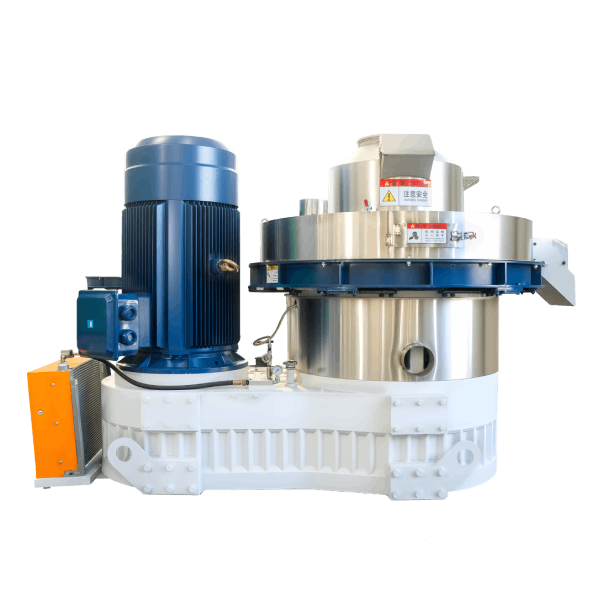
On a ring die mill, the die is vertical and the holes face inward. Access for clearing is through the die chamber, and clearing is done from the inside of the die outward. A ring die that is not purged before a stop cools with material distributed around the circumference, so restart blockages tend to be scattered around the ring rather than in one place.
On a flat die mill, the die is horizontal and the material sits above it. Access is from above, and clearing is done from the top of the die plate downward. Blockages tend to appear where feed distribution across the plate is uneven, and the guide or levelling components have a stronger influence on where the blockage starts.
In both types, clearing tools must be sized to the hole diameter, and the die working surface must not be pried against. The difference is mainly in how the operator reaches the holes and which side the material is pushed from.
Clearing Wet Material from the Die
Before clearing:
- Stop the feeder and the main mill motor.
- Isolate and lock out the drives and confirm zero energy before opening the die chamber.
- Allow the die and rollers to cool before handling, and use suitable gloves.
- Use the correct clearing tool for the die: a hardened pin or drill sized to the hole diameter, used by hand or with a controlled driver. Do not use a punch, chisel or makeshift bar, and do not hammer on the die.
Clearing procedure:
- Open the die chamber access according to the manufacturer’s procedure.
- Identify whether the blockage is at the entry chamfer, inside the hole, or both. Wet material usually blocks both.
- Clear entry packing first, working from the outer edge inward. Do not pry against the die working surface.
- Clear inside-hole blocks with the correct tool, in the direction of normal material flow, with steady pressure rather than impact.
- Verify each cleared hole by pushing the correct pin through the full working length. A hole that is clear at the entry but not through the working length is not clear, and it will block again on restart.
- Inspect the cleared holes for glazing, packing and mechanical damage. A hole that has been scored or enlarged blocks more easily afterward, and the die may need to be replaced or reworked according to the manufacturer’s guidance.
- Clear the roller area of packed material before restarting, and check that the rollers turn freely.
Drying and Restarting the Die
A die that has been cleared of wet material still needs to be brought back to working temperature before it will accept material at full rate. Restarting at full feed rate on a cold die repeats the problem.
- Start the mill and confirm normal no-load condition.
- Warm the die according to the manufacturer’s procedure.
- Start the feeder at a reduced rate and raise it gradually, watching main motor load and the roller area.
- If load rises without output, stop and check the die again. Do not continue feeding into a die that is not accepting material.
- Bring the feed rate up to normal only after the die is producing consistent pellets at the reduced rate.
Moisture Control That Prevents It
Prevention is a material control problem, not a machine adjustment problem. The die can only work with material that is within its moisture range.
Measure moisture before the die, not after. Moisture measured at the raw material store does not describe what reaches the die. Measure at the mill inlet, and check it whenever the material source or the weather changes.
Dry or blend to the die’s range. The correct range depends on the material and the die compression ratio and should be confirmed by testing. Drying is not always required: dry-harvested material may need no drying, while wet or seasonally variable material may need drying or blending.
Control storage and conveying conditions. Covered storage, avoiding condensation on cold surfaces, and avoiding long residence in humid conditions all reduce moisture pickup after drying.
Blend wet and dry batches. A mixed batch gives an average reading that hides wet pockets. Blending before the die produces a more consistent feed and avoids the wet pocket reaching the die first.
Control added steam or water. If conditioning adds moisture, the addition should be controlled against the incoming moisture and checked at the mill inlet, not set once and left.
Watch the trend, not only the reading. A slow rise in moisture shows up as a slow rise in main motor load and a slow drop in output before the die blocks. Tracking load against output catches the problem before the blockage.
Compression Ratio and Moisture Tolerance
The die’s compression ratio decides how much resistance the material meets as it passes through the hole, and therefore how much moisture the die can tolerate.
A higher compression ratio produces harder, denser pellets but raises the pressure needed to push material through. The die therefore tolerates less moisture: material that would pass through a lower-ratio die blocks a higher-ratio die at the same moisture. A higher-ratio die is also less forgiving of a wet batch or a wet pocket.
A lower compression ratio tolerates more moisture but produces softer pellets and poorer die filling, which can itself cause quality problems.
This means the moisture limit is not a fixed number for the material alone. It is the combination of the material and the die. If the die blocks at a moisture level that the material should tolerate, the compression ratio, the open area or the hole condition should be reviewed, not only the drying.
When the Die Specification Is Also Wrong
If the die blocks with wet material that is within the range the die should accept, the die specification may be part of the problem.
- Compression ratio too high for the material raises the pressure needed to push material through, so the die blocks at a lower moisture than a correctly specified die would.
- Open area too small for the throughput has the same effect at high feed rates.
- Glazed, packed or damaged holes grip material more easily and block sooner.
In these cases, correcting the moisture treats the symptom but the die will still block more often than it should. The die specification should be reviewed against the material and the throughput.
Spare Parts Planning
Wet material blocking increases wear part consumption, because the mill runs with high load and poor flow, and because clearing and restarting add stress to the die and rollers.
- Die. Have the current die specification recorded, and keep a spare or a planned replacement in the maintenance schedule if wet-season blocking is frequent.
- Rollers and roller shells. Wet material increases roller load, and blocked holes cause uneven wear. Roller shells should be inspected after a blocking event, not only at scheduled intervals.
- Clearing tools. Keep pins and drills sized to the die holes on hand, so that clearing does not wait for a tool to be found or improvised.
- Feeder components. Wet material can wrap or jam the feeder, so couplings and drive elements should be checked after a blocking event.
- Seals and bearings. Repeated high-load running shortens bearing life, particularly on the roller shaft.
What to Confirm When Buying a Die or a Mill
Die specification against the material. Confirm the hole diameter, open area, chamfer and compression ratio are matched to your material and its moisture range, and ask what test data supports the recommendation.
Moisture tolerance. Ask the supplier what moisture range the die will accept with your material, and what happens outside that range.
Drying and blending provisions. If your material varies in moisture, confirm whether drying or blending is part of the proposed line and how it is sized.
Clearing tools. Confirm the correct clearing tools are supplied with the mill, sized to the die holes.
Wear parts. Confirm die and roller availability, lead time and cost, since wet material increases wear part consumption.
Acceptance testing. Confirm the mill is run with your material at its actual moisture, and that the test report records moisture, settings and output.
If wet material is blocking the die on a material that should be within the die’s range, send the material type, moisture range, die specification and what changed before the blockage, and the die and moisture control setup can be reviewed against the material.
AUTHOR / COMPANY INFORMATION
Shandong Changsheng Machinery Co., Ltd. is a manufacturer of biomass pellet production equipment, including ring die pellet mills, complete pellet lines and related process equipment, serving overseas importers, EPC contractors, engineering companies and biomass fuel producers.