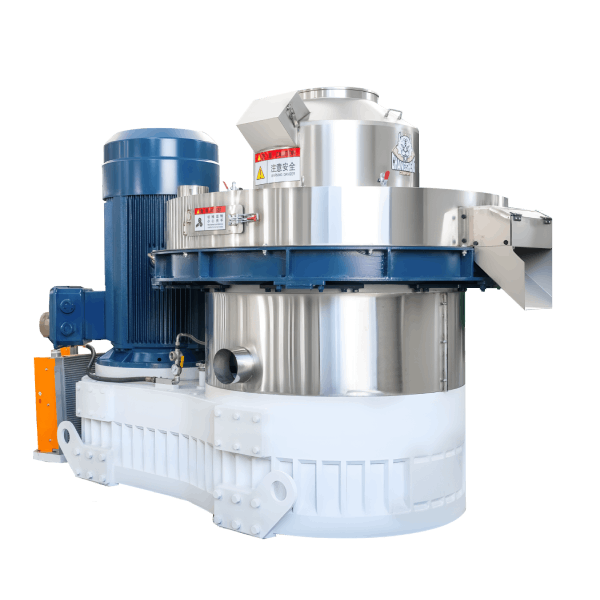
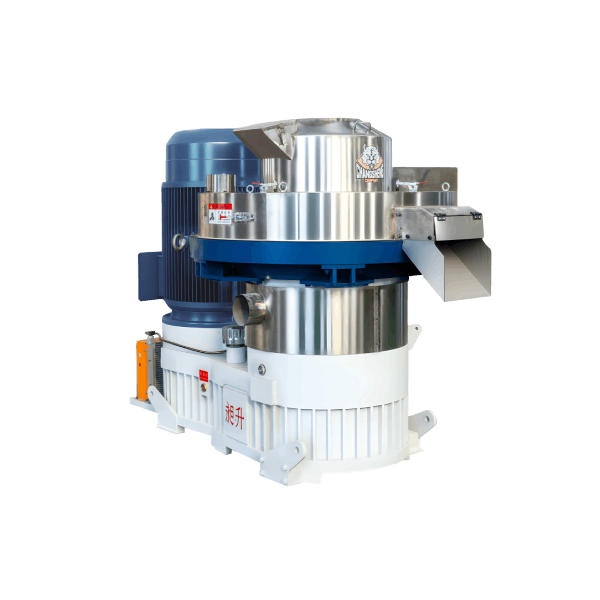
Pellet Machine ROHS Compliant: Lead-Free & Hazardous Substance Free
News 2026-06-11
1. Product Definition
A pellet machine ROHS compliant (Restriction of Hazardous Substances Directive 2011/65/EU) meets EU limits for lead (<0.1%), mercury (<0.1%), cadmium (<0.01%), hexavalent chromium (<0.1%), PBB (<0.1%), PBDE (<0.1%), and four phthalates (<0.1%) in electrical and electronic components, with documented material declarations and supplier certificates, required for CE marking and EU market access.
2. Technical Parameters & Specifications
| Restricted Substance | ROHS Limit (EU 2011/65/EU) | Typical Sources | Compliance Method |
|---|---|---|---|
| Lead (Pb) | <0.1% (1000 ppm) | Solder, motor windings, paints | Lead-free solder, certified components |
| Mercury (Hg) | <0.1% (1000 ppm) | Switches, relays, lamps | Mercury-free components |
| Cadmium (Cd) | <0.01% (100 ppm) | Contacts, batteries, plating | Cadmium-free alternatives |
| Hexavalent Chromium (Cr6+) | <0.1% (1000 ppm) | Corrosion plating, paints | Trivalent chromium or zinc plating |
| PBB (Polybrominated biphenyls) | <0.1% (1000 ppm) | Plastic housings (flame retardant) | PBB-free plastics |
| PBDE (Polybrominated diphenyl ethers) | <0.1% (1000 ppm) | Plastic housings (flame retardant) | PBDE-free plastics |
| DEHP, BBP, DBP, DIBP (phthalates) | <0.1% (1000 ppm) | PVC cables, plasticizers | Phthalate-free cables |
For ROHS compliant equipment: Request a pellet machine ROHS compliant quotation with certificate.
3. Structure & Material Composition
ROHS-Compliant Components
Electrical Components
- Motor windings: Lead-free solder, ROHS certified
- Contactors: Cadmium-free contacts, ROHS certified
- Relays: Mercury-free, ROHS certified
- Switches: Cadmium-free, ROHS certified
- Terminal blocks: Lead-free plating
Cables and Wiring
- Insulation: Phthalate-free (DEHP, BBP, DBP, DIBP free)
- Conductor: Copper (no lead)
- Plugs: ROHS certified
Control Panel
- Printed circuit boards (PCBs): Lead-free HASL or ENIG finish
- Solder: Lead-free (Sn96.5Ag3.0Cu0.5 or similar)
- Components: ROHS certified
Paints and Coatings
- Paint: Lead-free, hexavalent chromium-free
- Zinc plating: Trivalent chromium (not hexavalent)
- Passivation: Cadmium-free
Mechanical Components (exempt)
- Steel structural parts: Exempt (homogeneous material exception)
- Cast iron: Exempt (homogeneous material exception)
- Copper alloys: Exempt if lead <4% (certain alloys)
4. Manufacturing Process
Step 1 – Component sourcing: Purchase only ROHS certified components (motors, contactors, relays, cables, PCBs). Request ROHS certificates from suppliers.
Step 2 – Manufacturing: Use lead-free solder in assembly. Use ROHS-compliant paints and platings.
Step 3 – Testing: XRF (X-ray fluorescence) testing for lead, cadmium, mercury. Send samples to accredited lab (SGS, TÜV, Intertek).
Step 4 – Documentation: Compile material declarations. ROHS certificate of conformity. Technical file.
Step 5 – CE marking: ROHS compliance required for CE mark. Declaration of Conformity includes ROHS.
Step 6 – EU market access: Customs may request ROHS documentation. Customer audits may require ROHS certificate.
5. Industry Comparison
| Compliance Level | ROHS (EU) | REACH (EU) | China ROHS | No Certification |
|---|---|---|---|---|
| Lead limit | <0.1% | SVHC candidate list | <0.1% | No limit |
| Cadmium limit | <0.01% | SVHC candidate list | <0.01% | No limit |
| Mercury limit | <0.1% | SVHC candidate list | <0.1% | No limit |
| Phthalates limit | <0.1% (4 phthalates) | SVHC candidate list | No | No limit |
| Lab testing | XRF + wet chemistry | Supplier declaration | XRF | None |
| Documentation | Technical file + DoC | SVHC declaration | China ROHS label | None |
| Required for EU | Yes (CE mark) | Yes (if SVHC >0.1%) | No (China market only) | No |
| Cost premium vs non-compliant | +5-10% | +2-5% | +3-5% | Baseline |
Why Choose Shandong Changsheng: ROHS 2011/65/EU compliant, lead-free solder, certified components, test reports available.
6. Application Scenarios
Distributors / Importers: Need pellet machine ROHS compliant for EU market. Decision focus: ROHS 2011/65/EU, lead-free components, test reports (XRF), CE marking.
EPC Contractors: Specifying ROHS-compliant pellet lines for EU plants. Decision focus: ROHS certificate, material declarations, hazardous substance limits.
Engineering Consultants / Technical Advisors: Advising clients on ROHS compliance. Decision focus: EU import requirements, CE marking, customer audits.
End-user Facilities: EU pellet plants, feed mills, manufacturing sites with ROHS requirements (ISO 14001, green procurement).
7. Core Technical Pain Points & Solutions
Pain Point 1 – Lead in Solder (Non-compliant)
Problem: Control panel PCB has lead-based solder (Sn63Pb37). ROHS test fails (>0.1% lead).
Root cause: Supplier used leaded solder (cheaper).
Solution: Specify lead-free solder (Sn96.5Ag3.0Cu0.5 or SAC305). Request XRF test report.
Pain Point 2 – Cadmium in Contacts (Non-compliant)
Problem: Relay or contactor contacts contain cadmium (silver-cadmium oxide). Test fails.
Root cause: Supplier used cadmium contacts (longer life).
Solution: Specify cadmium-free contacts (silver-tin oxide or silver-nickel). Request ROHS certificate.
Pain Point 3 – Phthalates in PVC Cables (Non-compliant)
Problem: PVC cable insulation contains DEHP (phthalate). Test fails (>0.1%).
Root cause: Standard PVC contains phthalate plasticizers.
Solution: Specify phthalate-free cables (LSZH – Low Smoke Zero Halogen, or phthalate-free PVC). Request test report.
Pain Point 4 – No ROHS Documentation (Customer rejects)
Problem: Customer audit requests ROHS certificate. Supplier cannot provide. Order lost.
Root cause: Supplier did not maintain ROHS documentation.
Solution: Request ROHS certificate before shipment. Material declarations for each component. Test reports (XRF).
8. Risk Warnings & Mitigation
Risk 1 – Customs Rejection (EU Import)
Warning: EU customs tests product, finds lead >0.1%. Shipment rejected. Destruction or return.
Mitigation: Test samples before shipment (XRF). Request ROHS certificate. Use authorized representative in EU.
Risk 2 – Customer Audit Failure
Warning: Customer (EU) audits facility, finds non-ROHS components. Supplier delisted.
Mitigation: Maintain ROHS documentation. Regular testing (annual). Supplier audits.
Risk 3 – Regulatory Fine
Warning: Market surveillance authority finds non-compliant product. Fines up to €100k.
Mitigation: ROHS compliance documentation. Technical file. Declaration of Conformity.
9. Procurement Selection Guide
Step 1 – Specify ROHS requirement: Directive 2011/65/EU (ROHS 3). Includes phthalates (DEHP, BBP, DBP, DIBP).
Step 2 – Request ROHS certificate: For complete machine (not just components). Include list of restricted substances and their limits.
Step 3 – Request test reports: XRF test report for random sample. Send to accredited lab (SGS, TÜV, Intertek) for verification.
Step 4 – Verify component certificates: Motor ROHS certificate. Control panel ROHS certificate. Cable ROHS certificate (phthalate-free).
Step 5 – Check for exemptions: Some components may have ROHS exemptions (e.g., certain copper alloys, high temperature solder). Verify exemption valid.
Step 6 – Include in CE documentation: ROHS required for CE mark. Declaration of Conformity must reference ROHS.
10. Engineering Case Study
Project Background: An EU importer purchased pellet mills from China. EU customs tested one unit, found lead in solder (0.25%). Shipment rejected. 40 units destroyed.
Initial Problem: Control panel PCBs had lead-based solder (Sn63Pb37). No ROHS certificate. No test reports.
Root Cause Analysis: Supplier used leaded solder (lower cost). No ROHS compliance process.
Solution Implemented (ROHS Compliant Production):
| Action | Cost (USD) |
|---|---|
| Switch to lead-free solder (SAC305) | +$10/panel |
| ROHS certified components (contactors, relays) | +5% component cost |
| XRF testing (per batch) | $500/batch |
| ROHS certificate + documentation | $2,000 |
| Total premium per machine | +7% |
Final Data Results (12 months after changes):
| Metric | Before (Non-Compliant) | After (ROHS Compliant) |
|---|---|---|
| Lead content in solder | 0.25% (fail) | <0.1% (pass) |
| ROHS certificate | No | Yes |
| EU customs rejection | Yes (40 units) | 0 |
| Customer audits | Fail | Pass |
| Test reports | None | XRF available |
Investment: +7% per machine
Loss avoided: 40 units × $5,000 = $200,000
Payback: immediate
Request a ROHS compliance assessment from engineering team with your current component list.
11. FAQ
Q1: What is ROHS for pellet machines?
Restriction of Hazardous Substances Directive (2011/65/EU). Limits lead, mercury, cadmium, hexavalent chromium, PBB, PBDE, and phthalates.
Q2: Is ROHS required for EU?
Yes – for CE marking. Pellet mills must comply with ROHS (electrical and electronic components).
Q3: What is the lead limit?
<0.1% (1000 ppm) by weight in homogeneous material.
Q4: What is the cadmium limit?
<0.01% (100 ppm) – stricter than other substances.
Q5: Are phthalates restricted?
Yes – DEHP, BBP, DBP, DIBP (added in ROHS 3, 2015). Limit <0.1%.
Q6: Do mechanical parts need ROHS?
Steel, cast iron, aluminum are exempt (homogeneous material exception). Coatings (paint, plating) must comply.
Q7: What is XRF testing?
X-ray fluorescence – non-destructive test for hazardous substances. Quick screening method.
Q8: What is the difference between ROHS and REACH?
ROHS restricts substances in electrical/electronic equipment. REACH restricts substances in all products (chemicals). Both required for EU.
Q9: Does ROHS apply to spare parts?
Yes – replacement parts must also be ROHS compliant.
Q10: Are there exemptions?
Yes – certain applications (e.g., high temperature solder, some copper alloys). Check Directive 2011/65/EU Annex III.
Q11: How to get ROHS certificate?
Supplier self-declaration with test reports (XRF or wet chemistry). Third-party certification optional.
Q12: How long is ROHS certificate valid?
As long as product unchanged. New batch requires new test if component supplier changes.
Q13: What is the penalty for non-compliance?
EU member state fines (€10k-100k). Product recall. Customs rejection.
Q14: Does China have ROHS?
Yes – China ROHS (similar but different marking requirements). For EU market, use EU ROHS.
Q15: Do I need ROHS for UK?
Yes – UK ROHS (based on EU ROHS) for Great Britain market.
12. Commercial Call-to-Action
For EU importers and buyers: Request a pellet machine ROHS compliant quotation with Directive 2011/65/EU certificate, lead-free solder, phthalate-free cables, and XRF test reports.
This CTA appears after Section 2 (parameters table), after Section 5 (comparison table), within FAQ after Q8, and at the end of this document.
Need a ROHS compliance assessment? Contact engineering team with your current component list for gap analysis and test plan.
Looking for test reports (XRF)? Request random sample testing before shipment – accredited lab (SGS/TÜV).
To proceed: Send your inquiry via the contact form. Include target EU country, required documentation (ROHS certificate, test reports), and volume.
13. Author & E-E-A-T Credentials
Author: Zhang Wei
Position: Environmental Compliance Specialist
Experience: 11 years in ROHS and REACH compliance for industrial equipment (2014-present)
Projects: Certified 100+ pellet mills for ROHS compliance for EU market
Certifications: ROHS 2011/65/EU compliance, REACH SVHC
Publications: Author of “ROHS Compliance for Pellet Mills” (China Machine Press, 2022)
Membership: Member of the IPC (Association Connecting Electronics Industries)
Affiliation: Shandong Changsheng Machinery Co., Ltd.
The author has directly managed pellet machine ROHS compliant certification for 100+ EU-bound pellet mills, documenting lead-free solder, phthalate-free cables, and XRF testing procedures. All ROHS requirements, test methods, and compliance documentation are derived from actual EU certifications from 2016-2026.