Pellet Machine Belt Replacement: Signs, Tension, Alignment and Procedure
News 2026-11-06
A worn drive belt on a pellet machine does not usually fail without warning. It slips under load, it glazes, it stretches, it runs hot, and it starts to fray at the edges, and the operator often notices a fall in output or a rise in motor current before the belt actually breaks. By the time the belt is visibly damaged, the pulley may already be worn, the bearings may have been loaded unevenly, and the machine may have been running below its capacity for some time, so the cost of a late belt replacement is the belt plus the pulley plus the lost output.
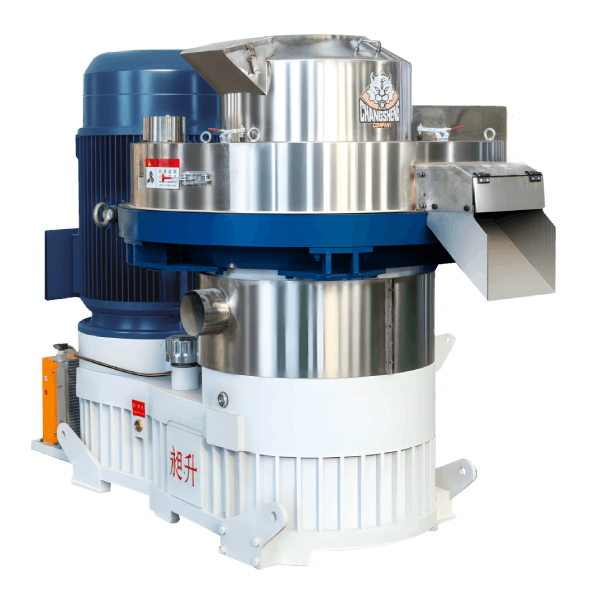
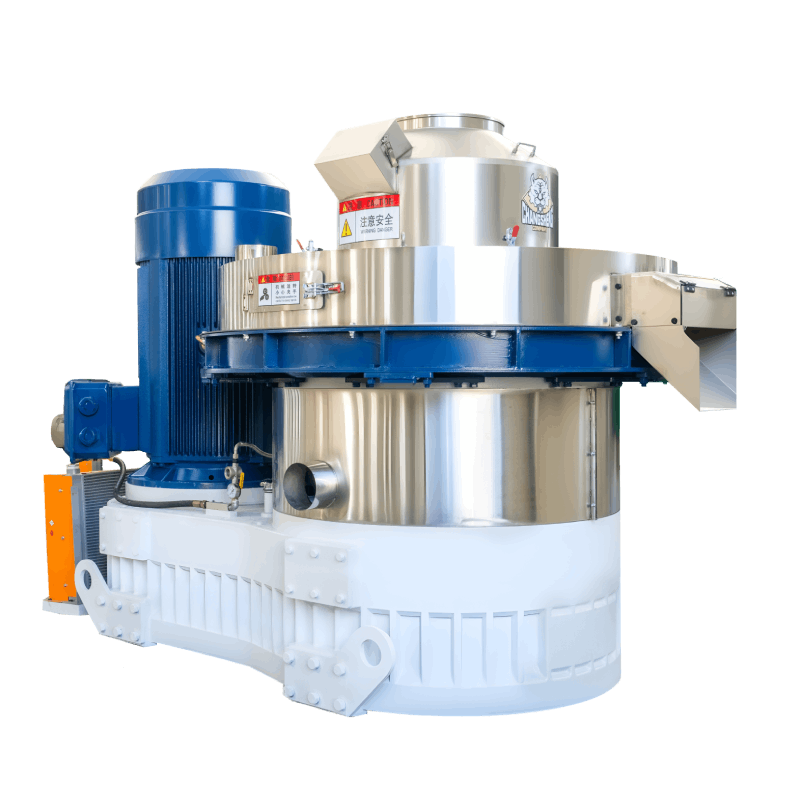
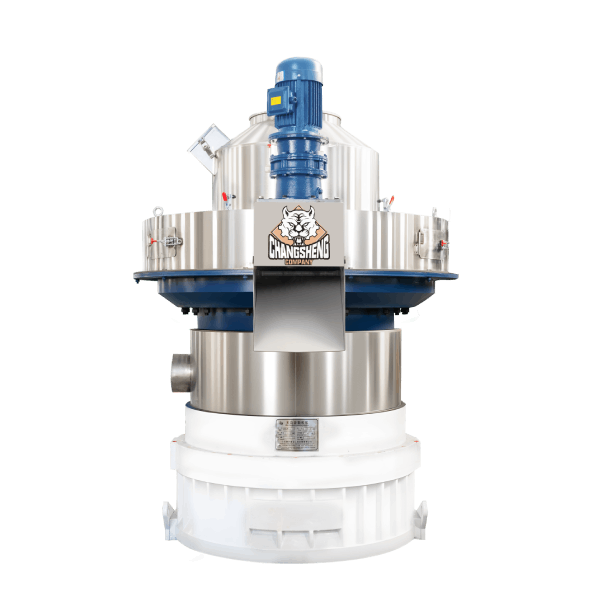
This page covers the signs that show a belt needs replacing on a belt-driven pellet machine, how to check the belt tension with a deflection check and how to judge the pulley groove wear, how to fit the new belt, how to plan the spare, and what to confirm with the supplier before ordering. Shandong Changsheng Machinery supplies ring die pellet mills with belt drive and with gearbox drive, and the guidance below reflects how belt replacement is handled in service. The machine covered here is the belt-driven type, and the gearbox-driven type does not use a drive belt for the main transmission.
The short answer
A pellet machine belt should be replaced when the signs point to wear rather than to a load problem: slipping under load, a glazed or polished belt surface, cracks or fraying at the edges, a belt that has stretched beyond the adjustment range, a rise in belt temperature, and a fall in output at the same motor current. The belt should be replaced as a matched set where the machine uses more than one belt, because a new belt running with a worn one carries more load and fails early.
The practical rule: check the belt tension and the pulley alignment and the pulley groove wear before replacing the belt, replace the set rather than a single belt on a multi-belt drive, re-tension after the first hours of running, and keep a spare belt set on site so that the replacement is planned rather than forced by a failure.
Signs that show a belt needs replacing
The symptoms of a worn belt overlap with the symptoms of an overloaded machine, and the two should be checked together, but the following point to the belt.
Slipping under load. The belt slips on the pulley when the load rises, the output falls, and the belt runs hot. A slipping belt can be heard as a squeal or a slipping noise, and it can be seen as a polished or glazed surface on the belt and the pulley.
A glazed or polished belt surface. The belt surface becomes shiny and hard, and the friction between the belt and the pulley falls. A glazed belt cannot be restored by tightening the tension, and it should be replaced.
Cracks or fraying at the edges. The belt should be inspected along its length, and any crack, missing rib, or frayed edge is a reason to replace it.
A belt that has stretched beyond the adjustment range. The belt stretches over its life, and when the adjustment is at the end of its travel and the tension can no longer be set, the belt has reached the end of its life.
A rise in belt temperature. A belt that runs hot is a belt that is slipping or misaligned, and the heat accelerates the wear.
A fall in output at the same motor current. The belt transmits less power when it slips, and the output falls even though the motor current is unchanged.
How to check the belt tension with a deflection check
The check should be made with the machine stopped and locked out.
The tension is normally checked by a deflection check at the middle of the longest free span of the belt. A specified force is applied to the belt at that point, the deflection is measured, and the reading is compared with the value in the machine manual. The force and the deflection range are in the manual, and the same method should be used each time so that the readings are comparable. A belt that deflects more than the manual allows is too loose, and a belt that deflects less is too tight.
A belt that is too loose slips and glazes, and a belt that is too tight loads the bearings and the shaft and shortens the life of the bearings and the shaft. The tension should be recorded as the baseline for the next check.

How to judge the pulley groove wear
The pulley groove should be checked while the belt is off, because a worn groove produces the same symptoms as a loose belt, and a new belt on a worn groove will slip even when the tension is correct.
The groove is checked with a pulley gauge where one is available, or by fitting a new belt into the groove and comparing how much of the belt sits proud of the groove with the manufacturer’s limit. A groove that has worn lets the belt sit too deep in the groove, the belt loses its grip, and the belt and the pulley both run hot. A groove that is worn beyond the limit cannot be corrected by tension, and the pulley should be replaced.
The pulley should also be checked for a polished or ridged surface on the groove flanks, for run-out on the shaft, and for bearing play, because each of those wears a new belt quickly.
How to check the pulley alignment
The pulley alignment should be checked with a straight edge or a laser alignment tool across the two pulley faces. A misaligned belt runs against the pulley flange, wears at the edge, and runs hot, and the alignment should be corrected before the new belt is fitted. The alignment should be checked again after the tension is set, because tightening the belt can move the pulley.
How to replace the belt
The replacement procedure depends on the machine, and the manufacturer’s procedure should be followed. The general sequence is the following.
Lock out the machine and release the tension on the drive. Remove the guard, and remove the old belt from the pulleys. The number of belts in the set should be confirmed from the manual or the guard, because a small machine may use a single belt while a larger machine usually uses a set of two or more, and the set is replaced as a whole.
Inspect the pulleys, the shafts, and the bearings while the belt is off. A worn pulley groove, a scored shaft, or a bearing with play should be corrected before the new belt is fitted, because a new belt on a worn pulley will fail early.
Fit the new belt or the new set, and check that the belts sit evenly in the grooves and that none is twisted. On a multi-belt drive, the belts should be a matched set, because belts of different lengths share the load unevenly and the shorter belt carries more than its share.
Set the tension to the manufacturer’s value, check the alignment again after the tension is set, run the machine without load for a short period, and check the belt tracking and the temperature.
Re-tension the belt to the manufacturer’s value after the first hours of running, at the interval the manufacturer recommends, because a new belt settles and the tension falls from the value that was set on installation. Skipping this step leaves the belt running loose, and a loose belt slips, glazes, and wears out early.
How to budget the belt replacement
The belt replacement should be budgeted as a recurring cost, based on the expected life of the belt on the drive, the number of replacements per year, the price of the belt or the belt set, the downtime of the change, and the spare stock.
The expected life depends on the load, the tension, the alignment, the pulley condition, the ambient temperature, and the belt quality, and it should come from the operating record rather than from a general figure. A belt that is failing earlier than the operating record suggests is a signal that the tension, the alignment, or the pulley condition needs attention, and the cause should be found rather than the belt replaced more often.
The spare stock should include at least one spare belt set per machine, stored in a dry place away from heat and oil, because a belt that has been stored in the wrong conditions can be as unusable as a worn belt.
What to check before buying a replacement belt
Before ordering, confirm the machine make and model, the belt type and size, the number of belts in the set, the pulley diameter and groove profile, and the manufacturer’s tension value and deflection range. Ask the supplier to state the belt specification, the matched-set requirement, and the recommended spare stock, and to confirm the belt is the correct type for the drive rather than a substitute.
A belt that is the correct length but the wrong profile, or a single belt fitted to a multi-belt drive, will not perform as the original, and the lower price is not a saving over the replacement cycle.
If you are sourcing a replacement belt for a belt-driven pellet machine and need the belt specification confirmed against your machine, send the machine model, the belt type and size, the number of belts in the set, and the pulley details, and the Shandong Changsheng Machinery team can confirm the belt specification and the recommended spare stock for that drive.
Bottom line
A pellet machine belt is a wear part that fails with warning, and the cost of a late replacement is the belt plus the pulley plus the lost output. Replace the belt when the signs point to wear rather than to a load problem, check the tension with the deflection check and judge the pulley groove wear before the new belt is fitted, replace the set on a multi-belt drive, and re-tension after the first hours of running. Budget the replacement as a recurring cost based on the operating record, keep a spare belt set on site and store it correctly, and specify the belt type, the size, the matched-set requirement, the tension value, and the deflection range on the purchase order. A belt that is failing earlier than the operating record suggests is a signal that the tension, the alignment, or the pulley condition needs attention, and the cause should be found rather than the belt replaced more often.