High Ash Content Material in Biomass Pelleting: Testing, Die Selection and Market Limits
News 2026-11-03
High ash content is one of the few feedstock properties that affects every part of a pellet line and the market the pellet can be sold into. It raises the ash of the finished pellet, it accelerates wear on the die, rollers, and hammer mill, it changes the combustion behavior of the fuel, and it sets a hard ceiling on which customers will accept the product. Unlike moisture, ash cannot be corrected at the pellet mill; it can only be measured, managed, and priced into the project.
This page is written for buyers and project developers who have a high-ash feedstock and need to decide whether it can be pelletized economically, what the ash means for the die and the wear parts, and what to confirm before committing to a line. Shandong Changsheng Machinery configures biomass pellet lines across a range of feedstocks, and the guidance below reflects how high-ash materials are typically assessed and where projects most often misjudge them.
The short answer
High ash content does not prevent pelleting, but it changes the economics and narrows the market. The ash of the finished pellet is largely determined by the ash of the feedstock, and the pellet mill cannot remove it. What the mill can do is handle the material with a die, a feeder, and a wear package selected for the abrasiveness, and what the project can do is measure the ash early, screen the material against the end-market limit, and price the wear and maintenance into the operating cost.
The practical rule: measure ash, silica, and the chlorine and alkali content on the actual material, obtain the ash limit in writing from the end user rather than working from a general figure, and specify the die and wear parts against the abrasiveness rather than against the ash percentage alone.
What high ash content means for a pellet line
Ash is the mineral residue left after combustion. It comes from two sources that behave differently in the line: contamination from soil and sand picked up during collection and handling, and mineral matter bound in the plant structure, of which silica is the most important for wear. The first can be reduced by cleaning; the second cannot.
In a pellet line, ash matters in four places.
It sets the ash of the finished pellet. The ash of the pellet is essentially the ash of the dry feedstock, and blending changes it in proportion to the blend ratio. A feedstock with high ash produces a pellet with high ash, and no amount of drying, grinding, or pelleting reduces it. The only ways to lower the ash of the product are to blend with a lower-ash material, to clean the feedstock of soil and sand, or to change the feedstock.
It accelerates wear. Silica and mineral matter are abrasive, and they wear the die, the rollers, the hammer mill hammers, and the conveying surfaces. Wear rates depend on the silica content, the hardness and mineralogy of the ash, the die material, and the operating conditions, and they cannot be estimated from the ash percentage alone. In principle, a material with 8 percent ash that is mostly soft mineral matter may wear less than a material with 5 percent ash that is mostly hard silica, depending on the mineralogy of each. The point is that the ash percentage is a screen, not a wear prediction.
It changes combustion behavior. High-ash fuels produce more ash in the boiler, which affects ash handling, slagging, and the maintenance interval. Some boilers and combustion systems have hard ash limits, and a pellet above the limit will not be accepted regardless of its other properties.
It interacts with chlorine and alkali metals. Ash is often accompanied by chlorine, potassium, and sodium, which affect corrosion and fouling in the boiler. The ash percentage is a first screen, and the chlorine and alkali content should be tested alongside it.
How to test and screen a high-ash material
The first test is ash content on a representative sample of the material as received, not on a dried or cleaned subsample. The sample should be taken across several batches, because ash can vary with the source and the season.
The second test is the silica content, or the composition of the ash. Ash is not a single substance, and its abrasiveness depends on what it is made of. Silica is the component most closely associated with wear on dies, rollers, and hammers, and a high silica fraction is the signal to specify harder die material, more frequent roller replacement, and heavier hammer mill components. A high ash that is mostly soft mineral matter is a different problem from a lower ash that is mostly silica, and the two should lead to different wear packages. The ash composition should be established by laboratory analysis on the actual material, and the wear package selected from that analysis rather than from the ash percentage.
The third test is the chlorine, potassium, and sodium content, because those elements determine the corrosion and fouling behavior in the boiler and often set the binding constraint in the market.
With those results, the material can be screened against the end-market specification. The ash limit differs substantially between markets, and it cannot be replaced by a general figure, because it depends on the boiler design, the emission rules in the destination country, and the individual customer’s acceptance specification. Residential heating appliances usually apply strict limits and will not accept a high-ash pellet. Industrial boilers and power generation can accept higher ash but need ash handling and may have their own limits for slagging and fouling. Export markets have their own specifications, which vary by destination. The limit that matters for a project is the one in the end user’s written specification, not a number taken from a general table, and it should be obtained before the equipment is specified. If the ash is above that limit and cannot be brought below it by blending or cleaning, the material is not suitable for that market, and no equipment specification will change that.
How high ash changes the die and wear parts
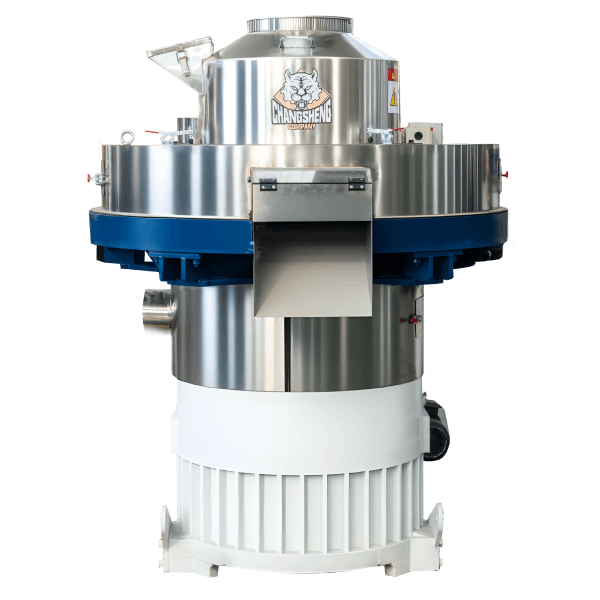
The die compression ratio, hole diameter, and open area should be selected against the material, the moisture at the die, and the target pellet diameter, and confirmed in trial. Ash does not change that principle, but it changes the wear calculation.
A die that is suitable for a low-ash wood feedstock may wear too quickly on a high-silica material. Die material, heat treatment, and hardness should be selected against the abrasiveness of the actual material, and the expected die life should be discussed with the supplier rather than assumed. Rollers, hammer mill hammers, and screens are subject to the same wear, and the spare parts package should be sized for the wear rate rather than for a standard package.
Whether a die with a different compression ratio would improve the pellet quality on a high-ash material depends on the material and should be confirmed in trial. Ash does not by itself determine the compression ratio; binding, moisture, and particle size do.
How high ash changes the line configuration
A high-ash material usually needs more cleaning than a low-ash material. Soil, sand, and stones that would pass through a line designed for clean wood will accelerate wear and raise the ash of the pellet, and a destoner or similar cleaning stage is normally justified.
The dust collection and ash handling around the line also need attention, because a high-ash material generates more dust, and the dust carries the same abrasiveness as the material.
The grinding stage may need heavier hammers and more frequent replacement, and the conveying surfaces may need wear liners. These are not optional extras on a high-ash line; they are part of the configuration, and they should be in the quotation rather than added after commissioning.
What high ash means for the market
The ash of the finished pellet determines which markets will accept it. The limit varies by market, and the market should be decided before the equipment, because it sets the ash limit that the project has to meet. A feedstock that is acceptable for a local industrial boiler may be rejected for export, and the reverse can also be true, depending on the destination specification. The end user’s written specification is the reference, and it should be obtained before the line is designed rather than after the first batch is produced.
Blending and cleaning as ash-reduction options
The two ways to reduce the ash of the product, other than changing the feedstock, are cleaning and blending.
Cleaning removes soil, sand, and stones, and it can reduce the ash of a contaminated feedstock substantially. It does not remove the silica that is bound in the plant structure, so it has a limit. A destoner and a screening stage are the usual cleaning equipment, and the achievable ash reduction should be confirmed by testing the cleaned material.
Blending with a lower-ash material reduces the ash of the product in proportion to the blend ratio. The blend ratio is limited by the ash limit of the market, and by the effect of the other component on binding, moisture, and cost. The ash of the blend can be estimated by arithmetic, but the durability and the handling behavior of the blend should be confirmed by trial.
What to specify to a supplier
Before requesting a quotation for a high-ash material, provide the material type and source, the ash and silica content as measured on the actual material, the chlorine, potassium, and sodium content, the moisture range, the particle size distribution and bulk density, the target capacity and pellet diameter, the end-market ash limit in writing, and whether cleaning or blending is planned. Ask the supplier to state the die specification and die material matched to the abrasiveness of the material, the cleaning arrangement, the expected wear parts consumption and the spare parts package, the dust collection arrangement, and the acceptance test to be run on the finished pellet. A quotation that lists capacity and motor power but does not state the wear package, the cleaning arrangement, and the ash basis leaves the high-ash risk with the buyer.
If you are working with a high-ash feedstock and need to test the ash and silica, screen it against the end-market limit, and specify the die and wear package for the abrasiveness, send the material data, the target capacity, the pellet diameter, and the intended market, and the Shandong Changsheng Machinery team can review the line configuration and propose a trial plan.
Procurement risks that appear later as high-ash problems
Ash tested on a cleaned or dried subsample. The ash of the material as received is higher than the test suggested, and the pellet fails the market limit after commissioning.
A wear package sized for a low-ash material. The die, rollers, and hammers wear faster than planned, and the maintenance cost is well above the budget.
A cleaning stage left out of the quotation. The material arrives with soil and stones, and the wear and ash problems appear after the line is installed.
A market selected without checking the ash limit. The pellet is produced to a specification that the target market will not accept.
No acceptance test on the finished pellet. The line is accepted on output and appearance, and the ash and durability failures appear at the customer.
Bottom line
High ash content is a feedstock property that the pellet mill cannot change. Measure ash, silica, and the chlorine and alkali content on the actual material, obtain the ash limit in writing from the end user, and decide the market before the line. Select the die, the rollers, the hammers, and the cleaning stage against the abrasiveness of the material and the mineralogy of the ash rather than against the ash percentage alone, and size the spare parts package for the wear rate. Blending and cleaning can reduce the ash of the product, but both have limits and both should be confirmed by trial. Specify the die specification, the cleaning arrangement, the wear package, and the acceptance test in the quotation, and trial the finished pellet before shipment.