Compact Pelletizing Unit: How to Choose a Small-Scale Pellet Line That Fits Your Site, Power and Feedstock
News 2026-09-30
A compact pelletizing unit is not simply a smaller version of a full pellet plant. It is a complete production system designed to fit a limited footprint, a limited power supply, and a limited feedstock volume, while still producing consistent pellets. The constraint that matters most is not the machine size. It is the match between footprint, power, feedstock, and target output.
This guide is written for farm owners, small producers, distributors, and project developers who need a compact pelletizing unit rather than a full industrial line. It covers what a compact unit includes, how to size it, how to choose between flat die and ring die, what auxiliary equipment is essential, what containerized and mobile configurations offer, and what to confirm with the supplier before ordering.
What a Compact Pelletizing Unit Actually Is
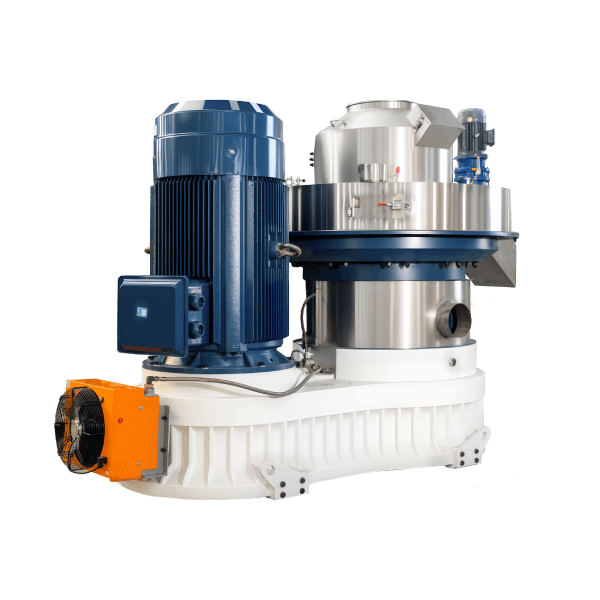
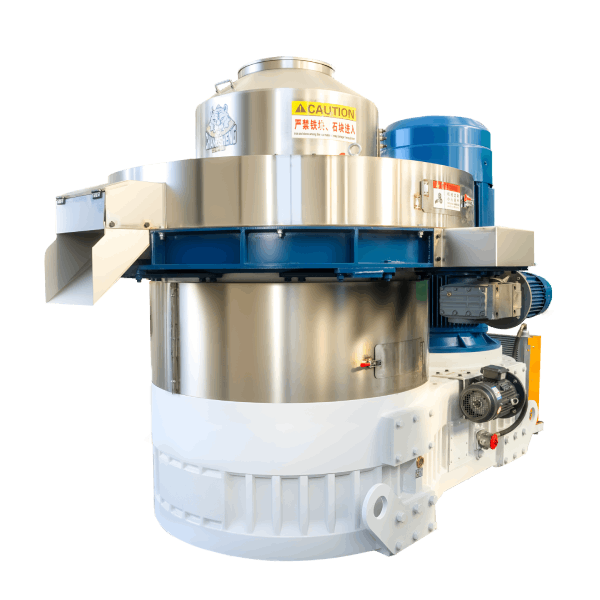
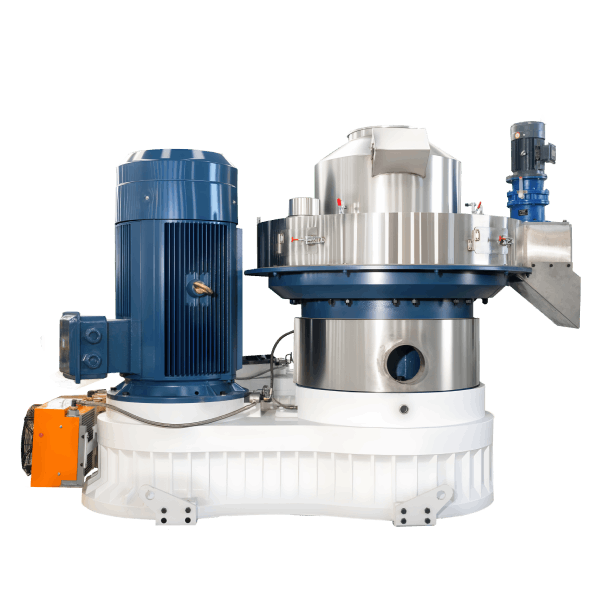
A compact pelletizing unit is a small, self-contained pellet production system. It usually includes a pellet mill, a feeder, a conditioner or moisture control step, a cooler, and a screener, arranged in a single frame or in a small building. It may include a hammer mill or a dryer if the feedstock requires them.
A compact unit differs from a full pellet plant in three ways. It has a smaller footprint, it has a lower connected load, and it is usually designed for one feedstock and one pellet specification. A full plant is designed for multiple feedstocks, higher capacity, and more automation.
Because of these differences, a compact unit is not a scaled-down industrial line. The design logic is different. The unit must fit the site, the power supply, and the feedstock, not the other way around.
Where a Compact Pelletizing Unit Makes Sense
A compact unit makes sense when feedstock is available in small volumes close to the site, when power supply is limited, when the site has limited space, when production is for own use rather than sale, and when the target market is local rather than export.
A compact unit also makes sense in remote locations such as islands, mountain sites, and off-grid farms, where a full plant is not practical because of transport access, power supply, or maintenance capability. In these locations, a compact unit can be installed close to the feedstock and operate independently.
A compact unit does not make sense when feedstock volume is large and continuous, when export quality and certification are required, when the site has access to full industrial power and space, or when the project requires full automation and continuous operation. In those cases, a standard ring die line is a better fit.
Typical Capacity Range for Compact Units
Compact pelletizing units typically range from about 30 kg/h to about 500 kg/h. This range depends on feedstock type, moisture, particle size, die specification, and configuration. Smaller units are often flat die machines. Larger compact units may use a small ring die machine.
Capacity should not be selected from a rated output figure alone. A compact unit rated at 300 kg/h may produce 150 to 250 kg/h under real conditions with variable feedstock and moisture. Rated capacity is only meaningful when feedstock type, moisture, particle size, and pellet diameter are stated.
As a practical reference, a compact unit running 2,000 hours per year at 200 kg/h produces approximately 400 tons per year. A compact unit running 4,000 hours per year at 400 kg/h produces approximately 1,600 tons per year. These figures are illustrative and should be adjusted for your actual operating hours and feedstock.
Feedstock Suitability for Compact Units
Compact units are most often used with sawdust, wood shavings, small wood chips after grinding, agricultural residues such as straw and rice husk after grinding, and other biomass materials that are already dry or can be dried on site.
Feedstock characteristics that affect compact unit selection include moisture, particle size, bulk density, fiber length, ash content, and abrasiveness. Feedstock that is too wet, too coarse, or too variable will reduce output, shorten die life, and increase blockage risk in a compact unit.
Flat Die vs Ring Die for Compact Units
Flat die machines are generally simpler, lower in cost, and easier to maintain. They suit small capacity, varied feedstock, and intermittent operation. Flat die machines are common in compact units up to about 300 kg/h.
Ring die machines are more efficient at higher capacity and produce denser, more uniform pellets. They suit larger compact units, continuous operation, and consistent feedstock. Ring die machines require more specialized maintenance and may need lifting equipment for die change.
The choice depends on feedstock consistency, operating hours, pellet quality requirement, and maintenance capability at the site.
Containerized and Mobile Configurations
A containerized compact pelletizing unit is a compact line built into one or more standard shipping containers. It is designed for easy shipping, fast installation, and use in remote or temporary sites. Containerized units are common for export projects where site construction is limited or where the plant may need to be relocated later. Packing, container loading, and documentation are planned as part of the supply.
A mobile compact pelletizing unit is mounted on a trailer or truck frame. It is used where feedstock is scattered or where production is seasonal, such as agricultural residue collection or forestry operations. Mobile units usually have lower capacity than containerized or fixed compact units, because of weight and power limitations on the trailer.
Both configurations are useful when fixed site construction is not practical. They should be specified with the same technical information as a fixed compact unit: feedstock, moisture, particle size, pellet diameter, power supply, and target capacity.
Footprint and Layout for a Compact Unit
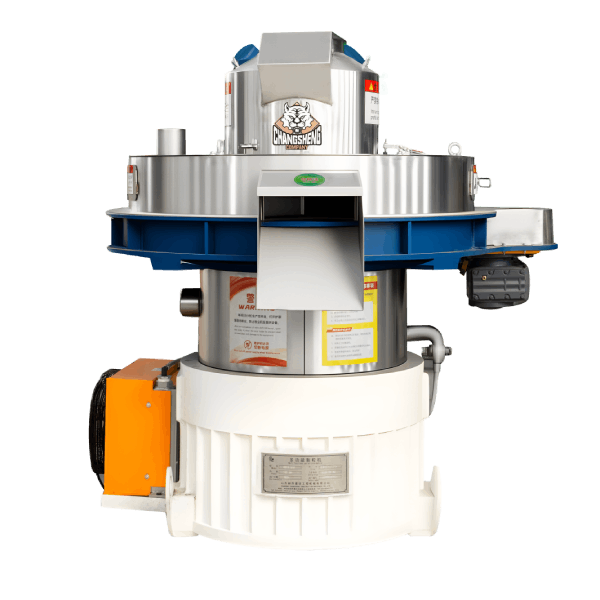
A compact unit must fit the available footprint without compromising material flow, maintenance access, and safety distances. Typical layout considerations include feedstock storage, feeding area, pellet mill, cooler, screener, finished pellet storage, and access for trucks and loading equipment.
Layout should be planned around the largest piece of equipment, because installation and future die change require space for lifting and access. A layout that fits the equipment but not the maintenance access will cause long-term operational problems.
Power Supply for a Compact Unit
Power supply is often the main constraint for a compact unit. A compact unit may run on single-phase power at low capacity, or three-phase power at higher capacity. Voltage, phase, frequency, and available transformer capacity must be confirmed before ordering.
As a practical reference, compact units in the 30 to 100 kg/h range often use motors in the range of about 7.5 to 22 kW and may run on single-phase or three-phase power depending on model. Units in the 100 to 300 kg/h range often use motors in the range of about 22 to 55 kW and usually require three-phase power. Units above 300 kg/h typically use motors above 55 kW and require three-phase power with confirmed transformer capacity. These figures are indicative and depend on feedstock, die specification, and machine design.
A compact unit with a 30 kW motor and auxiliary equipment may require a generator or transformer sized for starting current, not only running load. A soft starter or variable frequency drive reduces starting current and improves stability.
Automation Level and Labor Requirement
A compact unit may be manual, semi-automatic, or automatic. The automation level affects both initial cost and labor cost.
A manual compact unit requires one or two operators for feeding, monitoring, and bagging, and depends on operator skill for stable output. A semi-automatic unit uses variable frequency feeding and basic monitoring, and can run with one operator for most tasks. An automatic unit includes PLC control, automatic lubrication, and remote monitoring, and can run with one operator plus periodic inspection.
The right level depends on local labor cost and operating hours. In high-wage regions, higher automation may reduce total cost. In low-wage regions, manual operation may be acceptable for small capacity.
Die Temperature and Operating Control
Die temperature is the friction-generated temperature inside the die chamber during pelletizing. It affects lignin softening, binding, and pellet durability. If die temperature is too low, pellets are weak. If die temperature is too high, material may scorch and die wear accelerates.
A compact unit usually does not include a complex temperature control system, but it should include a die temperature sensor and alarm. Feed rate should be adjusted to keep temperature within the target range. The target range depends on feedstock type, moisture, compression ratio, and feed rate, and should be confirmed with a pelletizing test.
Auxiliary Equipment: What Is Essential and What Is Optional
Essential auxiliary equipment for a compact unit includes magnetic separation, feeding control, cooling, and screening. Magnetic separation protects dies and rollers. Feeding control stabilizes output. Cooling hardens pellets and reduces fines. Screening removes fines and oversize.
Optional auxiliary equipment includes hammer mill, dryer, moisture conditioner, dust collection, and packing. Whether these are needed depends on feedstock condition and target pellet quality. A compact unit running dry sawdust may not need a dryer. A compact unit running wet agricultural residues will need one.
Moisture and Particle Size for Compact Units
Typical target moisture before pelletizing is around 10 to 15 percent for most wood and biomass feedstocks, but this range depends on feedstock type, die compression ratio, and machine configuration. The exact target should be confirmed with a pelletizing test.
Particle size affects feeding stability, compression, pellet density, and die wear. Target particle size is usually in the range of 2 to 5 mm, depending on die specification. If feedstock is too coarse, grinding is required. If too fine, bridging and die blockage risk increases.
Compact Unit Cost and What Determines It
The cost of a compact pelletizing unit depends on capacity, machine type, motor power, die and roller specification, drive system, automation, included auxiliary equipment, and the scope of supply.
A compact unit that includes only the pellet mill and cooler is in a different price category from a compact unit that includes hammer mill, dryer, dust collection, and packing. A containerized or mobile configuration is in a different price category again because of the frame, container, or trailer structure.
Buyers comparing quotations should compare scope of supply, not headline price. Machine price is not the same as installed and commissioned project cost.
Die Life, Spare Parts and Cost per Ton
Dies and rollers are wear parts. Their life depends on feedstock abrasiveness, moisture, compression ratio, and operating conditions. For abrasive feedstocks, die and roller life may be shorter than for clean wood. Expected die and roller life should be confirmed with the supplier based on similar material, not assumed from a general figure.
A practical spare parts plan for a compact unit includes at least one spare die, one or two spare roller shell sets, bearings, belts, seals, lubricants, and critical electrical spares such as contactors and relays.
Cost per ton of pellets is the figure that matters, not die price alone. A die that costs more but lasts significantly longer may reduce cost per ton, especially for abrasive feedstocks.
Energy Consumption
Energy consumption per ton depends on feedstock type, moisture, particle size, die specification, compression ratio, feed rate, and motor efficiency. For compact units, energy consumption per ton is often higher than for larger industrial lines because of lower scale efficiency, but still acceptable for small-scale production.
Energy consumption should be confirmed with the supplier at your actual feedstock condition, not assumed from a catalog figure.
Pellet Quality and Standards
For local use, pellet quality requirements are usually set by the boiler, stove, or feed system. For export or for higher-grade markets, pellet quality may need to meet standards such as ISO 17225 for solid biofuels. Compact units can produce pellets that meet these standards when feedstock, moisture, die specification, cooling, and screening are correctly controlled, but certification requires testing and documentation that go beyond the compact unit itself. Exact grade limits should be confirmed against the current official standard, not assumed from a general figure.
Commissioning and First Production
Commissioning should include no-load run, load run with actual feedstock, die temperature check, roller clearance check, and pellet quality check. The first production run should be recorded with feedstock type, moisture, particle size, output, pellet quality, and power consumption. This record becomes the baseline for future operation.
Die change procedure should be confirmed during commissioning, including roller clearance adjustment, die installation, and safety procedure. Operators should be trained on feeding control, moisture control, die change, and shutdown.
Environmental and Workplace Factors
Compact units may operate indoors or in enclosed areas, so noise level, dust emission, and workplace safety matter. Dust collection with high-efficiency cyclone and filters is recommended. Explosion venting, spark detection, and grounding are recommended for commercial lines. Local regulations on noise, dust, and fire safety should always be confirmed.
Procurement Checklist
Before ordering, confirm capacity with stated feedstock, moisture, particle size, and pellet diameter. Confirm die compression ratio and die material. Confirm roller material and hardness. Confirm feeder type and whether variable frequency control is included. Confirm cooling, screening, and packing scope. Confirm dust collection scope. Confirm motor power, total connected load, voltage, phase, and frequency. Confirm spare parts list with part numbers. Confirm warranty scope and wear part definition. Confirm inspection and acceptance method before shipment.
Frequently Asked Questions
What is a compact pelletizing unit?
A compact pelletizing unit is a small, self-contained pellet production system that fits a limited footprint and power supply, usually for one feedstock and one pellet specification.
What capacity can a compact pelletizing unit produce?
Compact units typically range from about 30 kg/h to about 500 kg/h, depending on feedstock, moisture, pellet diameter, and configuration. Actual output is usually lower than rated output under real conditions.
Should I choose flat die or ring die for a compact unit?
Flat die machines suit small capacity, varied feedstock, and intermittent operation. Ring die machines suit larger compact units, continuous operation, and consistent feedstock. The choice depends on feedstock, operating hours, and maintenance capability.
Do I need a dryer for a compact pelletizing unit?
Drying is required when feedstock moisture is above the suitable range for pelletizing. Dry sawdust may not need a dryer. Wet agricultural residues usually do.
What power supply does a compact unit need?
Power supply depends on capacity and equipment scope. Units in the 30 to 100 kg/h range often use motors in the range of about 7.5 to 22 kW. Units in the 100 to 300 kg/h range often use motors in the range of about 22 to 55 kW. Units above 300 kg/h typically use motors above 55 kW. Voltage, phase, frequency, and transformer capacity must be confirmed before ordering.
How much does a compact pelletizing unit cost?
Cost depends on capacity, machine type, motor power, die and roller specification, automation, and included auxiliary equipment. A unit with only a pellet mill and cooler is in a different price category from a unit with hammer mill, dryer, dust collection, and packing. A containerized or mobile configuration is in a different price category again.
Can a compact pelletizing unit run multiple feedstocks?
It can, but performance will depend on the feedstock. A unit configured for one feedstock may not run another at the same output or pellet quality. For multiple feedstocks, a fixed mix ratio or a dual die configuration is usually required.