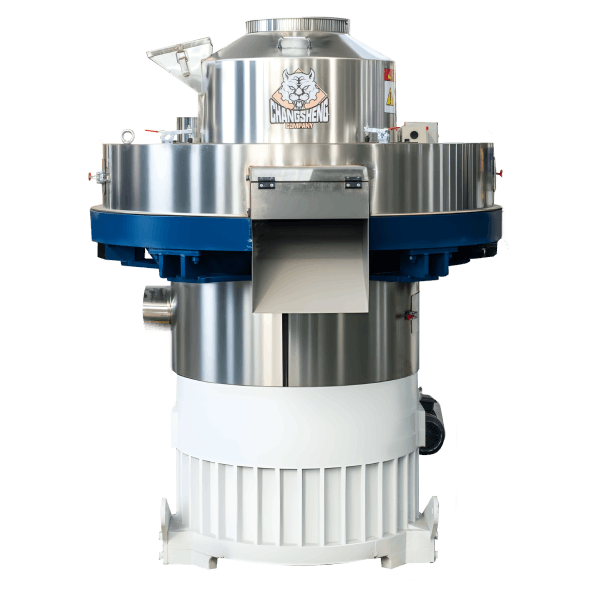
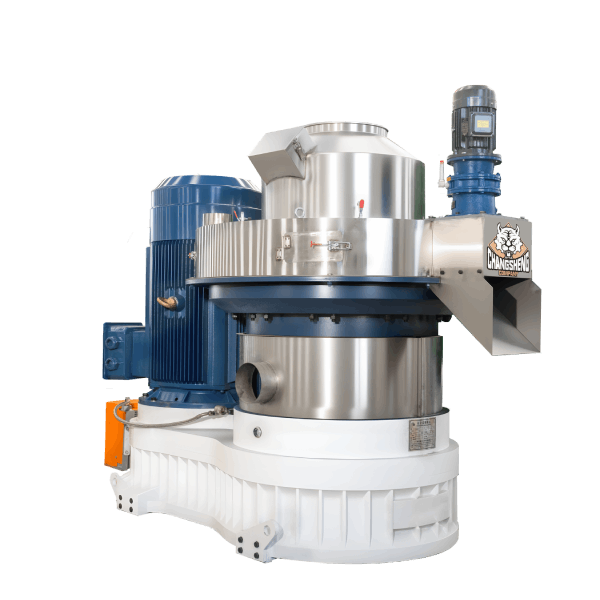
Bamboo Powder Wood Shaving Sawdust Pelletizer: Feedstock Differences, Configuration and Procurement
News 2026-09-29
A bamboo powder wood shaving sawdust pelletizer is often treated as a single machine, but bamboo powder, wood shavings, and sawdust are not the same feedstock. They differ in fiber length, bulk density, moisture behavior, and how they feed into the die. A machine configured for sawdust may not run wood shavings at the same output, and a machine configured for wood shavings may not produce durable bamboo powder pellets.
The practical question for a buyer is not which machine is the most powerful. The real question is which configuration fits the specific material you will run, and what must be confirmed before ordering.
This guide explains how bamboo powder, wood shavings, and sawdust differ as pelletizing feedstock, how those differences affect grinding, feeding, die selection, and capacity, and what to confirm with the supplier before purchase.
Can One Pelletizer Process Bamboo Powder, Wood Shavings, and Sawdust?
In principle, a ring die pelletizer can process all three materials. In practice, the configuration is not identical.
There are three common project approaches.
Single feedstock, single configuration. The machine is set up for sawdust only, wood shavings only, or bamboo powder only. This gives the most stable output and the longest die life for that specific material.
Mixed feedstock, single configuration. The machine runs a fixed mix ratio, such as sawdust mixed with wood shavings. This works when the mix ratio is consistent and the die is selected for the more challenging component.
Alternating feedstock, dual configuration. The machine runs one material at a time, with separate dies and possibly different feeder and grinding settings. This requires more planning and spare parts, but gives better performance on each material.
The correct approach depends on feedstock supply, mix ratio control, target pellet quality, and how often the material changes.
How Bamboo Powder, Wood Shavings, and Sawdust Differ as Pelletizing Feedstock
Fiber Length and Structure
Sawdust is usually the most uniform material, with relatively short fibers and consistent particle size. It feeds evenly and pelletizes well when moisture is controlled.
Wood shavings are longer and bulkier. They require grinding before pelletizing. If shavings are not ground to a consistent size, feeding becomes uneven and pellet quality varies.
Bamboo powder is fine and uniform after processing, but bamboo fibers are denser and more abrasive than softwood sawdust. Bamboo contains higher silica content, which increases die and roller wear. Bamboo powder also tends to be drier and may require moisture conditioning before pelletizing.
Bulk Density
Sawdust has moderate bulk density and feeds predictably. Wood shavings have low bulk density and require a feeder designed for bulky material. Bamboo powder has higher bulk density than shavings and may feed more evenly, but its density also increases load on the die and roller.
Because of these differences, a feeder designed for sawdust may not feed wood shavings evenly, and a feeder designed for shavings may overfeed bamboo powder.
Moisture Content and Drying Requirement
Sawdust moisture varies by source and storage condition. Wood shavings are often drier than sawdust but may absorb moisture in storage. Bamboo powder is usually dry after processing but can vary depending on the bamboo processing method.
Typical target moisture before pelletizing is around 10 to 15 percent for all three materials, but this range depends on feedstock type, die compression ratio, and machine configuration. The exact target should be confirmed with a pelletizing test.
Drying is required when moisture is above the suitable range. Sawdust from green wood often requires drying. Wood shavings may require drying if stored in humid conditions. Bamboo powder may require moisture conditioning rather than drying if it is too dry.
Ash and Silica Content
Bamboo contains higher silica content than most softwoods. This affects die and roller wear. Sawdust from clean softwood has lower ash content. Wood shavings from pallets or construction waste may contain sand, nails, and other contaminants. Ash and silica content should be confirmed by laboratory test for the specific feedstock.
Particle Size and Grinding Requirement
Particle size affects feeding stability, compression, pellet density, and die wear. Sawdust is usually already within the suitable range. Wood shavings require grinding. Bamboo powder is already fine but may need moisture conditioning to improve binding.
Screen size in the hammer mill determines final particle size. A 4 to 6 mm screen is common, but the exact size depends on feedstock and target pellet quality.
Die and Roller Selection for Bamboo Powder, Wood Shavings, and Sawdust
Die Compression Ratio
Die compression ratio is the ratio of die hole length to die hole diameter. It determines how much resistance the material meets as it passes through the die. Higher compression ratio increases pellet density but also increases power demand and die wear.
Sawdust usually requires a moderate compression ratio because of its lignin content. Wood shavings require a similar or slightly higher ratio after grinding. Bamboo powder may require a different compression ratio because of its higher density and silica content. The correct compression ratio should be confirmed with a pelletizing test on the actual material and target pellet diameter.
The definition of compression ratio can vary between suppliers, so it should always be confirmed before comparing dies.
Die Material and Heat Treatment
Die material and heat treatment affect die life. For abrasive materials such as bamboo, a die with higher wear resistance is usually required. Common industrial options include case-hardened alloy steel dies and coated dies. The correct choice depends on ash content, silica content, moisture, and target die life.
Expected die life varies widely by feedstock and contamination level. It should be confirmed with the supplier based on similar material and operating conditions, not assumed from a general figure.
Roller Shell Material and Hardfacing
Roller shells wear with the die. For abrasive materials such as bamboo, roller shells with hardfacing or carbide overlay may be used to extend roller life. The roller material and hardness should match the die and the feedstock.
Roller clearance should be checked regularly because abrasive materials change clearance over time. Incorrect clearance causes uneven wear and unstable pellet quality.
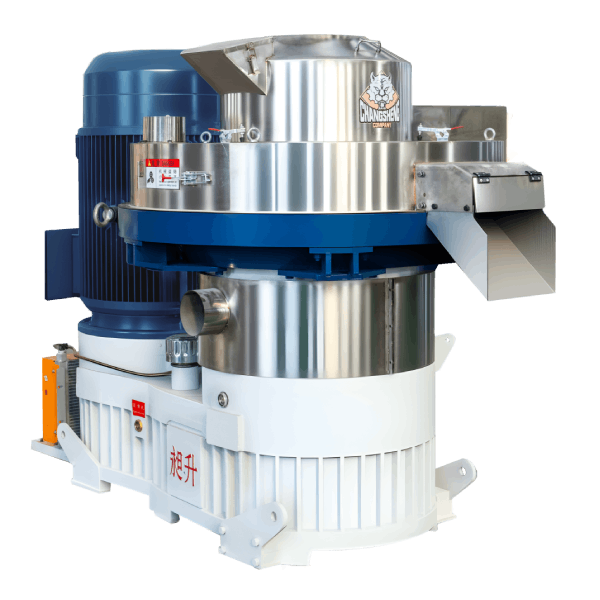
Auxiliary Equipment for a Mixed-Feedstock Line
Magnetic Separation
Magnetic separators remove ferrous metal such as nails, wire, and staples. Metal contamination damages dies and rollers. Double-stage separation is common in commercial lines handling wood waste.
Grinding
Grinding reduces particle size to the range suitable for the die. A hammer mill with suitable screen size is used. Wood shavings and chips require grinding. Sawdust and bamboo powder may not require grinding if already within range.
Drying and Moisture Conditioning
Drying reduces moisture when it is above the suitable range. Moisture conditioning adds moisture when material is too dry. Both are used to bring material into the target range for pelletizing. Bamboo powder may require moisture conditioning rather than drying.
Cooling, Screening, and Packing
Cooling hardens pellets and reduces fines. Screening removes fines and oversize particles. Packing prepares finished pellets for storage or sale. These downstream steps are required for commercial production and for pellets that will be stored or transported.
Dust Collection and Explosion Protection
Bamboo powder, wood shavings, and sawdust dust is fine and poses both health and explosion risks. Dust collection with high-efficiency cyclone and filters is required. Explosion venting, spark detection, grounding, and where applicable ATEX-rated equipment are recommended for commercial lines. Local regulations should always be confirmed.
Moisture and Particle Size: What to Test Before Ordering
Before requesting a quotation, the buyer should collect the following data:
Feedstock type and mix ratio.
Moisture content as received.
Moisture content after drying or conditioning.
Ash content.
Silica content, if available.
Fiber length and particle size distribution.
Bulk density.
Target pellet diameter.
Target capacity.
Operating hours per day or per year.
Available power supply.
This data allows the supplier to recommend a suitable configuration and to state capacity with conditions. A capacity figure without these conditions is not a technical commitment.
Capacity Planning for Bamboo Powder, Wood Shavings, and Sawdust
Capacity is usually expressed in kg/h or t/h. Required hourly capacity equals annual production target divided by annual operating hours. A capacity margin of about 20 to 30 percent is a practical starting point for feedstock variation, moisture changes, and maintenance.
Actual capacity depends on feedstock type, moisture, ash content, silica content, fiber length, particle size, pellet diameter, die specification, compression ratio, machine efficiency, and operating skill. Wood shavings usually produce lower output than sawdust under the same motor power because of their lower bulk density and longer fibers. Bamboo powder may produce lower output than softwood sawdust because of its higher density and silica content.
Rated capacity is only meaningful when feedstock, moisture, particle size, and die specification are stated. A capacity figure quoted without these conditions should not be treated as a guaranteed output for your project.
Spare Parts Planning for Mixed Wood Feedstocks
Dies and rollers are wear parts. Their life depends on feedstock abrasiveness, moisture, fiber length, compression ratio, and operating conditions. For abrasive materials such as bamboo, die and roller life may be shorter than for softwood sawdust.
A practical spare parts plan for a bamboo powder, wood shavings, and sawdust project includes at least one spare die, one or two spare roller shell sets, bearings, belts, seals, lubricants, and critical electrical spares such as contactors and relays.
Cost per ton of pellets is the figure that matters, not die price alone. A die that costs more but lasts significantly longer may reduce cost per ton. Expected die and roller life should be confirmed with the supplier based on similar material and operating conditions, not assumed from a general figure.
Procurement Checklist
Before signing a contract, confirm the following with the supplier:
Capacity with stated feedstock, moisture, particle size, and pellet diameter.
Die compression ratio and die material.
Roller shell material and hardness.
Feeder type and whether variable frequency control is included.
Grinding scope, including hammer mill screen size.
Magnetic separation and dust collection scope.
Drying or moisture conditioning scope.
Cooling, screening, and packing scope.
Dust collection and explosion protection scope.
Motor power, total connected load, voltage, phase, and frequency.
Spare parts list with part numbers and recommended first order.
Warranty scope, wear part definition, and response process.
Inspection and acceptance method before shipment.
Frequently Asked Questions
Can bamboo powder, wood shavings, and sawdust be pelletized on the same machine?
Yes, but the configuration is not identical. Die compression ratio, roller material, feeder design, grinding, and moisture control may need to be adjusted. A single configuration can be used for a fixed mix ratio, but performance will depend on the more challenging component in the mix.
What moisture is suitable for pelletizing these materials?
Typical target moisture before pelletizing is around 10 to 15 percent, depending on feedstock type, die compression ratio, and machine configuration. Bamboo powder may require moisture conditioning if it is too dry. The exact target should be confirmed with a pelletizing test.
Do wood shavings need grinding before pelletizing?
Yes. Wood shavings are longer and bulkier than sawdust. They require grinding with a hammer mill to reach a consistent particle size suitable for the die.
Why does bamboo powder wear dies faster than softwood sawdust?
Bamboo contains higher silica content than most softwoods. Silica is abrasive and accelerates die and roller wear. A die with higher wear resistance is usually required for bamboo.
What die material is suitable for bamboo powder?
For abrasive materials such as bamboo, a die with higher wear resistance is usually required. Common industrial options include case-hardened alloy steel dies and coated dies. Roller shells with hardfacing or carbide overlay may also be used. Expected die life should be confirmed with the supplier based on similar material.
What auxiliary equipment is needed for a mixed wood feedstock line?
A complete line may include magnetic separation, hammer mill, dryer or moisture conditioner, pellet mill, cooler, screener, packing, and dust collection. Scope depends on feedstock condition and target pellet quality.
How is capacity calculated for a mixed wood feedstock project?
Required hourly capacity equals annual production target divided by annual operating hours, plus a capacity margin of about 20 to 30 percent. Actual capacity depends on feedstock type, moisture, ash, silica, particle size, and die specification. Rated capacity is only meaningful when these conditions are stated.