Page SEO Summary: This comparison guide helps buyers choose the right pellet line capacity—covering small, medium, large, and industrial scales with investment and ROI analysis.
Choosing the right pellet line capacity is one of the most critical decisions in pellet production. Too small, and you miss market opportunities. Too large, and you tie up capital unnecessarily.
This guide provides a systematic comparison of pellet line capacities, helping you choose the scale that matches your market, budget, and growth plans.
Capacity Options
Overview of Scales
Scale Capacity (t/h) Annual Output Investment Typical User Small 0.5-1 1,000-3,000 tons $100,000-200,000 Local market Medium 1-3 3,000-9,000 tons $200,000-500,000 Regional market Large 3-5 9,000-15,000 tons $500,000-1,000,000 Commercial Industrial 5-10+ 15,000-30,000+ tons $1,000,000-3,000,000 Export/power
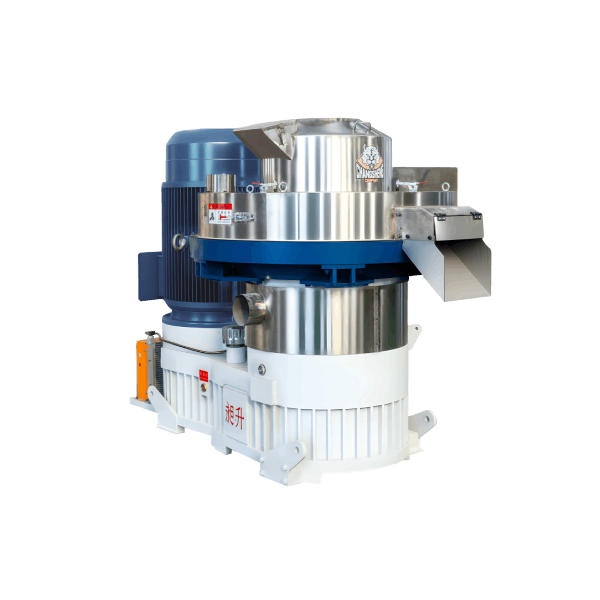
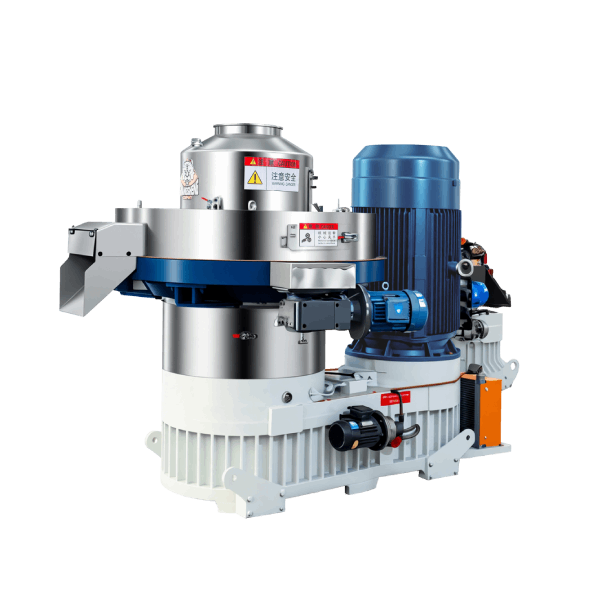
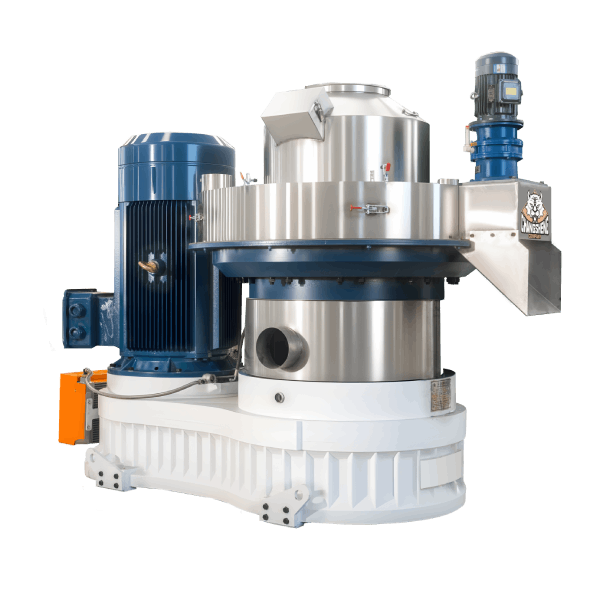
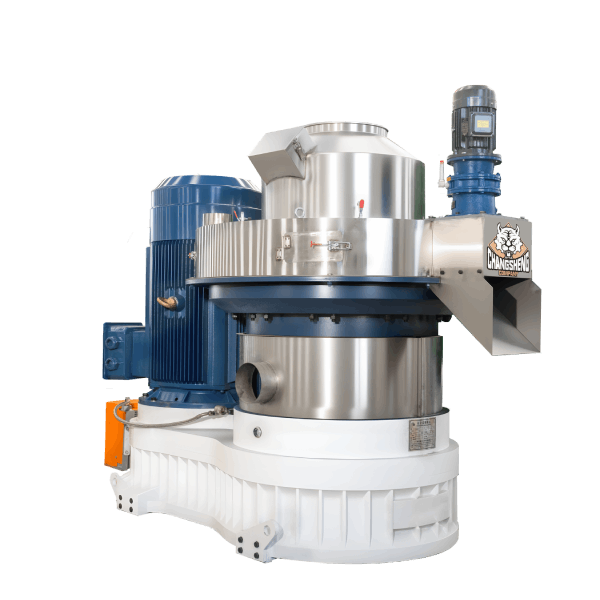
A pellet line from a manufacturer like Shandong Changsheng Machinery Co., Ltd. can be configured at any of these scales, with equipment and layout optimized for each capacity range.
Detailed Capacity Comparison
Small Scale (0.5-1 t/h)
Aspect Detail Equipment 1 pellet mill , 1 dryer, 1 hammer mill Space 150-300 m² Investment $100,000-200,000 Annual Output 1,000-3,000 tons Revenue $150,000-450,000 Payback 2-3 years
Medium Scale (1-3 t/h)
Aspect Detail Equipment 1-2 pellet mills, 1 dryer, 1 hammer mill Space 300-600 m² Investment $200,000-500,000 Annual Output 3,000-9,000 tons Revenue $450,000-1,350,000 Payback 1.5-2.5 years
Large Scale (3-5 t/h)
Aspect Detail Equipment 2-3 pellet mills, 1-2 dryers, 1-2 hammer mills Space 600-1,200 m² Investment $500,000-1,000,000 Annual Output 9,000-15,000 tons Revenue $1,350,000-2,250,000 Payback 1-2 years
Industrial Scale (5-10+ t/h)
Aspect Detail Equipment 3-6+ pellet mills, 2+ dryers, 2+ hammer mills Space 1,200-2,800+ m² Investment $1,000,000-3,000,000+ Annual Output 15,000-30,000+ tons Revenue $2,250,000-4,500,000+ Payback 1-2 years
Key Comparison Metrics
Capacity x Investment
Scale Cost per Ton Capacity Equipment Cost Cost per t/h Small $200,000/t/h $100,000-200,000 $100,000-200,000 Medium $150,000/t/h $200,000-500,000 $100,000-250,000 Large $130,000/t/h $500,000-1,000,000 $100,000-200,000 Industrial $120,000/t/h $1,000,000-3,000,000 $100,000-300,000
Capacity x Economics
Scale Annual Output Revenue/Year Operating Cost/Year EBITDA EBITDA Margin Small 2,000 tons $300,000 $180,000 $120,000 40% Medium 6,000 tons $900,000 $540,000 $360,000 40% Large 12,000 tons $1,800,000 $1,080,000 $720,000 40% Industrial 24,000 tons $3,600,000 $2,160,000 $1,440,000 40%
Equipment Requirements by Scale
Small Scale (0.5-1 t/h)
Equipment Specification Pellet mill 1 × 55-75 kW Dryer 1 × 1-2 t/h Hammer mill 1 × 30-45 kW Cooler 1 × 1 t/h
Medium Scale (1-3 t/h)
Equipment Specification Pellet mill 1-2 × 75-110 kW Dryer 1 × 2-4 t/h Hammer mill 1 × 45-75 kW Cooler 1-2 × 1.5-2 t/h
Large Scale (3-5 t/h)
Equipment Specification Pellet mill 2-3 × 110-132 kW Dryer 1-2 × 4-7 t/h Hammer mill 1-2 × 75-90 kW Cooler 2-3 × 2-3 t/h
Industrial Scale (5-10+ t/h)
Equipment Specification Pellet mill 3-6+ × 132-200 kW Dryer 2+ × 7-15 t/h Hammer mill 2+ × 90-132 kW Cooler 3-6+ × 3-4 t/h
Choosing the Right Scale
Decision Factors
Factor Consideration Market demand How much can you sell? Raw material availability How much feedstock do you have? Capital available What is your budget? Space available How much space do you have? Growth plans Do you plan to expand? Risk tolerance How much risk can you take?
Market-Driven Selection
If Your Market Is Choose Local (<2,000 tons/year) Small Regional (2,000-5,000 tons/year) Medium Regional/Export (>5,000 tons/year) Large Export/Industrial (>10,000 tons/year) Industrial
Resource-Driven Selection
Raw Material Availability Choose Limited (<2,000 tons/year) Small Moderate (2,000-5,000 tons/year) Medium Abundant (>5,000 tons/year) Large
Scaling Up: Expansion Paths
Growth Path Options
Start Expand To How Small (0.5-1 t/h) Medium (1-3 t/h) Add second line Medium (1-3 t/h) Large (3-5 t/h) Add line, upgrade dryer Large (3-5 t/h) Industrial (5-10+ t/h) Multiple lines
Expansion Considerations
Factor Why Important Space Plan for expansion Utilities Plan power capacity Layout Design for expansion Equipment Standardize for compatibility
Decision Framework
Questions to Ask
Question Why Important “What is your target market size?” Demand “What is your raw material availability?” Supply “What is your capital budget?” Investment “What is your risk tolerance?” Scale “Do you have growth plans?” Future
Decision Matrix
Factor Weight Small Medium Large Industrial Market size 25% Low Medium High Very High Capital 20% Low Medium High Very High Risk 15% Low Medium Medium High Growth potential 20% Medium High Very High Very High Resource availability 20% Medium Medium High High
Procurement Checklist
Market Assessment
□ Market demand confirmed
□ Competition assessed
□ Customer base identified
Resource Assessment
□ Raw material availability confirmed
□ Site identified
□ Utilities confirmed
Financial Assessment
□ Capital budget established
□ ROI projections completed
□ Financing identified
Decision
□ Scale selected
□ Equipment specified
□ Supplier selected
Frequently Asked Questions
1. What is the best capacity for a new pellet business?
For most new businesses, medium scale (1-3 t/h) offers the best balance of investment, market reach, and growth potential.
2. How much does capacity increase cost?
Roughly linear: doubling capacity roughly doubles equipment cost. Economy of scale improves operating costs per ton.
3. What is the smallest profitable scale?
0.5-1 t/h can be profitable with good market access and low-cost raw materials. Below 0.5 t/h is usually hobby scale.
4. What is the largest practical single line?
Single pellet mills max out at 3-5 t/h. Larger capacities require multiple lines.
5. How do I expand capacity later?
Plan for expansion in layout, utilities, and space. Add lines as demand grows.
6. Which scale has the best ROI?
Medium scale (1-3 t/h) often has the best ROI due to good economy of scale and manageable investment.
7. What is the most common capacity?
1-3 t/h is the most common commercial capacity, serving regional markets.
8. How much raw material do I need?
Rule of thumb: 1.5-2 tons of raw material per ton of pellets, depending on moisture and yield.
About the Author
Zhang Wei – Senior International Sales Engineer, Shandong Changsheng Machinery Co., Ltd.
Zhang Wei has over 12 years of experience in the biomass and feed pellet mill industry, with a background in mechanical engineering and international project execution. He has helped clients across Southeast Asia, the Middle East, Africa, Europe, and Latin America select the right pellet line capacity for their operations.
With hands-on experience in both the manufacturing workshop and client-side operations, Zhang brings practical insights into successful equipment selection—from the factory floor to the customer’s production site.