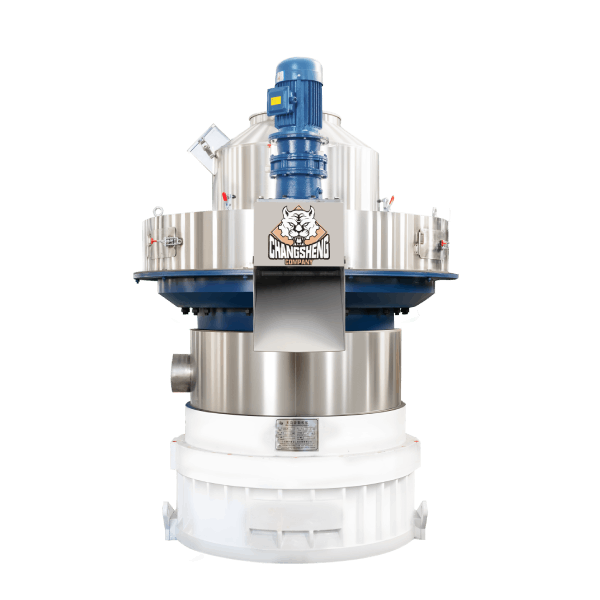
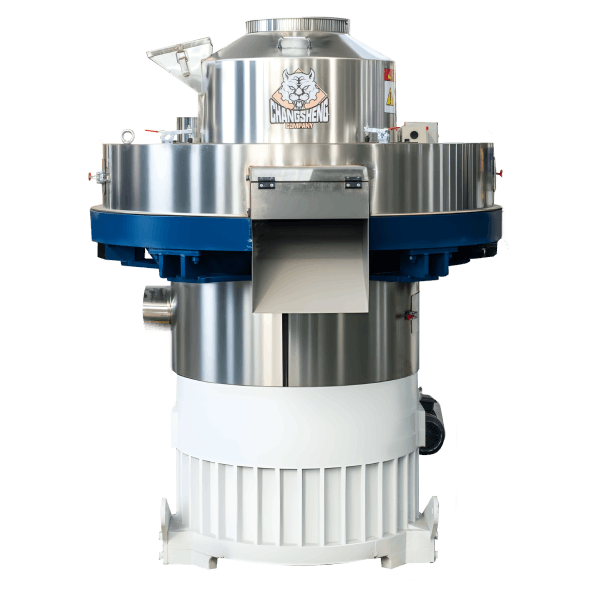
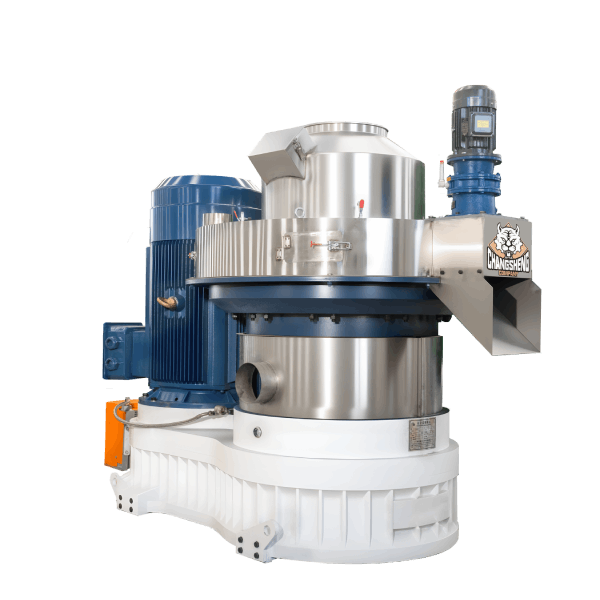
Pellet Mill with High Torque Gearbox: Complete Selection Guide
News 2026-07-18
Page SEO Summary: This technical guide helps procurement professionals and engineers evaluate pellet mills with high torque gearboxes—covering gearbox technology, torque requirements, reliability analysis, and selection criteria for demanding applications.
The gearbox is the heart of a pellet mill’s drive system. It transfers power from the motor to the die ring, reducing the high-speed motor rotation to the optimal die speed while multiplying torque. When the gearbox fails, the pellet mill stops—and production stops with it.
For demanding applications—pelleting hardwoods, agricultural residues, or other difficult materials—a standard gearbox may not be sufficient. The variable loads, high starting torque, and continuous operation of a pellet mill demand a gearbox designed for high torque capacity, robust construction, and long service life.
A pellet mill with high torque gearbox represents an investment in reliability, durability, and consistent production. This guide provides a comprehensive framework for understanding gearbox technology, evaluating torque requirements, and making informed procurement decisions.
Understanding Pellet Mill Gearboxes
The Role of the Gearbox
| Function | Description |
|---|---|
| Speed reduction | Reduces motor speed (typically 1,500-3,000 RPM) to die speed (typically 200-350 RPM) |
| Torque multiplication | Increases torque from motor to drive the die against material resistance |
| Power transmission | Transfers power from motor to die ring |
| Load distribution | Distributes forces across gears and bearings |
| Overload protection | Some designs include shear pins or torque limiters |
Typical Drive Configuration
| Component | Speed | Torque |
|---|---|---|
| Motor | 1,500-3,000 RPM | Low |
| Gearbox input | 1,500-3,000 RPM | Low |
| Gearbox output | 200-350 RPM | High |
| Die ring | 200-350 RPM | High |
Gearbox Reduction Ratio
| Parameter | Typical Value | Calculation Example |
|---|---|---|
| Motor speed | 1,500 RPM | — |
| Die speed | 250 RPM | — |
| Reduction ratio | 6:1 | 1,500 ÷ 250 = 6 |
| Torque multiplication | 6× | 6:1 ratio = 6× torque |
High Torque Gearbox: What Makes It Different
Definition
A high torque gearbox is designed to handle higher torque loads than a standard gearbox of the same size and power rating. It provides greater torque capacity, improved reliability, and longer service life under demanding conditions.
Comparison: Standard vs. High Torque Gearbox
| Aspect | Standard Gearbox | High Torque Gearbox |
|---|---|---|
| Torque capacity | Rated for nominal load | 1.5-2.5× nominal capacity |
| Service factor | 1.0-1.2 | 1.5-2.0+ |
| Bearing size | Standard | Oversized |
| Gear size | Standard | Larger or wider |
| Gear material | Standard steel | Premium steel; hardened |
| Housing | Standard casting | Heavy-duty; reinforced |
| Cooling | Natural convection | Forced cooling; oil cooling |
| Reliability | Good | Very high |
| Price premium | Base | 20-50% higher |
Key Design Features
| Feature | Benefit | Implementation |
|---|---|---|
| Larger bearings | Higher load capacity; longer life | Oversized bearings at both input and output |
| Hardened gears | Higher torque capacity; reduced wear | Case-hardened or through-hardened gears |
| Precision grinding | Smoother operation; lower noise | Ground gear teeth vs. cut teeth |
| Heavier housing | Reduced deflection; better alignment | Reinforced casting or fabricated housing |
| Adequate cooling | Maintains oil temperature | Oil cooling, fans, or water cooling |
| Filtered oil system | Clean lubrication | Built-in oil filter; external filtration |
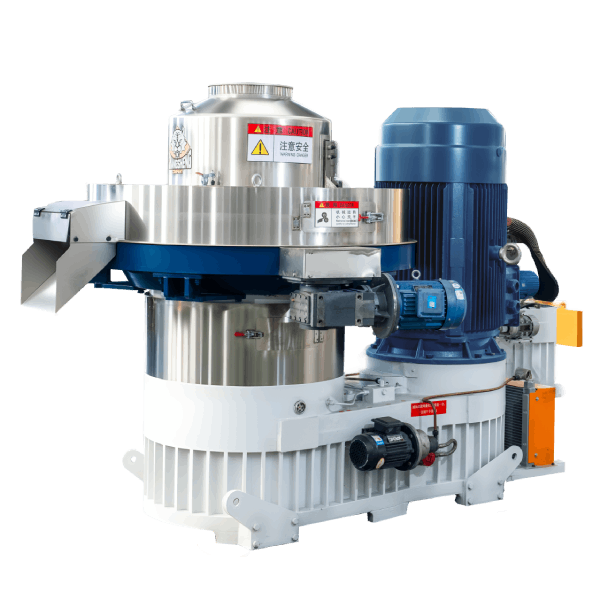
Why Pellet Mills Need High Torque
Load Characteristics
| Characteristic | Pellet Mill Load | Impact on Gearbox |
|---|---|---|
| Starting torque | Very high (inertia + material) | Peak torque at startup |
| Variable load | Fluctuates with material | Cyclic stress on gears |
| Continuous operation | 24/7 possible | Thermal stress; fatigue |
| High inertia | Die ring + material | High inertial loads |
| Shock loads | From material variations | Impact on gears and bearings |
Torque Demands by Material
| Material Type | Torque Requirement | Reason |
|---|---|---|
| Softwood | Moderate | Lower density; easier compression |
| Hardwood | High | Higher density; more resistance |
| Agricultural residues | High-Higher | High fiber; requires more force |
| Straw | Higher | Very high fiber; binding required |
| Rice husk | Moderate-High | Abrasive; moderate compression |
| Wood chips | High | Larger particles; more force |
What Happens with Insufficient Torque
| Symptom | Cause | Consequence |
|---|---|---|
| Motor trips on overload | Gearbox cannot handle peak torque | Production stops |
| Reduced production | Gearbox restricts power | Lower output |
| Premature gear failure | Gears not designed for actual load | Unplanned downtime |
| Overheating | Gearbox undersized for load | Reduced oil life; potential failure |
| Excessive wear | Gears and bearings overloaded | Shorter service life |
Gearbox Types for Pellet Mills
Common Gearbox Designs
| Type | Description | Advantages | Limitations | Suitability |
|---|---|---|---|---|
| Helical gear | Helical (spiral) gear teeth | Smooth; high efficiency; quiet | Lower torque capacity per size | Standard applications |
| Spiral bevel | Bevel gears with spiral teeth | Compact; right-angle drive | Higher cost | Some designs |
| Planetary gear | Multiple gears around a central sun gear | Very high torque; compact; high efficiency | Higher cost; more complex | High-torque applications |
| Worm gear | Worm and wheel | Self-locking; compact | Lower efficiency; more heat | Some specialty applications |
Recommended Gearbox Types
| Application | Recommended Type | Rationale |
|---|---|---|
| Standard pellet mill | Helical gear | Cost-effective; sufficient |
| High-torque application | Helical or planetary | Higher torque capacity |
| Space-constrained | Planetary | Compact; high torque density |
| Demanding applications | Planetary with hardened gears | Maximum torque; long life |
Gearbox Selection Criteria
Key Specifications
| Parameter | What to Check | Recommended Value |
|---|---|---|
| Torque capacity | Rated output torque | 1.5-2.0× motor torque |
| Service factor | Design margin | 1.5 minimum (2.0 for demanding) |
| Reduction ratio | Speed reduction | Based on die speed requirement |
| Efficiency | Power transmission efficiency | >95% for helical/planetary |
| Bearing life (L10) | Expected bearing life | >10,000 hours (continuous) |
| Oil capacity | Lubricant volume | Adequate for cooling |
| Noise level | Operational noise | <85 dBA (with cover) |
Design and Quality Indicators
| Indicator | What to Look For |
|---|---|
| Gear material | Premium alloy steel; case-hardened |
| Gear finishing | Ground teeth (not just cut) |
| Bearing brand | Premium brands (SKF, FAG, NSK) |
| Seal quality | Premium seals; leak-proof |
| Housing rigidity | Heavy-duty; minimal deflection |
| Cooling system | Adequate oil cooling; forced cooling |
| Lubrication system | Clean; reliable; with filter |
Investment Considerations
Cost Premium
| Gearbox Type | Cost Premium vs. Standard | Typical Payback |
|---|---|---|
| Heavy-duty helical | +20-30% | 1-2 years |
| Planetary (high torque) | +30-50% | 1-3 years |
| Premium all-in-one | +40-60% | 1-3 years |
Value of High Torque Gearbox
| Benefit | Quantified Value |
|---|---|
| Reduced downtime | 20-40 hours/year saved |
| Extended gearbox life | 2-3× longer life |
| Higher production | 3-8% higher throughput |
| Lower maintenance | Reduced repair costs |
| Peace of mind | Reliable operation |
ROI Example
Assumptions:
- 5 t/h pellet mill
- Production value: $500/hour
- 2 gearbox failures in 5 years (standard)
- 1 gearbox failure in 10 years (high torque)
| Factor | Standard | High Torque | Savings |
|---|---|---|---|
| Gearbox cost | $20,000 | $28,000 | -$8,000 |
| Failure count (10 years) | 4 | 1 | +3 |
| Downtime per failure | 16 hours | 16 hours | — |
| Production loss (10 years) | 64 hours | 16 hours | 48 hours |
| Production loss value | $32,000 | $8,000 | $24,000 |
| Repair/replacement cost | $40,000 | $10,000 | $30,000 |
| Total 10-year cost | $72,000 | $46,000 | $26,000 savings |
Procurement Checklist
Application Requirements
- Material type and characteristics identified
- Required throughput (t/h) confirmed
- Motor power (kW) specified
- Die speed requirement confirmed
- Duty cycle (continuous/intermittent) assessed
Gearbox Specifications
- Output torque capacity confirmed
- Reduction ratio specified
- Service factor confirmed (minimum 1.5)
- Gear type (helical, planetary) selected
- Gear material and hardness specified
- Bearing brand and size specified
Reliability and Maintenance
- L10 bearing life calculated (minimum 10,000 hours)
- Cooling system specified (oil cooling)
- Lubrication system (with filter)
- Oil capacity confirmed
- Access for maintenance confirmed
Supplier Evaluation
- Gearbox manufacturer reputation
- Quality certifications (ISO 9001)
- References from similar applications
- Warranty terms
- Spare parts availability
Frequently Asked Questions
1. What is a high torque gearbox and why is it important for pellet mills?
A high torque gearbox is designed to handle higher torque loads than standard gearboxes, with larger bearings, hardened gears, and a heavier housing. It is important for pellet mills because the variable loads, high starting torque, and continuous operation demand a robust gearbox.
2. What is the difference between standard and high torque gearboxes?
High torque gearboxes have larger bearings, heavier gears (often hardened), more robust housing, and a higher service factor (1.5-2.0 vs. 1.0-1.2). They can handle peak loads without failure and provide longer service life.
3. How much torque does a pellet mill gearbox need?
Torque requirements vary by material and machine size. As a rule, the gearbox should have a service factor of 1.5-2.0, meaning it can handle 1.5-2.0 times the nominal motor torque.
4. What materials most benefit from a high torque gearbox?
Hardwoods, agricultural residues, straw, and other difficult-to-pelletize materials benefit most from high torque gearboxes. These materials require higher compression forces and generate higher torque loads.
5. How long does a pellet mill gearbox typically last?
With proper design, installation, and maintenance, a gearbox should last 5-10 years in continuous operation. A high torque gearbox with premium components may last 10-15+ years.
6. What are the signs of gearbox problems?
Signs include: increased noise (grinding, whining), excessive vibration, oil leaks, oil temperature increase, metal particles in oil, reduced production rate, and motor overload trips.
7. Can I upgrade an existing pellet mill to a high torque gearbox?
In some cases, yes. However, the upgrade may require modifications to the mounting, drive system, and possibly the motor. Consult the manufacturer for feasibility and engineering requirements.
8. What is the typical payback period for a high torque gearbox?
The payback period is typically 1-3 years when considering reduced downtime, lower maintenance, and extended equipment life. For continuous operations, the payback is often less than 1 year.
About the Author
Zhang Wei – Senior International Sales Engineer, Shandong Changsheng Machinery Co., Ltd.
Zhang Wei has over 12 years of experience in the biomass and feed pellet mill industry, with a background in mechanical engineering and international project execution. He has managed pellet mill supply projects for clients across Southeast Asia, the Middle East, Africa, Europe, and Latin America, with extensive experience in drive train design, gearbox selection, and reliability engineering.
With hands-on experience in both the manufacturing workshop and client-side operations, Zhang brings practical insights into successful equipment procurement—from the factory floor to the customer’s production site.