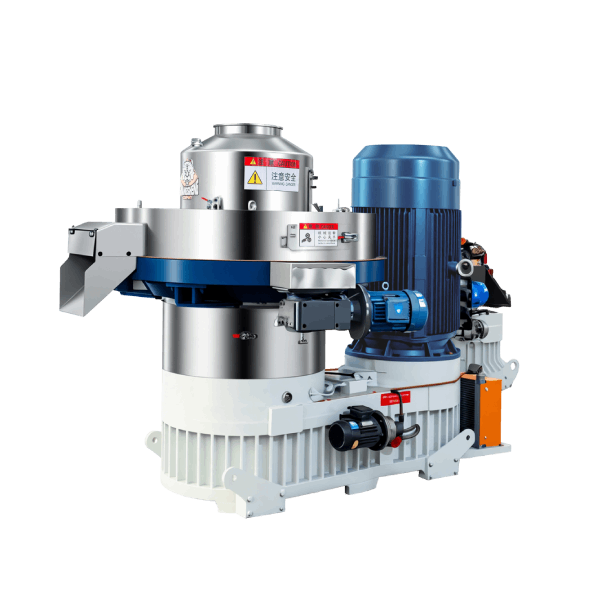
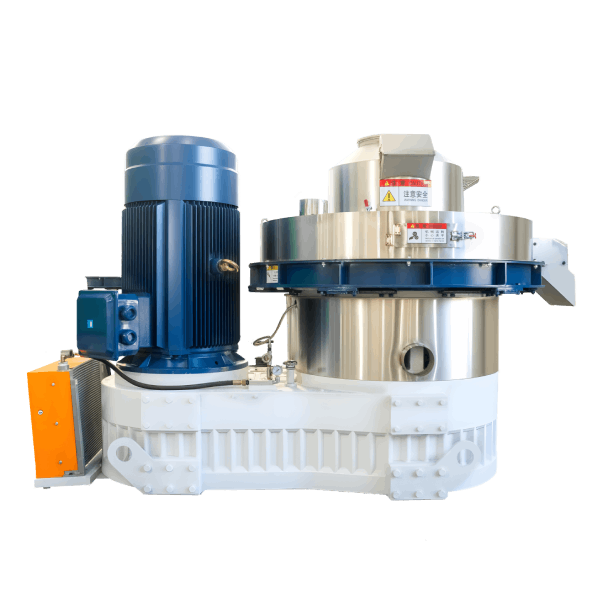
Pellet Machine Minimum Order Quantity: Complete Buyer’s Guide
News 2026-07-16
Page SEO Summary: This procurement guide helps buyers understand minimum order quantities for pellet machines—covering industry standards, supplier MOQ logic, negotiation strategies, and practical approaches for small-batch and trial orders.
A small feed mill operator needs a single pellet mill to replace aging equipment. An entrepreneur is planning a pilot plant and wants just one machine to test the market. An importer wants to order a container load of spare parts but only needs one complete machine to establish the product line.
All of these buyers face the same question: what is the minimum order quantity for a pellet machine? The answer matters. MOQ affects pricing, cash flow, inventory, and even whether a supplier is willing to do business at all. But the good news is that MOQ in industrial equipment is different from MOQ in consumer goods or commodity products. It is often more flexible, more negotiable, and more dependent on specific circumstances than a simple fixed number.
This guide provides procurement professionals with a comprehensive understanding of pellet machine minimum order quantities—why suppliers set them, what to expect, how to negotiate, and how to plan purchases effectively.
What Is Minimum Order Quantity (MOQ)?
Minimum Order Quantity (MOQ) is the smallest quantity of a product that a supplier is willing to sell in a single transaction. In B2B industrial equipment procurement, MOQ typically refers to the number of units (machines) or the total value of an order.
MOQ in Industrial Equipment vs. Consumer Goods
| Aspect | Consumer Goods MOQ | Industrial Equipment MOQ |
|---|---|---|
| Typical quantity | Hundreds or thousands of units | Often 1-3 units (machines) |
| Basis for MOQ | Production line efficiency | Engineering and logistics costs |
| Negotiability | Generally low | Generally moderate to high |
| Impact on buyer | Inventory holding cost | Project feasibility |
| Supplier rationale | Unit cost amortization | Design, engineering, and setup costs |
Key Insight: In industrial equipment, MOQ is often expressed as a minimum order value rather than a minimum number of machines. A supplier may accept a single machine order if the total value meets their threshold.
Pellet Machine MOQ: What to Expect
Understanding what is typical in the industry helps buyers set realistic expectations.
Typical MOQ Scenarios
| Scenario | Typical MOQ | Reason |
|---|---|---|
| Standard pellet mill (stock configuration) | 1 unit | Standard product; minimal engineering |
| Customized pellet mill (configuration changes) | 1-2 units | Engineering effort required but amortizable |
| Complete production line | 1 line | Turnkey project; unique design |
| OEM / Private label order | 5-10 units | Significant development and tooling required |
| Spare parts order | MOQ by value or line item | Logistics efficiency |
| Trial order (first-time buyer) | 1 unit | Supplier building relationship |
Order Value Equivalent
Many Chinese pellet machine suppliers set MOQ in terms of order value rather than unit count:
| Order Value Threshold | Typical Supplier Response |
|---|---|
| Below $5,000 | May decline; parts orders only |
| $5,000 – $15,000 | Accept single unit (small models) |
| $15,000 – $30,000 | Accept single unit (mid-range models) |
| $30,000 – $60,000+ | Accept single unit (large models) |
| Above $60,000 | Favored; may offer better pricing |
Typical MOQ for Standard Pellet Mills: Most pellet machine manufacturers are willing to accept an order for one unit of a standard configuration machine. The need for small quantities—pilot plants, single-line replacements, and first-time buyers—is well understood in the industry.
Why Suppliers Set MOQ
Understanding the supplier’s perspective helps buyers negotiate more effectively.
Supplier Cost Drivers
| Cost Factor | Why It Drives MOQ | Impact on Single Unit Order |
|---|---|---|
| Engineering setup | Creating or adapting designs for each order | Fixed cost spread over units |
| Procurement | Minimum order from component suppliers (motors, bearings) | Supplier must order more than one unit’s worth |
| Production setup | Tooling, machine setup, programming time | Setup cost per batch is fixed |
| Quality control | Inspection and testing procedures | Applies per order, not per unit |
| Documentation | Creating user manuals, drawings, certificates | Cost incurred once per order |
| Logistics | Export packing and documentation | Significant fixed time and cost |
Supplier Risk Factors
Beyond costs, suppliers also consider risk when setting MOQ:
- New customer risk: First-time buyer requires credit risk assessment
- Customization risk: Unique specifications may be non-reusable
- Support cost risk: Small orders require same support as large orders
Procurement Insight: Suppliers are more willing to accept single-unit orders if the buyer demonstrates clear project viability, financial stability, and potential for future business.
Factors That Influence MOQ
Not all single-unit orders are equally attractive to suppliers. Understanding what makes a small order more or less appealing helps buyers position their requests effectively.
Factors Reducing MOQ (Making Small Orders Easier)
| Factor | Why It Helps |
|---|---|
| Standard configuration | No engineering or design variation |
| In-stock product | Machine is already built or on the production line |
| Model with volume production | Design is mature and manufacturing is efficient |
| Clear technical specifications | Supplier knows exactly what to build |
| Payment on proforma invoice | No credit risk for the supplier |
| FOB shipment | Supplier handles minimal logistics complexity |
| Potential for repeat orders | Long-term relationship potential |
Factors Increasing MOQ (Making Small Orders Harder)
| Factor | Why It Creates Difficulty |
|---|---|
| Heavy customization | Significant engineering effort |
| Non-standard voltage/frequency | Custom motor or control panel |
| Unique material or die specification | Non-standard components |
| Complex certification requirements | Additional testing or certification costs |
| Extended warranty terms | Increased risk for the supplier |
| Unclear specifications | Risk of misinterpretation and rework |
How to Negotiate MOQ
Negotiating minimum order quantity is possible in most cases, especially when buyers understand how to present their case effectively.
Negotiation Strategies
| Strategy | How to Apply | Likelihood of Success |
|---|---|---|
| Highlight future potential | Emphasize that this is the first order of many | High |
| Offer progress payments | Show commitment with larger deposit | High |
| Accept longer lead time | Allow supplier to fit into production schedule | High |
| Order spare parts with the machine | Increase order value and show commitment | High |
| Use standard configurations | Minimize supplier engineering effort | High |
| Agree to FOB terms | Simplify supplier logistics | Moderate |
| Sign a non-disclosure agreement | Build trust | Moderate |
| Provide references or credit letter | Reduce financial risk | Moderate |
What to Avoid in Negotiations
- Demanding MOQ waiver without explaining rationale
- Being unclear about specifications
- Requesting multiple customizations and expecting MOQ waiver
- Trying to drive price down while also requesting MOQ waiver
- Not demonstrating project credibility
Cost Impact of MOQ
Understanding how quantity affects pricing helps buyers make informed decisions.
Quantity Pricing Impact
| Order Quantity | Typical Price per Unit | Price Difference |
|---|---|---|
| 1 unit | 100% (list price) | Base |
| 2-3 units | 95-98% of list | 2-5% discount |
| 4-5 units | 90-95% of list | 5-10% discount |
| 5-10 units | 85-90% of list | 10-15% discount |
| 10+ units | 80-85% of list | 15-20% discount |
Important Note: The discount is not only about economy of scale—it also reflects the supplier’s amortization of fixed costs and confidence in the relationship.
When Buying Multiple Units Makes Sense
| Situation | Consider Multiple Units When |
|---|---|
| Multiple production lines | You need more than one line |
| Spare machine | Critical production needs backup |
| Importer/distributor | You intend to resell |
| Collaborative purchase | Multiple buyers combine orders |
| Expansion planned | Phased projects with firm timeline |
Buying a Single Unit: Practical Advice
Many procurement managers need to order just one pellet machine. Here is practical advice for making that process successful.
Why Suppliers Accept Single Unit Orders
- Industry standard: Single unit orders are common in industrial equipment
- Competitive market: Many suppliers compete for all order sizes
- Relationship building: Good suppliers invest in future business
- Production flexibility: Most pellet mills are made to order anyway
How to Prepare Your Single Unit Request
| Step | Action | Why It Matters |
|---|---|---|
| 1 | Confirm standard configuration where possible | Reduces supplier risk |
| 2 | Provide clear technical specifications | Avoids misunderstandings |
| 3 | Include project background | Demonstrates credibility |
| 4 | Show potential for future orders | Increases supplier interest |
| 5 | Propose favorable payment terms | Reduces supplier risk |
| 6 | Accept standard lead time | Gives supplier production flexibility |
| 7 | Plan for logistics (FOB) | Simplifies supplier responsibilities |
Alternative Approaches When MOQ Is an Issue
If a supplier’s MOQ does not match your needs, consider these alternatives.
Alternative 1: Find a Supplier with No MOQ
Not all suppliers have the same MOQ requirements. Some manufacturers specialize in small-batch and single-unit orders.
Alternative 2: Order Through a Local Agent or Importer
Local distributors may be willing to consolidate orders or hold inventory, allowing you to order smaller quantities.
Alternative 3: Combine Orders
If you have a network of industry contacts, consider combining multiple buyers’ orders into a larger quantity.
Alternative 4: Start with Spare Parts Order
Establish a relationship by ordering spare parts first, then order the main equipment.
Alternative 5: Consider Used Equipment
If a single new unit is difficult to procure, the used equipment market may be an option.
Procurement Checklist: Pellet Machine MOQ Evaluation
Pre-Purchase Planning
- Confirm required quantity (project need vs. desired quantity)
- Verify if standard configuration meets requirements
- Assess whether customization is truly necessary
- Establish order value threshold for different suppliers
- Identify potential for future orders
Supplier Evaluation
- Confirm supplier’s published MOQ policy
- Ask if single-unit orders are accepted
- Request pricing for 1 unit vs. multiple units
- Assess supplier flexibility in initial contact
- Check if local agents or distributors are available
Negotiation Preparation
- Prepare rationale for small quantity (if needed)
- Gather evidence of project viability and funding
- Identify potential concessions to offer
- Determine maximum quantity you can reasonably commit to
- Understand pricing breakpoints
Frequently Asked Questions
1. What is the typical minimum order quantity for a pellet mill?
Most Chinese pellet machine suppliers accept orders for a single unit of a standard configuration machine. The typical MOQ is 1 unit for standard pellet mills and complete production lines.
2. Can I order just one pellet mill as a first-time buyer?
Yes. Single-unit orders are common in the industry, especially for first-time buyers testing a new supplier or for pilot projects. The key is clear communication about specifications and demonstrating project credibility.
3. Why do some suppliers require multiple-unit orders?
Suppliers may require multiple units when the machine requires significant customization, when engineering setup costs are high, or when the order value is very low. Customization and low-value orders may not be commercially viable.
4. Does ordering a single unit cost more per unit?
Typically yes, but the premium is usually small for standard equipment. Suppliers may charge 5-15% more for a single unit compared to a 5-unit order, depending on the machine type and value.
5. How can I negotiate a lower MOQ with a supplier?
Highlight future order potential, offer favorable payment terms, accept standard lead time, use standard configurations, and show project credibility. Demonstrating that this is the first order of a long-term relationship is the most effective approach.
6. Is there a minimum order value instead of a minimum number of units?
Yes. Many suppliers express MOQ as a minimum order value rather than a minimum number of machines. A single machine that meets the value threshold is acceptable, even if the supplier typically prefers larger quantities.
7. What is the MOQ for spare parts?
Spare parts MOQ varies by supplier. Many suppliers have no MOQ for commonly used parts but may require minimum order quantities for custom parts. Some require a minimum order value for spare parts shipments.
8. Are there suppliers that specialize in small orders?
Yes. Some manufacturers focus on the small- to medium-scale market and have developed efficient processes for handling single-unit orders efficiently. These suppliers may be a good fit for buyers needing small quantities.
About the Author
Zhang Wei – Senior International Sales Engineer, Shandong Changsheng Machinery Co., Ltd.
Zhang Wei has over 12 years of experience in the biomass and feed pellet mill industry, with a background in mechanical engineering and international project execution. He has managed pellet mill supply projects for clients across Southeast Asia, the Middle East, Africa, Europe, and Latin America, with extensive experience in order negotiation and international procurement.
With hands-on experience in both the manufacturing workshop and client-side operations, Zhang brings practical insights into successful equipment procurement—from the factory floor to the customer’s production site.