Pellet Machine with PLC Touch Screen Controller 0.5-5t/h | Supplier Guide
News 2026-07-10
Product Definition
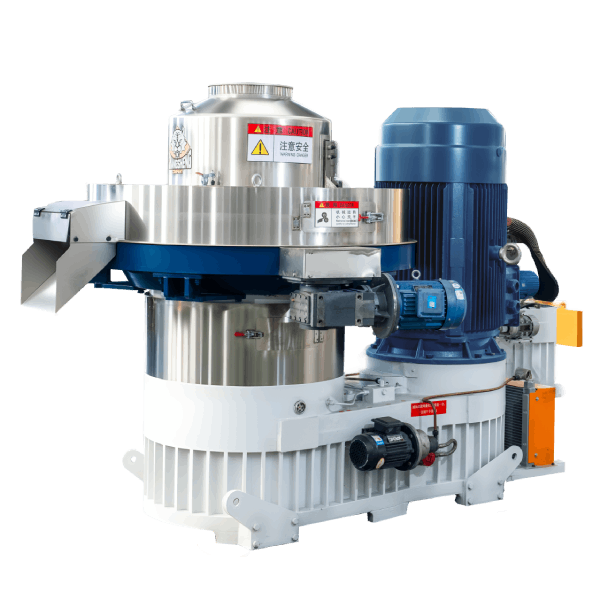
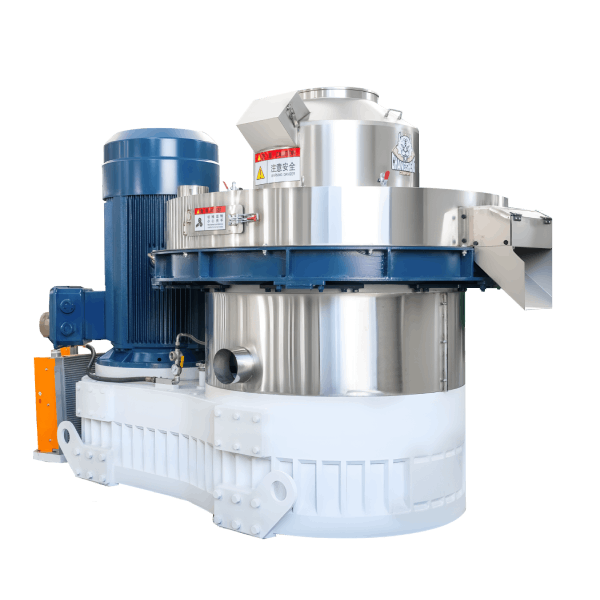
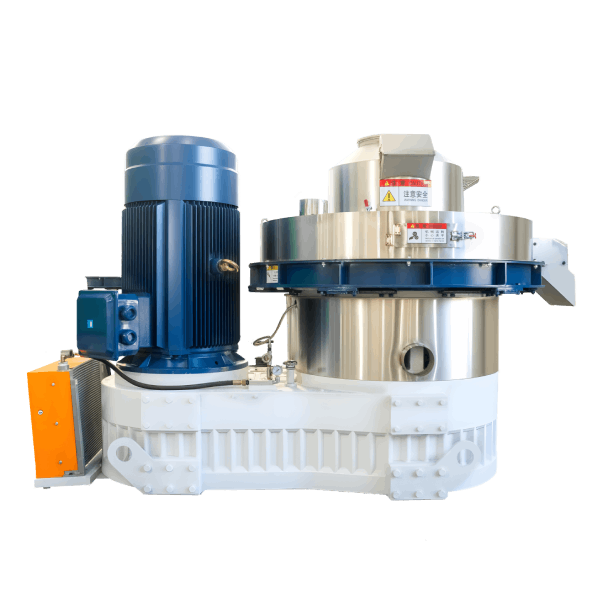
A pellet machine with PLC touch screen controller is a ring die compaction system featuring a programmable logic controller with human-machine interface for centralised operation, monitoring, and diagnostics. The system processes feed ingredients, biomass residues, and agricultural waste into dense pellets with automated control of motor start/stop, feeder speed, and process parameters.
Technical Specifications & Performance Parameters
| Parameter | Value Range / Specification |
|---|---|
| Throughput capacity | 0.5 – 5.0 t/h (feedstock-dependent) |
| Main motor power | 55 – 160 kW (IE3 / IE4 compatible) |
| Ring die inner diameter | 400 – 800 mm |
| Pellet diameter | 6 – 12 mm (customisable) |
| Pellet bulk density | 600 – 750 kg/m³ |
| Raw material moisture | 12% – 18% (optimal: 14% – 16%) |
| Specific energy consumption | 26 – 35 kWh/t |
| Die service life | 800 – 1,200 hours |
| Roller shell service life | 600 – 900 hours |
| HMI display size | 7 – 15 inch touch screen |
| Control interface | MODBUS RTU / Profibus / Ethernet IP |
| Data logging | 30 days to 12 months (SD card storage) |
| Maintenance man-hours | 4 – 6 h / month |
Structural Composition & Material Selection
The PLC touch screen pellet machine integrates four functional subsystems with defined material grades:
Mechanical System
- Ring die: Forged alloy steel (20CrMnTi) with carburised hardening layer (HRC 58–62)
- Roller shells: High-chromium cast iron (Cr26) with wear-resistant overlay
- Main shaft: Heat-treated 42CrMo4 steel with induction-hardened journals
- Gearbox: Helical-gear configuration, case-hardened to HRC 58–60
Control System
- PLC: Industrial-grade controller with digital and analogue I/O
- HMI: Touch screen display with graphical user interface
- Software: Programmable logic with password-protected parameter access
- Data logging: Production records, alarm history, and maintenance logs
- Communication: MODBUS RTU, Profibus DP, or Ethernet IP for DCS/SCADA integration
Support System
- Bearing housings: Ductile cast iron (QT600-3) with precision-machined seating
- Base frame: Welded structural steel, stress-relief annealed, with vibration-damping mounts
Lubrication System
- Centralised grease lubrication for bearings (NLGI grade 2)
- Forced oil circulation for gearbox (ISO VG 460) with temperature monitor and alarm
Manufacturing Process – Engineering Workflow
Step 1 – Raw Material Preparation & Grinding
Feedstock ground to 2.0–3.0mm for feed or 4.0–6.0mm for biomass. Magnetic separator removes ferrous contaminants. Moisture adjusted to 14%–16%.
Step 2 – Conditioning & Steam Treatment
Double-shaft paddle conditioner with steam injection at 0.2–0.4 MPa. Retention time 45–60 seconds. Mash temperature elevated to 80–95°C.
Step 3 – PLC-Controlled Pelletising
Operator selects material type and target throughput on HMI touch screen. PLC controls motor start/stop sequence, feeder speed, and load monitoring. Die speed set automatically based on recipe. Motor current feedback adjusts feeder speed to maintain optimal load.
Step 4 – Counterflow Cooling
Ambient air drawn counter-current through pellet bed. Retention time 6–10 minutes. Pellet exit temperature ≤ ambient +5°C. Final moisture ≤12%.
Step 5 – Screening & Bagging
Vibrating screener removes fines. Automatic bagging scale with ±0.2% tolerance. Production data logged for each batch.
Industry Comparison – Control System Options
| Control Type | Automation Level | Operator Skill | Data Logging | Typical Application |
|---|---|---|---|---|
| PLC + Touch Screen HMI | High – full recipe control | Moderate | Yes – production & alarms | Industrial plants |
| Manual Push-Button | Low – manual start/stop | Low | No | Small farms, basic operations |
| Relay Logic Control | Low – hardwired sequence | Low | No | Older equipment |
| DCS Integration | Very High – plant-wide | High | Yes – full SCADA | Large industrial facilities |
Differentiation (Shandong Changsheng Machinery):
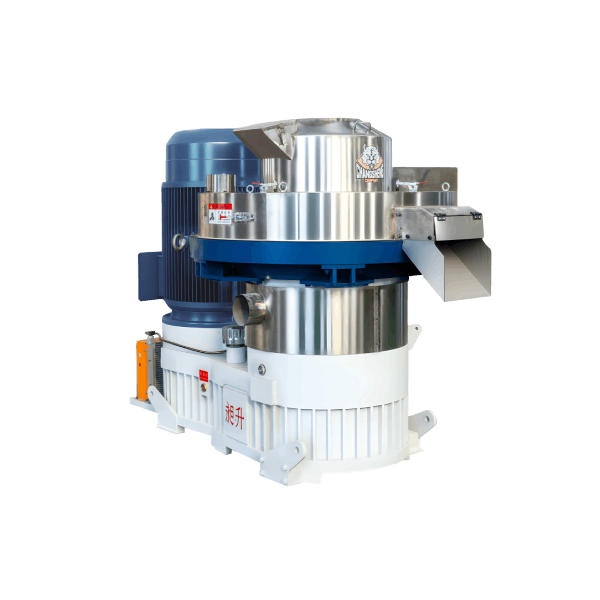
Our PLC touch screen controller provides intuitive operation with recipe storage for multiple materials. Real-time monitoring of motor current, bearing temperature, and production rate. Alarm history and production logs for quality and maintenance tracking. Password-protected access for parameter changes.
Application Scenarios by Buyer Role
Distributors / Importers
Focus on HMI language options and training requirements. Require data logging capability for customer reporting.
EPC Contractors
Integrating PLC-controlled pellet mills into plant automation systems. Need communication protocol details and interface specifications.
Engineering Consultants / Technical Advisors
Evaluate automation level for plant efficiency. Require data logging and alarm handling specifications.
End-user Production Facilities
Industrial feed mills and biomass plants. Demand automated operation with minimal operator intervention and full production traceability.
Core Pain Points & Engineering Solutions
Pain Point 1 – Operator error causing process variation
Root cause: Manual control relies on operator judgment – inconsistent feed rates and parameter settings.
Solution: PLC recipes store optimal settings for each material – ensure consistent operation across shifts.
Pain Point 2 – Limited process visibility
Root cause: No central monitoring – operators cannot see real-time performance.
Solution: HMI touch screen displays motor current, production rate, temperature, and alarm status – single-screen overview.
Pain Point 3 – No production records
Root cause: No data logging – difficult to track performance and troubleshoot issues.
Solution: Automated data logging – production records, alarm history, and maintenance logs stored for review.
Pain Point 4 – Unscheduled downtime
Root cause: No early warning of developing issues – failures occur without warning.
Solution: Alarm system with pre-alert thresholds – temperature, current, and pressure warnings before critical failure.
Critical Risk Warnings & Mitigation Measures
Risk 1 – PLC battery failure losing program
Mitigation: Replace PLC battery annually. Backup program to SD card. Maintain hard copy of ladder logic.
Risk 2 – HMI screen damage in dusty environment
Mitigation: Install protective cover. IP65-rated screen. Regular cleaning.
Risk 3 – Unauthorised parameter changes
Mitigation: Password protection for parameter access. Three levels of access (operator, supervisor, engineer).
Procurement Selection Guide – 7 Executable Steps
Step 1 – Define automation requirements
Recipe storage for multiple materials. Data logging. Alarm handling. Remote monitoring.
Step 2 – Select HMI display size
7-inch for basic control. 10-inch for comprehensive monitoring. 15-inch for full plant interface.
Step 3 – Specify communication protocol
MODBUS RTU for basic integration. Profibus DP or Ethernet IP for advanced DCS/SCADA integration.
Step 4 – Verify language support
Interface languages for operator team. English standard. Additional languages available.
Step 5 – Define alarm and interlock requirements
Temperature alarms. Current overload. Bearing temperature. Interlock with upstream/downstream equipment.
Step 6 – Plan for data logging and reporting
Production log format. Alarm history. Maintenance tracking. Report generation.
Step 7 – Establish training programme
Operator training on HMI operation. Supervisor training on parameter adjustment. Maintenance training on PLC diagnostics.
Engineering Case Study – Feed Mill Automation Upgrade in Thailand
Project Background
A feed mill in Thailand operated three pellet mills with manual push-button controls – inconsistent production quality across shifts and limited process visibility.
Initial Problem
Manual control resulted in production variation – output varied 10%–20% across shifts. No production records for quality tracking. Motor overload trips occurred without warning.
Root Cause Analysis
No automation system – operators relied on manual start/stop and visual monitoring. No data logging – issues could not be traced to specific conditions.
Solution Implemented
Retrofitted pellet mills with PLC touch screen controllers. Recipe storage for each feed type. Data logging for production tracking. Alarm system for early warning.
Final Data Results
| Metric | Before (Manual Control) | After (PLC Touch Screen) |
|---|---|---|
| Production consistency | ±15% across shifts | ±3% across shifts |
| Motor trips (annual) | 12 | 3 |
| Production data available | None | Full batch records |
| Operator errors | 8/month | 1/month |
Frequently Asked Questions (FAQ)
1. What is a PLC touch screen controller?
A programmable controller with human-machine interface for centralised operation, monitoring, and diagnostics of pellet mill parameters.
2. What functions are controlled by the PLC?
Motor start/stop sequence, feeder speed control, load monitoring, temperature alarms, and interlock coordination.
3. Can the HMI store recipes for different materials?
Yes – multiple recipes can be stored. Operators select material type – settings automatically applied.
4. Does the system log production data?
Yes – production records, alarm history, and maintenance logs stored on SD card or internal memory.
5. What communication protocols are supported?
MODBUS RTU, Profibus DP, and Ethernet IP – integration with DCS/SCADA systems.
6. Is the HMI available in different languages?
Yes – English standard. Spanish, French, Chinese, Arabic, and other languages available.
7. What alarms are included?
Motor current overload, bearing temperature high, low oil pressure, feeder jam, and emergency stop.
8. Can I monitor the machine remotely?
Yes – with optional Ethernet connection and remote access software.
9. What is the HMI display size?
7, 10, or 15 inches – select based on visibility and interface complexity.
10. Is password protection available?
Yes – multi-level access (operator, supervisor, engineer) with password protection.
11. What happens if power is lost?
PLC retains program and settings. Production log continues after power restoration.
12. Can the system be retrofitted to existing equipment?
Yes – PLC touch screen system can be retrofitted to existing pellet mills.
Author & E-E-A-T Credentials
Author: Dr. Chen Wei
Title: Senior Mechanical Engineer, Pelletising Systems Division
Experience: 14 years in biomass densification and feed processing equipment design
Notable Projects:
- Commissioned 12 PLC-controlled pellet lines across Thailand, Vietnam, and China
- Developed HMI interface and control logic for automated pellet production
- Co-author of “Industrial Pellet Mill Maintenance and Optimisation” (Engineering Press, 2022)
Affiliation: Shandong Changsheng Machinery Co., Ltd.