Heavy Duty Ring Die Pellet Mill for Industrial Use 1-10t/h | Supplier Guide
News 2026-07-08
Product Definition
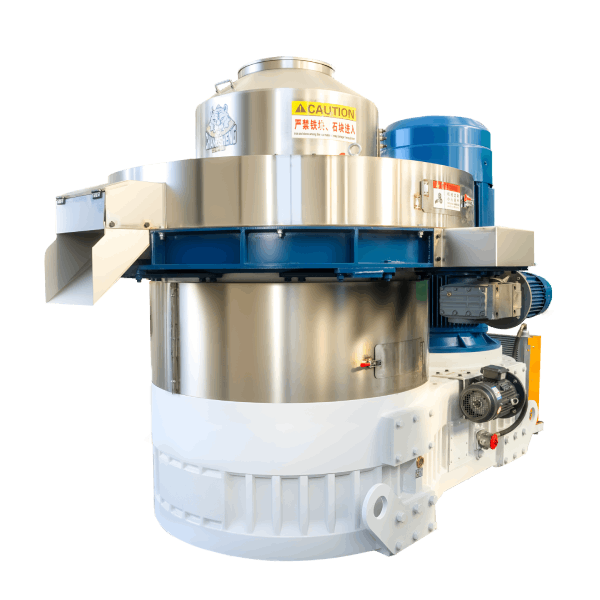
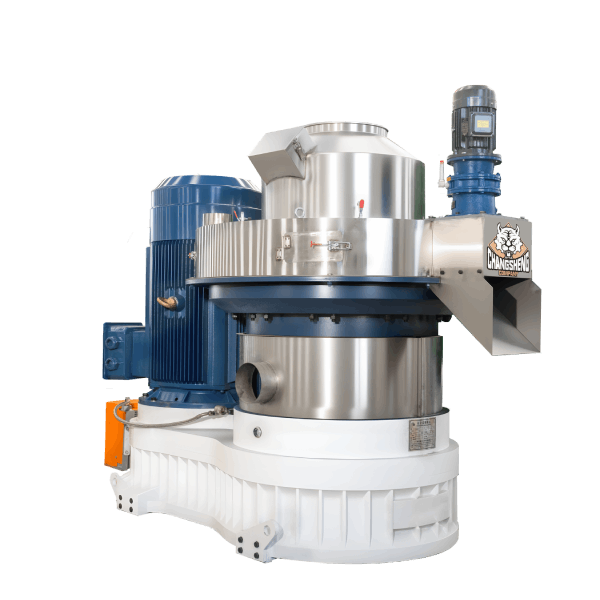
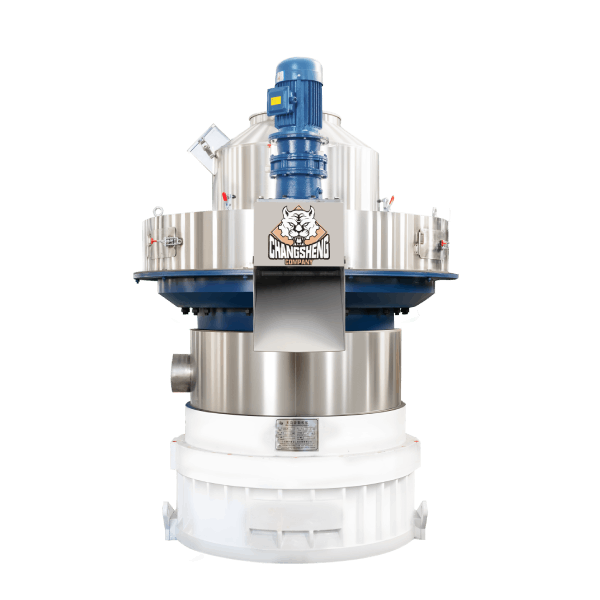
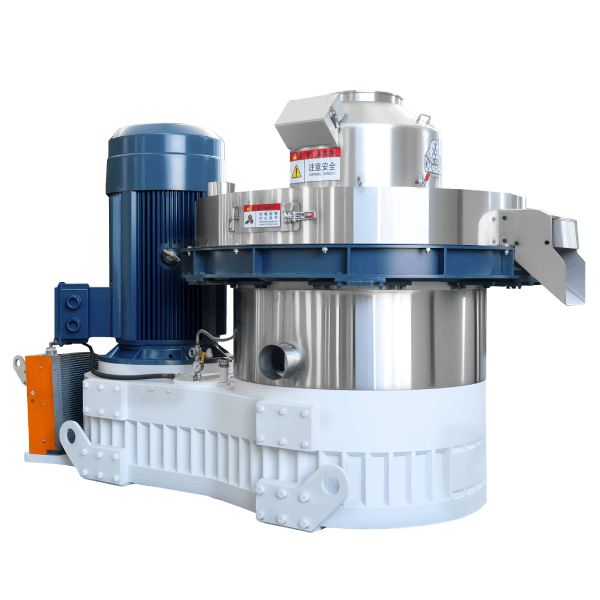
A heavy duty ring die pellet mill for industrial use is a high-capacity compaction system engineered for 24/7 continuous operation in demanding industrial environments. The machine processes biomass, feed, and waste materials at throughputs of 1 to 10 tonnes per hour, featuring reinforced construction, oversized bearings, and advanced cooling systems for maximum reliability and minimal downtime.
Technical Specifications & Performance Parameters
| Parameter | Value Range / Specification |
|---|---|
| Throughput capacity | 1.0 – 10.0 t/h (feedstock-dependent) |
| Main motor power | 90 – 250 kW (IE3 / IE4 compatible) |
| Ring die inner diameter | 600 – 1,000 mm |
| Ring die width | 200 – 400 mm |
| Pellet diameter | 6 – 12 mm (customisable) |
| Pellet bulk density | 600 – 750 kg/m³ |
| Raw material moisture | 12% – 18% (optimal: 14% – 16%) |
| Specific energy consumption | 25 – 35 kWh/t |
| Die service life | 1,200 – 2,000 hours |
| Roller shell service life | 800 – 1,200 hours |
| Bearing L10 design life | 20,000 – 30,000 hours |
| Scheduled maintenance man-hours | 6 – 8 h / month |
| Availability (operational) | ≥ 95% |
Structural Composition & Material Selection
The heavy duty industrial pellet mill integrates four functional subsystems with defined material grades:
Mechanical System
- Ring die: Premium forged alloy steel (20CrMnTi) with deep carburised hardening layer (HRC 60–64)
- Roller shells: High-chromium cast iron (Cr26) with tungsten-carbide overlay
- Main shaft: Heavy-duty heat-treated 42CrMo4 steel with induction-hardened journals
- Gearbox: Extra-heavy-duty helical-gear configuration, case-hardened to HRC 60–62
- Main bearings: Heavy-duty spherical roller bearings (C4 clearance for thermal expansion)
Support System
- Bearing housings: Extra-heavy ductile cast iron (QT700-2) with precision-machined seating
- Base frame: Heavy-duty welded structural steel, stress-relief annealed, with vibration-damping mounts
- Motor base: Adjustable sliding base with heavy-duty jacking bolts
Lubrication System
- Centralised automatic grease lubrication for bearings (NLGI grade 2)
- Forced oil circulation for gearbox (ISO VG 460) with oil cooler and filtration
- Temperature monitoring and alarm system
Control System
- PLC with advanced HMI touchscreen for process monitoring
- Motor current feedback for load control
- VFD for speed variation (heavy-duty rated)
- Remote monitoring and diagnostics capability
- Overload protection and fail-safe shutdown
Manufacturing Process – Engineering Workflow
Step 1 – Raw Material Preparation & Grinding
Industrial-scale hammer mills reduce feedstock to 2.0–3.0mm for feed or 4.0–6.0mm for biomass. High-capacity magnetic separators remove tramp metal. Continuous moisture monitoring ensures 14%–16% target.
Step 2 – Continuous Conditioning
Heavy-duty double-shaft paddle conditioner with high-pressure steam injection. Retention time 60–90 seconds. Mash temperature elevated to 85–100°C. Automation ensures consistent conditioning across variable feed rates.
Step 3 – Pelletising (Core Forming Process)
Main motor drives ring die rotation at 4–8 m/s peripheral speed. Heavy-duty roller assembly with hydraulic gap adjustment (0.10–0.30mm). Real-time motor current feedback adjusts feed rate automatically.
Step 4 – Counterflow Cooling
High-capacity counterflow cooler with extended retention time (8–15 minutes). Pellet exit temperature ≤ ambient +5°C. Final moisture ≤12% for storage stability.
Step 5 – Screening & Bulk Handling
High-capacity vibratory screener removes fines. Automated recirculation of oversized pellets. Bulk storage or bagging systems integrated.
Step 6 – Control & Automation
Full PLC automation with remote monitoring. Production data logging for quality and maintenance tracking. Integration with plant DCS/SCADA systems.
Industry Comparison – Pellet Mill Grades
| Machine Grade | Capacity (t/h) | Power (kW) | Bearing Life (hours) | Typical Application |
|---|---|---|---|---|
| Heavy Duty Industrial | 1.0 – 10.0 | 90 – 250 | 20,000 – 30,000 | 24/7 industrial, feed, biomass |
| Standard Industrial | 0.5 – 5.0 | 55 – 160 | 10,000 – 15,000 | 16-20 hours/day production |
| Light Industrial | 0.2 – 2.0 | 30 – 90 | 5,000 – 10,000 | 8-12 hours/day, pilot plants |
| Small Scale | 0.05 – 0.8 | 5.5 – 30 | 2,000 – 5,000 | Farm, workshop, intermittent |
Differentiation (Shandong Changsheng Machinery):
Our heavy duty industrial pellet mills feature the most robust construction in our product line, engineered for 24/7 continuous operation with ≥95% availability. Oversized bearings with L10 design life exceeding 20,000 hours, deep-hardened dies with HRC 60–64 surface, and fully automated control systems ensure maximum uptime in demanding industrial environments. Gearboxes are rated for continuous heavy-duty service with integrated oil cooling and filtration.
Application Scenarios by Buyer Role
Distributors / Importers
Focus on heavy-duty specification for industrial clients. Require high availability and long service life for customer satisfaction and repeat orders.
EPC Contractors
Integrating heavy-duty pellet mills into complete industrial production lines. Need reliable equipment for turnkey projects with 24/7 operational requirements.
Engineering Consultants / Technical Advisors
Evaluate heavy-duty specification for industrial applications. Require reliability data, bearing life calculations, and availability guarantees.
End-user Production Facilities
Large-scale feed mills, biomass pelleting plants, and waste processing facilities. Demand continuous operation with minimum downtime and low maintenance costs.
Core Pain Points & Engineering Solutions
Pain Point 1 – Unplanned downtime affecting production targets
Root cause: Undersized bearings, inadequate cooling, and insufficient automation for 24/7 operation.
Solution: Oversized main bearings (20,000–30,000 hours L10 life). Forced oil circulation with oil cooling. PLC automation with predictive maintenance alerts.
Pain Point 2 – Short die life reducing profitability
Root cause: Standard dies not designed for industrial throughput and abrasive feedstocks.
Solution: Deep carburised dies (HRC 60–64) with tungsten-carbide overlay. Extended die life 1,200–2,000 hours.
Pain Point 3 – High energy costs from inefficient operation
Root cause: Fixed-speed operation not optimised for variable feedstock.
Solution: Heavy-duty VFD for speed optimisation. Load-sensing controls adjust feed rate and speed for minimum energy consumption at target throughput.
Pain Point 4 – High maintenance costs
Root cause: Multiple smaller machines requiring more maintenance than one heavy-duty unit.
Solution: Single heavy-duty machine replaces multiple smaller units – reduced maintenance cost per tonne. Extended service intervals and centralised lubrication.
Critical Risk Warnings & Mitigation Measures
Risk 1 – Gearbox failure from continuous high load
Mitigation: Oil temperature monitoring with alarms. Forced oil circulation with cooling. Scheduled oil analysis for predictive maintenance.
Risk 2 – Bearing seizure from inadequate lubrication
Mitigation: Automatic centralised lubrication system. Bearing temperature monitoring (alarm at 85°C, shutdown at 95°C). Regular lubrication line inspection.
Risk 3 – Fire risk from high-speed friction
Mitigation: Temperature monitoring at key points. Fire suppression system. Regular cleaning to prevent dust accumulation.
Procurement Selection Guide – 7 Executable Steps
Step 1 – Define production capacity requirement
Calculate required throughput with 20% margin for peak demand. Available capacities: 1.0–10.0 t/h.
Step 2 – Analyse feedstock characteristics
Moisture range, particle size, abrasiveness, and variability. Determine die and roller specification.
Step 3 – Specify die and roller materials
Deep carburised die for extended life. Tungsten-carbide rollers for abrasive feedstocks. Select compression ratio for specific material.
Step 4 – Verify utility infrastructure
Power supply (90–250 kW), steam capacity, and cooling water availability. Confirm site infrastructure supports heavy-duty equipment.
Step 5 – Evaluate automation requirements
VFD for speed control. PLC integration with DCS/SCADA. Remote monitoring capability.
Step 6 – Plan for foundation and installation
Heavy-duty equipment requires reinforced foundation. Confirm floor loading capacity. Allow access for maintenance and die changes.
Step 7 – Establish maintenance programme
Predictive maintenance schedule. Spare parts inventory planning. Operator training.
Engineering Case Study – Heavy Duty Pellet Mill in Indonesia
Project Background
A wood pellet production plant in East Kalimantan processes 15,000 tonnes/month of hardwood sawdust. Plant operated multiple standard pellet mills with frequent downtime and high maintenance costs.
Initial Problem
Standard pellet mills (5 units) operated at 2.0 t/h each – producing 10 t/h total. Frequent breakdowns, unplanned maintenance, and high labour costs. Availability averaged 82%.
Root Cause Analysis
Standard machines undersized for 24/7 industrial operation. Bearings failed prematurely. Maintenance requirements exceeded plant capacity.
Solution Implemented
Installed two Shandong Changsheng heavy duty pellet mills (5.0 t/h each). Replaced 5 standard machines. Full automation and centralised lubrication. Predictive maintenance programme implemented.
Final Data Results
| Metric | Before (5 Standard Units) | After (2 Heavy Duty Units) |
|---|---|---|
| Total capacity | 10 t/h | 10 t/h |
| Availability | 82% | 96% |
| Bearings replaced/year | 10 | 2 |
| Maintenance labour | 8 hours/day | 3 hours/day |
| Annual maintenance cost | $45,000 | $18,000 |
| Production increase | – | 14% (due to uptime) |
Frequently Asked Questions (FAQ)
1. What is a heavy duty ring die pellet mill?
An industrial-scale pellet mill engineered for 24/7 continuous operation with reinforced construction, oversized bearings, and advanced cooling systems.
2. What capacity range is available?
1.0 – 10.0 tonnes per hour depending on feedstock and model.
3. What is the motor power range?
90 – 250 kW (IE3 / IE4 compatible). Heavy-duty VFD optional.
4. What die life can I expect?
1,200 – 2,000 hours – up to 2× longer than standard dies.
5. What is the availability of the machine?
≥95% – designed for continuous industrial operation.
6. What cooling systems are included?
Forced oil circulation with oil cooler for gearbox. Bearing temperature monitoring.
7. Can the machine process different feedstocks?
Yes – feed, biomass, waste materials. Die and roller specification adjusted for each feedstock.
8. What automation is included?
PLC control with HMI. VFD for speed variation. Remote monitoring and diagnostics.
9. Is the machine suitable for 24/7 operation?
Yes – designed for continuous industrial operation with oversized bearings and forced lubrication.
10. What is the payback period?
Typically 18 – 24 months based on increased uptime and reduced maintenance.
11. What site preparation is required?
Reinforced foundation. Power supply 90–250 kW. Steam and cooling water.
12. What maintenance is required?
Scheduled oil changes, bearing inspection, and die/roller replacement at specified intervals. Predictive maintenance recommended.
Author & E-E-A-T Credentials
Author: Dr. Chen Wei
Title: Senior Mechanical Engineer, Pelletising Systems Division
Experience: 14 years in biomass densification and feed processing equipment design
Notable Projects:
- Commissioned 6 heavy duty industrial pellet lines across Indonesia, Malaysia, and China
- Developed heavy-duty specification and reliability protocols for 24/7 industrial applications
- Co-author of “Industrial Pellet Mill Maintenance and Optimisation” (Engineering Press, 2022)
Affiliation: Shandong Changsheng Machinery Co., Ltd.