Pellet Machine Roller Shell Resurfacing 600-900h | Maintenance Guide
News 2026-06-25
Product Definition
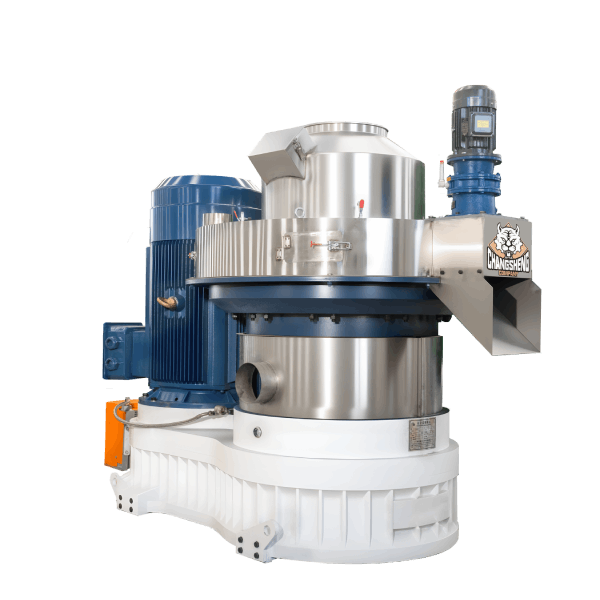
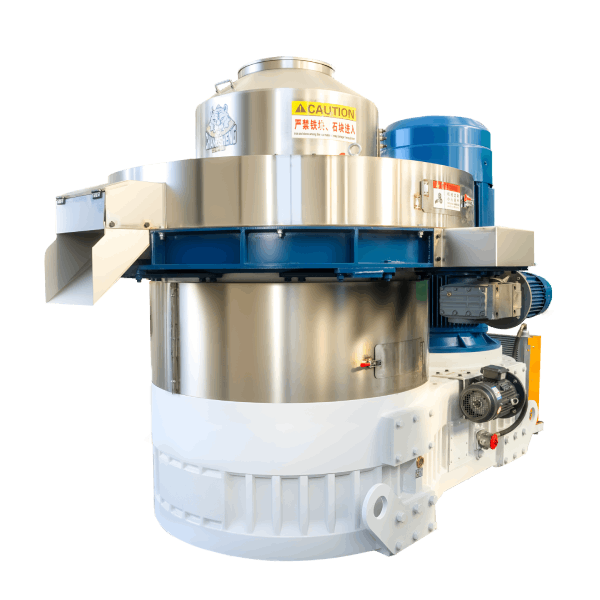
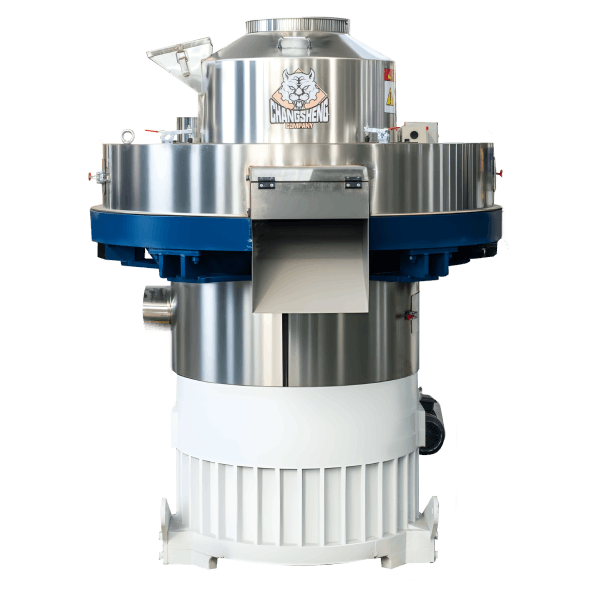
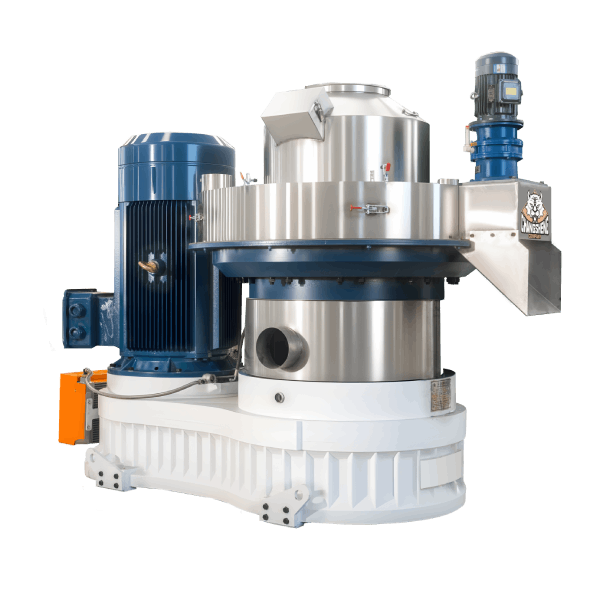
A pellet machine roller shell resurfacing refers to the maintenance procedure of restoring worn roller shells to original dimensions through grinding or weld build-up, extending service life and maintaining proper roller-to-die gap. The roller shell is a critical wear component that compresses material through the die holes, requiring periodic resurfacing based on wear patterns and gap measurement.
Technical Specifications & Performance Parameters
| Parameter | Value Range / Specification |
|---|---|
| Throughput capacity | 0.5 – 5.0 t/h (feedstock-dependent) |
| Main motor power | 30 – 160 kW (IE3 / IE4 compatible) |
| Roller shell outer diameter (new) | 200 – 400 mm |
| Roller shell width | 80 – 150 mm |
| Typical roller life (feed) | 600 – 900 operating hours |
| Typical roller life (biomass) | 400 – 700 operating hours |
| Nominal roller-die gap | 0.15 – 0.30 mm |
| Gap replacement threshold | > 0.40 mm |
| Resurfacing method | Grinding (preferred) or weld build-up |
| Surface hardness after resurfacing | HRC 55 – 62 |
| Resurfacing cycle (grinding) | 1 – 2 resurfacing operations per shell |
| Resurfacing cycle (weld build-up) | 2 – 4 resurfacing operations per shell |
| Weld overlay thickness | 2.0 – 5.0 mm |
| Maintenance man-hours (resurfacing) | 2 – 4 hours (in-house) / 1 – 2 days (external) |
| Scheduled maintenance man-hours | 4 – 6 h / month |
Structural Composition & Material Selection
The roller shell assembly comprises precision-engineered components with defined material grades:
Roller Shell
- Base material: High-chromium cast iron (Cr26–Cr28) or alloy steel
- Hardened layer: HRC 55–62, depth 3–8mm
- Surface profile: Crowned or flat (matched to die curvature)
- Bore: Precision-machined for bearing fit (H7 tolerance)
Resurfacing Consumables (Weld Build-Up)
- Buffer layer: Cr–Mo alloy wire (HRC 40–50)
- Hardfacing layer: Chromium-carbide wire (HRC 58–62)
- Flux: Submerged arc or open-arc type (matched to base material)
Grinding Equipment
- Cylindrical grinder (for external surface)
- Grinding wheel: Aluminium oxide (ALO) or CBN (cubic boron nitride)
- Coolant: Water-based emulsion (to prevent heat damage)
Associated Components
- Roller bearings: Inspect and replace if worn during resurfacing
- Bearing seals: Replace during roller shell removal
Manufacturing Process – Engineering Workflow
Step 1 – Wear Assessment & Removal Decision
Measure roller-die gap at multiple positions (centre and edges). If gap > 0.40mm or wear is uneven > 0.15mm variation, schedule resurfacing. Track operating hours – typical 600–900 hours interval.
Step 2 – Roller Shell Removal
Stop pellet mill and lockout/tagout. Remove guard doors. Release roller assembly. Remove bearings and seals. Clean roller shell surface.
Step 3 – Grinding Resurfacing (Preferred Method)
Mount roller shell on cylindrical grinder. Grind to original outer diameter specification (OEM dimension). Remove minimal material (0.2–0.5mm) to restore concentricity. Maintain original profile (crowned or flat). Achieve surface finish Ra ≤ 1.6μm.
Step 4 – Weld Build-Up (Alternate Method)
Apply buffer layer (2–3mm, Cr–Mo alloy) to restore OD. Apply hardfacing layer (2–3mm, chromium carbide) for wear resistance. Maintain interpass temperature ≤ 200°C. Post-weld grinding to final dimension. Surface hardness HRC 58–62.
Step 5 – Installation & Gap Setting
Reinstall bearings and seals. Mount roller assembly in pellet mill. Measure roller-die gap with feeler gauge. Set to 0.15–0.30mm. Run for 30 minutes at reduced feed to verify operation. Re-check gap after 8 hours of running.
Industry Comparison – Resurfacing Options
| Resurfacing Method | Cost | Life Extension | Downtime | Equipment Required |
|---|---|---|---|---|
| Grinding (In-House) | Low | 80% – 100% of new | 2 – 4 hours | Cylindrical grinder |
| Weld Build-Up (External) | Moderate | 100% – 120% of new | 1 – 2 days | Welding equipment + grinder |
| Weld Build-Up (In-House) | Moderate | 100% – 120% of new | 1 – 2 days | Weld + grind capability |
| Replacement with New Shell | High | 100% of new | 2 – 4 hours | Basic tools only |
| On-Line Roller Tuning | Low | 60% – 80% | 30 – 60 minutes | Specialised tuning tool |
Differentiation (Shandong Changsheng Machinery):
Our roller shell resurfacing procedure is designed for maximum life extension with minimal cost. Grinding resurfacing provides 80%–100% of original life at 30%–40% of replacement cost. For severely worn shells, weld build-up with chromium-carbide hardfacing exceeds original life by 20% while maintaining HRC 58–62 hardness. All resurfaced shells are supplied with dimensional certification and hardness test reports.
Application Scenarios by Buyer Role
Distributors / Importers
Focus on resurfacing services availability for customer support. Require recommended resurfacing intervals based on operating hours.
EPC Contractors
Integrating roller shell maintenance into plant reliability programme. Need resurfacing turnaround time data for maintenance planning.
Engineering Consultants / Technical Advisors
Evaluate cost-effectiveness of resurfacing vs replacement. Require life extension data for lifecycle cost analysis.
End-user Production Facilities
Operating 24/7 with maintenance budget constraints. Demand reliable resurfacing procedures to minimise downtime and reduce spare part costs.
Core Pain Points & Engineering Solutions
Pain Point 1 – Uneven roller wear causing poor pellet quality
Root cause: Edge wear or centre wear creates uneven roller-die gap, producing variable pellet density and PDI drop.
Solution: Grinding resurfacing restores original profile (crowned or flat). Gap variation reduced to ±0.02mm. PDI stabilised at target.
Pain Point 2 – High cost of new roller shells
Root cause: Roller shell replacement at 600–900 hours costs $500–$2,000 per shell.
Solution: Grinding resurfacing at 30%–40% of new cost. Weld build-up resurfacing at 40%–60% of new cost – extends life 100%–120% of new.
Pain Point 3 – Loss of surface hardness with wear
Root cause: Worn roller shells lose surface hardness, accelerating further wear and reducing pellet quality.
Solution: Resurfacing restores surface hardness to HRC 58–62. Weld build-up with chromium-carbide hardfacing provides superior wear resistance.
Pain Point 4 – Roller shell removed – extended downtime
Root cause: Removing roller shell for external resurfacing causes 1–2 days downtime.
Solution: In-house grinding resurfacing (2–4 hours) minimises downtime. Maintain spare resurfaced shell for quick swap (≤1 hour changeover).
Critical Risk Warnings & Mitigation Measures
Risk 1 – Heat damage during weld build-up
Mitigation: Control interpass temperature ≤200°C. Use preheat (150–200°C) to avoid cracking. Post-weld slow cooling in sand or vermiculite.
Risk 2 – Incorrect grinding allowance
Mitigation: Remove minimum material to achieve concentricity (0.2–0.5mm). Do not exceed 1.0mm total material removal – shell thickness reduces.
Risk 3 – Gap setting error causing die damage
Mitigation: Use feeler gauge (0.15–0.30mm) at multiple positions (3 points minimum). Re-check after 8 hours running.
Procurement Selection Guide – 7 Executable Steps
Step 1 – Assess current roller wear condition
Measure roller-die gap at centre and edges. If gap > 0.40mm or wear variation > 0.15mm – resurfacing required.
Step 2 – Determine resurfacing method
Grinding preferred (low cost, 2–4 hours). Weld build-up for severely worn shells (40–60% of new cost, 120% life extension).
Step 3 – Verify in-house grinding capability
If not available, outsource to specialist. Consider purchasing resurfaced spare shell for quick swap.
Step 4 – Establish resurfacing schedule
Based on operating hours (600–900 hour interval). Plan resurfacing during scheduled maintenance or shift change.
Step 5 – Prepare spare roller shell inventory
Maintain one resurfaced spare shell per machine. Enables quick swap (≤1 hour) vs 2–4 hours for in-house resurfacing.
Step 6 – Document resurfacing procedure
Define grinding parameters (depth of cut, feed rate, wheel speed). Define weld build-up procedure (preheat, interpass, post-weld treatment). Hardness test after resurfacing.
Step 7 – Implement quality control
Diameter measurement (0.01mm accuracy). Hardness test (HRC). Profile measurement (crowned or flat). Gap setting verification.
Engineering Case Study – Feed Mill in Nigeria
Project Background
A poultry feed mill in Ogun State operates two 75kW pellet mills at 2.5 t/h each. Roller shell replacement cost is $850 per shell. Plant spends $1,700 per month on replacement rollers (2 machines × 1 replacement/month).
Initial Problem
Roller shells replaced every 600–700 hours – 12 replacements per machine annually. Total annual replacement cost $20,400. Old shells discarded without resurfacing consideration.
Root Cause Analysis
No resurfacing programme existed. Plant did not have grinding equipment and assumed replacement was the only option. Roller-die gap was not measured – replacement based on visual wear only.
Solution Implemented
Purchased cylindrical grinder and trained maintenance team on resurfacing procedure. Maintained spare roller shell per machine for quick swap. Implemented gap measurement protocol and resurfacing schedule at 800 hours (planned maintenance).
Final Data Results (12-month average)
| Metric | Before (Replacement Only) | After (Resurfacing Programme) |
|---|---|---|
| Average roller life | 650 h | 780 h (including 1 resurfacing) |
| Roller cost per machine | $10,200/year | $4,080/year (resurfacing) |
| Total annual savings (2 machines) | – | $12,240 |
| Roller-die gap variation | ±0.08mm | ±0.02mm |
| PDI variation | ±2.5% | ±0.8% |
Frequently Asked Questions (FAQ)
1. When should I resurface the roller shell?
When roller-die gap exceeds 0.40mm or wear is uneven >0.15mm variation. Typical interval: 600–900 operating hours.
2. What is the recommended resurfacing method?
Grinding is preferred for cost and simplicity. Weld build-up for severely worn shells (life extension 20%+).
3. Can I resurface the roller shell in-house?
Yes – with a cylindrical grinder. Weld build-up requires welding equipment and skilled welder.
4. How much material is removed during grinding?
0.2–0.5mm to restore concentricity. Do not exceed 1.0mm total – shell thickness reduces.
5. What surface hardness is required after resurfacing?
HRC 55–62 for feed and biomass applications. Hardness test after resurfacing.
6. How many times can a roller shell be resurfaced?
Grinding: 1–2 times (then shell thickness reduces). Weld build-up: 2–4 times (restores OD with weld overlay).
7. What is the cost difference between resurfacing and replacement?
Grinding resurfacing: 30%–40% of new cost. Weld build-up: 40%–60% of new cost. Life extension: 80%–120% of new.
8. What equipment is required for grinding resurfacing?
Cylindrical grinder, grinding wheel (ALO or CBN), coolant system, measuring equipment (micrometer, hardness tester).
9. What welding consumables are recommended?
Buffer layer: Cr–Mo alloy wire. Hardfacing layer: Chromium-carbide wire. Hardness HRC 58–62.
10. How do I set the roller gap after resurfacing?
Use feeler gauge at 3–4 positions around die. Set to 0.15–0.30mm. Re-check after 8 hours running.
11. Can I resurface crowned roller shells?
Yes – cylindrical grinder can replicate crown profile. Maintain original profile – flat or crowned.
12. What is the typical turnaround time for external resurfacing?
1–2 days for weld build-up + grinding. Maintain spare shell for quick swap (≤1 hour changeover).
Author & E-E-A-T Credentials
Author: Dr. Chen Wei
Title: Senior Mechanical Engineer, Pelletising Systems Division
Experience: 14 years in biomass densification and feed processing equipment design
Notable Projects:
- Developed roller shell resurfacing programme for 30+ feed mills across Africa and Asia (2016–2025)
- Authored weld build-up and grinding protocol for chromium-carbide hardfacing
- Co-author of “Industrial Pellet Mill Maintenance and Optimisation” (Engineering Press, 2022)
Affiliation: Shandong Changsheng Machinery Co., Ltd.