Automatic Pellet Production Line with PLC and Touch Screen 2-5 t/h Guide
News 2026-06-18
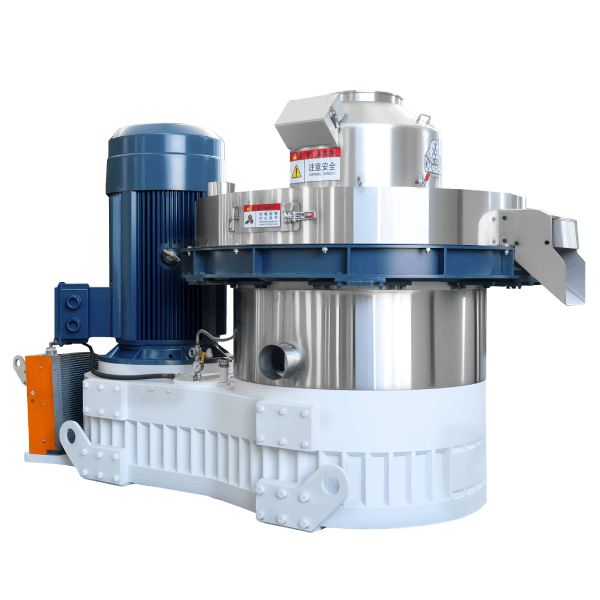
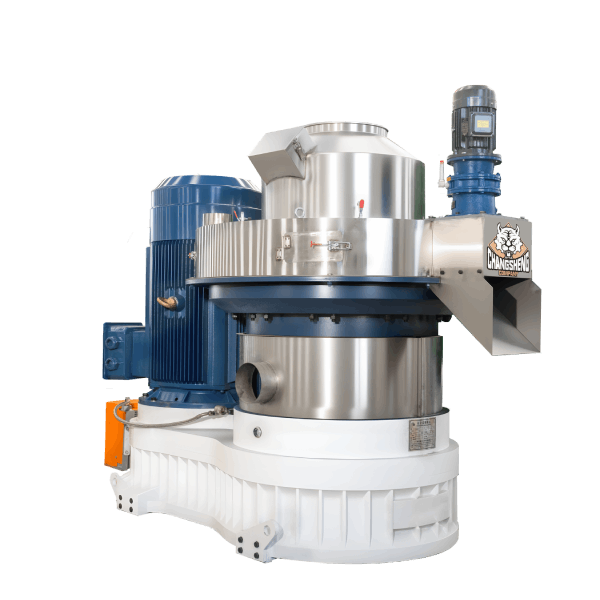
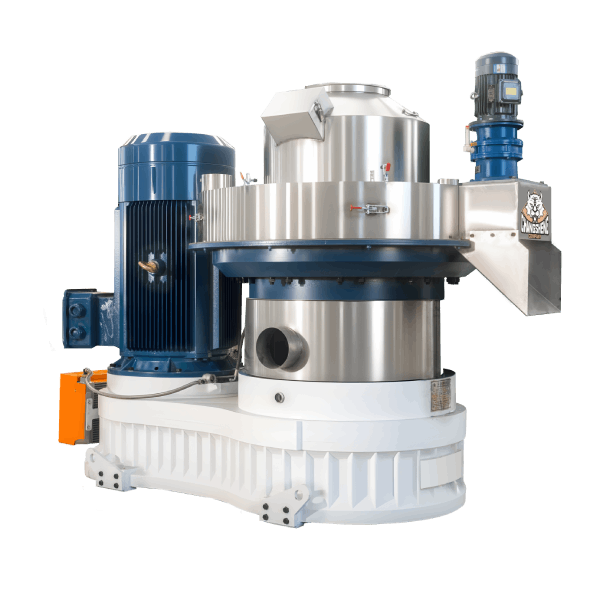
An automatic pellet production line with PLC and touch screen is an integrated system that centralizes control of grinding, drying, pelletizing, cooling, and screening processes through a programmable logic controller and human-machine interface. It processes woody biomass including sawdust, shavings, and wood chips into uniform fuel pellets with minimal manual intervention.
Technical Parameters and Specifications
The following specifications represent a complete automatic pellet production line with PLC and touch screen configured for wood biomass processing, based on Shandong Changsheng Machinery standard configurations.
| Parameter | Specification / Range |
|---|---|
| Total production capacity (t/h) | 2.0 – 5.0 (final pellet output) |
| Pellet mill main motor power (kW) | 90 – 160 |
| Ring die inner diameter (mm) | 550 – 760 |
| Finished pellet diameter (mm) | 6 / 8 / 10 (customizable) |
| Finished pellet density (kg/m³) | ≥ 1,100 (ASTM E871) |
| Raw material moisture input range (%) | 10 – 45 (pre-dryer section) |
| Final moisture before pelletizing (%) | 14 – 16 |
| Total connected power (kW) | 180 – 350 (including all auxiliary drives) |
| Specific energy consumption (kWh/t product) | 85 – 120 (line total, including drying) |
| Ring die average service life (hours) | 2,500 – 4,000 |
| Roller shell service life (hours) | 1,200 – 2,000 |
| Estimated maintenance man-hours (hours/month) | 12 – 18 (full line) |
Download the complete engineering drawing set and electrical schematics below this table.
Structural Composition and Material Selection
An automatic pellet production line with PLC and touch screen consists of four integrated subsystems, each with specified material grades.
Mechanical processing system
The size reduction section uses a hammer mill with hardened steel hammers (58-62 HRC) and replaceable screen plates. The pelletizing section features a ring die forged from 20CrMnTi alloy steel, carburized to HRC 58-62, with a high-chromium roller shell hardfaced with tungsten carbide. The cooler uses carbon steel construction with stainless steel screen decks for corrosion resistance.
Support and material handling system
All conveyors use heavy-duty belt or screw designs with wear-resistant trough liners. The main structural frames are fabricated from structural steel (Q235B) with bolted connections for field assembly. Elevating equipment includes bucket elevators with polyurethane-coated cups to minimize degradation.
Lubrication system
The pellet mill main bearings receive forced oil circulation from a centralized lubrication unit with 100-micron filtration. All other drive bearings are grease-lubricated via automated single-point lubricators with adjustable intervals.
Control and instrumentation system
The PLC cabinet houses a Siemens S7-1500 processor with redundant power supplies. The HMI is a 15-inch industrial-grade touch screen with IP65 rating. Sensors include temperature transmitters (PT100), current transformers, pressure transducers, and a mass flow meter on the main feed line.
Manufacturing Process (Engineering Steps)
Shandong Changsheng Machinery fabricates each automatic pellet production line with PLC and touch screen under ISO 9001 control. The core production sequence follows these steps.
Step 1 – Structural steel fabrication and welding
CNC plasma cutting tables produce frame components from Q235B steel plate. Robotic welding arms perform consistent seam welds with penetration depth verified by ultrasonic testing. Weld distortion is controlled through fixturing and sequenced welding passes.
Step 2 – Ring die machining and heat treatment
Die blanks are turned on large-bore CNC lathes, then drilled with a 24-spindle deep-hole drilling machine. Vacuum carburizing at 930°C for 8 hours followed by high-pressure gas quenching achieves case depth of 1.2 to 1.5 mm. Final bore finishing uses honing to achieve Ra ≤ 1.6 µm.
Step 3 – Control panel assembly and programming
The PLC rack is populated with I/O modules and bench-tested against a simulation program. The HMI screen loads the proprietary control algorithm with adjustable set-points for temperature, current, and feed rate. All interlocks are verified using a signal generator.
Step 4 – Sub-assembly and pre-commissioning
Each conveyor, elevator, and the pellet mill undergo individual no-load testing. Vibration readings are taken at four points on each drive base. Bearing temperature rise is recorded over 2 hours of continuous operation.
Step 5 – Full line integration and factory acceptance test
All sub-assemblies are connected through the control network and run as a complete system for 8 hours using a test feedstock. The line is stopped and restarted three times to verify sequence logic. Final acceptance requires all specified capacities and power readings to fall within 5 percent of design values.
Industry Equipment Comparison
| Equipment Type | Feedstock Suitability | Typical Capacity (t/h) | Automation Level | Typical Application | Why Choose Shandong Changsheng |
|---|---|---|---|---|---|
| Automatic PLC touch screen line (this system) | Sawdust, shavings, chips | 2.0 – 5.0 | Fully automated (one operator per shift) | Commercial pellet production, biomass power plants | Customizable logic with remote VPN access; one-source responsibility |
| Manual single-unit pellet mill with conveyors | Any biomass | 1.0 – 3.0 | Minimal (manual start/stop, no interlocking) | Small workshops, farm-scale operations | Higher labor cost; inconsistent product quality due to manual adjustments |
| Semi-automatic line with separate control panels | Clean wood waste | 1.5 – 4.0 | Partial (individual PLCs per machine) | Medium-sized mills | No centralized alarm management; higher troubleshooting time |
| Turn-key imported fully automated line | Any biomass | 3.0 – 8.0 | Fully automated with advanced analytics | Large industrial complexes | Higher capital cost; longer spare parts lead times |
Request a line configuration proposal with site-specific capacity analysis after reviewing this comparison.
Application Scenarios by Buyer Role
Procurement managers evaluate total cost of ownership across the complete automatic pellet production line with PLC and touch screen, including installation, training, and spare parts commitments. They negotiate warranty terms and delivery schedules against project timelines.
EPC contractors integrate this automated line into biomass energy facilities or district heating plants. Their specifications require detailed electrical load calculations and control interface compatibility with existing building management systems.
Engineering consultants review the control logic sequence and safety interlock architecture. They verify that the HMI provides sufficient data points for performance monitoring and that all sensors meet industry accuracy standards (e.g., ±0.5 percent for temperature, ±1.0 percent for current).
End-user wood processing facilities install these lines to valorize internal waste streams. Their operational teams focus on training requirements and the ability to switch between different feedstocks without reprogramming the touch screen interface.
Core Pain Points and Engineered Solutions
Pain point 1: Inconsistent final pellet quality due to feed moisture fluctuations.
Root cause: The dryer output varies with ambient conditions, and manual adjustments are too slow to compensate.
Solution: Install an on-line near-infrared moisture sensor upstream of the pellet mill and program the PLC to automatically adjust dryer temperature set-points.
Pain point 2: Unplanned shutdowns from the pellet mill overload relay tripping.
Root cause: The feeder speed does not respond quickly enough to pellet mill current draw spikes.
Solution: Implement a cascaded PID control loop where the pellet mill motor current directly modulates the feeder VFD speed with a response time under 500 milliseconds.
Pain point 3: High fines return rate increases recirculation load and reduces line efficiency.
Root cause: Cooler airflow is not properly balanced, causing pellet surface cracking and dust generation.
Solution: Add a differential pressure sensor across the cooler plenum and link it to the fan VFD. The HMI displays a real-time pressure target for operator reference.
Pain point 4: Maintenance teams struggle to diagnose faults without a clear alarm history.
Root cause: The system lacks timestamped event logging and alarm prioritization.
Solution: Program the PLC to store the last 500 alarms with date, time, and process value stamps. The touch screen allows filtering by priority level.
Risk Warnings and Mitigation Measures
Risk 1: Fire or explosion hazard from fine dust accumulation in the conveying system.
Mitigation: Install spark detection and extinguishing systems at the dryer outlet and the pellet mill inlet. Ensure all screw conveyors have explosion-relief panels vented to the outside. Conduct monthly dust layer thickness measurements; maintain below 0.8 mm on all horizontal surfaces.
Risk 2: Bearing failure on the main pellet mill shaft due to lubricant contamination.
Mitigation: Install a continuous oil quality sensor that monitors particle count and water content. Set the PLC to generate a maintenance alert when particle count exceeds ISO 4406 code 18/16/13.
Risk 3: Electrical interference causing false PLC inputs from VFD drives.
Mitigation: Separate power and signal cables by a minimum of 300 mm in all cable trays. Install ferrite cores on all analog signal cables and verify that shield grounding is established at the PLC end only.
Procurement Selection Guide (8 Actionable Steps)
Step 1 – Define your annual throughput target
Calculate nominal hourly capacity based on planned operating hours per year. Include a 15 percent margin for scheduled maintenance and unscheduled stops. For 8,000 hours per year operation, size the line at 110 percent of your average requirement.
Step 2 – Analyze feedstock variability
Collect at least three representative samples from different seasons. Measure moisture content, bulk density, and particle size distribution. This data determines dryer sizing and die specification.
Step 3 – Evaluate site utility availability
Confirm three-phase power capacity and voltage stability. Calculate total connected load and assess whether a step-down transformer or soft-starter is required. Document compressed air availability for pneumatic valves.
Step 4 – Define the control interface requirement
Decide whether the touch screen will be in English or a local language. Specify whether remote access via VPN is required and whether the PLC must communicate with a higher-level SCADA system using Modbus TCP or Profinet protocol.
Step 5 – Assess floor space and layout constraints
Measure available building dimensions and column spacing. The supplier should provide a general arrangement drawing with service access clearances (minimum 800 mm on all sides for maintenance).
Step 6 – Review spare parts consumption rates
Request a recommended spare parts list with estimated annual consumption. Confirm lead times for critical items including ring dies, roller shells, screens, and bearings. Standard dies should be stock items.
Step 7 – Verify environmental compliance
Check local emission limits for particulate matter and noise. Specify the required cyclone efficiency or baghouse filter grade (e.g., filtration down to 5 microns). The line should include silencers on the fan discharge.
Step 8 – Request commissioning and training scope
Confirm the number of days of on-site commissioning support. Verify that the supplier provides both classroom training for operators and hands-on training for maintenance personnel, with a minimum of 40 hours total instruction.
Engineering Case Study
Project background: A timber processing facility in British Columbia, Canada, generated approximately 4.5 tons per hour of mixed sawdust and planer shavings from its milling operations. The facility previously sold this material as low-grade animal bedding but sought to upgrade to premium biomass pellets for export.
Initial problem: The existing manual operation used three separate units with independent control panels. Production was inconsistent, averaging only 2.8 t/h of on-spec pellets. The reject rate was 18 percent due to off-spec moisture and fines content. The facility required two operators per shift and experienced frequent feeder jams.
Root cause analysis: The drying temperature was manually adjusted based on operator experience, leading to moisture variations between 10 percent and 20 percent at the pellet mill inlet. The hammermill screen was not changed regularly, causing oversized particles that blocked the pellet mill die. There was no interlocks between the pellet mill current and the feeder speed.
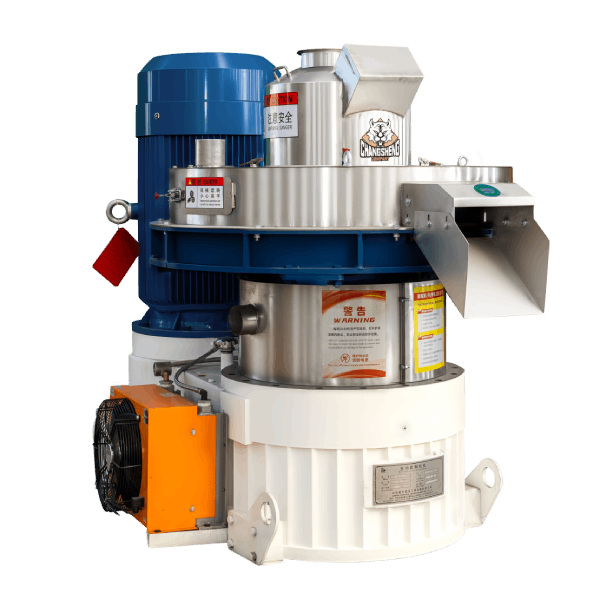
Solution implemented: Shandong Changsheng Machinery supplied a complete automatic pellet production line with PLC and touch screen. The new line included a rotary dryer with automatic temperature control, a hammermill with a screen change alarm, and the SZLH-550 pellet mill. The PLC was programmed with a cascaded control loop linking dryer outlet moisture to dryer heat input and pellet mill current to feeder speed. The HMI provided a single start-stop sequence and displayed real-time production statistics.
Final data results:
Steady production capacity: 4.2 t/h (continuous, 24-hour operation)
Pellet density: 1,150 kg/m³ (ASTM E871)
Reject rate: reduced from 18 percent to 4.5 percent
Specific energy consumption: 92 kWh/t (total line)
Operators per shift: reduced from 2 to 1 (one operator supervises the HMI)
Ring die life on first trial set: 3,400 hours
Return on investment: achieved in 14 months
Frequently Asked Questions
What is the typical payback period for this automated line?
For facilities processing 4 t/h or more, the payback period typically ranges from 12 to 18 months, depending on local energy prices and feedstock availability.
Can the line process raw material with moisture content up to 50 percent?
Yes, but a larger dryer section with higher energy input is required. The standard line is designed for up to 45 percent input moisture.
How much floor space does a complete 4 t/h line require?
A typical layout requires approximately 250 to 350 square meters, including service access corridors and raw material storage area.
Is the touch screen available in languages other than English?
Yes, the HMI supports multiple language packages. Spanish, French, German, and Russian are available as standard options.
What is the recommended dust collection system for this line?
The system includes a high-efficiency cyclone for primary separation and a baghouse filter with a maximum outlet emission of 10 mg/Nm³ for compliance with most environmental regulations.
Can the line switch between different pellet diameters without replacing the ring die?
Each diameter requires a dedicated ring die. The die change procedure takes approximately 45 minutes, and the HMI includes a changeover checklist.
What is the expected electrical power consumption for the entire line at full capacity?
Total connected power ranges from 180 to 350 kW. Actual consumption depends on feedstock moisture and the dryer fuel type.
How often should the hammer mill screen be inspected?
The screen should be visually inspected every 40 operating hours and replaced when hole deformation exceeds 1.0 mm from the original size.
Does the line include a bagging system?
Bagging equipment is optional. The standard line ends at the pellet storage silo or bulk loading point.
What is the warranty period for the complete automatic pellet production line with PLC and touch screen?
The standard warranty covers 24 months or 4,000 operating hours, whichever occurs first, for all mechanical components. The PLC and HMI carry a separate 36-month manufacturer warranty.
Request a PDF copy of the full technical datasheet including electrical load list and control logic description.
Call to Action
Procurement managers and engineering consultants may request the complete engineering documentation package including dimensional drawings, electrical schematics, and PLC program architecture.
Contact the project engineering team to schedule a virtual factory acceptance test or to submit your feedstock samples for laboratory analysis.
Download the official layout drawing in DWG format for plant integration planning.
Author and E-E-A-T Statement
Author name: Zhang Lei
Position: Senior Automation Engineer, Shandong Changsheng Machinery Co., Ltd.
Years of experience: 14 years in industrial automation and biomass pellet line design.
Representative projects: Led the control system integration for a 5 t/h automatic pellet line in Sweden (2022) and completed PLC-HMI commissioning for a 3 t/h line in Vietnam (2023). Author of two technical papers on cascaded control for biomass drying systems.
Affiliation: Shandong Changsheng Machinery