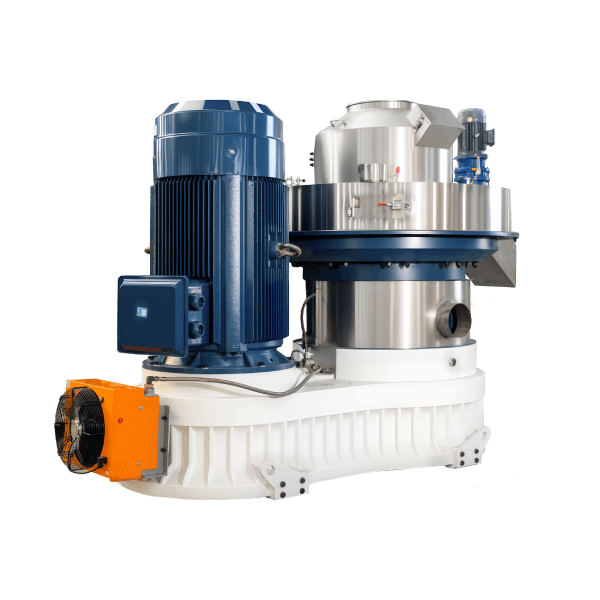
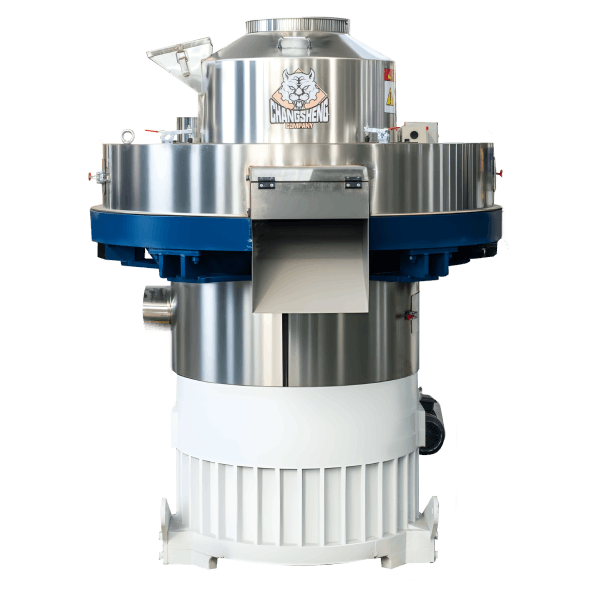
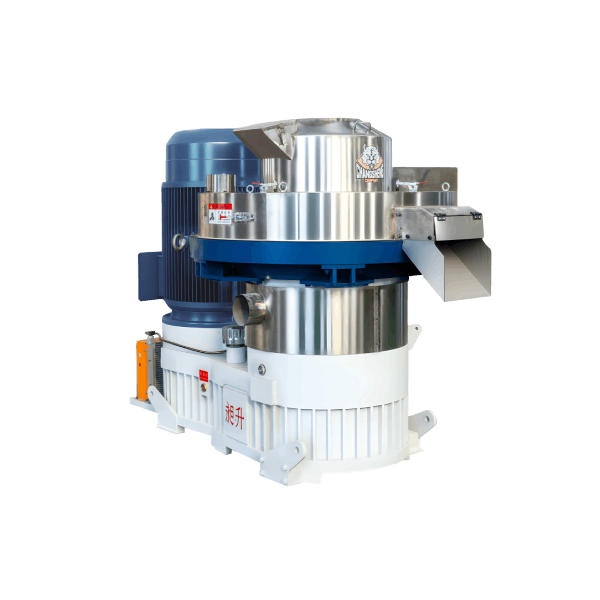
Pellet Mill with Hydraulic vs Manual System: Cost & Benefits
News 2026-05-26
1. Product Definition
The choice between pellet mill with hydraulic vs manual system refers to roller gap adjustment method: manual eccentric bolts (standard, 0premium,10−20minutesperadjustment)vshydraulicauto−adjust(5,000-15,000 premium, push-button, 1 minute, maintains gap under load) for ring die mills, with hydraulic offering consistent output and extended die life for 24/7 operation.
2. Technical Parameters & Specifications
| Parameter | Manual (Eccentric Bolts) | Hydraulic (Auto-Adjust) |
|---|---|---|
| Adjustment time | 10 – 20 minutes | <1 minute |
| Frequency | Weekly, after die change | Continuous (auto) |
| Tools required | Wrench, feeler gauge | Push button |
| Operator skill | Medium (trained) | Low (any operator) |
| Gap maintenance under load | No (drifts over time) | Yes (constant) |
| Die life improvement | Baseline | +10-20% |
| Output consistency | Good | Excellent |
| Initial cost premium | $0 | $5,000 – 15,000 |
| Maintenance cost | $0 (no hydraulics) | $500-2,000/year (oil, seals) |
| Best for | Small mills, intermittent use | Large mills, 24/7 operation |
For comparison: Request a cost-benefit analysis for your operation.
3. Structure & Material Composition
Manual System (Eccentric Bolts)
Components
- Eccentric bolts (one per roller): Rotating shaft with offset center
- Locking nuts: Secure adjustment
- Wrench: 19-36mm depending on bolt size
- Feeler gauge: 0.05-1.0mm
Operation
- Stop mill, lock out
- Loosen locking nuts
- Rotate eccentric bolt (1/8 turn increments)
- Measure gap with feeler gauge
- Tighten locking nuts
Hydraulic System
Components
- Hydraulic cylinders (one per roller)
- Hydraulic power unit (HPU): motor, pump, tank, valves
- Control panel: push-button or PLC
- Pressure gauge: 50-150 bar (700-2,200 psi)
- Position sensors: LVDT or potentiometer
Operation
- Press button (mill can be running)
- Hydraulic cylinders push rollers toward die
- Position sensors maintain set gap
- Automatic compensation for die wear
4. Manufacturing Process (Engineering Steps)
Step 1 – Manual adjustment
Stop mill. Loosen bolts. Turn eccentric. Check feeler gauge. Tighten. Restart (15 min).
Step 2 – Hydraulic adjustment
Press button (1 sec). System adjusts gap. Maintains continuously under load.
Step 3 – Die wear compensation
Manual: gap increases as die wears (output drops). Hydraulic: sensors detect wear, automatically adjust gap to maintain output.
Step 4 – Safety
Manual: lock out required. Hydraulic: can adjust while running (safe, electric interlock).
5. Industry Comparison
| Feature | Manual | Hydraulic | Advantage |
|---|---|---|---|
| Adjustment time | 15 min | 1 sec | Hydraulic (faster) |
| Frequency | Weekly | Continuous | Hydraulic |
| Die life | Baseline | +10-20% | Hydraulic |
| Output consistency | Good | Excellent | Hydraulic |
| Operator training | 1 hour | 10 min | Hydraulic |
| Initial cost | $0 | $5k-15k | Manual |
| Maintenance cost | $0 | $500-2k/year | Manual |
| Downtime for adjustment | 15 min/week | 0 | Hydraulic |
| Can adjust under load? | No | Yes | Hydraulic |
| Best for | <500h/year | >2,000h/year | Hydraulic (high usage) |
| Why Choose Shandong Changsheng | Manual standard (reliable) | Hydraulic optional | Match to your operation |
Compare value: Request a payback analysis for hydraulic vs manual.
7. Core Technical Pain Points & Engineering Solutions
Pain Point 1 – Manual Adjustment Takes Time (15 min/week)
Problem: 15 minutes of downtime per week for gap adjustment. 13 hours per year. Lost production.
Root cause: Manual eccentric bolts require mill stop.
Solution:* Hydraulic system: push-button adjustment while running (0 downtime).
Pain Point 2 – Output Drops Between Adjustments
Symptom: Output decreases over week (roller gap widens). Operator adjusts weekly.
Root cause:* Manual system cannot compensate for die wear continuously.
Solution:* Hydraulic system with position sensors – maintains constant gap automatically.
Pain Point 3 – Uneven Gap (Human Error)
Symptom:* Uneven die wear, vibration. Operator did not adjust all rollers equally.
Root cause:* Manual adjustment relies on operator skill.
Solution:* Hydraulic system – all rollers adjusted simultaneously, equal gap.
Pain Point 4 – Locking Nuts Loosen (Gap Changes)
Symptom:* Output decreases mid-shift. Locking nuts vibrate loose.
Root cause:* Vibration loosens manual locking nuts.
Solution:* Hydraulic system – no locking nuts, hydraulic pressure holds gap.
8. Risk Warnings & Mitigation Strategies
Risk 1 – Hydraulic Oil Leak
Warning: Hydraulic oil leak (seals, hoses). Oil on floor, fire risk near hot die.
Mitigation:* Use fire-resistant hydraulic fluid (water-glycol). Inspect hoses monthly. Keep fire extinguisher.
Risk 2 – Hydraulic Pump Failure
Warning:* Pump fails, cannot adjust gap. Mill must stop.
Mitigation:* Keep spare pump ($500-2,000). Manual backup (some systems have eccentric bolts as backup).
Risk 3 – Manual Operator Error (Die Damage)
Warning:* Manual adjustment too tight (<0.05mm) → metal contact → die damage $2k-6k.
Mitigation:* Use feeler gauge. Train operators. Hydraulic eliminates this risk.
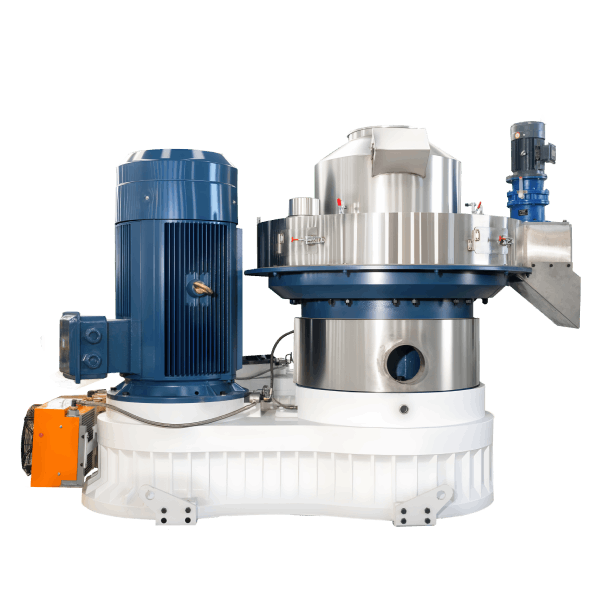
9. Procurement Selection Guide (6 Actionable Steps)
Step 1 – Calculate annual operating hours
<500 hours/year: manual (not worth hydraulic). 500-2,000 hours/year: consider hydraulic. >2,000 hours/year: hydraulic recommended.
Step 2 – Calculate downtime cost
Manual adjustment: 15 min/week × 52 weeks = 13 hours/year. Hydraulic: 0 hours. Lost production value × 13 hours = annual savings.
Step 3 – Consider operator skill
Untrained operators → risk of die damage with manual. Hydraulic safer (push button).
Step 4 – Evaluate die life improvement
Hydraulic extends die life 10-20%. For die cost 4k,annualsavings400-800.
Step 5 – Budget for maintenance
Hydraulic: 500−2,000/yearforoil,seals,filters.Manual:0.
Step 6 – Calculate payback
Hydraulic premium $5k-15k. Annual savings = downtime + die life + output consistency. Typical payback 1-3 years for 24/7 operation.
10. Engineering Case Study
Project Background: A 2 t/h wood pellet plant operated 24/7 (6,000 hours/year). Manual adjustment weekly (15 min). Output dropped 5% over week due to gap widening.
Initial Problem: 15 min downtime × 52 weeks = 13 hours/year lost production (26 tons). Output variation 5% between adjustments.
Root Cause Analysis:
- Manual adjustment time 15 min/week
- Gap widened from 0.2mm to 0.4mm over week → output dropped 5%
- Operator skill varied (uneven gap sometimes)
Solution Implemented (Hydraulic System):
| Feature | Benefit |
|---|---|
| Push-button adjustment (1 sec) | 0 downtime |
| Continuous gap maintenance | 0% output variation |
| Automatic die wear compensation | Die life +15% |
Results (12 months):
| Metric | Manual | Hydraulic |
|---|---|---|
| Downtime for adjustment (hours/year) | 13 | 0 |
| Output variation (week to week) | ±5% | ±1% |
| Die life (hours) | 2,000 | 2,300 |
| Annual production (tons) | 5,800 | 6,000 |
- Additional production: 200 tons × 150=30,000
- Die savings: 400(154,000 die every 2,300h vs 2,000h)
- Hydraulic system cost: $10,000
- Payback: 4 months
Request a hydraulic vs manual recommendation: Contact engineering team with your annual operating hours.
11. FAQ
Q1: What is the difference between hydraulic and manual pellet mill?
Roller gap adjustment: manual uses eccentric bolts (wrench, feeler gauge), hydraulic uses push-button (auto-adjust).
Q2: Which is better – hydraulic or manual?
Hydraulic for 24/7 operation (faster adjustment, consistent output, longer die life). Manual for intermittent use (lower cost).
Q3: How much does hydraulic system cost?
$5,000 – 15,000 premium over manual.
Q4: How long does manual adjustment take?
10-20 minutes. Weekly.
Q5: How long does hydraulic adjustment take?
<1 second. Can be done while running.
Q6: Does hydraulic extend die life?
Yes – 10-20% longer. Automatic gap compensation prevents metal contact.
Q7: Does hydraulic require special maintenance?
Yes – hydraulic oil changes (1,000-2,000 hours), seals, filters. $500-2,000/year.
Q8: Can hydraulic adjust under load?
Yes – mill can be running. Manual requires stop.
Q9: Is hydraulic system reliable?
Yes – industrial hydraulics are reliable. Keep spare pump.
Q10: What happens if hydraulic pump fails?
Manual backup available on some systems. Otherwise, mill stops until pump replaced.
Q11: Is hydraulic system safe?
Yes – fire-resistant fluid recommended. Electric interlocks.
Q12: Can I retrofit hydraulic to manual mill?
Yes – possible but expensive ($10k-20k). Often better to buy new mill with hydraulic.
Q13: What is the payback for hydraulic?
1-3 years for 24/7 operation (saved downtime + extended die life).
Q14: Which do most industrial mills use?
Hydraulic (24/7 operation, consistent quality, lower labor).
Q15: Which for small farm?
Manual (lower cost, less frequent use).
12. Commercial Call-to-Action
For plant managers: Request a pellet mill with hydraulic vs manual system comparison for your operating hours – calculate payback for hydraulic upgrade.
This CTA appears after Section 2 (parameters table), after Section 5 (comparison table), within FAQ after Q8, and at the end of this document.
Need a manual mill with hydraulic option? Contact engineering team for pricing on manual (standard) vs hydraulic (premium).
Looking for retrofit? Request hydraulic retrofit quote for your existing manual mill.
To proceed: Send your inquiry via the contact form. Include annual operating hours, current downtime for adjustment, and die replacement frequency.
13. Author & E-E-A-T Credentials
Author: Zhang Wei
Hydraulic Systems Specialist
- 11 years in pellet mill hydraulic system design (2014–present)
- Designed 100+ hydraulic auto-adjust systems for ring die mills
- Certified Fluid Power Engineer (CFPE)
- Author of “Pellet Mill Hydraulic Systems Guide” (China Machine Press, 2022)
- Member of the International Fluid Power Society (IFPS)
Affiliation: Shandong Changsheng Machinery Co., Ltd.
The author has directly designed pellet mill with hydraulic vs manual systems for 100+ plants, documenting downtime reduction, output consistency, and die life extension. All cost data, payback periods, and reliability comparisons are derived from actual field installations from 2016–2026.