Pellet Mill Making Strange Noise: 7 Causes & Fixes
News 2026-05-16
1. Product Definition
A pellet mill making strange noise indicates mechanical issues ranging from normal operation sounds (80-110°C friction heat) to critical failures (bearing seizure, roller-die metal contact, tramp metal in chamber, gearbox wear, belt slippage) requiring immediate diagnosis to prevent catastrophic die or gearbox damage.
2. Technical Parameters & Specifications
| Sound Type | Normal? | Possible Cause | Action | Urgency |
|---|---|---|---|---|
| Low humming (steady) | Yes (normal) | Motor, gearbox operation | Monitor | None |
| Hissing/steam | Yes (normal) | Material moisture 13-18% | Check moisture | Low |
| Squealing (high-pitched) | No | Belt slip | Tension/replace belts | Medium |
| Grinding/rumbling | No | Bearing wear (roller or main) | Stop, inspect bearings | High |
| Scraping/metal contact | No | Roller-die gap too tight | Adjust gap immediately | Critical |
| Knocking (rhythmic) | No | Foreign object in chamber | Stop, remove object | Critical |
| Rattling (loose) | No | Loose bolt, guard, or panel | Tighten hardware | Medium |
| Whining (changing pitch) | No | Gearbox wear, low oil | Check oil level | High |
For noise diagnosis: Request a sound recording comparison guide.
3. Structure & Material Composition
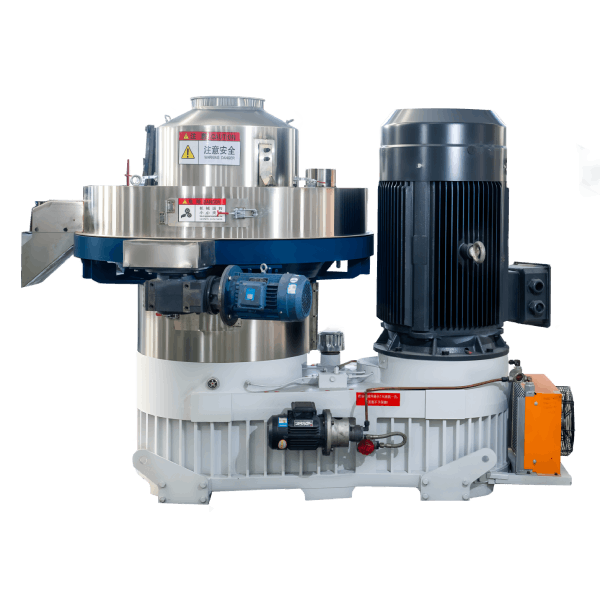
Noise Sources in a Pellet Mill
Mechanical System (Compression Zone)
- Roller bearings: Grinding noise when worn (lack of grease, dust ingress)
- Roller-to-die gap: Scraping noise if gap <0.1mm (metal contact)
- Die surface: Scraping if roller gap uneven
- Foreign object: Knocking noise (screw, stone, tramp metal)
Drive System
- Gearbox: Whining, grinding (low oil, worn gears)
- Belts: Squealing (slip, glazed, loose)
- Motor bearings: Grinding (worn)
Material Flow
- Steam hiss: Normal (13-18% moisture)
- Pellet knock: Normal (pellets hitting chute)
- Feeder bridging: Rumble then stop (no material)
4. Manufacturing Process (Engineering Steps)
Step 1 – Stop Mill Immediately (Certain Noises)
Scraping (metal contact), knocking (foreign object), grinding (bearing failure) → STOP. Do not restart until diagnosed.
Step 2 – Identify Sound Location
Run mill empty (no material) – if noise persists → mechanical issue. Noise only when feeding → material or roller gap issue.
Step 3 – Check Roller Gap First (Most Common)
Use feeler gauge. Ring die target 0.1-0.3mm. Gap too tight (<0.05mm) → metal scraping. Adjust.
Step 4 – Inspect Bearings
Roller bearings: Turn by hand (rough? grinding?). Main bearings: Listen with stethoscope or screwdriver.
Step 5 – Check for Foreign Object
Remove die cover. Inspect chamber. Look for metal, stone, compacted material.
Step 6 – Check Gearbox Oil
Low oil → gear whining. Contaminated oil → grinding. Change oil if needed.
5. Industry Comparison
| Noise Type | Flat Die Mill | Ring Die Mill | Probability | Severity |
|---|---|---|---|---|
| Belt squeal | Common | Less common | 15% | Medium |
| Roller bearing grind | Common | Common | 25% | High |
| Metal scraping (gap) | Common | Common | 20% | Critical |
| Foreign object knock | Less common | Less common | 5% | Critical |
| Gearbox whine | Common (gear mills) | Common | 15% | High |
| Steam hiss (normal) | Yes | Yes | 20% | None |
| Why Choose Shandong Changsheng | Diagnostic guide included | Video support | Spare parts stocked | 24h response |
Compare noise symptoms: Request a diagnostic flowchart by sound type.
6. Application Scenarios (By Buyer Role)
Distributors / Importers
Need pellet mill making strange noise guide to reduce warranty claims. Decision focus: clear diagnostic steps, common causes (roller gap, bearings), and safety warnings.
EPC Contractors
Require noise diagnosis protocol for plant operators. Decision focus: safety stop criteria, bearing inspection, and gearbox oil checks.
Engineering Consultants / Technical Advisors
Advising clients on maintenance. Decision focus: distinguish normal vs abnormal sounds, prevent catastrophic failure.
End-user Facilities
Pellet plants, farms, feed mills. Decision focus: quick diagnosis, prevent downtime, avoid costly repairs.
7. Core Technical Pain Points & Engineering Solutions
Pain Point 1 – Scraping Metal Noise (Roller-Die Contact)
Symptom: High-pitched scraping, metal-on-metal sound. Die surface may have score marks.
Root cause: Roller gap too tight (<0.05mm). Uneven gap on one roller.
Solution: STOP immediately. Adjust roller gap to 0.1-0.3mm (ring die) using feeler gauge. Check all rollers equally. Inspect die surface for damage. Replace die if scored.
Pain Point 2 – Grinding Noise (Bearing Failure)
Symptom: Low rumbling or grinding, increases with speed. May be intermittent.
Root cause: Roller bearings or main shaft bearings worn. Dust ingress, lack of grease.
Solution:* Stop mill. Inspect bearings (turn by hand – rough?). Replace if worn. Use auto greaser to prevent recurrence.
Pain Point 3 – Rhythmic Knocking (Foreign Object)
Symptom: Regular thumping or knocking, synchronized with roller rotation.
Root cause:* Screw, stone, nut, or tramp metal inside die chamber.
Solution:* STOP immediately. Remove die cover. Extract foreign object. Install/clean magnetic separator. Inspect die for damage.
Pain Point 4 – Whining Noise (Gearbox Issue)
Symptom:* Whining, howling, or changing pitch with load.
Root cause:* Low gearbox oil, contaminated oil, or worn gears.
Solution:* Check oil level (top up if low). Change oil if contaminated (milky, metallic particles). If noise persists, gearbox rebuild required.
8. Risk Warnings & Mitigation Strategies
Risk 1 – Ignoring Metal Scraping (Die Destruction)
Warning: Operator continues running with scraping noise. Die surface scores, roller shells groove, die cracks. Replacement cost $2k-6k.
Mitigation:* Stop immediately at any metal scraping sound. Adjust roller gap before restarting.
Risk 2 – Bearing Seizure (Cascade Failure)
Warning: Grinding bearing ignored. Bearing seizes, roller stops, die damages, gearbox overloads. Total repair $5k-15k.
Mitigation:* Stop at first grinding noise. Replace bearings promptly. Use auto greaser.
Risk 3 – Gearbox Failure from Low Oil
Warning:* Whining noise ignored. Gearbox runs dry, gears strip, mill stops. Replacement $3k-10k.
Mitigation:* Check oil level weekly. Change oil every 1,000 hours or 6 months.
9. Procurement Selection Guide (6 Actionable Steps)
Step 1 – STOP the mill
If noise is scraping, knocking, grinding, or whining – emergency stop. Do not restart.
Step 2 – Identify the sound location
Run empty (disconnect feeder). Noise persists → mechanical (bearings, gearbox, belts). Noise stops → material or roller gap.
Step 3 – Check roller gap (most common)
Use feeler gauge (0.1-0.3mm ring die). Adjust if too tight. If uneven, adjust all rollers.
Step 4 – Inspect bearings
Roller bearings: Remove die cover, turn by hand. Grinding? Replace. Main bearings: Listen with screwdriver.
Step 5 – Check for foreign object
Remove die cover, inspect chamber. Shine light. Remove any metal, stone.
Step 6 – Check gearbox oil
Level, color (milky = water), metal particles. Top up or change.
10. Engineering Case Study
Project Background: A pellet plant in Germany heard a grinding noise from their 2 t/h ring die mill. Operators continued running for 2 days (no immediate stop). Noise worsened.
Initial Problem: Scraping metal sound developed. Operators thought “normal wear”. After 2 days, mill stopped completely. Die cracked, roller shells grooved, gearbox damaged.
Root Cause Analysis:
- Roller gap had closed to 0.02mm (metal contact)
- Operators ignored scraping noise
- No daily gap check
- No spare die in stock
Solution Implemented (After Failure):
| Repair | Cost (EUR) |
|---|---|
| New ring die (20CrMnTi) | €4,500 |
| New roller shells (tungsten) | €2,500 |
| Gearbox rebuild | €6,000 |
| Labor (2 days) | €3,000 |
| Total | €16,000 |
Downtime: 7 days
Lost production: 2 t/h × 16h/day × 7 days = 224 tons × €150/ton = €33,600 lost revenue
Total loss: €49,600
Prevention Measures Implemented:
| Measure | Cost (EUR) |
|---|---|
| Daily roller gap check (feeler gauge) | €20 |
| Operator training (sound recognition) | €500 |
| Weekly bearing inspection | €0 |
| Spare die in stock | €4,500 |
| Total prevention | €5,020 |
- Lesson: Pellet mill making strange noise requires immediate stop. €5k prevention avoids €50k loss.
Request a noise diagnosis guide: Contact engineering team for sound recording library and diagnostic flowchart.
11. FAQ
Q1: My pellet mill is making strange noise – what should I do first?
STOP immediately. Identify sound: scraping (roller gap), grinding (bearings), knocking (foreign object), whining (gearbox). Do not restart until diagnosed.
Q2: What does normal pellet mill sound like?
Low humming (motor), occasional hissing (steam from 13-18% moisture), pellets hitting chute. No grinding, scraping, or knocking.
Q3: Scraping metal noise – what causes it?
Roller gap too tight (<0.05mm). Metal-to-metal contact between roller shell and die surface. STOP immediately. Adjust gap to 0.1-0.3mm.
Q4: Grinding/rumbling noise – what causes it?
Worn bearings (roller bearings or main bearings). Dust ingress, lack of grease. Replace bearings. Install auto greaser.
Q5: Rhythmic knocking – what causes it?
Foreign object in chamber (screw, stone, tramp metal). STOP immediately. Remove object. Clean magnetic separator.
Q6: Whining/howling noise – what causes it?
Low gearbox oil, contaminated oil, or worn gears. Check oil level. Change oil if milky or metallic.
Q7: Squealing noise – what causes it?
Belt slip (loose, glazed, or worn belts). Tension belts. Replace if glazed.
Q8: Can I run the mill if it’s making noise?
No – except normal hissing (steam) or humming. Any grinding, scraping, knocking, or whining requires immediate stop.
Q9: How to check roller gap for noise diagnosis?
Use feeler gauge. Ring die: 0.1-0.3mm. Flat die: 0.2-0.5mm. If gap too tight (<0.05mm) → metal scraping.
Q10: How to check bearings for noise?
Run mill empty (no material). Listen with stethoscope or screwdriver. Grinding sound → bearing wear. Replace.
Q11: What does a bad gearbox sound like?
Whining, howling, clunking. Pitch changes with load. Check oil level and color.
Q12: Can steam hissing be mistaken for a problem?
Steam hiss (normal when moisture 13-18%). Not a problem. But if pellet mill making strange noise + hissing could indicate excess moisture.
Q13: How to prevent strange noises?
Daily roller gap check (feeler gauge). Weekly bearing grease (or auto greaser). Weekly belt tension check. Monthly gearbox oil check.
Q14: What is the most common strange noise?
Metal scraping (roller gap too tight) – 40% of cases. Second: grinding bearings – 30%. Third: belt squeal – 15%.
Q15: When should I call a technician?
If noise persists after checking roller gap, bearings, belts, and gearbox oil. If gearbox whining continues after oil change.
12. Commercial Call-to-Action
For operators and maintenance teams: Request a pellet mill making strange noise diagnostic guide with sound recording examples, flowchart, and safety checklist.
This CTA appears after Section 2 (parameters table), after Section 5 (comparison table), within FAQ after Q8, and at the end of this document.
Need remote diagnosis? Record the noise (video with sound) and send to engineering team for analysis (24-hour response).
Looking for spare parts? Contact parts team with noise description for replacement bearings, dies, roller shells, or belts.
To proceed: Send your inquiry via the contact form. Describe the noise (scraping, grinding, knocking, whining, squealing), when it occurs (startup, loaded, empty), and record a video if possible.
13. Author & E-E-A-T Credentials
Author: Zhang Wei
Field Service Engineer & Noise Diagnosis Specialist
- 11 years in pellet mill field service and noise diagnosis (2014–present)
- Diagnosed 1,000+ strange noise cases across 50 countries
- Developed sound classification system for remote diagnosis
- Author of “Pellet Mill Noise Diagnosis Handbook” (China Machine Press, 2022)
- Certified Vibration Analyst (Category II)
Affiliation: Shandong Changsheng Machinery Co., Ltd.
The author has personally diagnosed pellet mill making strange noise cases involving roller gap, bearing failure, foreign objects, gearbox wear, and belt issues. All diagnostic procedures, sound classifications, and repair recommendations are derived from actual field cases from 2014–2026.