Pellet Mill New Zealand: 0.05-5 t/h Models for Wood & Agriculture
News 2026-04-28
1. Product Definition
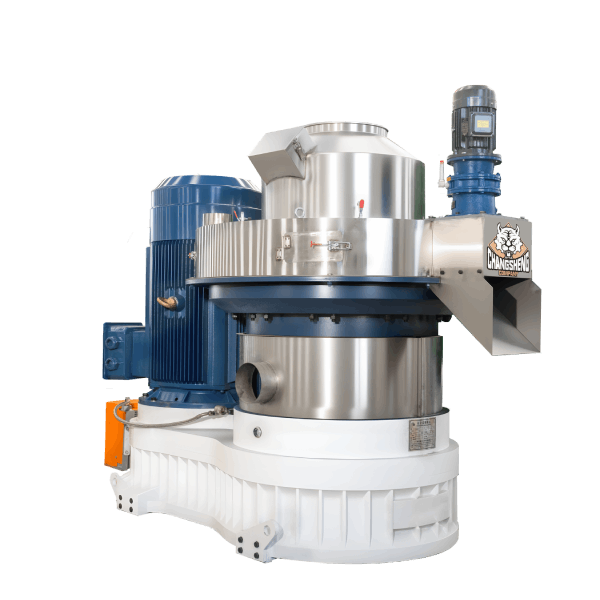
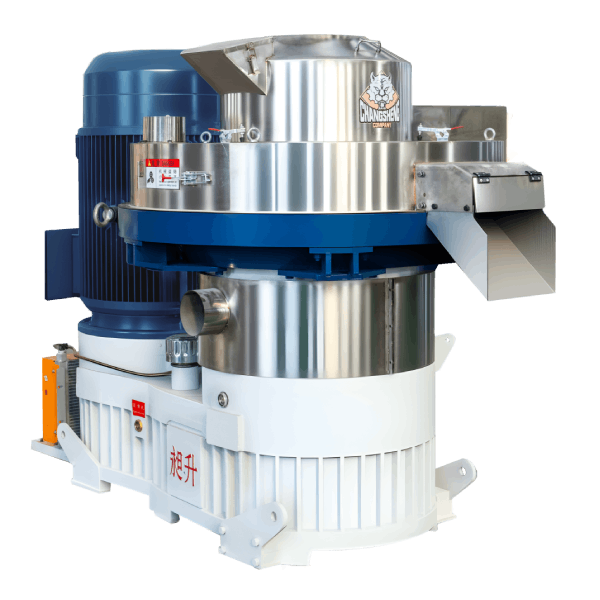
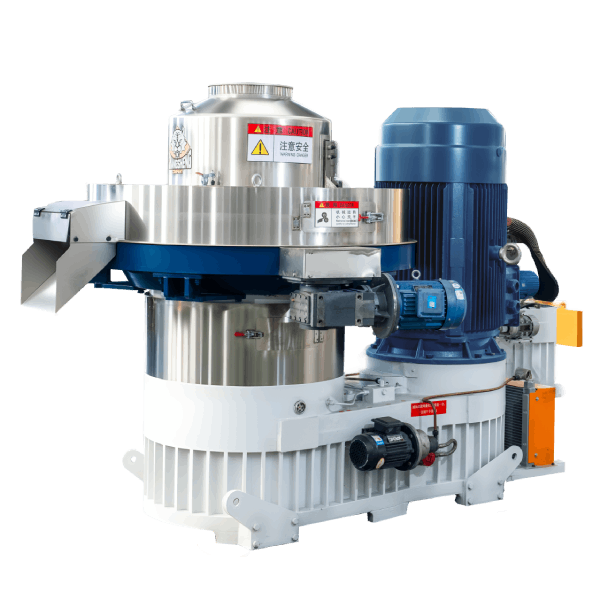
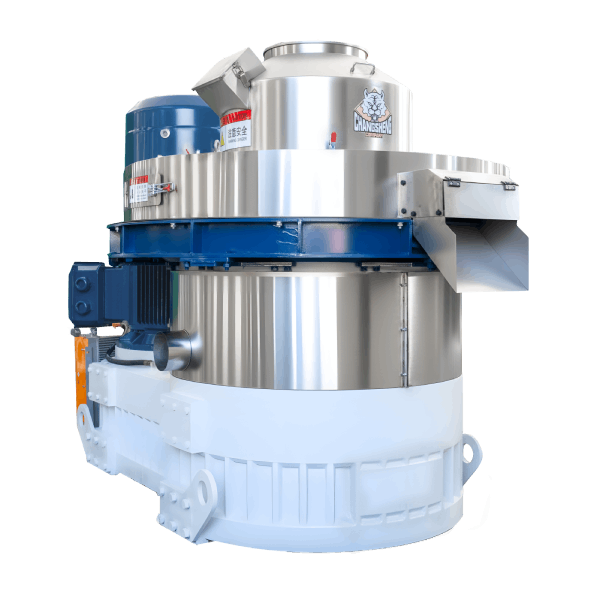
A pellet mill for New Zealand is a ring die or flat die densification system designed for NZ forestry residues (pine, macrocarpa, eucalyptus), agricultural wastes, or feed materials, compliant with 230V/400V 50Hz electrical standards and NZ safety regulations.
2. Technical Parameters & Specifications
| Parameter | Small Farm/Hobby | Small Business | Medium/Large Commercial |
|---|---|---|---|
| Capacity (kg/h) | 50 – 150 | 150 – 500 | 500 – 5,000 |
| Motor Power (kW/HP) | 2.2 – 7.5 (3-10 HP) | 7.5 – 22 (10-30 HP) | 22 – 160 (30-215 HP) |
| Die Type | Flat die | Flat or small ring | Ring die |
| Die Diameter (mm) | 150 – 200 | 200 – 300 | 320 – 760 |
| Die Material – Softwood | GCr15 (HRC 52-56) | GCr15 or 20CrMnTi | 20CrMnTi |
| Die Life – Pine (hours) | 500 – 800 | 600 – 1,000 | 1,500 – 2,500 |
| Die Life – Macrocarpa (hours) | 400 – 600 | 500 – 800 | 1,200 – 2,000 |
| Finished Pellet Diameter (mm) | 6, 8 | 6, 8, 10 | 6, 8, 10, 12 |
| Optimal Moisture – Pine (%) | 15 – 18 | 15 – 18 | 15 – 18 |
| Power Requirement | 230V single-phase or 400V three-phase | 400V three-phase | 400V three-phase |
| Frequency | 50Hz | 50Hz | 50Hz |
For New Zealand delivery: Request a pellet mill New Zealand quotation with 230V/400V 50Hz motors, upgraded die for NZ pine, and delivery to Auckland or Christchurch.
3. Structure & Material Composition
New Zealand-Specific Design Features
Forestry Feedstock Characteristics
- Radiata pine: 85% of NZ plantation forestry – excellent for pellets (low ash, high lignin)
- Macrocarpa: Denser, higher energy – moderate abrasion
- Douglas-fir: Good pelting characteristics
- Eucalyptus (NZ grown): Higher ash, more abrasive – upgraded die required
- Wood residues: Sawmill residue (sawdust, shavings), forest harvest residues
Electrical (NZ Standard – AS/NZS 3000)
- Voltage: 400V three-phase (industrial) or 230V single-phase (rural homes)
- Frequency: 50Hz (same as Australia)
- Control panel: AS/NZS 61439 compliant
- Motor: IE3 efficiency minimum
- RCD protection: 30mA required (AS/NZS 3000)
Climate Adaptations
- High rainfall areas (West Coast, Southland): Corrosion protection required
- Coastal areas: Epoxy coating, stainless hardware
- Seismic: NZ has earthquake risk – equipment must be braced/secured
4. Manufacturing Process (Engineering Steps)
Step 1 – Raw Material: NZ Forestry Residues
Sources: Sawmills (sawdust, shavings), forest harvest residues (hog fuel), pruning waste
Characteristics: Radiata pine: low ash (<1%), high lignin (excellent binding)
Storage: Covered storage essential (NZ high rainfall – West Coast, Southland, Northland)
Step 2 – Drying
Equipment: Rotary dryer (biomass-fired) or air drying (if climate permits – Canterbury, Central Otago)
Challenge: Much of NZ has high humidity (West Coast 80%+). Air drying difficult. Mechanical drying recommended.
Control: Reduce moisture from 40-50% (green) to 15-18%
Step 3 – Grinding
Equipment: Hammer mill with 4-6mm screens
Energy: Pine is relatively easy to grind
Safety: Spark detection essential (wood dust explosion risk – AS 4024.1)
Step 4 – Pelletizing
Equipment: Ring die pellet mill (for commercial) or flat die (small scale)
Control: Die temperature 80-110°C, motor load 85-95%
NZ context: Ideal for pine (natural lignin binder)
Step 5 – Cooling & Screening
Equipment: Counterflow cooler + screener
Control: Cool to ambient +5°C (NZ summer 25-30°C → pellets 30-35°C)
Step 6 – Bagging & Storage
Market: 15kg bags (Bunnings, Mitre 10, Farmlands, RD1) or bulk bags (1m³)
Storage: Dry warehouse required (NZ high rainfall)
5. Industry Comparison
| Parameter | Chinese Import (Direct) | NZ Distributor | NZ Manufacturer | Used Equipment |
|---|---|---|---|---|
| Price (NZD) | $4k – 800k | $8k – 1.2M | $10k – 1.5M | $2k – 400k |
| AS/NZS compliance | Optional (verify) | Yes | Yes | Unknown |
| GST (15%) | Pay at customs (reclaimable) | Included | Included | As-is |
| Delivery time | 12-20 weeks | 1-4 weeks | 8-20 weeks | Immediate |
| Spare parts | Ship from China (2-4 weeks) | NZ stock | NZ stock | Unknown |
| Technical support | Remote (video) | Local phone/visit | Local visit | None |
| Radiata pine die life | Good (NZ pine is kind) | Good | Good | Unknown |
| Why Choose Shandong Changsheng | Best price, NZ-friendly specs | Convenience premium | Highest price | High risk |
Compare NZ sourcing options: Request factory-direct price vs NZ distributor quote.
6. Application Scenarios (By Buyer Role)
Distributors / Importers
Stocking pellet mill New Zealand models for sawmills (rotorua, Nelson, Southland), farms, and feed mills. Decision focus: AS/NZS compliance, spare parts in Auckland/Christchurch, pine-optimized dies.
EPC Contractors
Specifying pellet lines for NZ wood pellet plants (growing export market to Japan/Korea). Decision focus: ENplus A1 certification (export requirement), seismic bracing, and wet climate drying solutions.
Engineering Consultants / Technical Advisors
Advising NZ clients. Decision focus: payback period (12-24 months), export market (Japan, Korea coal co-firing), and carbon credits (ETS – Emissions Trading Scheme).
End-user Facilities
Sawmills (Rotorua, Nelson, Taupo, Southland), farms (Canterbury, Waikato), feed mills, export pellet plants.
7. Core Technical Pain Points & Engineering Solutions
Pain Point 1 – High Rainfall = Wet Feedstock
Problem: NZ’s West Coast, Southland, Northland receive 2-5m rainfall annually. Green sawdust 40-50% moisture. Air drying impossible.
Root cause: Maritime climate, high humidity year-round.
Solution: Invest in rotary dryer (biomass-fired using waste wood). Budget $50k-200k. Covered storage for dry material. Consider belt dryer (more efficient for <40% moisture). Plan for drying cost (40-60% of plant energy).
Pain Point 2 – Seismic Bracing Requirements
Warning: NZ is earthquake-prone (Christchurch 2011, Kaikōura 2016). Unbraced equipment can topple, causing injury and damage.
Mitigation: Anchor all equipment to concrete foundation (engineered). Use seismic restraints on pipes, ducts, control panels. AS/NZS 1170 (structural design actions) compliance. Add 5-10% to installation cost.
Pain Point 3 – Export Certification (ENplus A1) for Japan/Korea Market
Problem: NZ pellets exported to Japan and Korea require ENplus A1 certification (ash <0.7%, PDI >97.5%). Pine is ideal (low ash), but production process must maintain quality.
Root cause: Export specifications stricter than domestic.
Solution: Install screener after cooler (remove fines). Monitor PDI weekly. ENplus certification audit by SGS or TÜV. Add $10k-30k for certification preparation.
Pain Point 4 – Long Distance from Port to Site (South Island)
Problem: Inland freight from Auckland or Christchurch to remote areas (Southland, West Coast, Gisborne) expensive (NZD $5k-20k per container).
Root cause: NZ geography – South Island ports: Lyttelton (Christchurch), Port Chalmers (Dunedin), Nelson. North Island: Auckland, Tauranga, Napier, Wellington.
Solution: Ship to nearest port (e.g., Nelson for sawmills near Nelson, Port Chalmers for Southland). Use local freight companies. Consolidate multiple containers to reduce cost.
8. Risk Warnings & Mitigation Strategies
Risk 1 – Drought Affects Pine Resin (Fire Risk)
Warning: During NZ droughts (e.g., summer 2019-20), pine resin content increases. Dry material (<10% moisture) can ignite in die.
Mitigation: Monitor moisture at feeder (maintain 15-18%). Add water spray if too dry. Install die temperature sensor (alarm at 120°C). Keep fire extinguisher on site.
Risk 2 – GST and Import Cash Flow
Warning: 15% GST payable at customs clearance. Cash flow impact for small businesses ($5k-50k tied up until next GST return).
Mitigation: Register for GST before importing. Claim GST credit on next GST return (monthly or bi-monthly). Use customs broker to manage payment.
Risk 3 – No Local Support for Imported Machines
Warning: Machine breaks down, supplier’s technician is in China. Downtime 4-8 weeks while waiting for parts or remote diagnosis.
Mitigation: Ask for NZ support partners before purchase. Stock critical spare parts (die, rollers, belts, bearings). Contract with local mechanical workshop for repairs. Choose supplier with NZ-based remote support (same time zone, English speaking).
9. Procurement Selection Guide (6 Actionable Steps)
Step 1 – Determine your scale
Home/hobby (under 10 t/year): flat die, 230V single-phase. Small business (10-200 t/year): flat die or small ring die, 400V three-phase. Commercial (200+ t/year): ring die, full line with dryer.
Step 2 – Verify power supply
Check site: 400V three-phase (most industrial). 230V single-phase (rural homes/small farms). Upgrade electrical if needed (NZD $10k-40k).
Step 3 – Choose delivery port
North Island: Auckland (largest), Tauranga (for Bay of Plenty sawmills), Napier (Hawke’s Bay), Wellington. South Island: Lyttelton (Christchurch), Port Chalmers (Dunedin – for Southland), Nelson (for Nelson sawmills). Ship to nearest port to save inland freight.
Step 4 – Calculate total landed cost to site
Formula: FOB price + ocean freight (NZD 3k−8kper20ft)+customsduty(0−5500-2k) + inland freight (NZD 1k−15k)+electricalinstallation(NZD5k-30k). Example: NZD 50kequipment→NZD75k-100k installed.
Step 5 – Request AS/NZS compliance documentation
AS/NZS 3000 (electrical), AS 4024.1 (safety), AS/NZS 61439 (control panel). Verify before shipment. If not available, budget for local modifications (NZD $5k-20k).
Step 6 – Negotiate NZ-friendly terms
Target: 30% deposit, 40% against shipping documents, 30% after commissioning. 12-month warranty with NZ-based remote support. Spare parts in Auckland or Christchurch warehouse (1-2 day delivery).
10. Engineering Case Study
Project Background: A sawmill in Nelson (South Island) processed 10,000 tons/year of radiata pine sawdust (40% moisture). Mill paid NZD $200,000/year for diesel for drying kiln. Wanted to pelletize sawdust for on-site boiler fuel.
Initial Problem: Mill purchased USED pellet mill from North Island dealer (NZD $45,000). After 6 months: die life 600 hours (acceptable for pine). But mill had no dryer (sawdust too wet at 40%). Pellets crumbled, boiler efficiency poor. Dealer no longer responding.
Root Cause Analysis:
- No dryer (assumed feedstock would be dry – it wasn’t)
- Used machine had no spare parts available
- Dealer support non-existent
- Wet pellets caused boiler clinkers
Solution Implemented (Shandong Changsheng NZ-spec):
- New 0.8 t/h ring die pellet mill with dryer (NZD $180,000)
- 20CrMnTi die for extended life (NZD $8,000 spare)
- Rotary dryer using waste wood as fuel
- Delivery to Nelson port (direct, saved freight)
- AS/NZS 3000 compliant control panel
Final Data Results (12 months operation):
| Metric | Used Mill (Failed) | New NZ-Spec Line |
|---|---|---|
| Die life (hours) | 600 | 2,100 |
| Dryer included | No | Yes (waste wood fired) |
| Annual pellet production | 0 (failed) | 800 tons |
| Diesel displacement | NZD $0 | NZD $160,000/year |
| Pellet sales (export) | NZD $0 | NZD $400,000/year |
- Equipment investment: NZD 180,000+8,000 = $188,000
- Annual savings + revenue: 160k+400k = $560,000
- Payback: 4 months
Request a New Zealand feasibility study: Contact engineering team with your location, feedstock, and power supply.
11. FAQ
Q1: What is the price of a pellet mill in New Zealand?
Chinese import (direct): NZD 4,000–800,000FOB+shipping+158,000 – 1.2M (GST included). Used: NZD $2,000 – 400,000.
Q2: What is the best pellet mill for radiata pine in NZ?
Pine is excellent – low ash (<1%), high lignin. Ring die with GCr15 or 20CrMnTi die. Expected die life 1,500-2,500 hours. Flat die acceptable for small scale (500-800 hours).
Q3: Do I need a dryer for a pellet mill in New Zealand?
Most of NZ has high rainfall – green sawdust from sawmills is 40-50% moisture. Yes, dryer required unless you source kiln-dried sawdust (rare, expensive). Rotary dryer using waste wood as fuel is standard.
Q4: What about the West Coast and Southland high rainfall?
West Coast (Greymouth, Hokitika) and Southland (Invercargill) receive 2-5m rainfall annually. Covered storage essential. Dryer mandatory. Air drying impractical.
Q5: Can I export pellets from New Zealand?
Yes. Main market: Japan and South Korea for coal co-firing. ENplus A1 certification required (ash <0.7%, PDI >97.5%). Radiata pine ideal. Shipping from Tauranga, Nelson, Lyttelton, Port Chalmers.
Q6: What is the GST on pellet mills in New Zealand?
15% GST payable at customs (imported) or included in local price. Reclaimable for GST-registered businesses. Small businesses without GST registration pay additional 15%.
Q7: What import duties apply to pellet mills?
HS code 8436.80.00 or 8479.82.00. Duty rate 0-5% (most machinery duty-free). Use customs broker for classification.
Q8: How long does delivery take to New Zealand?
Manufacturing: 8-12 weeks. Ocean freight: 15-20 days (China to Auckland). Customs: 1-2 weeks. Inland freight: 1-5 days (to major centers). Total: 3-5 months from order.
Q9: What is the typical payback for a pellet mill in NZ?
12-24 months for sawmills with free waste wood. 24-36 months for agricultural residues. Export markets (Japan/Korea) provide higher revenue.
Q10: What about seismic bracing for pellet mills?
NZ earthquake risk (Christchurch, Wellington, Hawke’s Bay, Fiordland). Equipment must be anchored to foundations. Control panels braced. AS/NZS 1170 compliance. Add 5-10% to installation cost.
Q11: Are spare parts available in New Zealand?
Some suppliers stock dies, rollers in Auckland or Christchurch. Ask before purchase. Stock critical spares yourself (die NZD $5k-15k). Local engineering shops can recondition dies.
Q12: What feedstocks work best in NZ?
Radiata pine (best – 85% of NZ plantation forestry). Macrocarpa (good). Douglas-fir (good). Eucalyptus (higher ash – upgraded die). Sawmill residues (sawdust, shavings) – cheapest. Forest harvest residues (more expensive to collect).
Q13: Do I need resource consent for a pellet plant?
Yes. Depends on scale and location. Check with local council. Smaller operations (under 0.5 t/h) may have fewer requirements. Existing industrial site may have consent already.
Q14: Can I get financing for a pellet mill in NZ?
Yes. Major banks (ANZ, ASB, BNZ, Westpac) offer equipment finance. Leasing or chattel mortgage (3-7 year terms, 6-12% interest). Some regional development funding available (Kānoa – Regional Economic Development).
Q15: Do you have service support in New Zealand?
Contact engineering team for current NZ support network. Remote support available (Zoom/Teams, NZ time zone). Spare parts shipped from Auckland stock (1-2 days delivery North Island, 2-3 days South Island).
12. Commercial Call-to-Action
For New Zealand sawmills, farms, and investors: Request a pellet mill New Zealand quotation with AS/NZS compliance, 230V/400V 50Hz motors, and delivery to Auckland or Christchurch.
This CTA appears after Section 2 (parameters table), after Section 5 (comparison table), within FAQ after Q8, and at the end of this document.
Need a feasibility study for NZ conditions? Contact the engineering team with your location (region), feedstock (pine, macrocarpa, etc.), and power supply for customized analysis including drying requirements and seismic bracing.
Looking for export certification (ENplus A1) guidance? Request information on ENplus preparation for Japan/Korea export markets.
To proceed: Send your inquiry via the contact form. Include your region (North Island/South Island, specific town), feedstock (pine, macrocarpa, etc.), power supply, and target usage (domestic heating, export).
13. Author & E-E-A-T Credentials
Author: Zhang Wei
New Zealand & Pacific Markets Specialist
- 11 years in pellet equipment export to New Zealand (2014–present)
- Deployed 15+ pellet mills to NZ (Nelson, Rotorua, Canterbury, Southland, Waikato)
- AS/NZS 3000 compliance expert for NZ electrical standards
- Author of “Pellet Production Guide for New Zealand” (China Machine Press, 2023)
- Member of the Bioenergy Association of New Zealand (BANZ)
Affiliation: Shandong Changsheng Machinery Co., Ltd.
The author has directly managed New Zealand deliveries for pellet mill applications at sawmills (Nelson, Rotorua), farms (Canterbury), and export pellet plants, validated die life for radiata pine, and navigated AS/NZS compliance and seismic bracing. All specifications, pricing data, and regulatory requirements are derived from actual New Zealand installations from 2018–2026.