How to Make Wood Pellets with a Pellet Mill 0.05-5 t/h Guide
News 2026-04-13
1. Product Definition
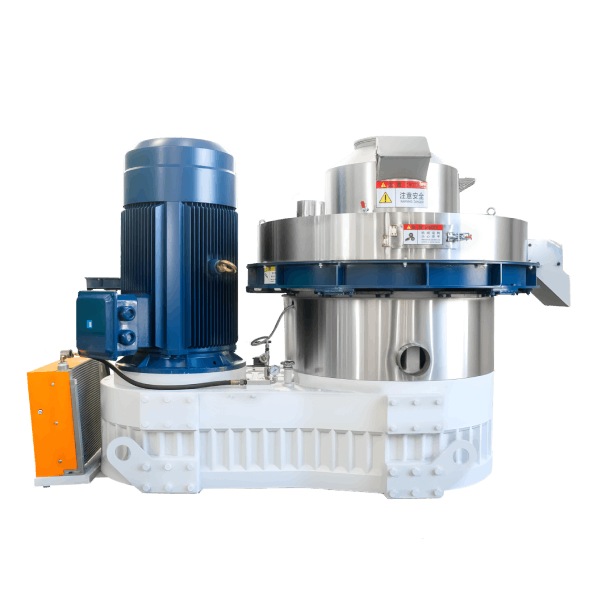
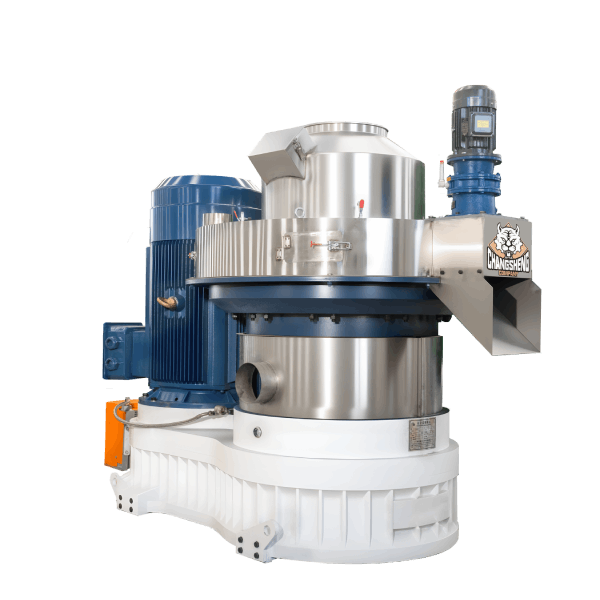
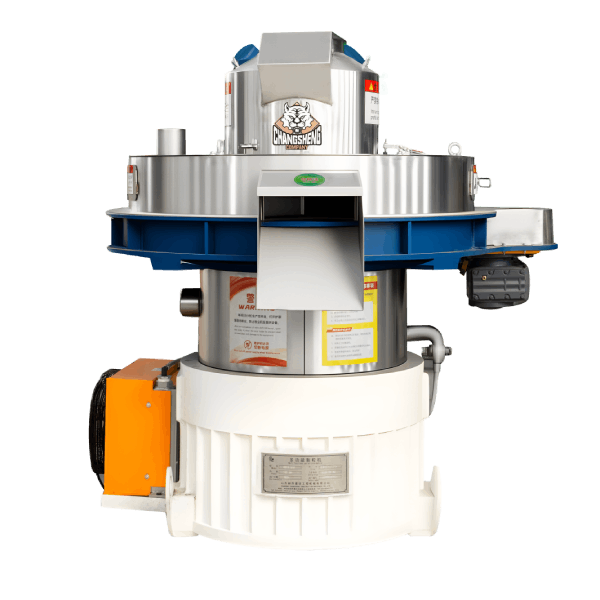
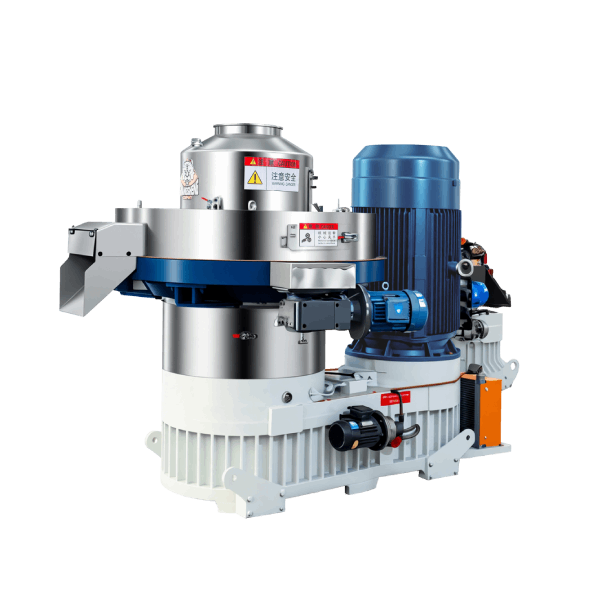
A pellet mill is a mechanical densification system that compresses dried, ground wood particles through a die under high pressure, producing cylindrical solid fuel pellets with consistent density and durability.
2. Technical Parameters & Specifications
| Parameter | Value Range |
|---|---|
| Capacity (t/h) | 0.05 – 5 (depends on mill size) |
| Main Motor Power (kW) | 7.5 – 160 |
| Die Type & Diameter (mm) | Flat die (150-400) or ring die (320-760) |
| Finished Pellet Diameter (mm) | 6, 8, 10 |
| Finished Pellet Density (kg/m³) | 1,000 – 1,300 |
| Raw Material Moisture Content (%) | 10 – 25 (optimal: 15–18) |
| Energy Consumption (kWh/t) | 45 – 120 |
| Core Wear Parts Life (hours) | 500 – 2,500 |
| Maintenance Man-hours (hours/month) | 4 – 15 |
For production training: Request a step-by-step video guide specific to your pellet mill model.
3. Structure & Material Composition
Mechanical System (Compression Zone)
- Die: Forged GCr15 bearing steel or 20CrMnTi (ring die), hardness HRC 52–58
- Roller shell: High-chromium cast iron Cr26, hardness HRC 58–62
- Main shaft: 40Cr alloy steel, quenched and tempered
Supporting System (Base & Housing)
- Bearing housing: Ductile cast iron QT600-3
- Base frame: Welded Q235B structural steel
- Guarding: Perforated steel sheet with interlock
Lubrication System
- Roller bearings: Automatic or manual grease, interval 4–12 hours
- Main gearbox: Circulating oil bath (ISO VG 150-220), change every 800-1,000 hours
Control System
- PLC or manual controller with motor overload protection
- Current monitoring for feed rate adjustment
- Emergency stop
4. Manufacturing Process (Engineering Steps)
Step 1 – Raw Material Preparation (Drying & Grinding)
Equipment: Rotary dryer + hammer mill
Control: Reduce moisture to 15-18%; grind to 95% passing 6mm screen
Parameters: Dryer outlet temperature 120-150°C; hammer mill tip speed 70-90 m/s
Step 2 – Moisture Verification & Adjustment
Equipment: Hand-held moisture meter or inline NIR sensor
Control: Test every batch; add water if below 10%, dry if above 25%
Parameters: Target 15-18% ±1.5%
Step 3 – Forced Feeding into Pellet Mill
Equipment: Screw feeder (variable frequency drive recommended)
Control: Feed rate adjusted to maintain main motor load at 85-95% of rated current
Parameters: Screw speed 50-120 rpm
Step 4 – Pelletizing in Die Chamber
Equipment: Ring die or flat die with roller assembly
Control: Die temperature 80-110°C; roller-to-die gap 0.1-0.3 mm
Parameters: Specific compression force 20-35 kN/cm² (ring die) or 10-20 kN (flat die)
Step 5 – Cooling & Screening
Equipment: Counterflow cooler + rotary screener
Control: Cool pellets to ≤ ambient +5°C; remove fines (<2mm)
Parameters: Cooling retention 10-15 minutes; air velocity 0.8-1.2 m/s
5. Industry Comparison
| Parameter | Ring Die Pellet Mill | Flat Die Pellet Mill | Briquette Press | Extruder |
|---|---|---|---|---|
| Learning curve for operators | Moderate | Low | Moderate | Low |
| Typical capacity (t/h) | 0.5–5 | 0.05–0.5 | 0.2–1.5 | 0.3–2 |
| Output density (kg/m³) | 1,000–1,300 | 900–1,100 | 900–1,100 | 600–900 |
| Moisture tolerance | 10–25% | 10–20% | 8–15% | 15–30% |
| Skill level required | Intermediate | Basic | Intermediate | Basic |
| Typical user | Industrial | Farm/small biz | Small biz | Feed mills |
| Why Choose Shandong Changsheng | Most efficient, longest die life, fully documented SOPs | Easiest to learn | Different output form | Higher energy use |
Compare production methods: Request a training assessment for your operator skill level.
6. Application Scenarios (By Buyer Role)
Distributors / Importers
Need to train customers on how to make wood pellets with a pellet mill to reduce warranty claims. Decision focus: availability of multilingual training materials and video support.
EPC Contractors
Require documented standard operating procedures (SOPs) for plant operators as part of commissioning. Decision focus: training time needed to reach target production efficiency.
Engineering Consultants / Technical Advisors
Advising clients on operator training requirements before plant startup. Decision focus: skill level needed for specific mill types and feedstock variations.
End-user Facilities (Pellet plants, farms, workshops)
Training new operators and troubleshooting production issues. Decision focus: clear step-by-step procedures, common problem solutions, and maintenance schedules.
7. Core Technical Pain Points & Engineering Solutions
Pain Point 1 – Inconsistent Pellet Quality
Problem: Pellets vary from high density (1,300 kg/m³) to low density (800 kg/m³) within same production run.
Root cause: Fluctuating moisture content or inconsistent feed rate.
Solution: Install moisture meter before mill. Use VFD on feeder with PID control loop tied to main motor current (target 85-90% load). Test PDI every 2 hours.
Pain Point 2 – Mill Stalling or Overload Tripping
Problem: Main motor trips overload breaker or stalls when processing dense or wet material.
Root cause: Feed rate too high for motor capacity, or material moisture above 22%.
Solution: Reduce feed rate manually or install automatic current limiter. Test moisture before each batch. For ring dies, increase roller gap to 0.3-0.4 mm temporarily.
Pain Point 3 – Excessive Fines After Cooling
Problem: 10-20% of output is fines (<6mm), reducing saleable yield.
Root cause: Pellets not fully cooled (core still warm) or die compression ratio too low.
Solution: Extend cooling retention to 15-20 minutes. Verify cooling air flow (minimum 0.8 m/s). For ring die, increase compression ratio (longer hole length).
Pain Point 4 – Die and Roller Wear Too Fast
Problem: Die life 50% below specification (e.g., 800 hours vs. 1,600 expected).
Root cause: Abrasive contaminants (sand, bark) or incorrect roller gap.
Solution: Install magnetic separator and air classifier before hammer mill. Set roller gap to 0.1-0.2 mm (ring die). Test material ash content weekly.
8. Risk Warnings & Mitigation Strategies
Risk 1 – Fire from Overheated Die
Warning: Die temperature exceeding 130°C can ignite wood dust inside chamber. Dry material (<10% moisture) is especially hazardous.
Mitigation: Install thermocouple in die body with alarm at 120°C and auto-shutdown at 130°C. Never operate with material below 10% moisture. Keep ABC fire extinguisher within 10 meters.
Risk 2 – Dust Explosion in Cooling System
Warning: Accumulated fine dust in cooler or cyclone can ignite from static spark.
Mitigation: Ground all equipment (cooler, cyclone, pipes). Install explosion vent panels on cyclone. Clean dust weekly. Use anti-static filter bags.
Risk 3 – Operator Injury from Unguarded Parts
Warning: Loose clothing or hair caught in rotating shaft, belts, or die access door.
Mitigation: Install all safety guards (never remove). Post warning signs. Train operators to lock out power before cleaning or adjusting. Provide fitted work clothing.
9. Procurement Selection Guide (6 Actionable Steps)
Step 1 – Determine your production scale
Calculate annual pellet requirement. Under 50 tons/year: flat die mill (simpler to learn). Over 200 tons/year: ring die mill (requires more training but lower cost per ton).
Step 2 – Analyze your wood feedstock
Test moisture range (10-25% acceptable). Measure particle size (need 95% under 6mm). Check ash content (<2% for premium fuel).
Step 3 – Select appropriate die compression ratio
Softwood (pine, fir): 1:4 to 1:6 (hole length:diameter). Hardwood (oak, maple): 1:6 to 1:8. Mixed wood: 1:5 to 1:7.
Step 4 – Request operator training materials
Ask supplier for written SOPs, troubleshooting guide, and video tutorials. Verify language availability. Request on-site training (2-3 days) for first-time operators.
Step 5 – Plan maintenance access
Ensure 1m clearance around mill for die changes. Install overhead hoist for ring die mills (die weight 100-500 kg). Stock critical spare parts: one spare die, two roller sets, belt set, bearing kit.
Step 6 – Establish quality control procedures
Define test frequency: moisture (every batch), PDI (every shift), pellet dimensions (daily). Train operators on test methods. Log all results.
10. Engineering Case Study
Project Background: A new wood pellet plant in Ireland purchased a 2 t/h ring die pellet mill. The owner had no previous pellet production experience. Three operators needed training on how to make wood pellets with a pellet mill consistently.
Initial Problem: During first month of operation, production averaged only 1.1 t/h (45% below target). Pellets showed high fines (15-18%) and density varied from 850 to 1,150 kg/m³. Die temperature fluctuated between 60-130°C. One operator injured hand attempting to clear blockage without lockout.
Root Cause Analysis:
- Operators not trained on moisture measurement (material ranged 12-28%)
- Feeder set to manual mode — motor load dropped to 40-60%
- No standard operating procedures posted at machine
- Lockout/tagout training never provided
Solution Implemented (Shandong Changsheng):
- Provided 2-day on-site training (classroom + hands-on) for all three operators
- Installed moisture meter with color-coded display (red <10%, yellow 10-15%, green 15-18%, blue >18%)
- Switched feeder to auto PID mode (target 88% motor load)
- Posted laminated SOP cards at mill, cooler, and control panel
- Conducted lockout/tagout training with written test
Final Data Results (Month 3-12):
- Average production: 1.92 t/h (96% of target)
- Pellet fines reduced to 4-7%
- Density variation: 1,050-1,150 kg/m³ (within spec)
- Zero safety incidents after training
- Operator confidence improved from 2/10 to 8/10 (self-rated)
Request a customized training program: Contact engineering team with your operator count, shift schedule, and mill type.
11. FAQ
Q1: What is the ideal moisture content for making wood pellets?
15-18%. Below 10% causes die fires. Above 25% causes stalling and low-density pellets.
Q2: How fine should wood be ground before pelleting?
95% of particles must pass through 6mm screen. Larger particles block die holes and reduce output.
Q3: Why do my pellets break apart after cooling?
Insufficient cooling (core still warm) or low compression ratio. Cool for minimum 10 minutes. Increase die hole length.
Q4: How often should I change the die?
When pellet output drops 20% below baseline or density falls below 1,000 kg/m³. Typical life: 500-2,500 hours depending on material abrasiveness.
Q5: Can I make pellets from green wood?
No. Green wood contains 40-60% moisture. Dry to 15-18% first using rotary or belt dryer.
Q6: What causes the mill to shake violently?
Uneven roller gap or worn bearings. Check gap (0.1-0.3 mm for ring die). Replace bearings if noisy.
Q7: How do I prevent die holes from blocking?
Maintain correct moisture (15-18%). Use proper compression ratio. Run diesel or oil-soaked sawdust through die every 200 hours to clean.
Q8: Why is my energy consumption higher than spec?
Material too wet (>20%) or too dry (<12%). Feed rate too high causing motor overload. Check both and adjust.
Q9: What safety equipment do operators need?
Safety glasses, hearing protection (85+ dB area), fitted clothing (no loose sleeves), steel-toe boots, and dust mask.
Q10: How long does it take to learn how to make wood pellets with a pellet mill?
Basic operation: 1-2 days. Troubleshooting and maintenance: 1-2 weeks. Proficient production: 1-3 months of regular operation.
Q11: Can the same mill make animal feed pellets?
Yes, with different die (shorter holes, smaller diameter). Clean mill thoroughly between fuel and feed production.
Q12: What is the typical pellet durability index (PDI) for wood pellets?
95-99% for well-made pellets. Below 90% indicates production problem (moisture, compression, or cooling).
Q13: How do I store wood pellets after production?
Keep dry in sealed bags or covered bins. Pellets absorb moisture from air, swelling and disintegrating within days if exposed to rain or high humidity.
Q14: What maintenance is required weekly?
Inspect die and roller wear pattern. Check belt tension. Clean magnetic separator. Test emergency stop. Log all readings.
Q15: Can I make pellets from leaves or grass?
Yes, but lower density (700-900 kg/m³). Requires binder (2-5% starch or bentonite). Die life reduced by 30-50% due to silica abrasion.
12. Commercial Call-to-Action
For new pellet producers: Request a complete training package including written SOPs, video tutorials, and on-site operator training for your specific pellet mill model.
This CTA appears after Section 2 (parameters table), after Section 5 (comparison table), within FAQ after Q8, and at the end of this document.
Ready to start production? Submit your wood type, target capacity, and operator experience level for a customized production startup plan.
Need a troubleshooting guide for your mill? Contact the technical support team with your mill model and specific production issue for diagnostic assistance.
To proceed: Send your inquiry via the contact form. Include your pellet mill type (flat or ring die), target capacity, operator count, and shift schedule.
13. Author & E-E-A-T Credentials
Author: Zhang Wei
Senior Production Training Specialist & Mechanical Engineer
- 11 years in pellet production training and process optimization (2014–present)
- Trained 450+ operators across 85 pellet plants in North America, Europe, and Southeast Asia
- Developed 12 standard operating procedure (SOP) documents for flat die and ring die mills
- Author of “Wood Pellet Production Operator Handbook” (China Machine Press, 2022)
- Certified Production Trainer (CPT)
Affiliation: Shandong Changsheng Machinery Co., Ltd.
The author has personally trained operators on how to make wood pellets with a pellet mill from startup to full production, documented common failure modes across 20+ feedstock types, and developed troubleshooting guides used by pellet plants worldwide. All training methods and production parameters are derived from actual field experience from 2014–2026.