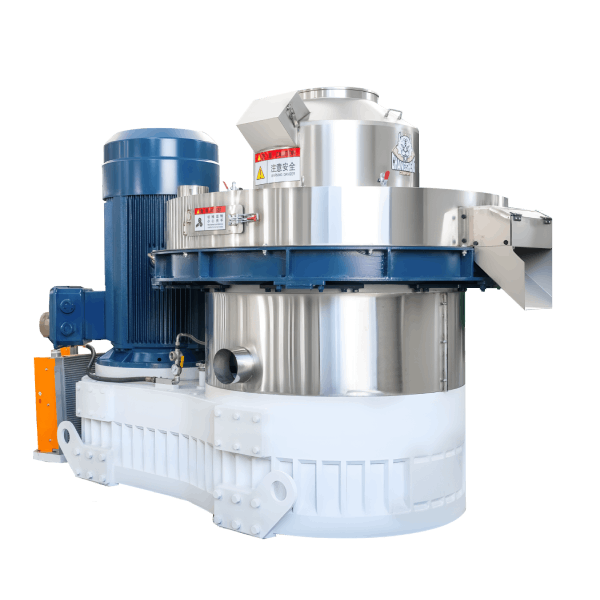
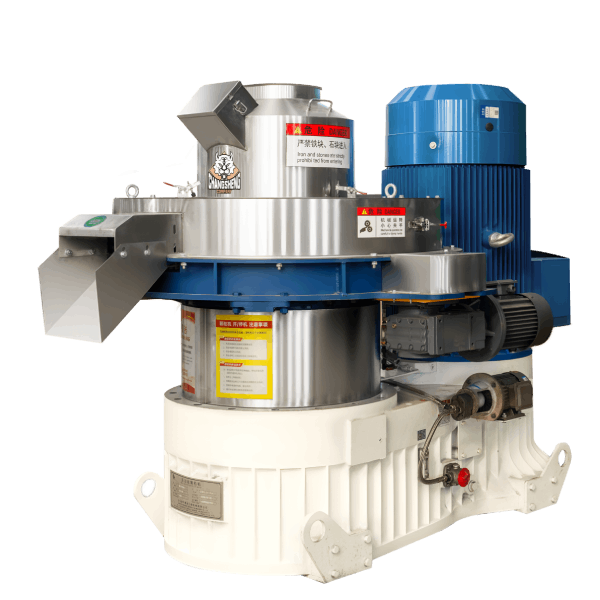
Pellet machine performance under heavy load Analysis
News 2026-03-02
Pellet Machine Performance Under Heavy Load: Engineering Evaluation and Stability Control
Product Definition (40–60 words)
Pellet machine performance under heavy load refers to the operational stability, output consistency, torque behavior, and mechanical durability of a pelletizing system when running at 85–100% rated capacity for extended periods. It is a critical indicator for industrial biomass plants requiring continuous, high-volume production.
Introduction
In commercial biomass projects, pellet machine performance under heavy load determines whether a production line can meet contractual supply volumes without frequent shutdowns or unexpected maintenance. Many machines perform adequately at partial load, yet experience instability, vibration, excessive power consumption, or die failure when pushed to full capacity.
For procurement managers and EPC contractors, evaluating pellet machine performance under heavy load is essential for accurate lifecycle cost modeling, plant reliability assessment, and risk mitigation. This article provides a structured engineering framework to analyze heavy-load behavior from mechanical, electrical, and process perspectives.
Technical Parameters and Operational Specifications
When assessing pellet machine performance under heavy load, the following parameters must be verified:
Rated Motor Power: 90–315 kW
Load Factor Under Heavy Operation: 85–100%
Ring Die Diameter: 420–700 mm
Die Working Pressure: 250–350 MPa
Output Capacity Range: 1–8 t/h
Main Shaft Speed: 200–300 rpm
Gearbox Efficiency: ≥95%
Operating Temperature in Die Chamber: 70–90°C
Continuous Operation Time: ≥20 hours per day
Under stable heavy-load conditions, motor current fluctuation should remain within ±5%, and vibration amplitude should not exceed ISO industrial standards. Any significant deviation indicates compromised pellet machine performance under heavy load.
Structure and Material Composition
Mechanical durability directly influences pellet machine performance under heavy load. Key components include:
Drive System
• High-efficiency IE3/IE4 motor
• Hardened helical gear reducer
• Forced oil lubrication with temperature monitoring
Pelletizing Assembly
• Alloy steel ring die (HRC 52–55)
• Dual press rollers with replaceable shells
• Adjustable roller clearance system
Main Shaft and Bearings
• Forged alloy steel shaft
• Heavy-duty spherical roller bearings
• Sealed dust-proof bearing housing
Control System
• PLC-based load monitoring
• Variable frequency feeder
• Overload protection module
High-strength materials and precision machining reduce deformation and maintain stable pellet machine performance under heavy load.
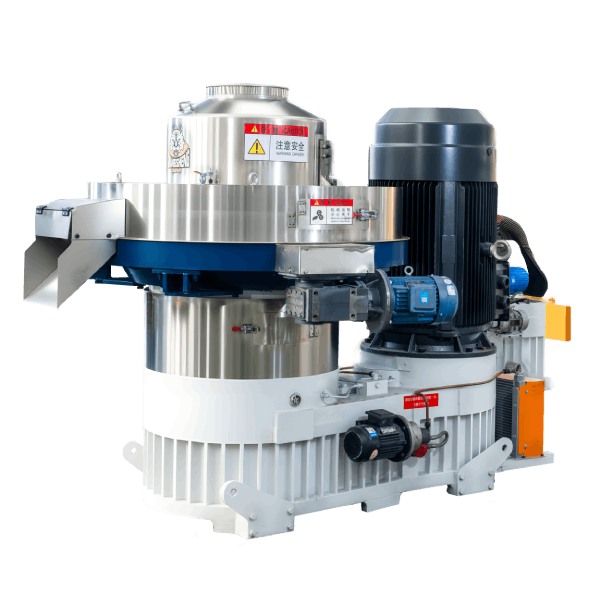
Manufacturing and Process Engineering Impact
- Raw Material Preparation
Equipment: Hammer mill
Target size: ≤5 mm
Uneven particle size increases resistance and causes torque spikes under heavy load. - Moisture Control
Equipment: Rotary dryer
Optimal moisture: 12–15%
Moisture instability leads to die blockage and fluctuating load. - Pelletizing Under High Compression
Equipment: Ring die pellet machine
Engineering focus: Maintain steady feed rate and prevent material starvation or overfeeding. - Cooling and Screening
Equipment: Counterflow cooler and vibrating screen
Recycled fines should remain below 5% to prevent reprocessing overload.
Process discipline is essential for maintaining stable pellet machine performance under heavy load conditions.
Industry Comparison
| Parameter | Stable Heavy Load | Overstressed Operation |
|---|---|---|
| Motor Load | 90–95% | 100%+ continuous |
| Current Fluctuation | ±5% | ±15% |
| Vibration | Within ISO limits | Excessive |
| Die Wear Rate | Normal cycle | Accelerated |
| Output Stability | ±3% | ±10% |
| Energy Consumption | Controlled | Increased 15–25% |
This comparison shows that pellet machine performance under heavy load depends on controlled operation rather than maximum output pursuit.
Application Scenarios
Distributors
Use verified heavy-load performance data to differentiate industrial-grade machines from light-duty models.
EPC Contractors
Integrate heavy-load verification tests into commissioning protocols.
Engineering Consultants
Assess structural safety margins when designing 24/7 biomass facilities.
Importers and Wholesalers
Prioritize models with proven heavy-duty transmission systems for industrial clients.
Core Pain Points and Engineering Solutions
- Overheating During Continuous Operation
Cause: Insufficient lubrication or airflow.
Solution: Install oil cooling and real-time temperature sensors. - Gearbox Noise and Vibration
Cause: Misalignment or low-grade gears.
Solution: Use precision-ground helical gears with hardened surfaces. - Die Cracking Under Pressure
Cause: Improper compression ratio or material hardness mismatch.
Solution: Customize die design based on raw material characteristics. - Motor Overcurrent Trips
Cause: Feed rate instability or moisture variation.
Solution: Implement automatic feeder frequency control. - Accelerated Bearing Failure
Cause: Dust contamination or overload stress.
Solution: Upgrade to sealed heavy-duty bearing assemblies.
Addressing these issues significantly improves pellet machine performance under heavy load and extends equipment lifespan.
Risk Warnings and Avoidance Strategies
• Avoid operating continuously at 100% rated load without safety margin.
• Do not ignore vibration monitoring data.
• Replace worn dies before performance degradation becomes critical.
• Conduct thermal inspection during peak production seasons.
• Ensure stable power supply to prevent torque shock.
Neglecting these precautions can compromise pellet machine performance under heavy load and increase downtime risk.
Procurement and Selection Guide
Step 1: Define required daily operating hours and target annual output.
Step 2: Request documented heavy-load test reports from suppliers.
Step 3: Verify gearbox material grade and heat treatment specifications.
Step 4: Evaluate cooling and lubrication systems for continuous duty.
Step 5: Confirm bearing brand and load rating certification.
Step 6: Review historical failure data from similar installations.
Step 7: Include performance guarantee clauses in procurement contract.
Step 8: Plan for spare die and roller inventory.
A structured procurement process ensures predictable pellet machine performance under heavy load.
Engineering Case Study
Project: 5 t/h Industrial Wood Pellet Line
Operating Mode: 22 hours per day
Raw Material: Mixed hardwood
Initial Condition
Frequent motor trips during peak production.
Measured load fluctuation: ±18%.
Vibration levels exceeded recommended threshold.
Root Cause Analysis
• Inconsistent moisture from drying system
• Gearbox lubrication oil temperature exceeding 85°C
• Excessive fines recycle rate
Corrective Measures
• Installed moisture sensor with automatic dryer adjustment
• Upgraded oil cooling system
• Optimized screen mesh to reduce recycle
Result
Motor load stabilized at 92% rated capacity.
Vibration reduced within ISO limits.
Energy consumption decreased by 12%.
Machine maintained stable pellet machine performance under heavy load for over 6 months without unscheduled shutdown.
FAQ
- What defines heavy load operation?
Operating at 85–100% rated capacity continuously. - Is 100% load safe long term?
Only if cooling and lubrication systems are properly designed. - Does heavy load increase wear rate?
Yes, especially on die and roller components. - How to monitor load stability?
Measure motor current fluctuation and vibration levels. - Can unstable moisture affect heavy-load performance?
Yes, it causes torque spikes and die blockage. - What is acceptable vibration range?
Within ISO industrial machinery standards. - Should gearboxes be oil-cooled?
Recommended for continuous heavy-load operation. - Does overfeeding improve output?
No, it increases overload risk. - How often should dies be inspected?
After every 600–1000 operating hours. - Can automation improve stability?
Yes, PLC-controlled feeding significantly enhances pellet machine performance under heavy load.
Request Technical Documentation or Quotation
For a detailed evaluation of pellet machine performance under heavy load in your project, provide raw material type, target hourly capacity, daily operating hours, and local environmental conditions. Our engineering team will prepare a structured technical proposal including load analysis, configuration recommendation, and formal quotation.
Authoritative Industry Background (E-E-A-T)
This article is prepared by mechanical engineers and commissioning specialists with over 15 years of experience in biomass pellet plant design, heavy-duty transmission systems, and industrial performance optimization. The team has supervised multiple 1–10 t/h continuous production lines across Asia, Europe, and the Middle East, focusing on measurable operational reliability and long-term performance stability.