Pellet Machine Power Fluctuation: Causes and Checks
News 2026-10-27
A pellet machine with fluctuating power is usually reporting a material or feed variation, but a supply voltage variation, a motor winding fault, or a protection setting that is too close to the running current can produce the same symptom and must be ruled out. The power draw follows the load, and the load follows the material that reaches the die, the feed rate that delivers it, and the die condition that resists it. When the feed is uneven, the moisture changes, or the die condition changes, the current moves with it, and the fluctuation is the visible part of a process that is not steady.
The first decision is whether the fluctuation follows the feed or appears without it. A current that moves with the feeder current or the feed rate, and that settles when the feed is stable, usually points to the process. A current that moves without a feed change, and that appears on other equipment on the same supply at the same time, usually points to the supply. The two are separated by the recording, not by the sound of the machine.
This article covers how to record the fluctuation, how to tell a process fluctuation from a supply fluctuation, which process causes produce the pattern, how the feeder and the die show up, which checks to run in order, when to stop rather than adjust, and what to record before contacting a supplier.
How to Record the Power Fluctuation
A fluctuation complaint needs a recording, and the recording needs to cover the same period for the machine current, the feeder current, and the supply voltage.
| Recording item | How to record it | Why it matters |
|---|---|---|
| Motor current | A data logger, the PLC trend, or a manual reading at a fixed interval | Gives the fluctuation range and the period |
| Feeder current | The same method, over the same period | Shows whether the current follows the feed |
| Supply voltage on each phase | The same method, over the same period | Shows whether the fluctuation comes from the supply |
| Sampling interval | Short enough to catch the fastest movement of interest | A slow sample misses a fast fluctuation |
| Recording duration | Long enough to cover several cycles of the fluctuation | A short record cannot show a periodic pattern |
| Operating condition during the record | Material, moisture, feed rate, die condition | Confirms the record is comparable with the next one |
A fluctuation range without the sampling interval and the recording duration is not a measurement. A record that covers one minute cannot show a fluctuation that repeats every ten minutes, and a record that samples once a minute cannot show a movement that repeats every five seconds. The recording should be designed to match the fluctuation that is being investigated.
Supply Fluctuation
A supply fluctuation is confirmed by comparing the machine current with the supply voltage over the same period. A voltage that moves with the current, on the same phase, points to the supply. A voltage that is steady while the current moves points to the process or the machine. The acceptable voltage unbalance and the acceptable voltage variation should come from the motor manufacturer documentation and the applicable electrical standard, and they should not be taken from a general figure.
Process Fluctuation or Supply Fluctuation
The two groups are separated by the recording and by what else changes at the same time.
| What you observe | Likely group | First check |
|---|---|---|
| Current moves with the feeder current or the feed rate, and settles when the feed is steady | Process fluctuation | Feeder stability, moisture, particle size |
| Current moves with no feed change, and other equipment on the same supply shows it | Supply fluctuation | Supply voltage on each phase, other loads on the site |
| Current moves with the die temperature | Die or moisture condition | Die hole condition, moisture at the mill inlet |
| Current is high and unstable, with a new noise | Mechanical fault or die blockage | Die chamber, rollers, bearings |
| Current is unstable and the motor is hot | Motor or supply fault | Supply balance, motor cooling, protection record |
| Current moves at a fixed period | Feeder cycle, control loop, or a rotating part | Feeder setting, control loop, rotation speed |
A current that moves with the feed is a process fluctuation. A current that moves without a feed change, and that appears on other equipment at the same time, is a supply fluctuation. A current that is unstable and accompanied by new grinding, scraping, knocking, or vibration is a mechanical fault, and it should be treated as a stop condition.
Feeder and Feed Stability
Why it fluctuates: The feeder delivers material to the die chamber at a rate that the control sets. A screw feeder with bridging, a belt feeder with a varying layer, or a vibratory feeder with a build-up on the tray delivers an uneven rate, and the current follows the rate. A fixed-speed feeder cannot compensate for a change in the material bulk density, and the current moves with the material even when the feeder setting has not changed.
What to check: Feeder motor current, feeder setting, material level in the hopper, and the feed rate stability at the die inlet. The feeder type changes what you see.
| Feeder type | Fluctuation symptom | What to check |
|---|---|---|
| Screw feeder | Current cycles as the screw loads and clears | Screw wear, bridging, motor current |
| Belt feeder | Current moves with the belt layer | Belt tension, gate setting, material layer |
| Vibratory feeder | Current moves with the tray flow | Tray condition, amplitude, build-up |
What to do: Stabilise the feed before adjusting the die. A variable frequency feeder can hold a steadier rate where the material bulk density varies, but the effect depends on the feeder type, the control loop, and the material, and it should be confirmed by the site record.
Material Moisture and Particle Size
Why it fluctuates: The moisture at the die inlet changes the friction and the load. Material that moves between wet and dry across a shift produces a current that moves with the moisture. The particle size does the same. A mix of coarse and fine particles produces an uneven fill in the die chamber, and the current follows the fill.
What to check: Moisture at the mill inlet across several samples, and the particle size distribution after grinding. The moisture at the storage pile and the moisture at the mill inlet may differ, depending on the storage condition, the conditioning, and the transport, and the sample should be taken at the mill inlet.
What to do: Correct the moisture and the particle size before adjusting the machine. A moisture that varies across the shift is a drying or a material-blending problem, and the die cannot compensate for it.
Die and Roller Condition
Why it fluctuates: A die with partially blocked holes has an open area that changes as the holes clear and block again, and the current follows the open area. A worn die has an uneven hole condition, and the current moves as the rollers pass over the uneven area. A roller that does not rotate freely produces a periodic current movement.
Partial Blockage or Wear
The two die conditions are separated by the hole inspection and the production record.
| Indicator | Partial blockage | Wear |
|---|---|---|
| Hole entrance | Material packed in some holes, other holes clear | Hole entrance enlarged or smoothed |
| Hole pattern | Localised, often in one sector | Even across the die surface |
| Output trend | Sudden or intermittent drop | Gradual decline |
| Die hours | Not necessarily high | High, relative to the material |
| Motor current | Rises as the open area falls | Rises gradually with the wear |
What to check: Die hole condition, die hours, roller free rotation with the machine locked out, roller surface, and roller clearance against the machine manual.
What to do: Clear a partially blocked die using the die manufacturer procedure, replace a worn die, and replace a roller that does not rotate freely. Set the roller clearance to the manual specification.
Supply and Motor
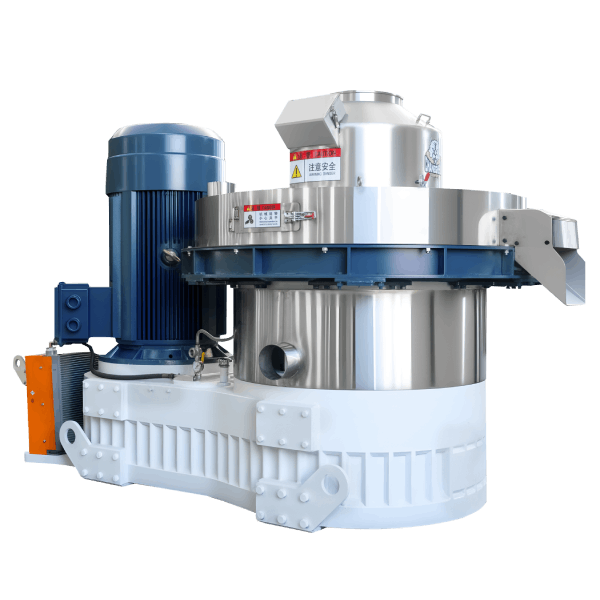
Why it fluctuates: A supply voltage that varies, a phase that is unbalanced, or a loose terminal produces a current that moves without a process change. A motor with a winding fault or a cooling problem produces a current that is unstable and a motor that runs hot. A protection device that is set close to the running current produces a trip that looks like a fluctuation.
What to check: Supply voltage and current on each phase, terminal tightness, motor temperature, and the protection record. The protection record should state the trip time, the current at the trip, and the trip class or setting, so that the trip can be compared with the running current.
What to do: Stop the machine and isolate the power for an electrical inspection by a qualified electrical person. Do not adjust the protection setting to stop the fluctuation without finding the cause.
Diagnostic Order
Use this order to avoid adjusting the machine before the cause is found.
- Record the motor current, the feeder current, and the supply voltage over the same period.
- Confirm whether the current moves with the feed or without it.
- If it moves without the feed, compare the current with the supply voltage over the same period.
- Check the moisture and the particle size at the mill inlet.
- Check the die hole condition and the die hours, using the blockage-or-wear table.
- Check the roller free rotation and the roller clearance.
- Check the motor temperature and the protection record.
- If the process and the supply are both within range, check the feeder type and the control loop for a periodic movement.
Fixed-Period Fluctuation
A fluctuation that repeats at a fixed period has three common sources, and the period identifies which one.
| Source | How to confirm | What to check |
|---|---|---|
| Feeder cycle | The period matches the feeder screw or belt cycle | Feeder setting, feeder wear, material bridging |
| Control loop | The period changes when the control setting is changed | Control parameters, sensor response |
| Rotating part | The period matches the rotation speed of a roller or a bearing | Roller condition, bearing condition, rotation speed |
A period that matches the feeder cycle points to the feeder. A period that changes when the control setting changes points to the control loop. A period that matches the rotation speed points to a rotating part, and the roller and the bearing should be inspected.
When to Stop Rather Than Adjust
Stop the machine when any of the following applies.
| Condition | Action |
|---|---|
| Current fluctuation with a new noise or vibration | Stop. Inspect the die chamber, rollers, and bearings. |
| Current fluctuation with a motor temperature above the rating | Stop. Inspect the motor cooling and the supply. |
| Current fluctuation with a burning smell from the motor or the panel | Stop immediately and isolate the power. |
| Current fluctuation with the protection tripping repeatedly | Stop. Find the cause before resetting the protection. |
| Current fluctuation with a die temperature above the manual limit | Stop. Inspect the die and the feeder. |
What to Record Before Contacting a Supplier
The record makes the comparison possible.
| Item | What to record |
|---|---|
| Motor current | The value over time, the fluctuation range, the sampling interval, and the recording duration |
| Feeder current | The value over the same period |
| Supply voltage | The value on each phase over the same period |
| Material | Type, source, moisture, particle size |
| Die | Specification, hours in service, hole condition |
| Rollers | Surface condition, clearance setting |
| Motor temperature | Value against the rating |
| Protection record | Trip time, current at the trip, trip class or setting |
Frequently Asked Questions
Does a fluctuating current damage the motor?
A current that moves within the motor rating does not damage the motor, and a current that repeatedly rises above the rating heats the winding and shortens the insulation life. The protection setting and the load cause should both be checked.
Can a variable frequency feeder reduce the fluctuation?
A variable frequency feeder can hold a steadier rate where the material bulk density varies, and it can reduce a fluctuation that comes from the feeder. It does not correct a fluctuation that comes from the moisture or the die.
Why does the current fluctuate at a fixed period?
A fixed-period fluctuation points to a feeder cycle, a control loop, or a rotating part. The period identifies the source, and the feeder, the control setting, the roller, and the bearing are the items to check.
When should I call an electrician instead of a mechanic?
When the current moves without a feed change, when the supply voltage is unbalanced, when the motor temperature is above the rating, or when there is a burning smell. These are electrical causes and should be inspected by a qualified electrical person.
Request Diagnostic Support for Your Pellet Machine
Send the motor current and the feeder current over the same period, the sampling interval and the recording duration, the supply voltage on each phase, the material type and moisture, the die specification and hours, the roller condition and clearance, the motor temperature, and the protection record. A diagnostic review can be prepared against the machine and the operating conditions rather than against a general checklist.
Current limits, voltage limits, protection settings, clearance values, and acceptance criteria in this article must be confirmed against the machine manual, the motor nameplate, the control cabinet documentation, and the applicable electrical standards. This article does not provide universal values for these items.