Pellet Mill for Empty Fruit Bunches: Complete Technical Guide

News 2026-07-27

Page SEO Summary: This technical guide helps project developers and procurement professionals evaluate pellet mills for empty fruit bunches (EFB)—covering material properties, pre-processing requirements, equipment specifications, and market opportunities for palm oil waste pellets.

The global palm oil industry produces approximately 70-80 million tons of Empty Fruit Bunches (EFB) annually—the fibrous stalks left after oil palm fruit is removed for oil extraction. This waste has historically been burned or left to decompose, releasing greenhouse gases and creating environmental concerns.

EFB pellets represent a significant opportunity for the palm oil industry. Converting this waste into high-quality biomass pellets provides a sustainable fuel source, reduces environmental impact, and creates a new revenue stream. However, EFB is one of the most challenging feedstocks for pelletizing, requiring specialized equipment and careful process design.

This guide provides a comprehensive technical framework for evaluating pellet mills for EFB pelleting applications.


Understanding EFB

What Is EFB?

AspectDetails
DefinitionEmpty Fruit Bunches from palm oil extraction
Production1.5 tons EFB per ton of crude palm oil
Annual global production70-80 million tons
Current useMostly burned or decomposed
PotentialFuel pellets; bioenergy; compost

EFB Composition

ComponentProportionImpact on Processing
Stalk fibers40-50%Long; tough; requires shredding
Spikelets35-40%Smaller fibers
Empty fruit stalks10-15%Base material
Moisture content60-70%Very high; requires drying
Lignin content15-25%Moderate; natural binder
Cellulose content30-45%Provides structure
Oil content2-5%Affects processing
Ash content2-5%Moderate
Silica content1-3%Abrasive

EFB Production by Country

CountryCrude Palm Oil (M tons)EFB (M tons)
Indonesia45-5067-75
Malaysia18-2027-30
Thailand3-44.5-6
Colombia1.5-22.2-3
Nigeria1-1.51.5-2.2

Unique Challenges of EFB Pelleting

Why EFB Is One of the Most Challenging Feedstocks

ChallengeDescriptionImpact
Long fibers5-50 mm lengthResists size reduction
High moisture60-70%Requires significant drying
Low bulk density60-80 kg/m³Special handling required
ToughnessHighly resilientHeavy-duty equipment needed
Variable qualityInconsistentProcess control challenges
Oil content2-5%Affects binding

Challenge Summary

ChallengeSolution
Long fibersShredding + grinding
High moistureMechanical pressing + drying
Low densityForced feeding; pre-compaction
ToughnessHeavy-duty hammer mill
Variable qualityBlending; process control
Oil contentTemperature control

Pre-Processing: The Critical Step

Why Pre-Processing Is Essential

ReasonExplanation
Fiber reductionMust reduce 5-50 mm fibers to 2-5 mm
Moisture reductionMust dry from 60-70% to 10-15%
Density increaseMust increase 60-80 kg/m³ to manageable levels

Pre-Processing Equipment

EquipmentFunctionSpecifications
ShredderInitial size reductionHeavy-duty; handles wet material
Screw pressMechanical dewateringReduce moisture to 30-40%
Rotary dryerReduce moisture to 10-15%High capacity; heat source
Hammer millFinal size reductionHeavy-duty; 3-6 mm screens

Drying: The Most Significant Cost

Drying MethodAdvantagesConsiderations
Rotary drum dryerHigh capacity; robustHigh energy consumption
Belt dryerGentle; good qualityLower capacity; higher cost
Solar dryingLow costWeather dependent

Processing Parameters

Optimal Conditions for EFB Pelleting

ParameterRecommended RangeNotes
Moisture content10-15%Critical for binding
Particle size3-6 mmUniform for good pellets
Temperature100-120°CHigher than wood
Compression ratio (L/D)1:14 to 1:18Very high; lower lignin
PressureVery highNeeds more compression

Effect of Process Parameters

ParameterToo LowOptimalToo High
MoisturePoor binding10-15%Steam; poor durability
TemperatureWeak pellets100-120°CMaterial degradation
L/D ratioLow density1:14 to 1:18High energy; lower output

Equipment Requirements

Pellet Mill Specifications for EFB

SpecificationRecommendationRationale
Motor power1.3-1.5× standardHigh energy for tough fiber
Die materialPremium alloy (X46Cr13 or higher)Abrasion resistance
Die compression ratio1:14 to 1:18Very high; low lignin
Feeder designForce feeder (heavy-duty)Low bulk density; tough material
ConditionerEssentialHeat activation
Roller materialHardened; tungsten carbideWear resistance

Why EFB Requires Heavy-Duty Equipment

FactorWhy Heavy-Duty Needed
Fiber toughnessRequires more cutting/grinding energy
AbrasivenessSilica accelerates wear
Low densityRequires forced feeding
High pressureNeeds robust gearbox and bearings

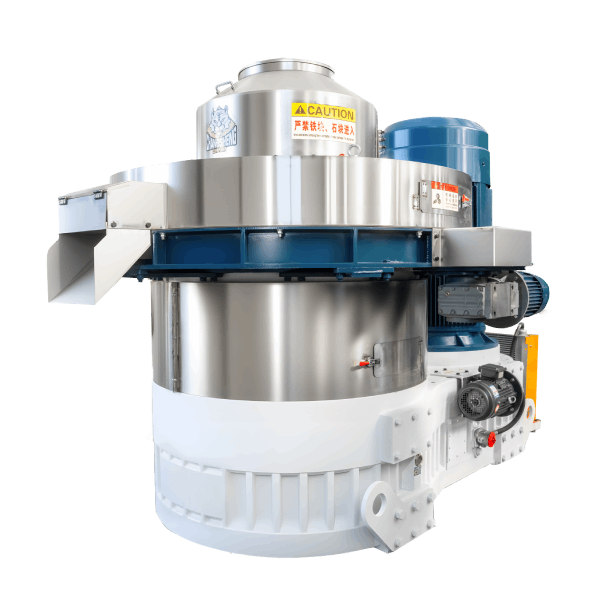
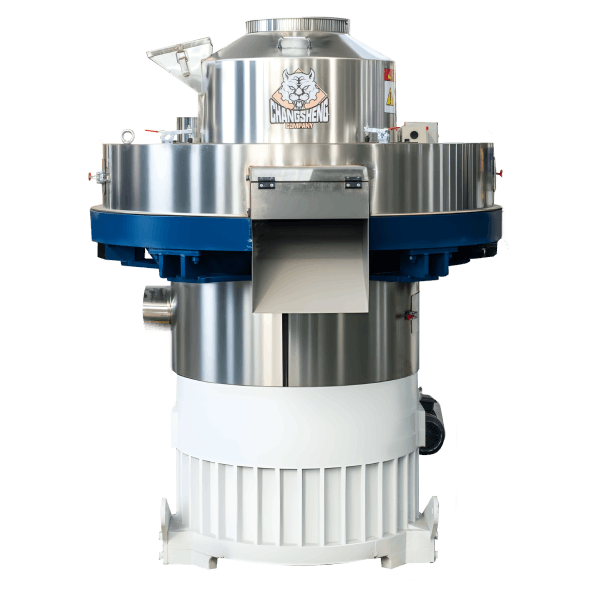
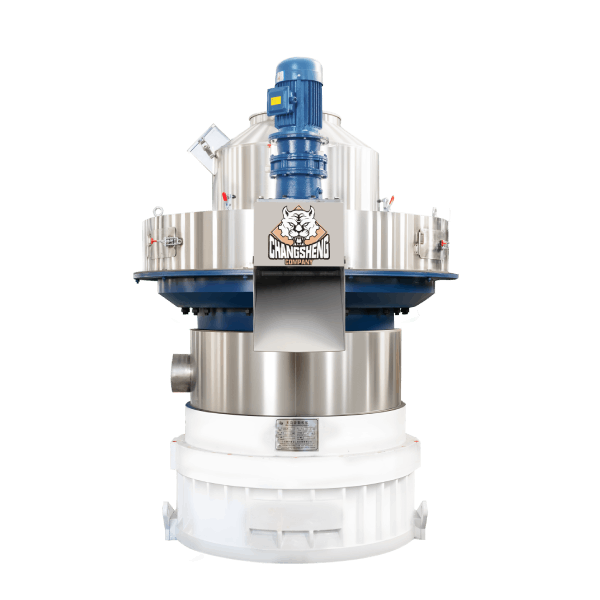
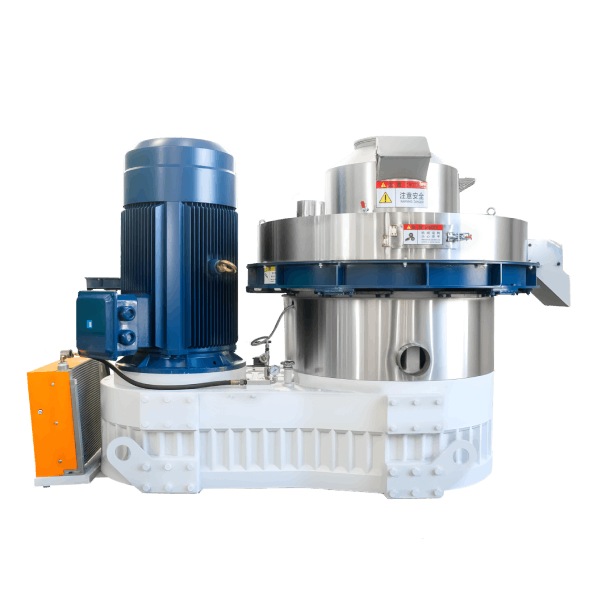
pellet mill

Complete Process Flow

Step-by-Step for EFB Pellets

StageEquipmentParametersPurpose
ReceivingStorage; conveyorsRaw EFB handling
Pre-shreddingHeavy-duty shredder5-10 cm piecesInitial size reduction
PressingScrew pressReduce to 30-40% moistureMechanical dewatering
DryingRotary dryer10-15% moistureFinal moisture reduction
GrindingHammer mill3-6 mm particle sizeUniform fiber size
ConditioningConditioner100-120°C; steamSoften fibers; activate binders
PelletizingPellet millHigh L/D; high pressureForm dense pellets
CoolingCoolerAmbientStabilize pellets
ScreeningFines screenRemove fines
Storage/PackagingSilo; baggingFinal product

Energy Balance Considerations

StageEnergy InputRecovery Potential
DryingVery HighSome heat recovery possible
GrindingHighLimited
PelletizingHighLimited

Pellet Quality and Applications

EFB Pellet Specifications

ParameterTypical ValueNotes
Calorific value16-18 MJ/kgGood
Moisture content8-12%Good for storage
Ash content3-8%Moderate; higher than wood
Durability (PDI)80-90%Moderate
Bulk density550-650 kg/m³Acceptable

Applications

ApplicationSuitabilityMarket Value
Palm oil mill boilerExcellentFuel cost reduction
Industrial combustionGoodGrowing demand
Power generationGoodGrowing demand
Export (Asia)ModerateRequires quality consistency
Export (Europe)LimitedAsh content may be high

Economic Analysis

Cost Factors for Palm Oil Mills

FactorAdvantageNotes
Raw material costVery low (EFB is waste)Significant advantage
Energy costOn-site steam/electricityMay be available
LocationPalm oil mills have infrastructureBuilt-in advantage
MarketLocal and exportGrowing demand

Annual Value (Medium Palm Oil Mill)

ParameterValue
CPO production50,000 tons/year
EFB produced75,000 tons/year
EFB for pellets30,000-50,000 tons/year
Pellet production potential15,000-30,000 tons/year
Pellet market value$70-130/ton
Annual revenue potential$1.0-3.9 million

Investment Estimates

ScaleCapacity (t/y)Investment (Est.)
Small5,000-10,000$1,000,000-2,500,000
Medium10,000-25,000$2,500,000-6,000,000
Large25,000-50,000$6,000,000-12,000,000

Procurement Checklist: EFB Pellet System

Material Assessment

  • □ EFB availability and volume confirmed
  • □ Moisture content measured
  • □ Fiber characteristics assessed
  • □ Seasonality of supply understood

Equipment Specifications

  • □ Shredder included (essential)
  • □ Screw press included (essential)
  • □ Drying system capacity matched to production
  • □ Hammer mill with hardened components
  • □ Pellet mill with force feeder
  • □ Premium die material specified
  • □ Die compression ratio: 1:14 to 1:18
  • □ Conditioner included
  • □ Dust collection and safety included

Process Parameters

  • □ Moisture target: 10-15%
  • □ Particle size target: 3-6 mm
  • □ Temperature target: 100-120°C

Supplier Evaluation

  • □ Supplier experience with EFB or similar fiber
  • □ References from EFB projects
  • □ Ability to supply complete line
  • □ Understanding of EFB-specific challenges

Frequently Asked Questions

1. Can EFB be pelleted?

Yes. EFB can be made into pellets for fuel applications. However, EFB requires specialized processing—shredding, pressing, drying, and heavy-duty pelletizing equipment. It is one of the most challenging feedstocks for pelleting.

2. What moisture content is needed for EFB pelleting?

EFB must be dried to 10-15% moisture before pelleting. Raw EFB contains 60-70% moisture, making drying the most significant process step and cost.

3. What is the optimal die compression ratio for EFB?

EFB typically requires a compression ratio of 1:14 to 1:18. This is very high compared to wood pellets (1:6 to 1:10) due to the lower lignin content and fiber characteristics.

4. Why is EFB so difficult to pelletize?

EFB has three main challenges: long fibers (5-50 mm) that resist size reduction, high moisture content (60-70%) that requires extensive drying, and low bulk density (60-80 kg/m³) that complicates handling and feeding.

5. What is the calorific value of EFB pellets?

EFB pellets typically have a calorific value of 16-18 MJ/kg, which is comparable to wood pellets.

6. Are EFB pellets suitable for export?

EFB pellets can be exported, particularly to Asian markets (Japan, South Korea) for industrial combustion. For European residential heating, the ash content (3-8%) may be an issue.

7. What is the ash content of EFB pellets?

EFB pellets typically have ash content of 3-8%, which is higher than wood pellets (0.5-2%) but acceptable for industrial combustion and power generation.

8. Is EFB pelleting economically viable?

Yes, particularly for palm oil mills that already have the raw material. EFB is a low-cost waste, and pelleting adds significant value. However, the capital investment is significant due to the required pre-processing equipment.


About the Author

Zhang Wei – Senior International Sales Engineer, Shandong Changsheng Machinery Co., Ltd.

Zhang Wei has over 12 years of experience in the biomass and feed pellet mill industry, with a background in mechanical engineering and international project execution. He has managed pellet mill supply projects for clients across Southeast Asia, the Middle East, Africa, Europe, and Latin America, including extensive experience with EFB, bagasse, and other challenging agricultural residues.

With hands-on experience in both the manufacturing workshop and client-side operations, Zhang brings practical insights into successful equipment procurement—from the factory floor to the customer’s production site.