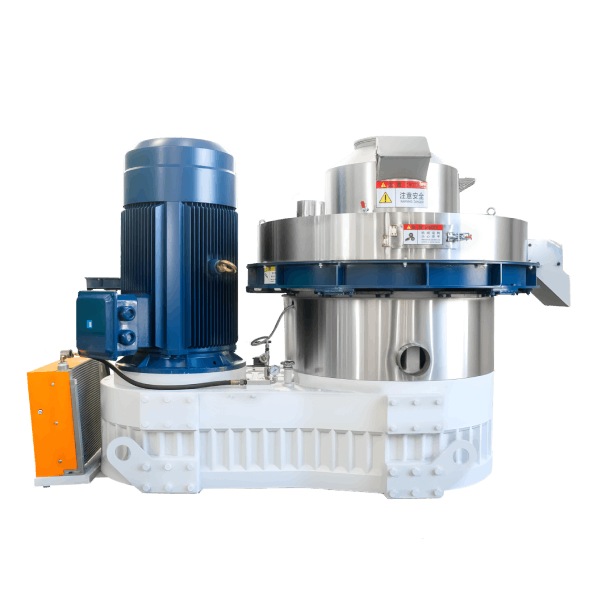
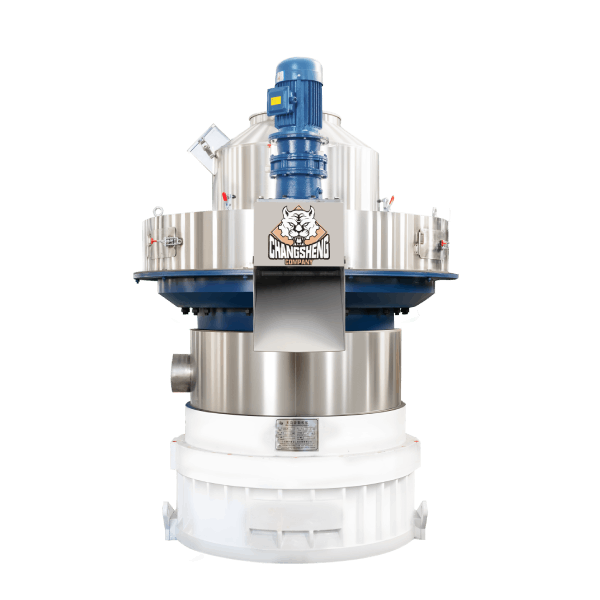
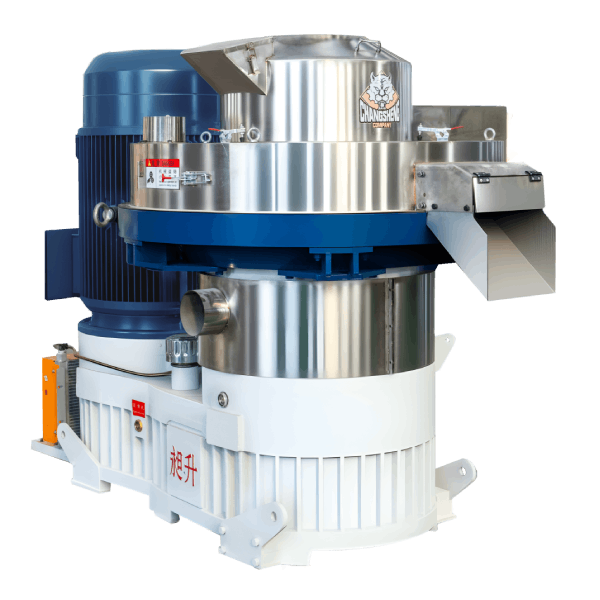
Pellet Mill with Magnetic Separator: Protection Guide for Buyers
News 2026-07-14
Page SEO Summary: This technical guide helps procurement professionals understand the critical role of magnetic separators in pellet mill protection—covering metal contamination sources, separator types, magnetic strength requirements, and integration considerations for complete pellet production lines.
An operator hears a sudden metallic screech from the pellet mill. The machine shudders, then stops. When the maintenance team opens the die chamber, they find the rollers gouged, the die cracked, and a small piece of broken hammer tip embedded in the compression zone. The repair bill: $12,000. The production loss: three shifts.
This scenario is not uncommon. Metal contamination in raw material is one of the most destructive—and most preventable—causes of pellet mill damage. A single piece of tramp metal entering the pellet mill can destroy the die, damage the rollers, and in severe cases, cause catastrophic failure of the main shaft assembly.
A pellet mill with magnetic separator is not an optional upgrade; for industrial operations, it is a fundamental protective measure. This guide provides procurement professionals with the technical knowledge needed to evaluate magnetic separator solutions for pellet mill applications—from understanding the threat to specifying the right protection.
The Metal Contamination Threat: Sources and Consequences
Understanding the sources of metal contamination is the first step in specifying effective protection.
Sources of Metal Contamination
| Source Category | Examples | Typical Frequency |
|---|---|---|
| Raw material processing | Broken hammer mill hammers, screen fragments, conveyor wear particles | Moderate |
| Harvesting and handling | Nails, staples, wire fragments, bolts from agricultural equipment | Common |
| Storage and transport | Metal shavings from bins, conveyor belt clips, bucket elevator bolts | Common |
| Facility maintenance | Tools left in bins, welding spatter, construction debris | Occasional |
| Packaging and supply chain | Metal fragments from supplier processing | Variable |
The Real Cost of Metal Damage
| Damage Type | Typical Repair Cost | Production Impact |
|---|---|---|
| Die replacement | $3,000–$10,000 | 4–8 hours downtime |
| Roller shell replacement | $1,500–$4,000 | 4–6 hours downtime |
| Main shaft damage | $5,000–$15,000 | 1–3 days downtime |
| Bearing damage from metal fragments | $2,000–$6,000 | 8–16 hours downtime |
| Complete machine overhaul | $20,000–$50,000 | 1–2 weeks downtime |
Critical Engineering Note: The most dangerous metal contamination is often invisible to operators—small fragments of hardened steel that become lodged in the compression zone and gradually cause wear or sudden seizure. These fragments typically originate from upstream processes and are not detectable without proper magnetic separation.
How Magnetic Separators Protect Pellet Mills
A magnetic separator installed upstream of the pellet mill removes ferrous metal contaminants from the material flow before they can enter the pellet mill. The operating principle is simple but effective: as material passes through or over a magnetic field, ferrous particles are attracted to and retained on the magnetic surface, allowing clean material to continue to the pellet mill.
Key Terminology
| Term | Definition |
|---|---|
| Gauss (G) | Unit of magnetic flux density. Higher gauss = stronger magnetic field |
| Ferrous | Metals containing iron that are attracted to magnets |
| Tramp metal | Unwanted metal contaminants in the material stream |
| Capture rate | Percentage of ferrous particles removed from the material flow |
| Cleaning interval | Frequency required to remove captured metal from the separator surface |
Magnetic Separator Types: Selection Framework
Three main types of magnetic separators are commonly used in pellet production lines. The selection depends on installation location, material characteristics, and the level of protection required.
Type 1: Permanent Magnet Separators
Operating Principle: Permanent magnets made from rare earth materials (typically neodymium) create a magnetic field without requiring electrical power.
| Characteristic | Detail |
|---|---|
| Magnetic strength | Typically 3,000–8,000 Gauss (surface) |
| Power requirement | None |
| Advantages | No ongoing energy cost; reliable; simple maintenance |
| Limitations | Fixed magnetic strength; cannot be switched off for cleaning |
| Best for | Most pellet mill applications; primary protection at intake |
Sub-types:
Plate Magnets:
- Flat magnetic plates installed above or within material flow
- Suitable for gravity chutes and conveyor belt applications
- Lower cost; easier to clean
Grate Magnets:
- Multiple magnetic bars arranged in grid pattern
- Material flows through the grid, making contact with magnetic bars
- Higher capture rate due to multiple contact points
- Suitable for both gravity and pneumatic conveying
Separator Drums:
- Rotating drum with internal stationary magnet
- Material flows over the drum; ferrous particles are held against the drum while clean material falls away
- Self-cleaning version available (automatic discharge of captured material)
Type 2: Electromagnetic Separators
Operating Principle: An electromagnet generates a magnetic field when electrical current flows through a coil. The magnetic field can be switched on and off.
| Characteristic | Detail |
|---|---|
| Magnetic strength | Up to 15,000+ Gauss |
| Power requirement | Significant (often 1–5 kW) |
| Advantages | Very strong magnetic field; can be de-energized for cleaning; adjustable field strength |
| Limitations | Higher cost; ongoing energy consumption; requires power supply |
| Best for | High-capacity lines; applications requiring very high magnetic strength |
Sub-types:
Suspended Electromagnets:
- Installed above conveyor belts
- Strong magnetic field attracts ferrous particles through the material depth
- Suitable for high belt speeds and thick material layers
Liquid-Cooled Electromagnets:
- Oil or water cooling allows higher current and stronger magnetic field
- Used in extremely demanding applications
- Higher capital and operating cost
Type 3: Rotary Magnet Separators
Operating Principle: A rotating magnetic assembly separates ferrous particles from free-flowing material. The magnetic field captures particles, which are then discharged as the magnet rotates away from the material flow.
| Characteristic | Detail |
|---|---|
| Magnetic strength | 5,000–10,000 Gauss |
| Power requirement | Low (small motor for rotation) |
| Advantages | Continuous operation; automatic cleaning |
| Limitations | Higher cost than static designs; requires drive motor |
| Best for | High-volume operations requiring automatic cleaning |
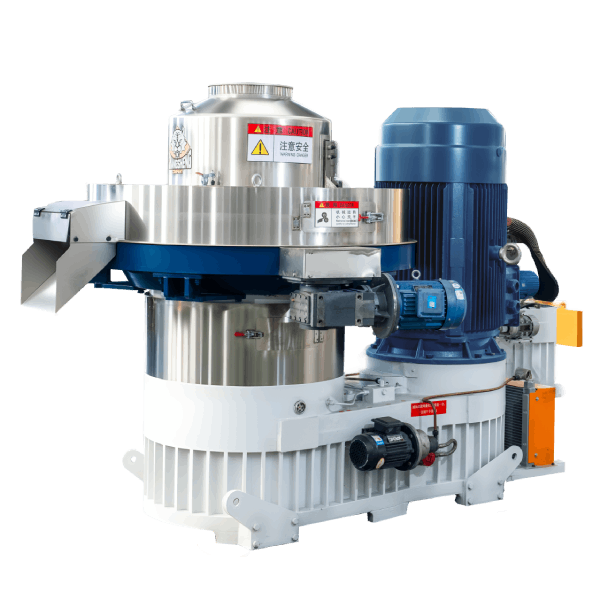
Magnetic Strength: Specification Guidance
Magnetic strength is the most critical specification for a pellet mill magnetic separator. Insufficient strength will allow ferrous particles to pass through; excessive strength adds cost and cleaning difficulty without additional benefit.
Recommended Gauss Ratings by Application
| Application | Recommended Minimum Surface Gauss | Recommended Minimum Depth Gauss |
|---|---|---|
| Gravity flow (low material depth) | 5,000 G | 1,500 G at 25 mm |
| Conveyor belt (light material) | 6,000 G | 2,500 G at 50 mm |
| Conveyor belt (heavy material) | 8,000 G | 4,000 G at 75 mm |
| Pneumatic conveying | 6,000 G | N/A (short exposure time) |
Procurement Note: Surface Gauss readings alone are insufficient. Request the supplier to provide Gauss readings at depth—the magnetic field strength at the distance where the material flows. A magnet with 10,000 Gauss at the surface may drop to 2,000 Gauss at 50 mm depth, while a different magnet with 7,000 Gauss surface may provide 4,000 Gauss at depth due to different magnetic circuit design.
Capture Rate by Particle Size
| Particle Size | Typical Capture Rate (5,000 G) | Application Consideration |
|---|---|---|
| >5 mm | >99% | Most tramp metal; very high capture |
| 2–5 mm | 95–99% | Common for small metal fragments |
| 0.5–2 mm | 80–95% | Wear particles from upstream |
| <0.5 mm | 50–80% | Very fine wear material; often captured in downstream screening |
Installation Position: Where to Locate the Magnetic Separator
The position of the magnetic separator within the pellet production line significantly affects its effectiveness.
Primary Protection: Before the Pellet Mill
The most critical magnetic separator placement is immediately before the pellet mill feed point. This is the last opportunity to remove metal before it enters the pellet mill’s compression zone.
Primary Position Requirements:
- Installed between the surge bin (or conditioner) and the pellet mill
- Accessible for regular cleaning
- Located in a straight vertical or near-vertical section for gravity flow
- Adequate space for insertion and removal
Secondary Protection: Upstream Positions
Secondary magnetic separators can be placed at upstream positions to remove metal earlier in the process:
| Position | Purpose | Recommended Type |
|---|---|---|
| After hammer mill | Remove screen fragments and hammer wear particles | Grate or plate magnet |
| Before mixing | Protect mixer from metal contamination | Plate or grate magnet |
| At receiving pit | Remove large tramp metal early in process | Suspended electromagnet or drum |
| Conveyor belt (above) | Remove metal from flowing material on conveyor | Suspended magnet |
Multi-Stage Protection Strategy
For high-risk applications, a multi-stage approach is recommended:
- Stage 1: Suspended electromagnet or drum at the receiving point—removes large tramp metal early
- Stage 2: Grate or plate magnet after hammer mill—removes process-generated metal
- Stage 3: Magnetic separator immediately before the pellet mill—last line of defense
Engineering Recommendation: Even with upstream separators, the primary protection point immediately before the pellet mill must never be omitted. This is the most important single position for pellet mill protection.
Cleaning and Maintenance: A Critical Operational Factor
A magnetic separator is only effective if it is cleaned regularly. A magnet covered with captured metal begins to lose its effectiveness as the metal accumulation reduces the magnetic field reaching the material flow.
Recommended Cleaning Frequency
| Position | Cleaning Frequency | Indicator |
|---|---|---|
| Pre-pellet mill (primary) | Every 4–8 hours | Visual inspection of magnet surface |
| Post-hammer mill | Every shift | Captured material volume |
| Receiving point (primary separator) | Every shift or daily | Captured material volume |
Warning: In many installations, the pre-pellet mill magnetic separator is accessed infrequently because it is inconvenient to reach. This is the most common failure of magnetic protection systems. Specify installation locations that enable accessible, safe, and quick cleaning.
Self-Cleaning vs. Manual Cleaning
| Aspect | Self-Cleaning | Manual Cleaning |
|---|---|---|
| Labor requirement | Minimal | Moderate (routine labor) |
| Equipment cost | Higher | Lower |
| Risk of incomplete cleaning | Low | Moderate (operator dependent) |
| Best for | High-capacity lines; 24/7 operation | Moderate capacity; regular operating hours |
Integration with Pellet Mill: Supplier Considerations
When sourcing a pellet mill with magnetic separator, the integration approach is an important procurement consideration.
Factory-Integrated Solution
| Aspect | Detail |
|---|---|
| Description | Pellet mill supplied with magnetic separator pre-installed on the feed chute |
| Advantages | Guaranteed compatibility; pre-engineered; single source for protection |
| Limitations | Limited choice of separator type and brand |
| Best for | Standard configurations; procurement teams with limited engineering resources |
Supplier-Integrated Solution
| Aspect | Detail |
|---|---|
| Description | Pellet mill supplier coordinates installation of third-party magnetic separator |
| Advantages | Access to best-in-class separator technology; customization options |
| Limitations | Requires coordination; integration guarantee required |
| Best for | Projects requiring specific separator performance specifications |
Field-Installed Solution
| Aspect | Detail |
|---|---|
| Description | Magnetic separator purchased separately and installed on-site |
| Advantages | Full flexibility; competitive sourcing |
| Limitations | Installation and compatibility risk; no system guarantee |
| Best for | Retrofits; projects with dedicated installation engineering |
Procurement Recommendation: For new equipment purchases, request the pellet mill supplier to provide the magnetic separator as a guaranteed component of the equipment package. This ensures the separator is properly sized, correctly installed, and integrated into the pellet mill’s control and safety systems.
Procurement Decision Checklist: Pellet Mill with Magnetic Separator
Use the following checklist when evaluating pellet mill proposals with magnetic separator integration.
Technical Specifications
- Magnetic type: Is permanent magnet sufficient, or is electromagnet required for the application?
- Gauss rating: Has the supplier provided surface AND depth Gauss readings?
- Capture rate: Is the expected capture rate stated for the specific material?
- Cleaning mechanism: Is manual or self-cleaning appropriate for operating schedule?
- Installation position: Is the separator installed immediately before the pellet mill?
- Accessibility: Can the separator be safely and easily accessed for cleaning?
Integration and Engineering
- Physical compatibility: Does the separator fit the available feed chute space?
- Material flow compatibility: Does the separator handle the required throughput?
- Control integration: Is the separator’s alarm integrated with plant control system?
- Installation support: Does the supplier provide installation guidance?
Commercial and Support
- Separator warranty: Is the separator covered under the equipment warranty?
- Spare parts: Are replacement magnetic elements available?
- Technical support: Is support available for separator troubleshooting?
- Training: Is operator training on cleaning and inspection included?
Frequently Asked Questions
1. Is a magnetic separator always necessary with a pellet mill?
For any commercial pellet mill operation, yes. Metal contamination is present in virtually all raw materials, and the cost of a magnetic separator is far less than the cost of a single die replacement resulting from metal damage.
2. What happens if a piece of metal enters the pellet mill?
Depending on the size and hardness, metal can cause roller damage, die cracking, bearing damage, or catastrophic main shaft failure. Even small metal particles can score the die surface, reducing pellet quality and die life.
3. How strong should the magnet be for a pellet mill?
For pre-pellet mill protection, a permanent magnet with at least 5,000 Gauss at the surface and 1,500 Gauss at the flow depth is the recommended minimum. For conveyor belt applications or thicker material layers, stronger magnets are required.
4. Can a magnetic separator remove all metal contaminants?
Magnetic separators remove ferrous metals (iron and steel). They do not remove non-ferrous metals such as aluminum, copper, or stainless steel. For these contaminants, additional separation technology (such as eddy current separators or density separation) is required.
5. How often should the magnetic separator be cleaned?
The pre-pellet mill separator should be inspected and cleaned at least every 4 to 8 operating hours. The actual frequency depends on the level of metal contamination in the raw material and can be established during initial operation.
6. What is the difference between a permanent and an electromagnetic separator?
Permanent magnets use rare earth materials to generate a constant magnetic field and require no electrical power. Electromagnets generate a magnetic field when energized and can achieve higher magnetic strengths but require a continuous power supply.
7. Should I install the magnetic separator before or after the hammer mill?
Both positions are recommended. A separator after the hammer mill removes process-generated metal (screen fragments, hammer wear). The primary protection position is immediately before the pellet mill, regardless of other placements.
8. Can I retrofit a magnetic separator to an existing pellet mill?
Yes. Retrofitting is common and often straightforward. The main consideration is the available space at the pellet mill feed chute and accessibility for installation and routine cleaning.
About the Author
Zhang Wei – Senior International Sales Engineer, Shandong Changsheng Machinery Co., Ltd.
Zhang Wei has over 12 years of experience in the biomass and feed pellet mill industry, with a background in mechanical engineering and international project execution. He has managed pellet mill supply projects for clients across Southeast Asia, the Middle East, Africa, Europe, and Latin America, overseeing everything from initial technical specification to production coordination, factory acceptance testing, and delivery logistics.
With hands-on experience in both the manufacturing workshop and client-side operations, Zhang brings practical insights into successful equipment protection strategies—from the factory floor to the customer’s production site.