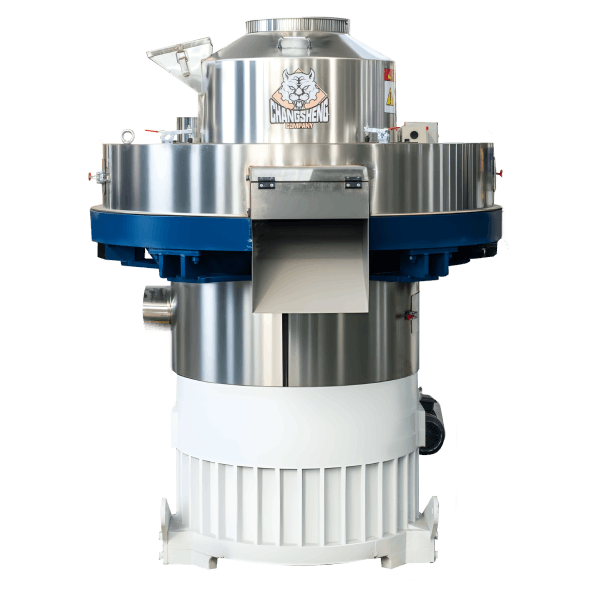
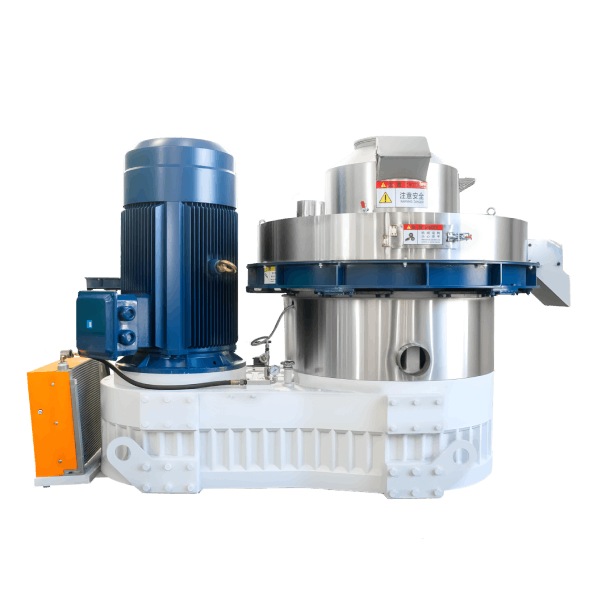
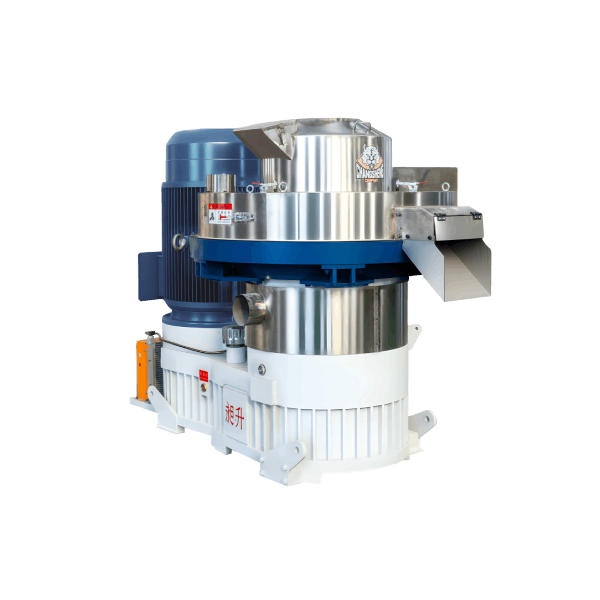
Pellet Machine with Three-Phase Electric Motor
News 2026-07-13
Page SEO Summary: This technical guide helps procurement professionals and project engineers understand the critical role of three-phase electric motors in industrial pellet machines—covering power ratings, international voltage compatibility, starting methods, and key specifications that directly impact purchase decisions and operational reliability.
When a feed mill, biomass processing plant, or wood pellet production facility evaluates new equipment, the conversation inevitably arrives at the same question: what kind of motor power does this machine need? And more specifically—can it run on the three-phase power supply available at our site?
For industrial operations, the pellet machine with three-phase electric motor is not merely an option—it is the standard configuration for any serious production environment. Single-phase motors simply cannot deliver the sustained power, starting torque, or operational efficiency required for continuous pelletizing operations.
This guide provides a technical framework for evaluating three-phase electric motors in pellet machines, helping procurement professionals and project engineers make informed decisions that align with site power conditions, production requirements, and long-term reliability expectations.
Why Three-Phase Motors Dominate Industrial Pellet Machine Applications
The three-phase induction motor is the workhorse of industrial manufacturing. In pellet machine applications, its dominance is rooted in fundamental engineering principles, not tradition.
Power Density and Efficiency
Three-phase motors deliver higher power output per unit of frame size compared to single-phase motors of equivalent rating. For a given physical footprint, a three-phase motor typically achieves:
- 15–20% higher efficiency across the operating range
- Lower full-load current for the same power output—reducing cable sizing requirements and feeder capacity
- Reduced copper losses in windings due to better phase balance
Starting Torque Characteristics
Pellet mills face high inertial loads during startup. The rotating assembly—including the main shaft, die, rollers, and flywheel effect of the driven components—requires substantial starting torque.
Three-phase motors provide higher locked-rotor torque and more consistent acceleration torque compared to single-phase capacitor-start designs. This translates to:
- Faster startup times
- Less stress on mechanical drive components
- Reduced risk of motor stalling or overheating during loaded starts
Continuous Operation Capability
Industrial pellet mills are designed for continuous operation—often running 24 hours per day, 7 days per week, with scheduled maintenance intervals. Three-phase motors are inherently suited for this duty cycle due to:
- Better heat dissipation characteristics
- Absence of start/run capacitors that degrade over time in single-phase systems
- More robust bearing designs
Engineering Note: The minimum recommended motor rating for a commercial pellet machine is 22 kW (30 HP). Below this threshold, production rates are typically insufficient for commercial operations. Three-phase supply is generally required for motors above 3.7 kW (5 HP).
International Voltage and Frequency Compatibility: What Buyers Must Verify
One of the most critical—and frequently overlooked—aspects of sourcing a pellet machine with a three-phase motor is voltage and frequency compatibility with the destination country’s power grid.
Global Grid Standards
| Region | Common Voltages | Frequency | Number of Phases |
|---|---|---|---|
| North America | 208V / 230V / 460V / 575V | 60 Hz | 3-phase |
| Europe | 230V / 400V / 690V | 50 Hz | 3-phase |
| UK | 415V | 50 Hz | 3-phase |
| Australia / New Zealand | 415V | 50 Hz | 3-phase |
| Southeast Asia | 380V / 400V / 460V | 50 Hz | 3-phase |
| Middle East | 400V / 415V | 50 Hz | 3-phase |
| South Africa | 380V / 400V | 50 Hz | 3-phase |
| South America | 220V / 380V / 440V | 50 or 60 Hz | 3-phase |
| Japan | 200V / 220V | 50 or 60 Hz | 3-phase |
Voltage Tolerance Range
A properly designed industrial motor should accommodate ±10% voltage variation from nameplate rating. However, prolonged operation at the extremes of this range affects:
- Motor temperature rise
- Starting torque capability
- Insulation life
- Overall efficiency
Procurement Recommendation: When specifying your pellet machine, confirm the exact voltage and frequency available at your facility. Reputable Chinese manufacturers like Shandong Changsheng offer motors wound for virtually any standard voltage/frequency combination, but this must be specified at the time of order.
Dual Voltage Motors
Many modern three-phase motors offer dual voltage capability—typically 230/460V or 380/415V configurations, achieved by reconfiguring the internal winding connections (delta vs. star). This provides flexibility for facilities with voltage fluctuations or multiple site locations with different supply voltages.
Wiring Caution: Dual voltage motors require correct terminal box configuration. Improper connection results in:
- Motor overcurrent or undervoltage operation
- Rapid winding failure
- Voided motor warranty
Motor Power Ratings and Corresponding Pellet Machine Capacities
Matching motor power to production capacity is a fundamental sizing exercise. The table below provides typical guidelines for ring-die pellet machines under standard operating conditions.
| Motor Power (kW) | Motor Power (HP) | Approximate Capacity (t/h) | Typical Application |
|---|---|---|---|
| 22 | 30 | 0.8–1.2 | Small feed mills; pilot plants |
| 37 | 50 | 1.5–2.5 | Mid-size feed production |
| 55 | 75 | 2.5–4.0 | Commercial feed mills |
| 75 | 100 | 4.0–6.0 | Large feed and biomass operations |
| 90 | 125 | 5.5–7.5 | Industrial-scale production |
| 110 | 150 | 7.0–9.0 | High-capacity industrial plants |
| 132 | 180 | 8.5–10.5 | Large-scale industrial operations |
| 160 | 220 | 10.0–12.0 | Maximum commercial scale |
| 200 | 270 | 12.0–15.0 | Very large operations |
Important Caveats:
- Capacity figures depend on material characteristics (density, moisture content, fiber content)
- The same motor will produce higher capacity with easy-pelleting materials (e.g., compound feed) and lower capacity with hard-pelleting materials (e.g., pure wood biomass)
- Die specification (hole diameter, compression ratio) significantly influences throughput at a given motor power
- These are continuous-rated capacities—peak surge capacity may be higher but is not sustainable for extended periods
Selection Principle: When in doubt between two power ratings, select the larger motor. Operating a motor at 80–85% of its rated capacity extends service life and improves efficiency compared to running at 95–100% loading. The incremental capital cost is typically recovered through reduced maintenance and electrical losses.
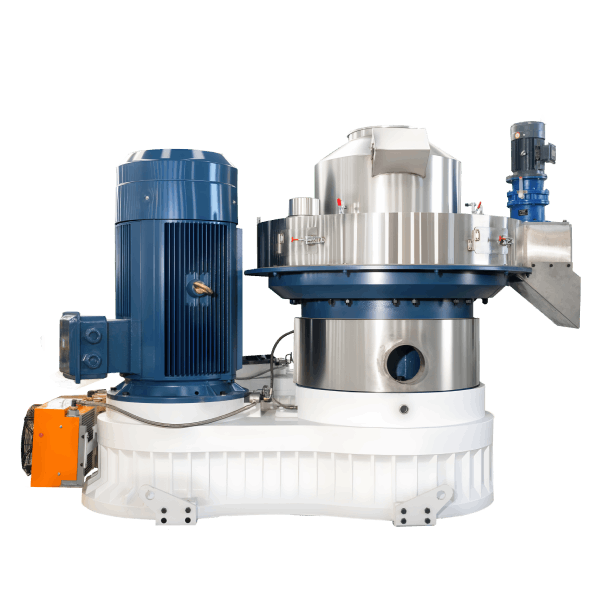
Key Motor Specifications: What Procurement Professionals Must Confirm
Beyond basic power and voltage ratings, the following motor specifications directly impact operational reliability, maintenance requirements, and total cost of ownership.
Efficiency Class (IE Code)
International Efficiency (IE) standards define motor efficiency levels:
| Class | Efficiency Level | Typical Price Premium | Payback Period (24/7 Operation) |
|---|---|---|---|
| IE1 (Standard) | Baseline | 0% | N/A |
| IE2 (High) | +1–3% above IE1 | 10–15% | 1–2 years |
| IE3 (Premium) | +2–5% above IE1 | 20–25% | 1.5–3 years |
| IE4 (Super Premium) | +3–6% above IE1 | 30–40% | 2–4 years |
Procurement Advice: For pellet mills running continuously, specify at least IE3 efficiency. The incremental cost is typically recovered within two years through electricity savings, and the motor runs cooler, extending bearing and insulation life.
Enclosure Type: IP Rating
The Ingress Protection (IP) rating determines the motor’s ability to resist dust and moisture ingress.
| IP Rating | Description | Suitability for Pellet Mills |
|---|---|---|
| IP23 | Drip-proof; limited protection | Suitable for clean, dry environments only |
| IP44 | Splash-proof | Suitable for some feed mill applications |
| IP54 | Dust-protected; splash-proof | Recommended minimum for most pellet mill environments |
| IP55 | Dust-protected; jet-proof | Recommended for all pellet mill applications |
| IP56 | Dust-protected; powerful jet-proof | Suitable for washdown environments |
Recommendation: Specify IP55 as the minimum for any pellet machine motor. The operating environment typically includes dust, moisture from steam conditioning, and occasional washdown—all of which penetrate lower-rated enclosures.
Insulation Class and Temperature Rise
| Insulation Class | Maximum Temperature (°C) | Typical Application |
|---|---|---|
| B | 130 | Light duty; intermittent operation |
| F | 155 | Standard industrial duty |
| F (with Class B rise) | 155 insulation / 105 rise | Preferred for pellet mills |
| H | 180 | High-temperature environments |
Practical Guidance: Specify Class F insulation with Class B temperature rise. This provides a 25°C thermal margin, dramatically extending winding life. For a motor operating at 80% load in a 40°C ambient, this margin can double the expected insulation life from approximately 40,000 hours to over 80,000 hours.
Service Factor (SF)
The service factor indicates how much over-rating the motor can handle on a continuous basis.
| Service Factor | Meaning | Application Advice |
|---|---|---|
| 1.00 | No over-rating capacity | Not recommended for pellet mills |
| 1.15 | 15% continuous over-rating capacity | Standard recommendation |
| 1.25 | 25% continuous over-rating capacity | For demanding, variable load applications |
Why SF Matters in Pellet Mills: Feedstock variations cause intermittent load spikes. A motor with SF 1.15 can handle these spikes without tripping, whereas a 1.00 SF motor may trip on overcurrent during normal operational variations.
Starting Methods: Impact on Grid and Equipment
The starting method of a three-phase motor affects both the electrical grid and the mechanical system. Selection should consider:
- Motor size relative to grid capacity
- Mechanical coupling type
- Required starting frequency
Direct-On-Line (DOL) Starting
| Characteristic | Detail |
|---|---|
| Starting current | 6–8 × full load current (FLC) |
| Starting torque | 100–200% of rated torque |
| Application | Motors up to 22 kW on stiff grids |
| Advantages | Simple, low cost, reliable |
| Disadvantages | High current spikes; mechanical shock |
Star-Delta Starting
| Characteristic | Detail |
|---|---|
| Starting current | 2–3 × FLC |
| Starting torque | 30–40% of rated torque |
| Application | Motors 22–90 kW |
| Advantages | Reduced grid impact; less mechanical stress |
| Disadvantages | Requires 6 leads from motor; transition spike |
Soft Starter
| Characteristic | Detail |
|---|---|
| Starting current | 2.5–4 × FLC (adjustable) |
| Starting torque | Adjustable (30–80% of rated) |
| Application | Motors 37–200 kW |
| Advantages | Smooth acceleration; adjustable parameters |
| Disadvantages | Higher cost; harmonic generation |
Variable Frequency Drive (VFD)
| Characteristic | Detail |
|---|---|
| Starting current | 1–1.5 × FLC |
| Starting torque | Adjustable up to 150% |
| Application | Motors 22–250 kW requiring speed control |
| Advantages | Speed control; soft start; energy savings at partial load |
| Disadvantages | Highest cost; requires compatible insulation |
Engineering Recommendation: For pellet mills up to 55 kW with grid capacity, direct-on-line starting is often the simplest and most reliable method where grid capacity permits. For larger motors (75 kW and above), star-delta or soft starting is strongly preferred to avoid voltage dip issues.
Motor Installation and Coupling: Critical Details for Reliability
The mechanical connection between the motor and pellet mill is as important as the electrical specification. Procurement professionals should confirm these details with the supplier.
Coupling Type
Direct Coupling (Rigid or Flexible)
| Advantage | Disadvantage |
|---|---|
| Compact footprint | Alignment critical |
| No belt losses | Transmits shock loads directly |
| Lower maintenance | Requires precision alignment during installation |
Belt Drive (V-Belts)
| Advantage | Disadvantage |
|---|---|
| Absorbs shock loads | Belt losses (3–5%) |
| Allows speed ratio changes | Belt replacement required |
| Forgiving of minor misalignment | Increased footprint |
Decision Point: Direct coupling is preferred for high-power applications where efficiency and compactness are priorities. Belt drive is advantageous when speed variation is required or when starting torque is a concern.
Procurement Decision Checklist: Pellet Machine with Three-Phase Motor
Use the following checklist during supplier evaluation and specification finalization.
Power and Electrical
- Motor power rating (kW/HP) confirmed for required capacity
- Voltage and frequency matched to site supply
- Dual voltage configuration specified (if required)
- Efficiency class at least IE3 for continuous duty
- IP rating confirmed at IP55 minimum
- Insulation Class F with Class B temperature rise
Starting and Control
- Starting method selected based on motor size and grid capacity
- Motor control panel specified (including overload protection)
- Ambient temperature accounted for in motor sizing
- Starter sizing verified for selected starting method
Mechanical Integration
- Coupling type selected (direct or belt)
- Frame size confirmed compatible with mill base
- Shaft diameter and keyway dimensions verified
- Motor mounting arrangement specified (foot or flange)
Supplier Verification
- Motor manufacturer name and brand specified
- Certification documents available (CE, UL, CSA, or equivalent)
- Spare motor availability considered for critical applications
- Warranty terms confirmed for motor component
Real-World Example: Motor Specification in Practice
A poultry feed manufacturer in Nigeria was expanding their production facility from 5 t/h to 12 t/h. The site had a 415V/50Hz three-phase supply with limited transformer capacity.
The initial supplier quotation specified a 90 kW motor with direct-on-line starting—which would have caused unacceptable voltage dips during startup, potentially affecting other plant equipment. The procurement team, guided by a consulting engineer, revised the specification to:
- 75 kW motor (sufficient for the 12 t/h target with the specific feed formulation)
- Star-delta starting to limit inrush current
- IE3 efficiency class for 24/7 operation
- IP55 enclosure due to the dusty environment
- Class F insulation with Class B temperature rise
Results: The revised configuration operated successfully with stable grid voltage during starts, reduced the motor frame size, and yielded 5% lower electrical consumption than the originally quoted unit. The star-delta starter added modest cost but eliminated the need for transformer upgrade.
Final Recommendation for Procurement Professionals
When sourcing a pellet machine with a three-phase electric motor, treat the motor specification as a decision point rather than a commodity selection. The correct motor—properly sized, appropriately enclosed, and correctly matched to grid conditions—operates reliably for 10+ years. The wrong specification leads to premature failures, production interruptions, and unplanned capital expenditure.
The most important step is upfront: confirm your site power conditions before finalizing the purchase. Provide the supplier with:
- Available voltage (±%)
- System frequency (Hz)
- Transformer capacity (if known)
- Ambient temperature range
- Required production capacity and material type
A reputable manufacturer will use this information to recommend the appropriate motor configuration, not just accept a generic specification.
Frequently Asked Questions
1. Why can’t I use a single-phase motor for a commercial pellet machine?
Single-phase motors are not available in the power ranges required for commercial pellet mills (22 kW and above). The starting torque and efficiency characteristics are also insufficient for continuous industrial operation. Single-phase supply is limited to residential and light commercial applications.
2. What voltage should I order for my pellet machine if I’m importing to a 50 Hz country?
Most 50 Hz countries operate at 380V, 400V, or 415V. Confirm with your local utility and specify the exact voltage on your purchase order. Chinese manufacturers routinely supply motors for all these standards.
3. Can a 60 Hz motor run on 50 Hz supply?
A motor wound for 60 Hz will run at 5/6 of its rated speed on 50 Hz. However, the magnetic circuit saturates at the lower frequency, causing increased current draw and potential overheating. This is not recommended without de-rating the motor. Always order motors wound for the actual operating frequency.
4. What is the difference between a standard and a heavy-duty motor for pellet mills?
Heavy-duty motors feature heavier bearings, larger shaft diameters, higher grade insulation, and more robust housing. They are specifically designed for high-inertia, continuous-duty applications. For pellet mills, always specify a heavy-duty industrial motor rather than a general-purpose unit.
5. How long should a three-phase motor last on a pellet mill?
With proper specification, installation, and maintenance, a three-phase motor should last 10–15 years on a pellet mill. Bearing replacement is typically required at 3–5 year intervals depending on operating hours and environmental conditions. Winding insulation life depends on operating temperature—every 10°C reduction in operating temperature doubles insulation life.
6. Should I order a spare motor with my pellet machine?
For critical production applications where a motor failure would cause significant production losses, ordering a spare motor from the same production batch is advisable. This ensures exact compatibility and avoids future compatibility issues if motor designs change. For applications with shorter duty cycles or where a motor can be sourced locally, a spare may not be necessary.
7. What protection devices should I include in the motor control panel?
Minimum protection devices include: thermal overload relay, short-circuit protection (circuit breaker or fuses), phase failure protection, and phase imbalance protection. For motors above 75 kW, current transformer-based protection with thermal modeling is recommended for comprehensive protection.
8. Can I change the motor voltage after I receive the machine?
If the motor is wound for dual voltage (e.g., 230/460V), reconfiguration is possible by changing terminal connections in the motor junction box. For single-voltage motors, voltage change requires replacing the motor entirely. This is why confirming voltage at the time of order is critical.
About the Author
Zhang Wei – Senior International Sales Engineer, Shandong Changsheng Machinery Co., Ltd.
Zhang Wei has over 12 years of experience in the biomass and feed pellet mill industry, with a background in mechanical engineering and international project execution. He has managed pellet mill supply projects for clients across Southeast Asia, the Middle East, Africa, Europe, and Latin America, overseeing everything from initial technical specification to production coordination, factory acceptance testing, and delivery logistics.
With hands-on experience in both the manufacturing workshop and client-side operations, Zhang brings practical insights into what drives successful international equipment procurement—from the factory floor to the customer’s production site.