Mobile Trailer Pellet Mill for Rent 0.1-0.5t/h | Equipment Guide
News 2026-07-10
Product Definition
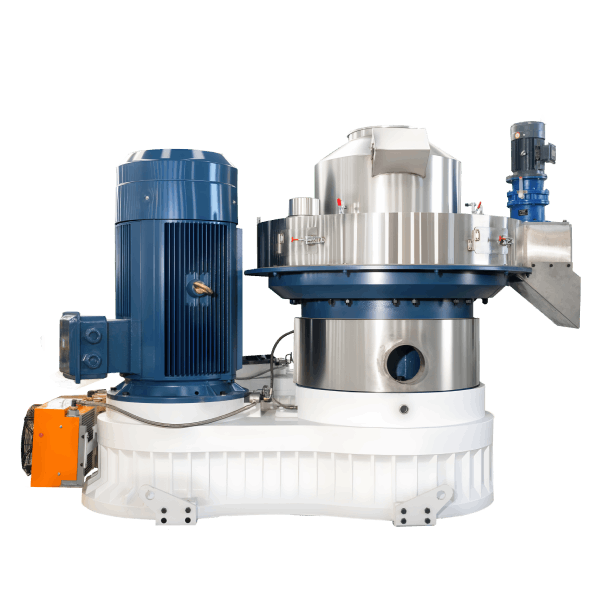
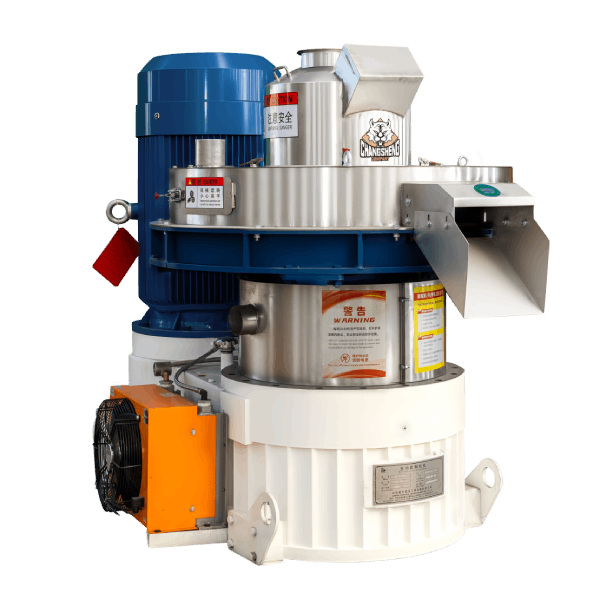
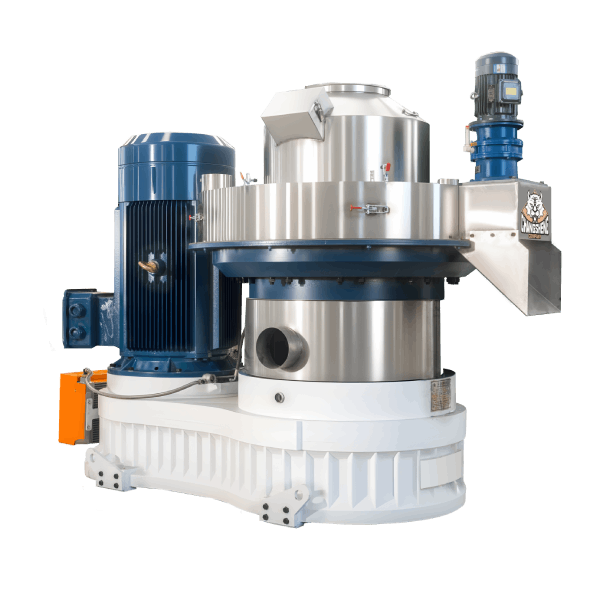
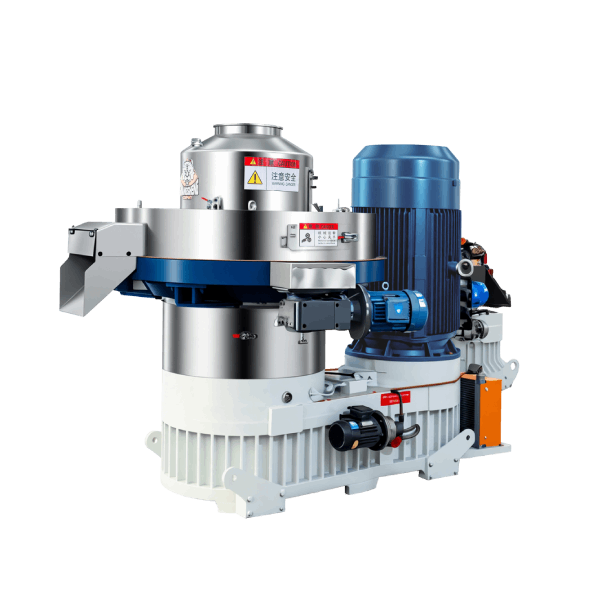
A mobile trailer pellet mill for rent is a flat die compaction system mounted on a road-towable chassis, designed for temporary on-site pellet production from biomass residues. The mobile unit processes crop residues, wood waste, and agricultural by-products into pellets at capacities of 0.1 to 0.5 tonnes per hour, with power options including tractor PTO, diesel engine, or electric motor.
Technical Specifications & Performance Parameters
| Parameter | Value Range / Specification |
|---|---|
| Throughput capacity | 0.1 – 0.5 t/h (feedstock-dependent) |
| Drive options | Tractor PTO (540/1000 rpm), diesel engine, or electric motor |
| Power requirement | 15 – 40 kW (PTO or electric) |
| Flat die diameter | 200 – 400 mm |
| Pellet diameter | 4 – 12 mm (customisable) |
| Pellet bulk density | 600 – 750 kg/m³ |
| Raw material moisture | 12% – 18% (optimal: 14% – 16%) |
| Specific energy consumption | 40 – 80 kWh/t |
| Machine weight | 800 – 1,500 kg |
| Trailer configuration | Single-axle, road-legal with lighting and brakes |
| Set-up time | 30 – 60 minutes |
| Required towing vehicle | 1.5 – 2.5 tonne towing capacity |
| Maintenance man-hours (weekly) | 2 – 4 hours |
Structural Composition & Material Selection
The mobile trailer pellet mill integrates five functional subsystems:
Flat Die Pelletising System
- Flat die: Alloy steel (40Cr) with hardened surface, 200–400mm diameter
- Roller assembly: High-chromium cast iron (Cr26), adjustable gap
- Main shaft: Heat-treated steel with sealed bearings
- Gearbox: Heavy-duty helical gearbox with PTO input or direct drive
Trailer Chassis & Mobility System
- Galvanised steel chassis with tow hitch (50mm ball or pin type)
- Single-axle suspension with leaf springs
- Road-legal lighting: Indicators, brake lights, and reflectors
- Parking brake and jockey wheel (manual or hydraulic)
Drive System
- PTO shaft: 540/1000 rpm with overrunning clutch
- Diesel engine: 15–40 kW, electric start, with fuel tank
- Electric motor: 15–40 kW, with starter and control panel
Support & Feeding System
- In-feed hopper: Foldable or detachable, 0.2–0.5m³ capacity
- Manual or screw feeder: Adjustable feed rate
- Discharge chute: Directs pellets into bags or containers
Manufacturing Process – Engineering Workflow
Step 1 – Raw Material Preparation
Biomass must be ground to particle size no larger than the die hole diameter (typically 3–6mm). Use hammer mill or tub grinder. Moisture adjusted to 14%–16%.
Step 2 – Feedstock Conditioning
Material moisture control – dry feedstock if moisture exceeds 18%, add water if below 12%. Uniform moisture distribution essential.
Step 3 – Pelletising (Core Forming Process)
Feedstock enters flat die chamber. Rollers compress material through die holes under pressure. Heat from friction fuses lignin or natural binders, forming dense pellets.
Step 4 – Cooling & Hardening
Pellets exit machine hot and soft. Cooling required to harden and reduce moisture to ≤12% for storage stability.
Step 5 – Screening & Bagging
Pellets screened to remove fines. Bagged for storage or sale. Mobile unit can be relocated to next site after each batch.
Industry Comparison – Mobile Pellet Production Options
| Equipment Type | Capacity (t/h) | Mobility | Power Source | Typical Application |
|---|---|---|---|---|
| Mobile Trailer Pellet Mill | 0.1 – 0.5 | High – road towable | PTO, diesel, electric | Field rental, seasonal |
| Stationary Flat Die Mill | 0.1 – 0.8 | None – fixed | Electric only | Farm, workshop |
| Stationary Ring Die Mill | 0.5 – 5.0 | None – fixed | Electric only | Industrial plants |
| Hire/Contractor Pellet Plant | 0.5 – 3.0 | Containerised | Electric | Large projects |
Differentiation (Shandong Changsheng Machinery):
Our mobile trailer pellet mills are engineered for rapid deployment – set-up time under 60 minutes. Road-legal configuration with lighting and brakes enables safe transport between sites. The flat die design handles multiple feedstock types with quick die change capability.
Application Scenarios by Buyer Role
Distributors / Importers
Focus on rental fleet management. Require robust construction for repeated transport and set-up. Parts availability and remote support.
EPC Contractors
Integrating mobile pelleting into project-based biomass processing. Need rapid deployment and relocation capability.
Engineering Consultants / Technical Advisors
Evaluate mobile vs stationary pellet production. Require operating cost and logistics data for client assessments.
End-user Production Facilities
Farmers, land clearing contractors, and seasonal processors. Demand reliable operation with minimal site preparation.
Core Pain Points & Engineering Solutions
Pain Point 1 – Inconsistent pellet quality from variable feedstock
Root cause: Mobile units process different materials at different sites – moisture and particle size vary.
Solution: Adjust roller gap and feed rate. Include moisture meter with rental package. Train operators on material preparation.
Pain Point 2 – Transport and set-up time
Root cause: Road transport requires securing and protecting equipment. Set-up takes time.
Solution: Integrated trailer with foldable hopper and quick-connect PTO. Standardised set-up procedure. Pre-trip checklists.
Pain Point 3 – Power source compatibility
Root cause: Different sites have different power availability – no electricity, PTO capability varies.
Solution: Multi-drive option – choose PTO, diesel, or electric based on site conditions. Diesel option for remote locations.
Pain Point 4 – Maintenance during rental periods
Root cause: Operators may not maintain equipment properly during rental.
Solution: Simple maintenance schedule. Daily operator checklist. Spare parts inventory with rental unit.
Critical Risk Warnings & Mitigation Measures
Risk 1 – Road transport damage to equipment
Mitigation: Secure all moving parts before transport. Check trailer tyres and lights. Use tie-down straps. Limit transport speed.
Risk 2 – PTO shaft injury during set-up
Mitigation: Install PTO guard. Use overrunning clutch. Lockout procedures during connection.
Risk 3 – Overloading from oversized particles
Mitigation: Ensure grinding before pelleting. Remove stones and metal with magnetic separator. Pre-screen material.
Procurement Selection Guide – 7 Executable Steps
Step 1 – Define feedstock and site conditions
Identify materials to be processed. Check site power availability. Assess transport access.
Step 2 – Select drive option
PTO for tractor-equipped sites. Diesel for remote locations. Electric for sites with grid power.
Step 3 – Determine capacity requirement
0.1–0.5 t/h depending on feedstock. Choose model for target production.
Step 4 – Verify road transport requirements
Trailer weight, towing vehicle capacity, lighting and brake compatibility. Confirm with local regulations.
Step 5 – Specify die hole size
6mm for general pellets. 8mm for biomass fuel. 4mm for fine feed pellets.
Step 6 – Plan for on-site logistics
Access for towing vehicle. Level ground for set-up. Space for feedstock and pellet storage.
Step 7 – Establish rental agreement terms
Duration, transport, insurance, and maintenance responsibilities. Operator training included.
Engineering Case Study – Seasonal Biomass Processing in Poland
Project Background
A farm cooperative in Poland needed to process 200 tonnes of straw and hay residues during a 4-week harvest period. Investment in stationary equipment was not justified for seasonal use.
Initial Problem
No on-site pellet production capability. Transporting loose straw to distant processing plant was cost-prohibitive. Equipment purchase cost exceeded seasonal production value.
Root Cause Analysis
Seasonal feedstock volume did not justify capital purchase. Rental solution would match production need with cost.
Solution Implemented
Rented mobile trailer pellet mill for 4 weeks. Tractor PTO drive (540 rpm). Processed 180 tonnes of straw into pellets. Pellets used for on-farm heating.
Final Data Results
| Metric | Value |
|---|---|
| Processing duration | 4 weeks |
| Feedstock processed | 180 tonnes |
| Pellet output | 160 tonnes (after drying/screening) |
| Rental cost | $4,200 |
| Avoided haulage cost | $6,500 |
| Net saving vs alternative | $2,300 |
Frequently Asked Questions (FAQ)
1. What is a mobile trailer pellet mill?
A flat die pellet mill mounted on a road-towable chassis, designed for temporary on-site pellet production.
2. What capacity is available?
0.1 – 0.5 tonnes per hour depending on feedstock and model.
3. What drive options are available?
Tractor PTO (540/1000 rpm), diesel engine, or electric motor.
4. What materials can be processed?
Straw, hay, wood waste, agricultural residues, and feed ingredients.
5. What moisture is required?
12% – 18%, with 14% – 16% optimal.
6. What is the set-up time?
30 – 60 minutes from arrival to production.
7. Is the trailer road-legal?
Yes – includes lighting, brakes, and standard towing hitch.
8. What is the machine weight?
800 – 1,500 kg depending on configuration.
9. What is the rental duration?
Daily, weekly, or monthly rental available.
10. What maintenance is required?
Daily: lubricate bearings, inspect rollers, clean die. Weekly: inspect belts and bolts.
11. Is operator training included?
Yes – basic operator training provided with rental.
12. Can I use the machine on unlevel ground?
Level site required. Adjustable jacks for levelling.
Author & E-E-A-T Credentials
Author: Dr. Chen Wei
Title: Senior Mechanical Engineer, Pelletising Systems Division
Experience: 14 years in biomass densification and feed processing equipment design
Notable Projects:
- Commissioned 8 mobile pellet mill rental units across Europe and North America
- Developed transport and set-up protocols for mobile pellet production equipment
- Co-author of “Industrial Pellet Mill Maintenance and Optimisation” (Engineering Press, 2022)
Affiliation: Shandong Changsheng Machinery Co., Ltd.